
Recruitment Technology Tools in 2026: The Complete Stack Guide
Ask five recruiters what recruitment technology tools they run and you get five different lists, each followed by a sigh about the one tool they pay too much for.
This guide maps the full stack: the applicant tracking system at the center, then the sourcing, screening, interview, analytics, and AI layers around it.
For each layer you get shortlisted tools, verified starting prices, and one criterion most buying guides skip: whether the tool actually connects to the rest of your stack.
Quick disclosure before we start. 100Hires is our product, and it appears first in the table below. We list its weak spots right next to its strengths. Every price here comes from a vendor page we fetched this month, or carries a "reported" label where the vendor publishes none.
Read our full ranked breakdown of the top 10 ATS platforms if the ATS choice is the only decision on your desk.
The recruitment technology stack at a glance
The hiring playbook, in your inbox
One email a week - benchmarks, AI screening tactics, and short interview templates from the 100Hires team. No product pitches.
Fourteen tools, six layers, one table. Prices are the cheapest published tier as of July 2026. "Custom quote" means the vendor publishes no number at all. The last column is the one to squint at: it tells you whether the tool plays well with others.
| Tool | Stack layer | Starting price | Free trial or plan | G2 | Integration surface |
|---|---|---|---|---|---|
| 100Hires | ATS, system of record | public $99/mo ($49/mo annual) | 14-day trial | 4.8 | Public API, webhooks, Zapier, native ChatGPT app (first-party MCP) |
| Indeed | Job distribution | Sponsored pay-per-click | Free posts | 4.3 | Partner-approved API only, Zapier |
| Calendly | Interview scheduling | Paid from $10/seat/mo | Free plan | 4.7 | Public API, webhooks, Zapier |
| Metaview | Interview notes | Pro $100/user/mo | Free tier | 4.8 | Writes into your ATS, Zapier |
| Apollo | Contact data | Basic $49/mo | Free plan | 4.7 | Public API, Zapier |
| Juicebox | AI sourcing | Starter $139/seat/mo | Free plan | n/a | Reads 50+ ATSs via a unified API, no Zapier |
| SeekOut | AI sourcing | $149/mo billed annually | 14-day trial | 4.5 | Pushes into major ATSs, no Zapier |
| Gem | Sourcing CRM | $135/mo billed annually (startup tier) | Not stated | 4.7 | Three documented public APIs, no Zapier |
| hireEZ | AI sourcing | $494/mo solo tier | 7-day trial | 4.6 | API and webhooks, Zapier |
| TestGorilla | Skills assessment | Core $142/mo billed annually | Free plan | 4.5 | Native ATS integrations, Zapier |
| GoodTime | Interview scheduling | Custom quote | Not stated | 4.4 | Built on your ATS's calendar and data |
| Zoho Recruit | ATS | $25/recruiter/mo billed annually | Free plan (1 job) | 4.4 | API rationed by plan tier, Zapier |
| JazzHR | ATS | $110/mo | Not stated | 4.4 | Partner integrations, Zapier |
| Workable | ATS | $299/mo | Trial available | 4.4 | Public API, webhooks, Zapier |
Juicebox shows no G2 score in the table on purpose. Its review sample there is tiny, so citing a number would flatter or punish it unfairly. Treat the gap as "young product", not "bad product".
If 100Hires makes your shortlist after the criteria below, start a 14-day free trial, no credit card needed.
How we evaluated these tools
This guide is based on nine research channels, collected in early July 2026. We read the top-ranking buyer guides, sixteen Reddit threads with about 460 comments from working recruiters, and twelve YouTube practitioner videos.
Five recruiting-tech podcast episodes rounded it out, plus Twitter and LinkedIn posts where TA leaders shared their real stacks.
Two audits back the numbers. Every starting price and rating in the table comes from a vendor page or review platform we fetched and dated this month.
The integration column comes from a July developer-docs audit across the finalists: API references, webhook pages, Zapier listings, and MCP announcements. Where vendor docs were blocked or absent, we used more cautious wording.
Selection followed the evidence. A tool made the list when it showed up across five or more of our nine channels, or when it anchored a stack layer with verified pricing. We cut enterprise platforms aimed at 1,000-plus-employee orgs, since this guide serves teams under 500.
And yes, 100Hires is ours; that is exactly why its claims are backed by named third parties where they exist and paired with stated limitations everywhere else.
How to map your recruitment technology stack before you buy
Recruitment technology only pays off as a system. A brilliant sourcing tool that traps candidates in its own database creates re-typing work that eats the time it saved. So map the stack first, shop second.
The map is simpler than vendor marketing suggests. One system of record sits in the middle: your ATS. Five layers surround it. You attract applicants, source passive candidates, screen the pipeline, run interviews, and analyze what worked.
A sixth layer is forming on top: AI assistants that read and write your recruiting data.
Three criteria separate a working stack from an expensive pile of tabs.
Criterion 1: integration surface
Check four things for every vendor: a public API, webhooks, a Zapier connector, and native integrations with your ATS. Then read the fine print on plan gating. Breezy HR gates its API to the Pro plan. Manatal reserves API access for its Enterprise Plus tier.
Zoho Recruit meters API calls per user by plan, from zero on the cheapest tier up the ladder.
The pattern from our audit of 19 vendor developer docs this month: mid-market ATSs ration integrations by plan, enterprise ATSs gate AI features instead, and job boards let almost nobody in at all. Price the tier that includes the API you need, not the tier on the banner.
Criterion 2: channel fit
Buy for the channel where your hiring actually happens. One vendor analysis argues that around nine in ten recruiter conversations happen on the phone, not on video. If that matches your desk, an AI notetaker built only for Zoom will miss most of your calls.
The same logic applies to outreach tools built for B2B sales and squeezed into recruiting.
Criterion 3: consolidation economics
Vendors now base pricing on your whole stack, not just their own feature list. hireEZ frames its enterprise pricing around the tools you would cancel. Gem bundles a year of Metaview Pro into its plans.
Before adding tool number seven, count your layers and ask which existing subscription the new one should replace.
The Zapier MCP caveat
One trap to flag early. Zapier auto-generates an "MCP server" page for nearly any app in its directory, which makes half the market look AI-agent-ready. That is Zapier's infrastructure, not the vendor's.
As of July 2026, first-party recruiter-facing MCP servers exist for exactly two tools in our audit: Ashby, which opened a beta in June 2026, and 100Hires. When a salesperson says "we support MCP", ask who built it.
The system of record: your ATS
Every other layer either writes into the ATS or steals time from it. Sourcing tools push candidates in, assessments push scores in, notetakers push summaries in, analytics reads everything out. Pick this one for the decade, not the quarter.
The ATS layer is where candidate relationships live too. Silver medalists from last year's search are your cheapest pipeline for this year's opening, provided the system keeps them searchable. More on that pattern in our guide to keeping past applicants warm between roles.
100Hires: the AI-first system of record for SMB teams
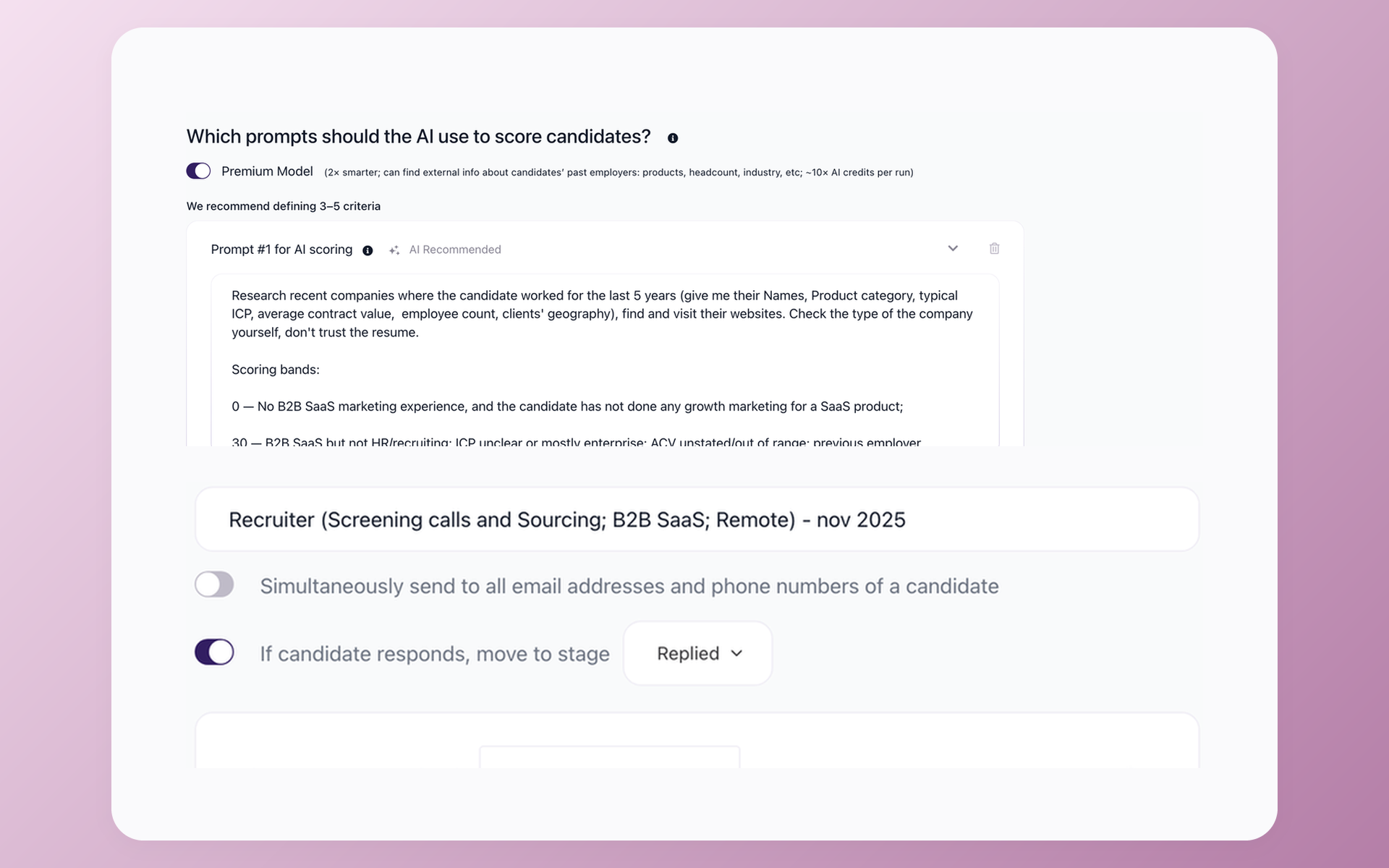
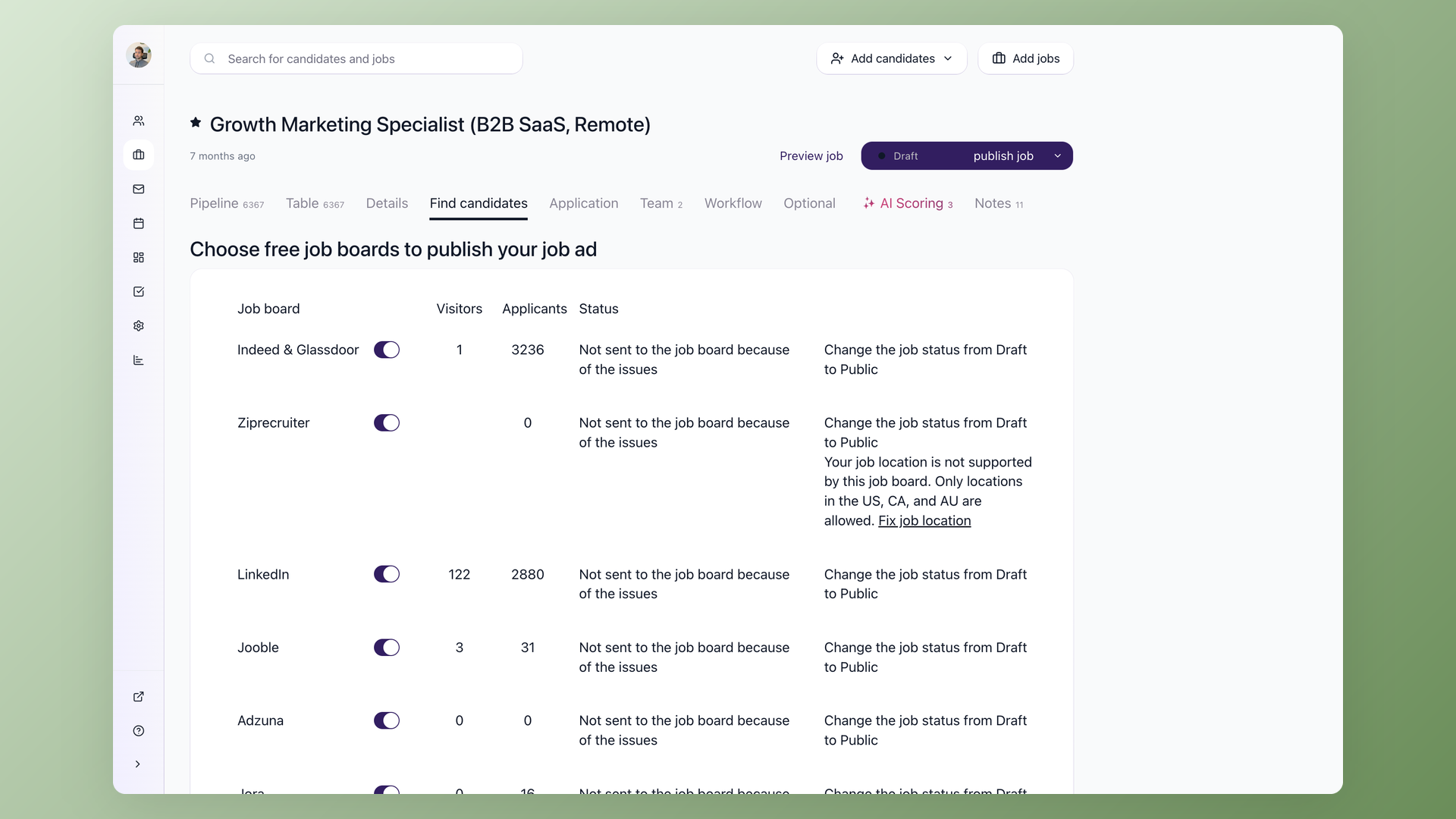
100Hires covers the center of the map: pipelines, one-toggle job distribution to Indeed, LinkedIn, and ZipRecruiter, workflow automations, and candidate emailing in one place. Setup takes about 15 minutes, and the Start plan runs $99/mo, or $49/mo billed annually.
The workflow automations run deeper than a couple of triggers - our breakdown of recruitment automation tools covers the 10 automation types and what each replaces.
Two features matter most for this article's focus. AI Score ranks every applicant against criteria you write yourself and shows the reasoning per criterion, so a recruiter can overrule it line by line.
AI Copilot turns your interview notes into structured assessments instead of leaving them buried in a doc.
On the integration criterion, 100Hires is the rare SMB tool that passes all four checks: a public REST API with an open spec, webhooks, a Zapier connector, and a native ChatGPT app built on a 130-tool MCP server covering 22 categories of recruiting data.
Third-party proof: Forbes Advisor ranks it the top applicant tracking pick for startups and small businesses, with a 4.8 on G2 across 1,341 reviews and 4.9 on Capterra across 1,157.
The honest limitations: the interface is text-dense and takes a day to feel fast, the Start plan gates candidate emailing to higher tiers, and branded career sites sit on bigger plans.
It is built for in-house SMB teams and small agencies, not 1,000-employee enterprises.
Other ATS options, through the integration lens
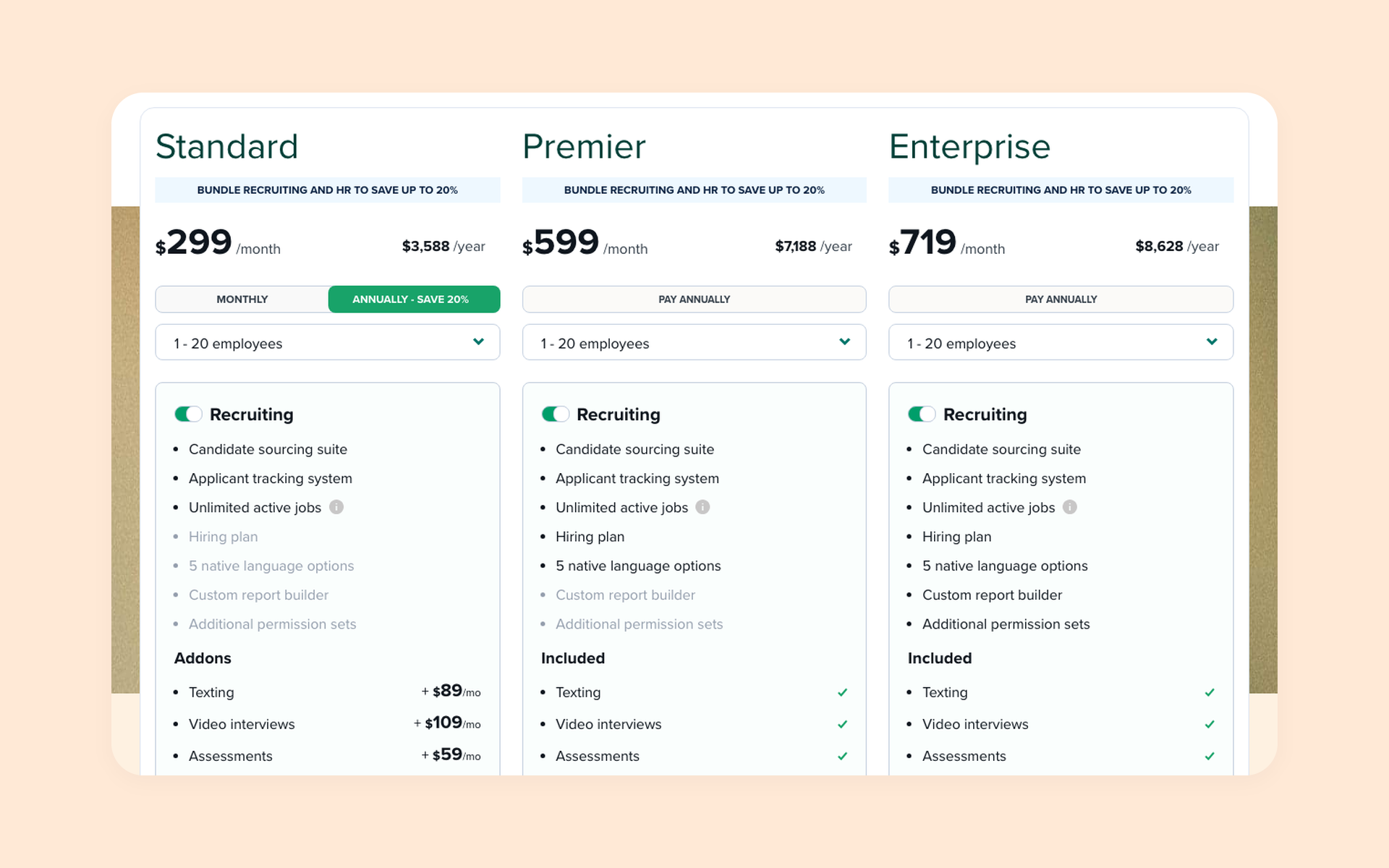
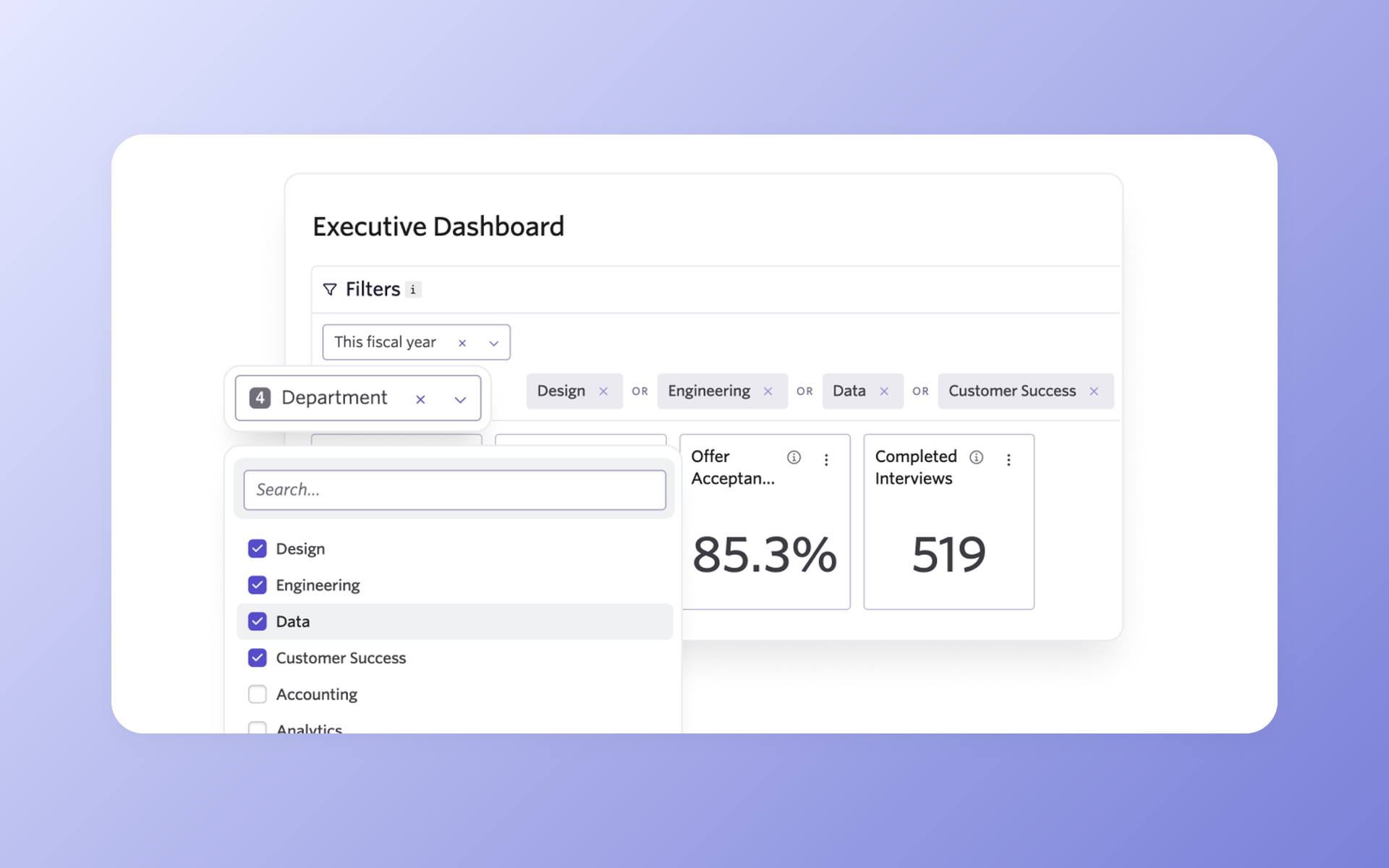
If you shortlist beyond 100Hires, judge each candidate by what its plans include, not by its demo.
- Zoho Recruit: the cheapest credible entry at $25/recruiter/mo billed annually, but API calls and marketplace extensions are rationed by tier, so automation ambitions raise the real price.
- JazzHR: a long-running small-business pick at $110/mo with a mature partner list; its Zapier app lives on under the legacy "Jazz" name.
- Breezy HR: loved for drag-and-drop pipelines from $157/mo billed annually; budget for the Pro plan if you need its API.
- Manatal: aggressive $15/user/mo pricing with its strongest footprint among staffing agencies in Asian markets; API access starts at Enterprise Plus.
- Workable: the scale-up all-rounder at $299/mo with a clean public API and webhooks; its newer AI features meter usage through credits.
- SmartRecruiters: an enterprise platform with a published $14,995/yr entry point, a solid customer API, and, surprisingly, no Zapier connector at all.
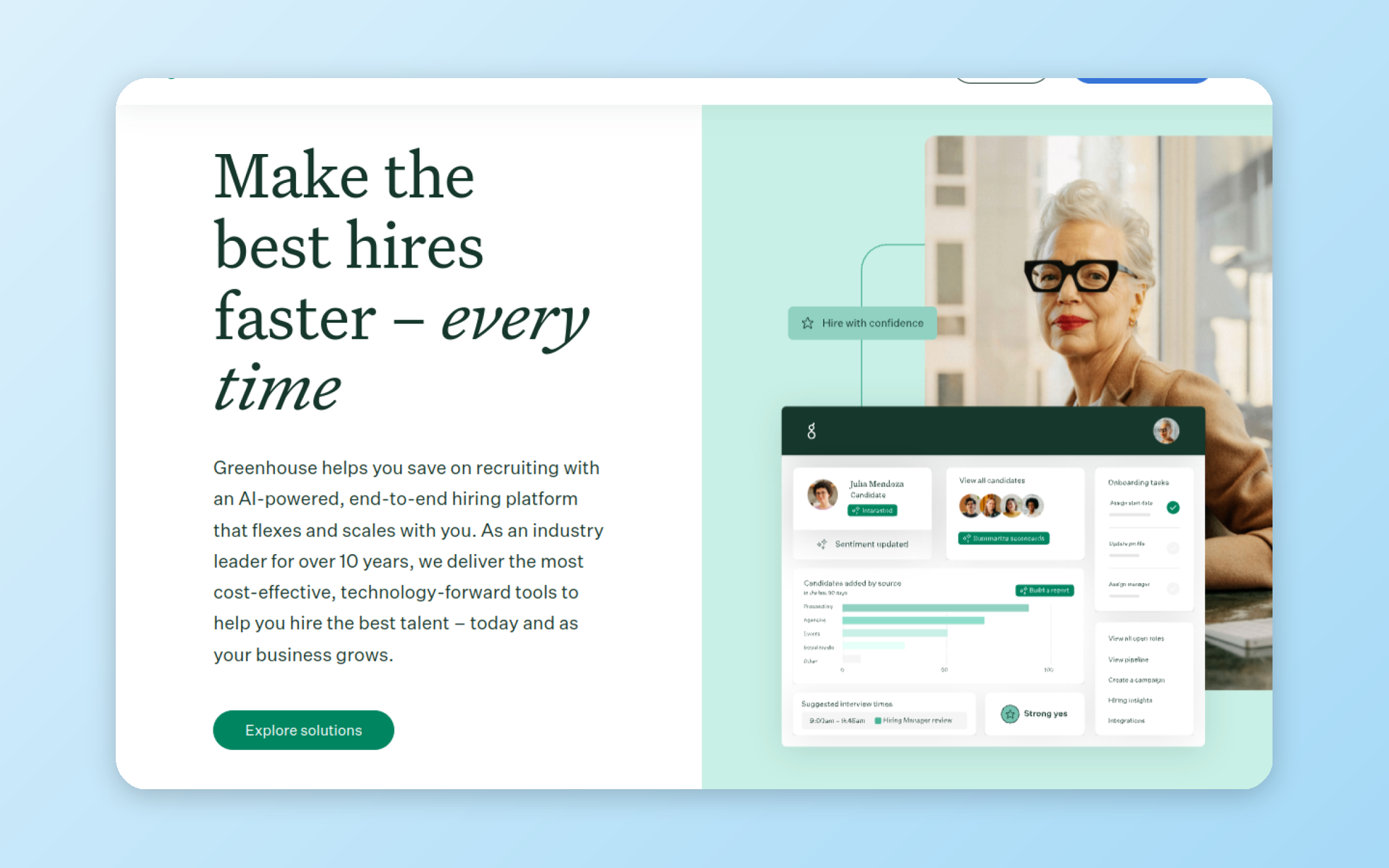
- Greenhouse: the structured-hiring reference with an open API and webhooks; pricing is quote-only and AI features live on upper tiers.
The attract layer: job distribution and your career site
Indeed, ZipRecruiter, and LinkedIn limit their posting APIs to approved partners. There is no self-serve developer signup at any price, a structural fact most buying guides skip. Your ATS's native distribution is your integration.
Practically, that means posting through the ATS toggle instead of pasting the same job into three tabs. Indeed remains the volume channel; it came up in 238 of the 314 sales calls we reviewed internally in July 2026, more than any other tool.
Free posts get limited visibility, and sponsored slots price per click. ZipRecruiter publishes no rates before signup; independent estimates converge around $299/mo per job slot, so treat that number as reported rather than official.
One toggle in the ATS should fan a role out to the paid boards, the free aggregators, and your own career page at once, then pull every application back into a single pipeline.
If your current setup involves a spreadsheet of board logins, that is the first integration gap worth closing, before any AI purchase.
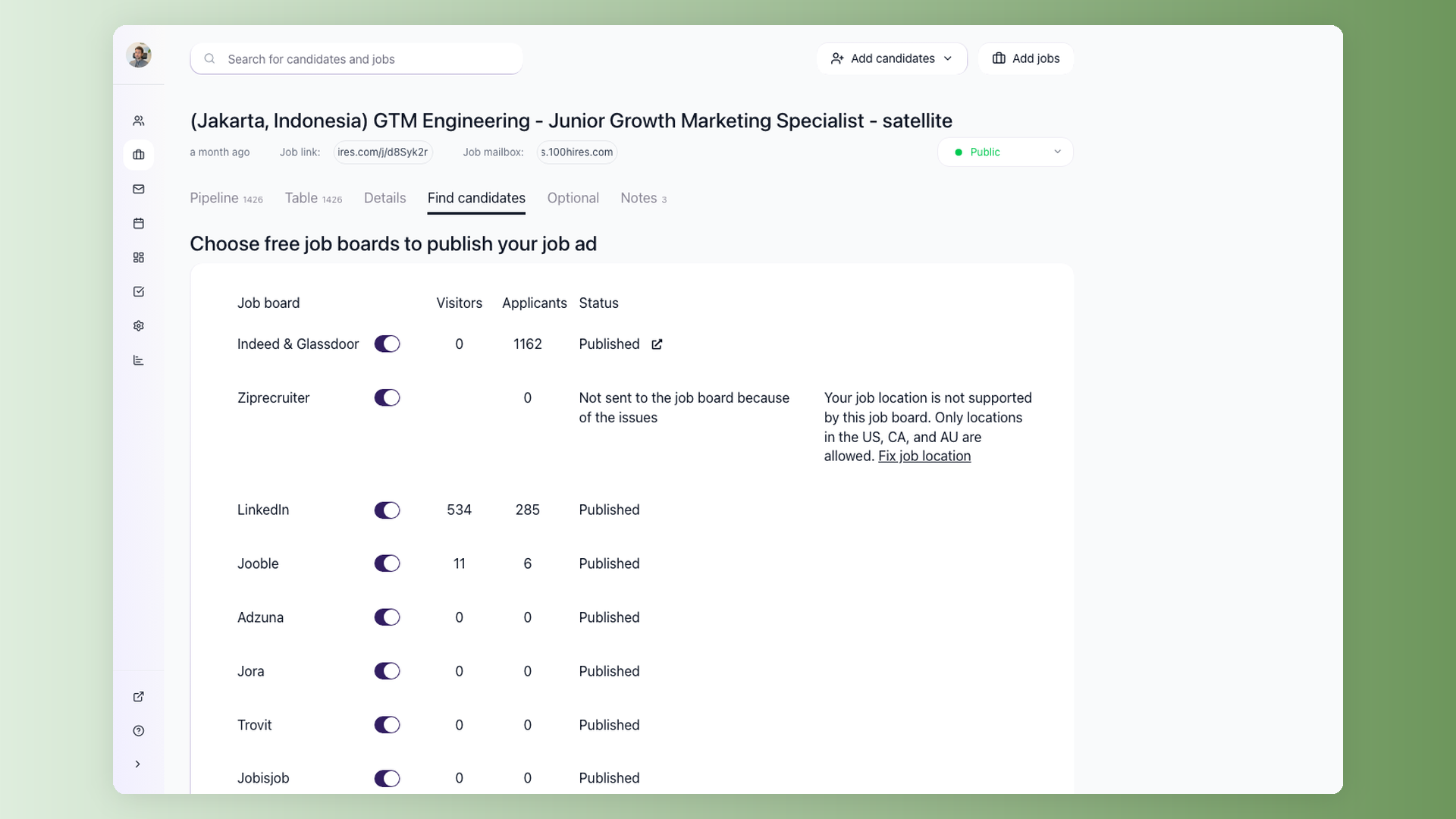
Our breakdown of where to actually post those jobs ranks the boards by role type and budget.
Your career site is now read by machines first
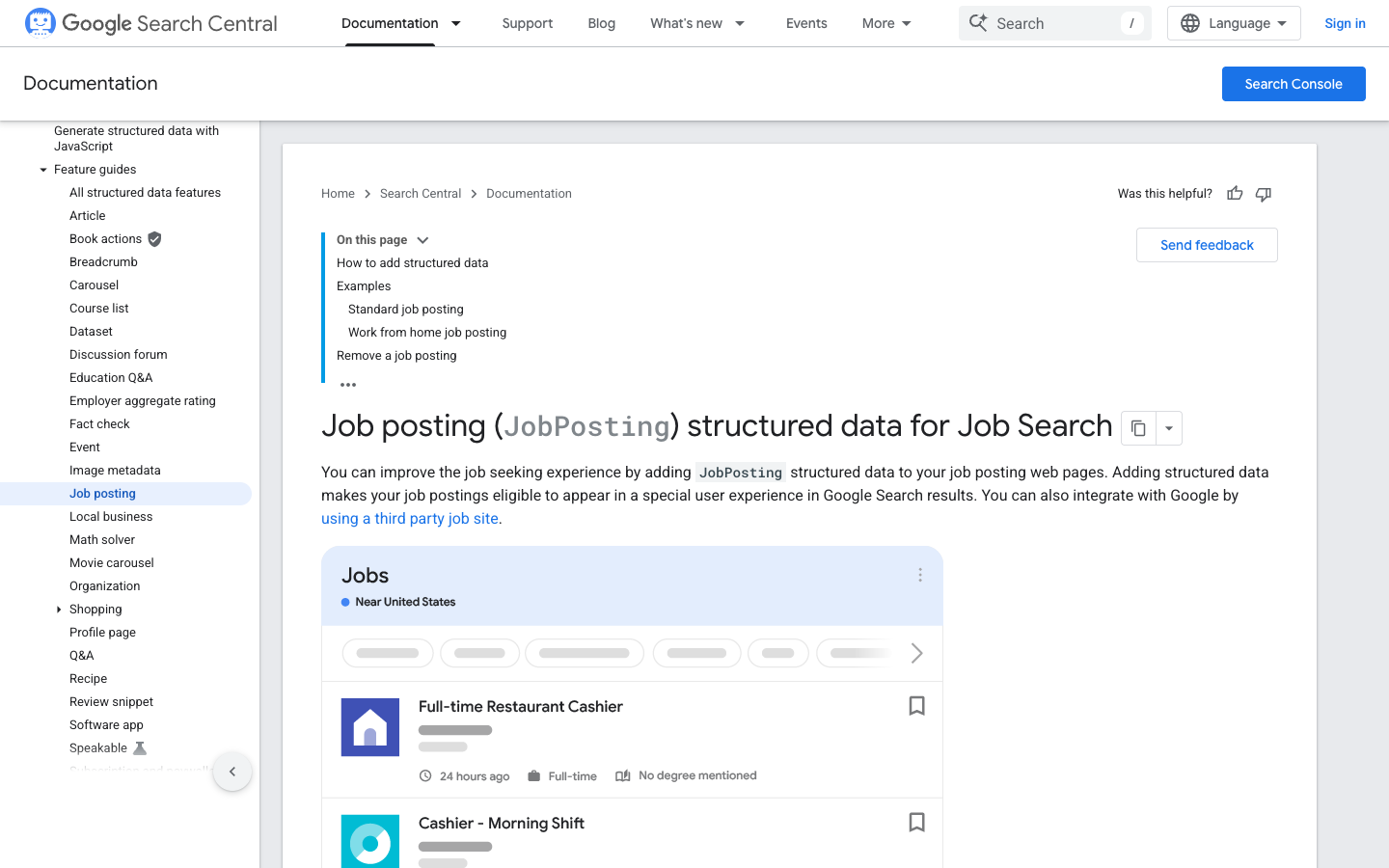
Some candidates now ask ChatGPT or Claude about your company before ever opening your career page. Those assistants ground their answers in ordinary search indexes, so a thin, generic career site is invisible twice: to Google and to the AI reading Google.
Specific, provable content about roles, pay, and process is what gets quoted.
Legacy applicant tracking treats the career site as an afterthought. Modern systems include SEO-ready career pages out of the box; 100Hires includes hosted career sites with structured job data on its higher tiers.
The source layer: finding people who did not apply
Sourcing is where recruiting budgets go to die, and the incumbent is the reason. LinkedIn Recruiter runs a closed system: ATS sync is reserved for certified partners, there is no public API, and even the sync documentation sits behind a partner login.
The cost pain is loud in public forums. Recruiters on r/recruiting this spring shared seat quotes in the tens of thousands per year and reply rates on InMail falling below one in ten, against roughly one in three for plain email.
The budget path many land on: LinkedIn Sales Navigator plus a separate contact-data tool.
Newer AI sourcing tools compete on exactly that math:
- Juicebox: natural-language people search with real practitioner momentum, the closest thing to a crowd favorite among newer sourcing tools. Some users report LinkedIn account restrictions when pushing outreach through it, so pace campaigns carefully. Free plan, then $139/seat/mo.
- SeekOut: deep filters and a 14-day trial at $149/mo billed annually, with no contract commitment on the entry tier. Strongest for technical and cleared talent, where its filter depth earns the price.
- hireEZ: sourcing plus outreach sequencing from $494/mo solo with a 7-day trial. Long-time users grumble about renewal pricing and contact accuracy, so verify data quality against ten known candidates in your pilot before committing.
- Gem: sourcing CRM at $135/mo billed annually for startups up to 100 employees, and the audit surprise of this article: three documented public APIs, more open than vendors many times its size.
- Apollo and Lusha: contact-data workhorses with free plans and paid tiers near $49/mo. Data quality varies by market and seniority, so test on your own niche before an annual commitment; a batch of twenty known contacts tells you more than any review site.
Note the pattern from our developer-docs audit: several newer point tools rely on other platforms' integrations.
They write into Greenhouse, Ashby, or Workable through those platforms' existing connectors instead of exposing a broad outbound API of their own; Gem and Apollo are the exceptions. Fine either way, as long as the write-back into your ATS works before you sign.
A quieter 2026 pattern deserves a mention: a few teams now wire Apollo, an enrichment layer, Claude through MCP, and an automation platform into a home-built sourcing flow instead of renewing the incumbent sourcing subscription.
It is an emerging experiment, not a settled playbook, but it shows where the pressure on incumbent pricing comes from.
Tech recruiting tools for engineering roles
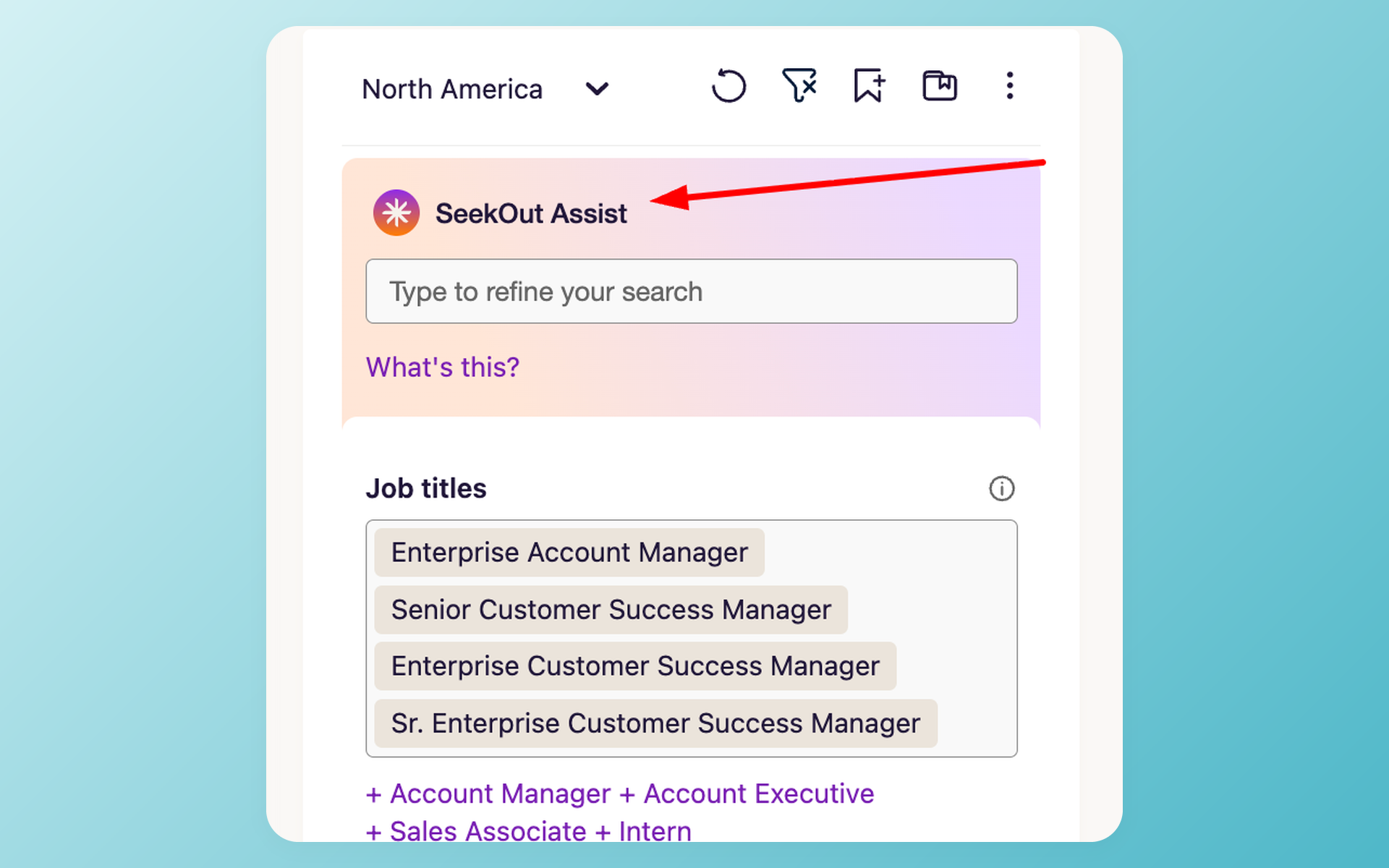
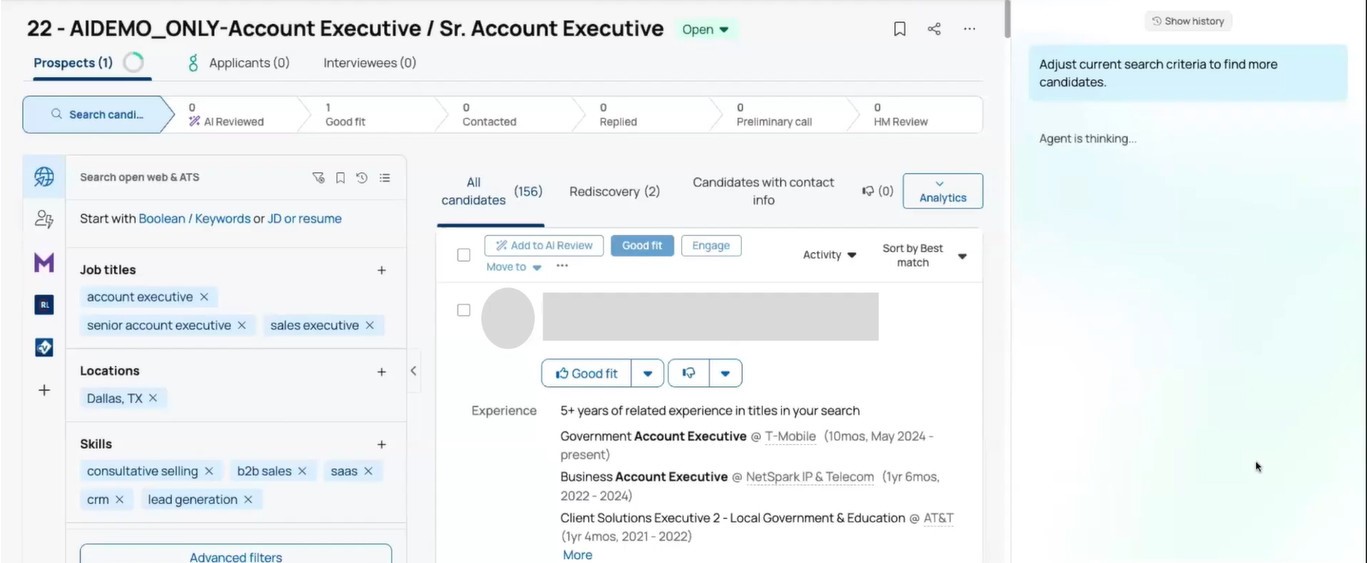
Engineering hiring uses the same layer with sharper filters. SeekOut and hireEZ lead on technical search facets, Gem and Apollo provide contact data for engineers, and the DIY crowd points Claude at GitHub-adjacent sources for niche skills.
The non-negotiable stays the same: whatever finds the engineer must write the profile back into the ATS without a CSV round-trip.
For a deeper tool-by-tool look at this layer, see our sourcing-specific tool comparison.
The screen layer: signal from the flood
Candidates started using AI to apply at scale before most employers used AI to screen at scale. Volume is up, signal is down, and screening tech is the response.
It is the most scrutinized layer of the stack for a reason: academic audits and active litigation around algorithmic screening keep making news, and candidates openly refuse processes that feel fully automated.
The calibration that survives that scrutiny: transparent criteria plus a human decision. 100Hires AI Score shows its reasoning against criteria you wrote, so the recruiter can see why a candidate ranked fifth and disagree with that ranking.
Knockout questions stay recruiter-authored and are the only true auto-reject in the system.
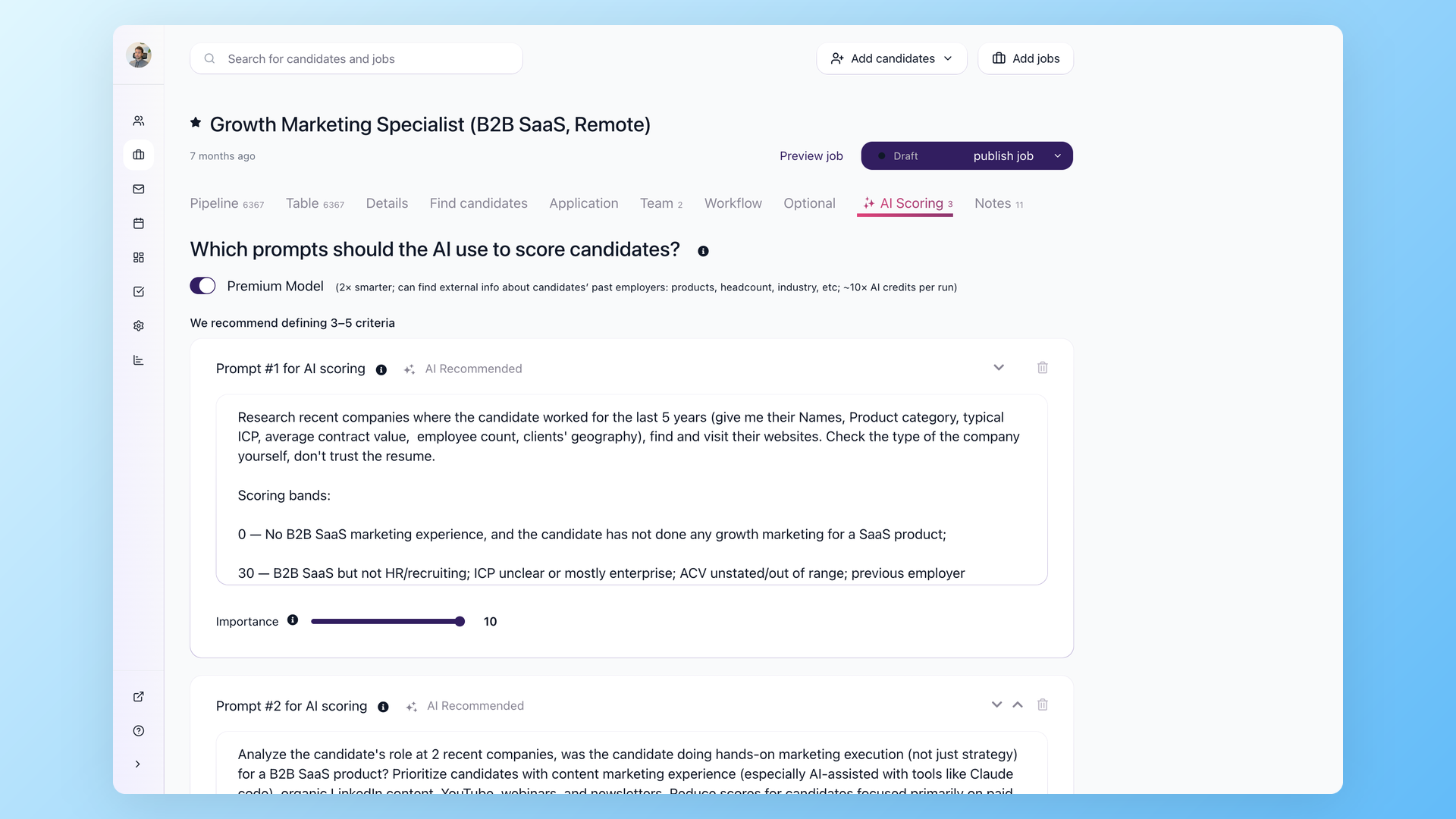
Knockout questions deserve more credit than they get. A well-written "do you have a forklift certification" filter at apply time removes more noise than any model, and the candidate understands exactly why.
In 100Hires they sit on the application form, so screening starts before a human reviews the pipeline.
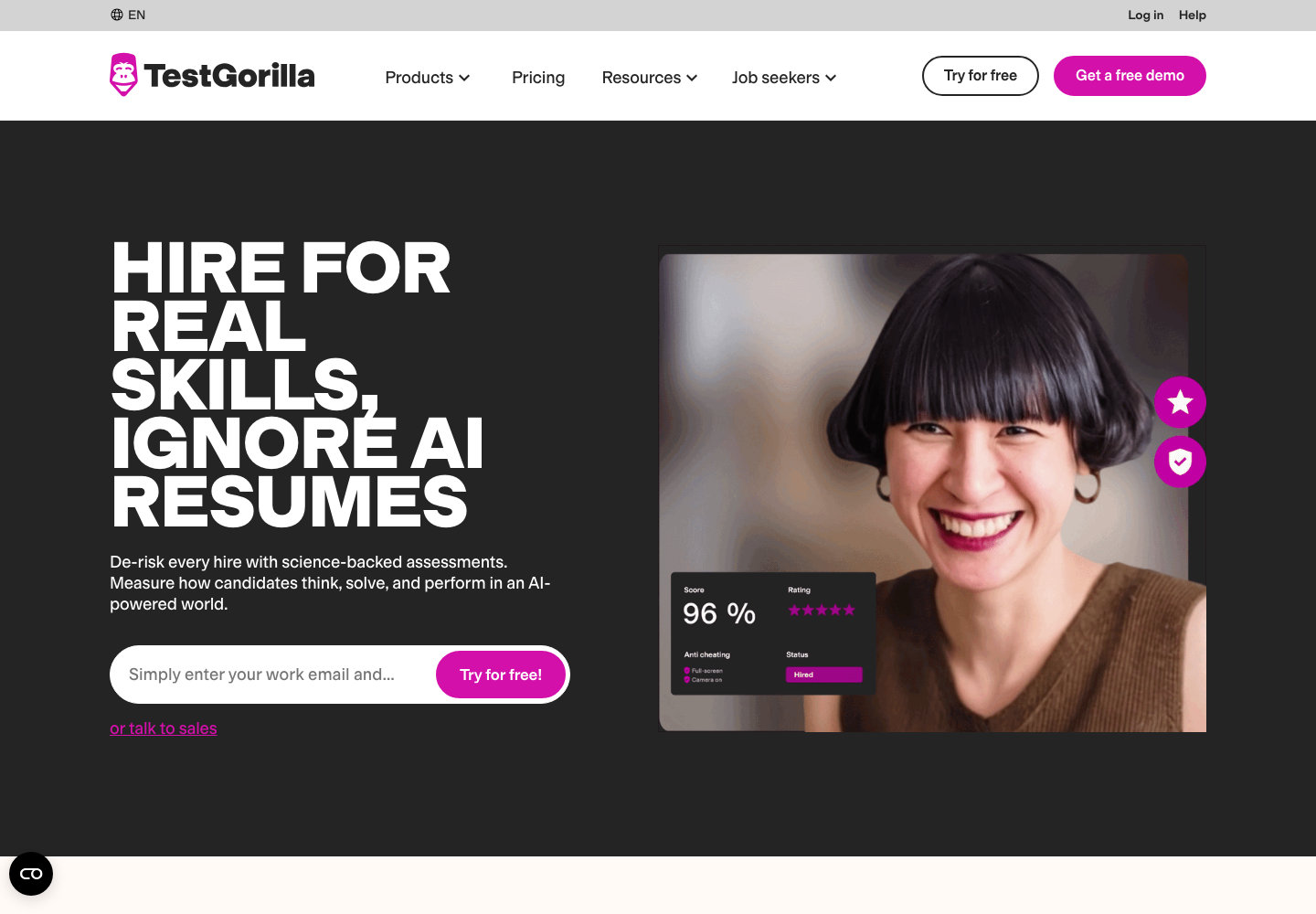
For hard-skill verification, TestGorilla runs assessment libraries from $142/mo billed annually and pushes results into your ATS.
Keep tests short and job-relevant; every extra 20 minutes of assessment costs you finalists, and the best candidates have the least patience for hoop-jumping.
We wrote up how AI resume screening actually scores applicants if you want the mechanics before trusting any vendor's black box.
The interview layer: scheduling, notes, and video
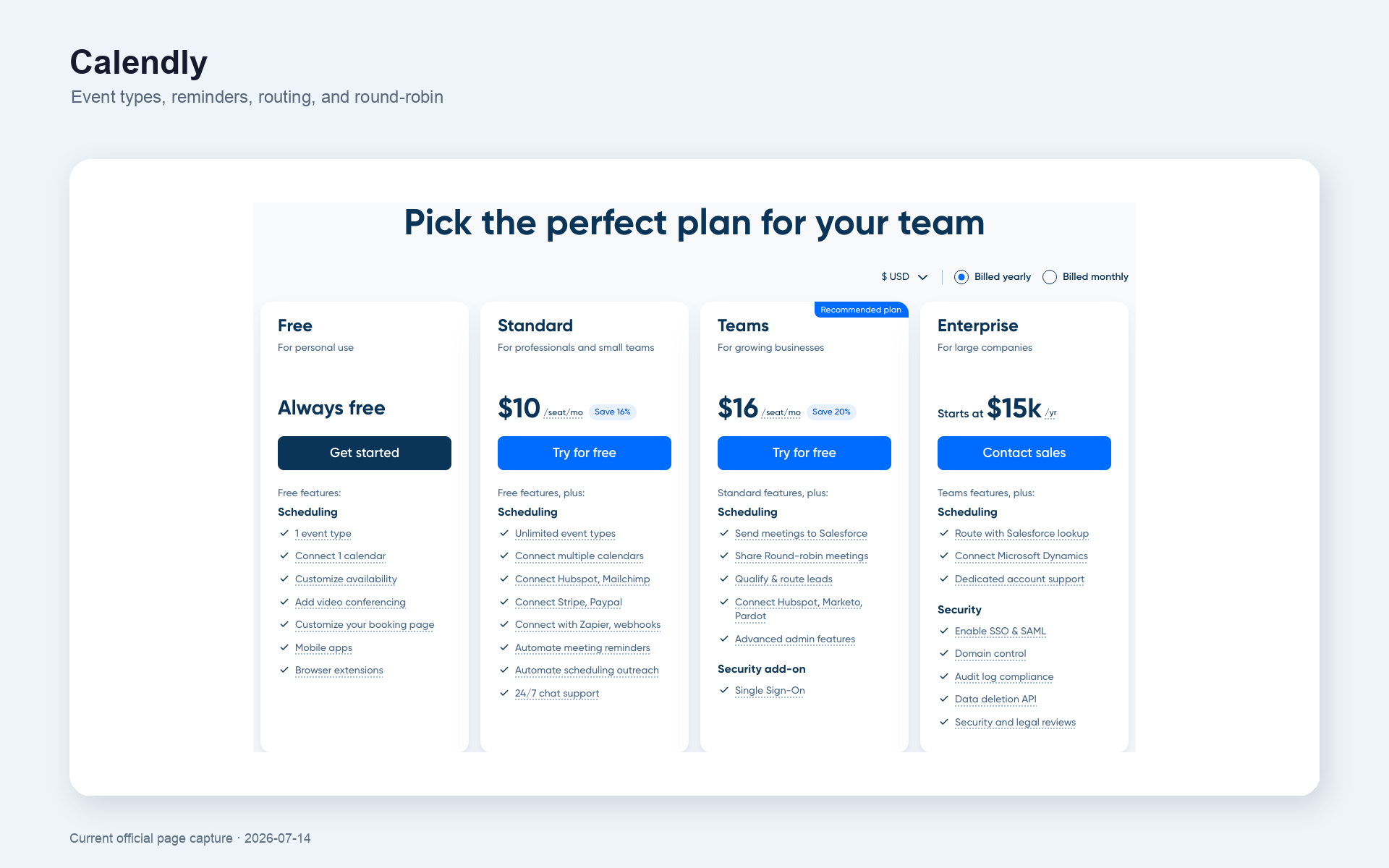
Scheduling first, since it burns the most coordinator hours. Calendly's free plan covers a small team's screening calls, with paid tiers from $10/seat/mo. GoodTime orchestrates multi-panel loops at enterprise scale and prices by candidate volume on a custom quote.
In 100Hires, interview scheduling and reminders run inside the ATS, which keeps the audit trail on the candidate record.
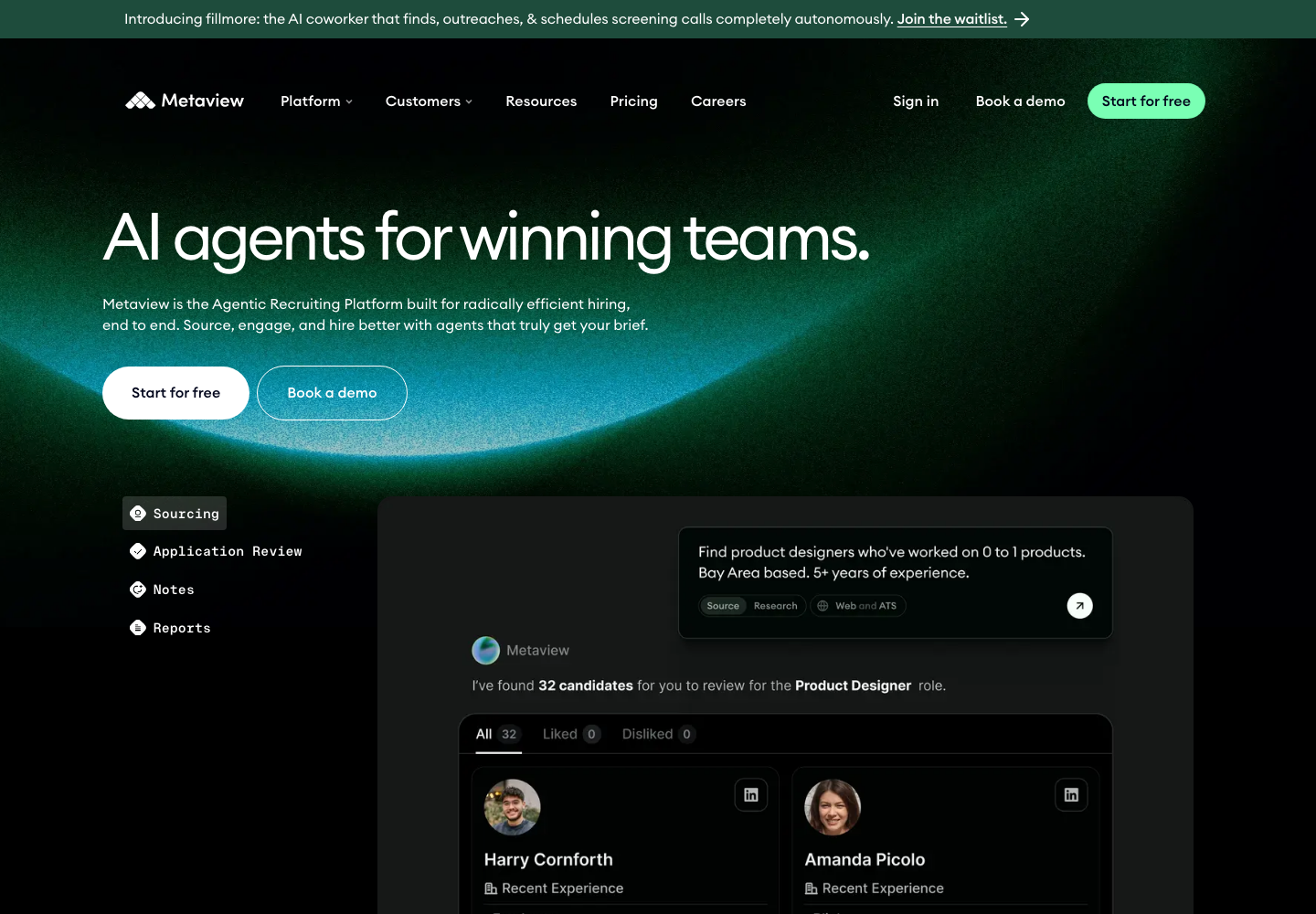
AI notetakers are the one AI category recruiters actually recommend to each other rather than tolerate. Metaview leads the recruiting-specific field, with a free first batch of conversations and $100/user/mo on Pro, and writes summaries straight into the ATS.
Apply the channel-fit test from earlier: if your screens happen by phone, confirm the tool captures calls, not just video meetings.
Async video is the polarizing corner. Spark Hire starts at $249/mo and Willo at $209/mo billed annually, making one-way screens cheap at volume; HireVue plays the same game for enterprises.
Candidates with options often resent one-way video, and the format draws the sharpest public backlash of any tool type here. Use it for high-volume roles with a human follow-up, or skip it.
Comparing schedulers in more depth? Our guide to dedicated interview-scheduling software options covers the field.
The decision and analytics layer
Analytics only works when source, stage, and evaluation data flow cleanly into the system of record. The metric layer is downstream of the integration layer; no dashboard fixes data that never arrived.
Three flows are worth instrumenting from day one. Source attribution: 100Hires Trackable links stamp every applicant with the channel that produced them, so the Indeed-versus-LinkedIn argument ends with data. Pipeline conversion: where candidates stall from stage to stage.
Time to fill: the number your CFO already asks about.
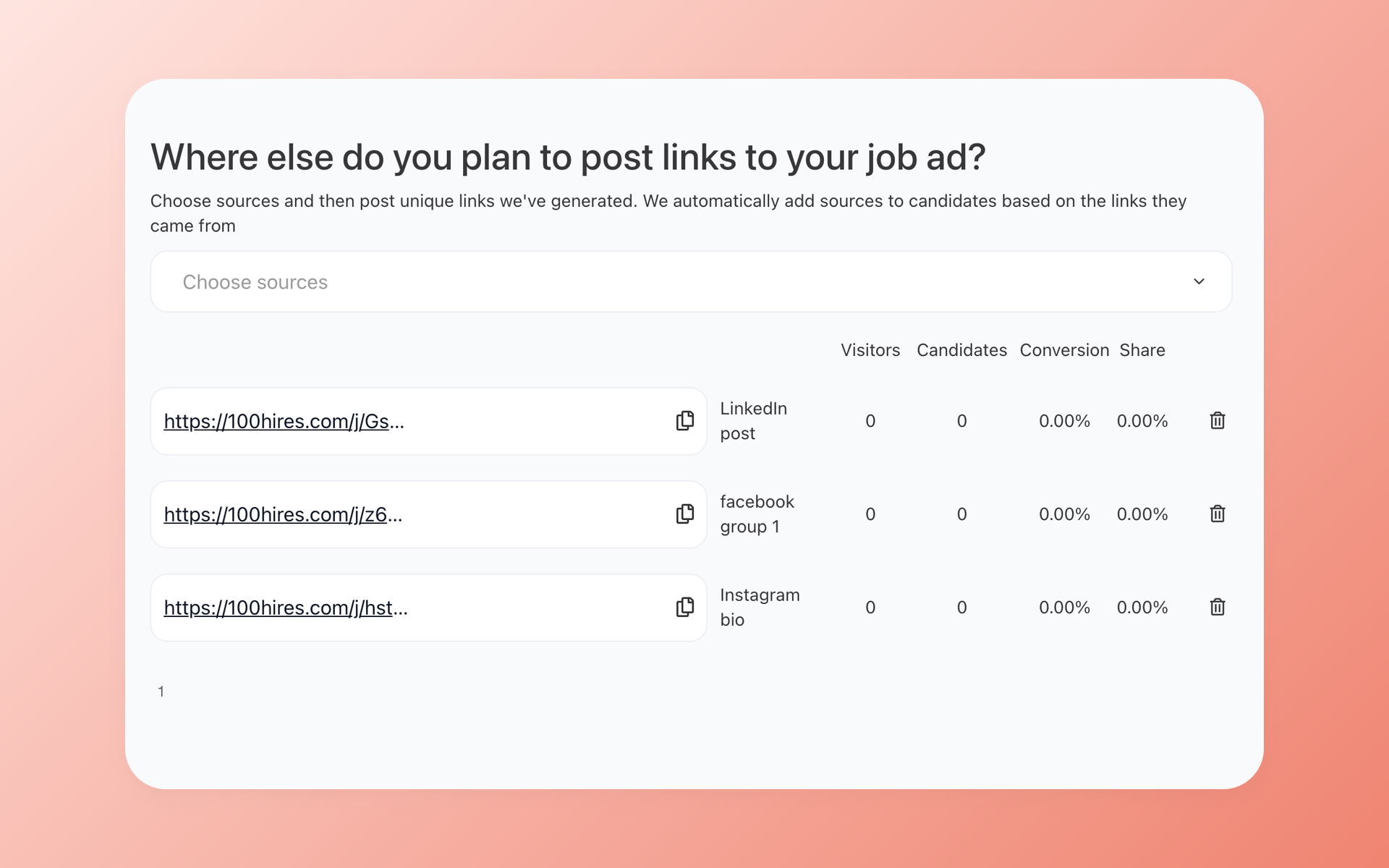
Structured evaluation feeds the same engine. Evaluation Forms in 100Hires chase interviewers for scores automatically, which turns "gut feel by Friday" into comparable data.
The anti-pattern to avoid has a name among TA leaders: dashboards for decoration, reports full of color that never change a decision.
When you outgrow ATS reporting, standalone recruitment analytics platforms pick up the heavy modeling.
The AI-agent layer: the newest seat in your stack
Practitioner stacks in 2026 treat ChatGPT and Claude as one shared layer, one shared support layer for job descriptions, boolean strings, screening summaries, and outreach drafts. Nobody replaces the system of record with a chatbot.
The interesting question is whether the chatbot can see the system of record.
That is what MCP decides. An MCP server lets an AI assistant read and act on your recruiting data with permission, no exports, no copy-paste.
Our July 2026 audit found first-party recruiter-facing MCP servers at exactly two vendors: Ashby, in beta since June 2026, and 100Hires, whose native ChatGPT app runs on a 130-tool MCP server spanning 22 categories of recruiting data.
ZipRecruiter's much-covered Claude integration is job-seeker-facing search, a different problem. Nearly everything else labeled "MCP" is a Zapier wrapper.
Before buying any AI recruiting tool, ask four questions. Which human decisions does it replace? How often will you audit its output? Who is accountable when it gets a candidate wrong?
And does it expose your data back to you through an API, webhooks, or MCP, or does your data check in and never check out?
What does that access buy in practice?
With the 100Hires ChatGPT app, a recruiter can ask for every past applicant with a given skill who reached the interview stage, draft outreach grounded in the actual notes on a candidate's record, or pull a Monday-morning hiring update straight from the live pipeline.
No exports, no tab-switching, permissions enforced by the same login you already have.
We documented the working setup in connecting your ATS to ChatGPT directly, including what a recruiter can actually ask it.
Three starter stacks by team size
Practitioners in our research consistently staged their tools by hiring volume, not by feature envy. Here is what that looks like in dollars.
Under 10 hires a year: one ATS and free everything else. 100Hires at $49/mo billed annually, free Indeed posts, Calendly's free plan for screens, ChatGPT or Claude for drafting. Roughly $50/mo total. Your bottleneck is employer visibility, not tooling.
10 to 50 hires a year: add one paid layer where the pain is loudest. Sourcing-constrained teams add SeekOut or Apollo paid tiers; interview-heavy teams add Metaview. Expect $250 to $500/mo all in, and hold the line at four to five tools.
50-plus hires a year: this is where assessment tools, GoodTime-style scheduling orchestration, and a dedicated sourcing seat earn their keep. Budget four figures monthly, and appoint one owner for the stack; unowned tools quietly renew themselves for years.
The integration acceptance test before you sign
Recruiters distrust top-10 lists, and honestly those lists have earned that distrust; plenty are pay-to-play. So do not take this article's word either. Run a short pilot and make the vendor demo YOUR workflow, not their script.
The practitioners' rule of thumb: judge a tool by what breaks after 30 days, not by the demo.
Four checks before any contract:
- Write-back: the tool pushes its output into your system of record through an API, webhook, or native integration. CSV export is a workaround, not an integration.
- Plan honesty: the API or integration you need is included in the tier you are quoted, not two tiers up.
- Exit path: your data exports cleanly if you leave. Ask to see the export before you sign, not after.
- Real-workflow demo: the vendor runs one of your live roles through the product inside the trial window.
Then do the consolidation math on paper. Write down what you pay today per layer, mark which subscriptions the new tool claims to replace, and cancel one before you add one. A stack that only grows needs an owner and a cancellation rule.
On pricing transparency: four of the finalists in this guide, GoodTime, Greenhouse, LinkedIn Recruiter, and ZipRecruiter, publish no price at all.
That is not automatically disqualifying, but a vendor who hides the rate card before the first call will not get more transparent after the invoice starts.
FAQ
What are the main layers in a recruitment technology stack?
Six layers cover it: a system of record (an ATS like 100Hires), job distribution (Indeed, ZipRecruiter), sourcing and contact data (SeekOut, Apollo), screening (100Hires AI Score, TestGorilla), the interview layer (Calendly, Metaview), and analytics. An emerging seventh layer is AI-agent connectivity, where assistants like ChatGPT read your recruiting data through an MCP server.
What technology do recruiters actually use day to day?
Working recruiters describe their kit by data flow: one ATS holds every candidate record (100Hires for SMB teams), a sourcing tool and an AI notetaker write into it, a scheduler handles logistics, and ChatGPT or Claude helps with drafting without replacing the ATS. The count matters less than whether those handoffs run without manual re-typing.
What is the difference between an ATS and a recruiting CRM?
An ATS manages active applications against open jobs; a recruiting CRM manages relationships with people who have not applied yet, like past finalists and passive prospects. Before buying a separate CRM, check whether your ATS already covers talent pools and nurture campaigns; 100Hires includes both, which keeps every touchpoint on one candidate record.
What tools do tech recruiters use?
Tech recruiters lean on sourcing tools with technical filters (SeekOut, hireEZ), contact data from Gem or Apollo, skills assessments like TestGorilla, and an ATS that screens against role-specific criteria with visible reasoning, the way 100Hires AI Score does. The common thread is write-back: every tool should land profiles, notes, scores, and outreach history in the ATS without manual re-typing.
How much does recruitment technology cost for a small team?
A lean SMB stack lands between roughly $50 and $500 per month depending on hiring volume: 100Hires from $49/mo billed annually as the ATS, free tiers of Calendly and Apollo, free Indeed posts, then one paid add-on where your bottleneck is. Costs jump when tools stop integrating; two systems that need manual re-typing cost more in hours than a third tool costs in dollars.
For a category-by-category walkthrough of every tool type mentioned here, our full category-by-category tool guide goes deeper on picks and pricing.
Build the stack around a system of record that talks back
Map your layers, run the integration acceptance test, and give the center of the stack the most scrutiny. If you want a system of record with transparent AI scoring, source attribution built in, and a first-party path to ChatGPT and Claude, start a 14-day free trial of 100Hires.
No credit card needed, and pricing stays public at 100hires.com/pricing.
Try 100Hires for free
No credit card. 14-day trial. Forbes Advisor #1 ATS for SMBs.