Enterprise Recruiting Software
AI screens and scores candidates before you open a profile. The REST API is included with paid plans. Structured scorecards, automated pipelines, and role-based access from day one, without a six-figure contract.
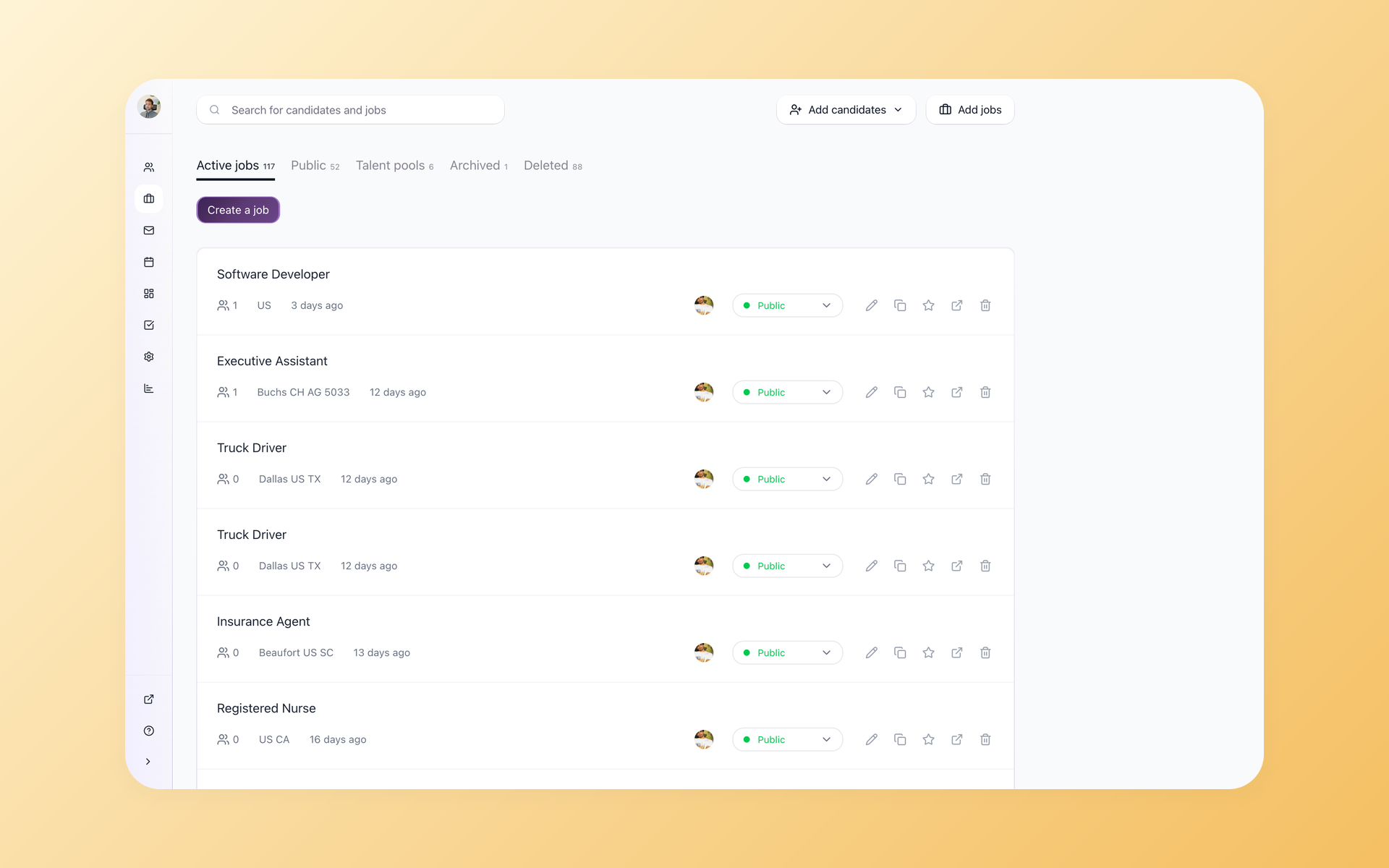
Enterprise applicant tracking systems built for large organizations can take months to deploy and carry contracts that run into the tens of thousands of dollars a year.
Lightweight tools work fine for your first five hires, then fall apart when you have thirty open roles and eight recruiters coordinating across departments.
100Hires sits in that gap: AI-powered screening, a full developer API, and the team coordination features that growing recruiting teams need, priced and set up for companies that are scaling into them.
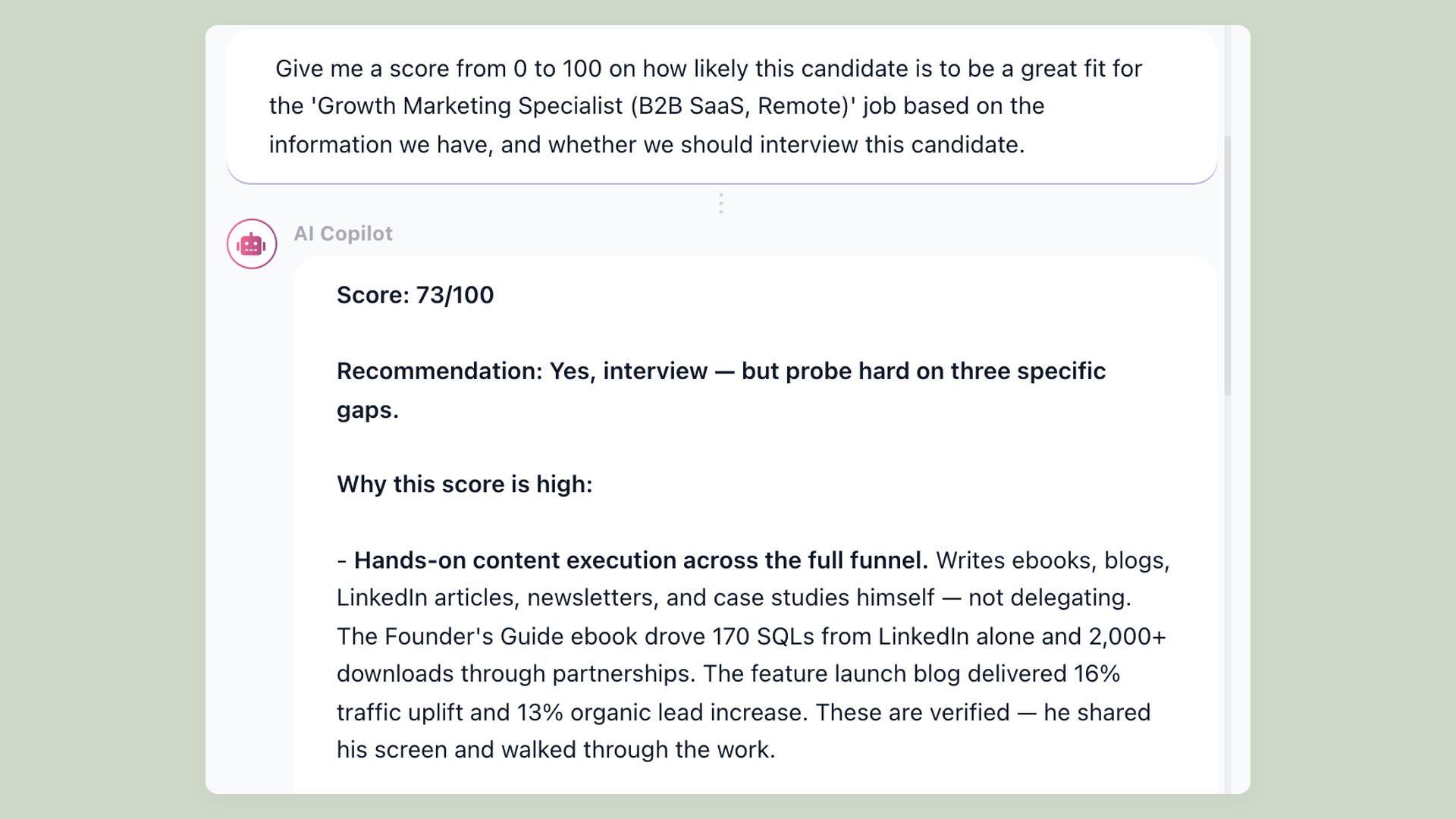
AI ranks every candidate before you open a profile
At scale, the bottleneck is not finding candidates: deciding who is worth a phone screen. The AI Score in 100Hires runs automatically on every new application. You define the criteria: relevant experience, seniority level, specific skills, location fit. Each criterion gets a weighted 0-100 score. The AI Copilot sits inside every candidate profile: ask it to summarize strengths and gaps, compare two finalists, or draft a follow-up based on what it found. The AI Email Composer writes outreach and follow-ups in your voice, with context from the candidate record already loaded. There is no separate AI tool to open and no context to copy in; the AI runs inside the same screen where the recruiter already works.
- AI Score: custom weighted criteria, automatic scoring on every application
- AI Copilot: ask questions about any candidate in plain language
- AI Email Composer: outreach and follow-ups drafted with candidate context
- Scores visible on the pipeline view before anyone reads a resume
Teams using AI Score typically cut time-to-first-interview by reviewing ranked shortlists instead of reading applications in submission order. The AI does not make hiring decisions; it surfaces signal so the recruiter can.
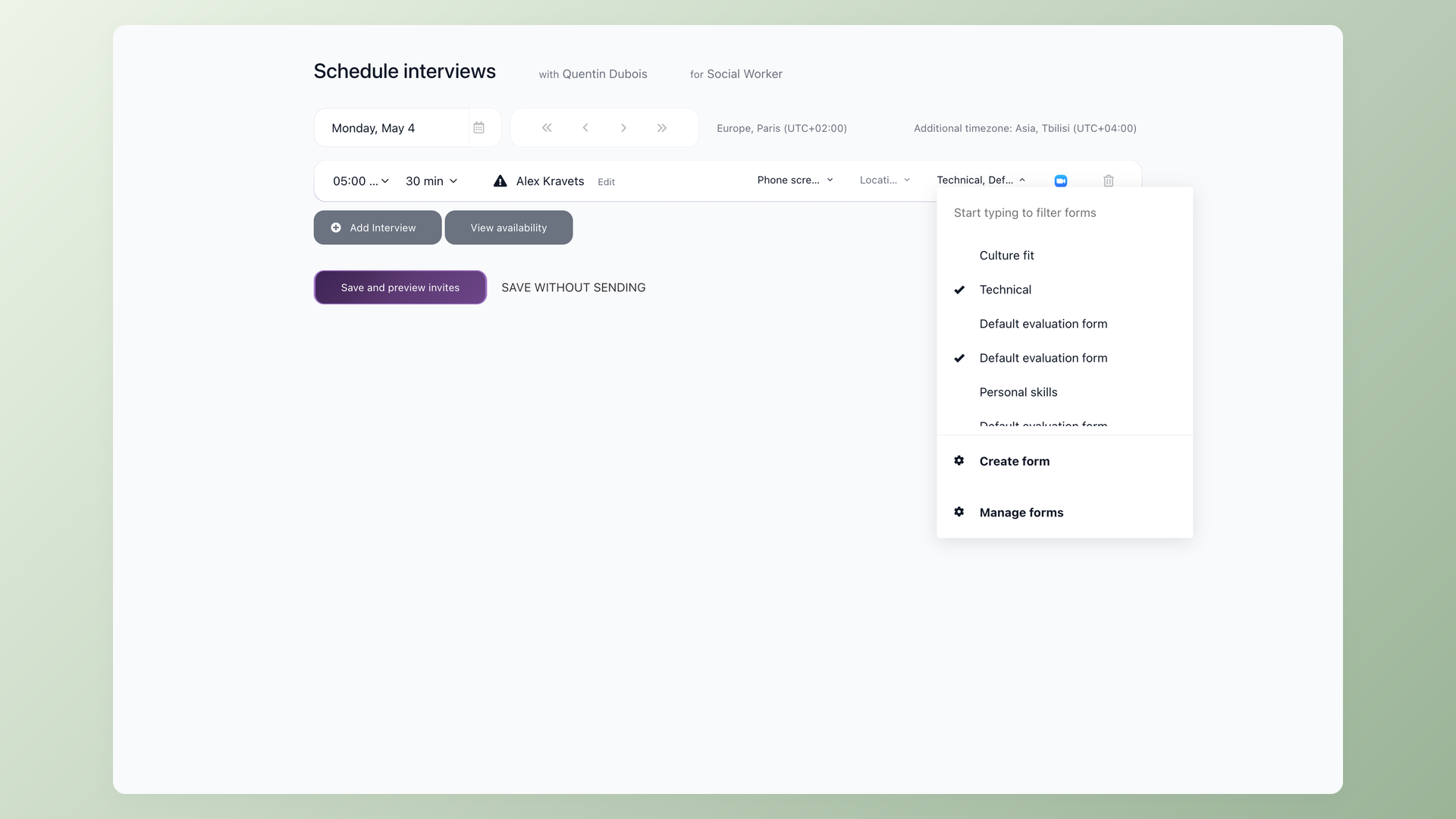
Every interviewer submits a consistent scorecard before the debrief
Ten hiring managers submit interview feedback ten different ways. Someone writes an essay. Someone says 'good vibes'. Someone skips it entirely. The person with the loudest voice wins the debrief. Evaluation Forms in 100Hires attach a structured form to each job. Same questions, same five-point scale, same criteria for every candidate, every time. Interviewers get notified automatically until they submit, so the debrief starts with scored data, not competing impressions.
- Evaluation Forms per job with 8 question types
- Five-point thumbs scale: double down, neutral, double up
- Forms assigned per job, not shared across roles
- Interviewers notified until they submit, no chasing
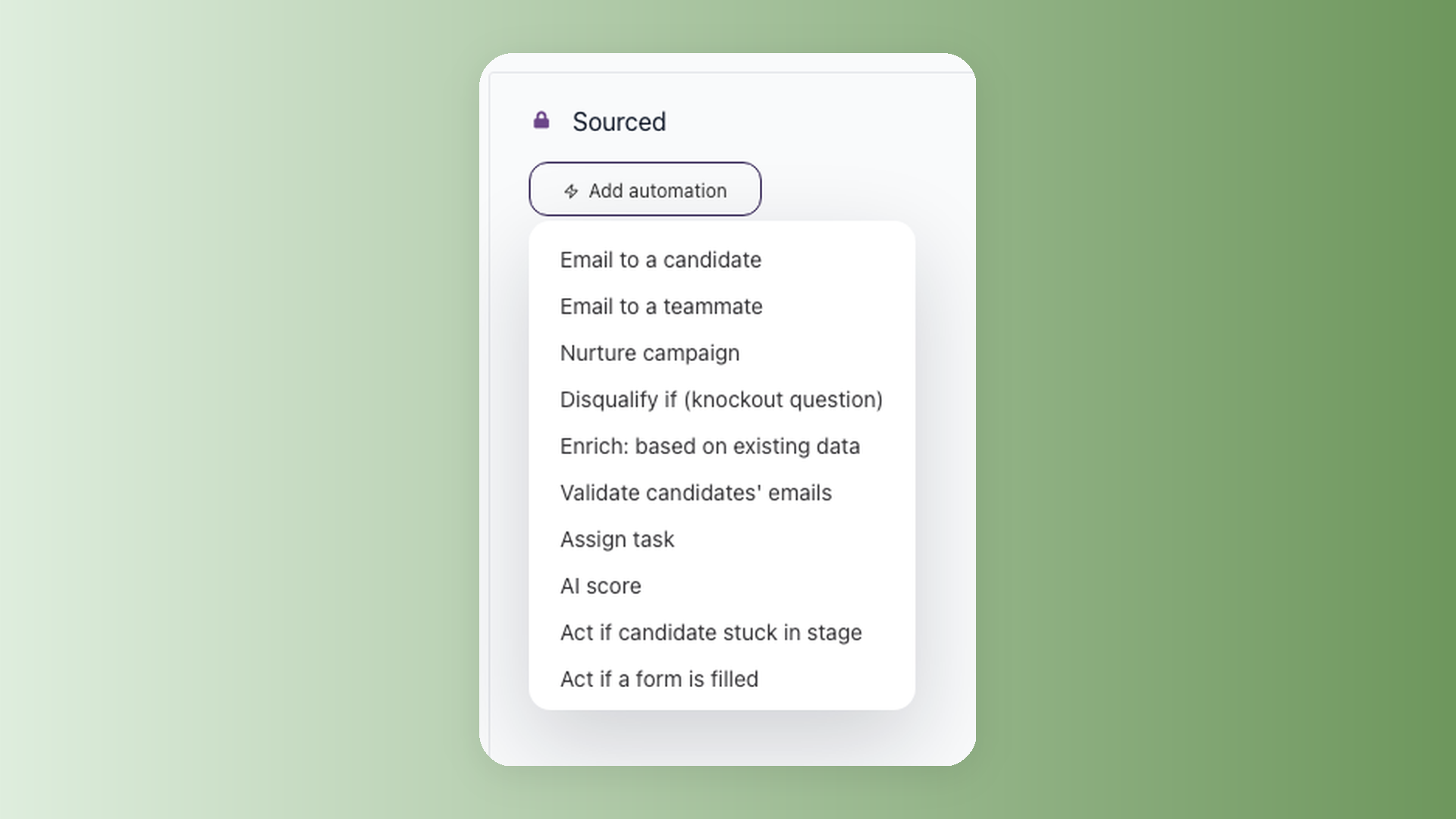
When a candidate moves stages, the right people hear about it automatically
At thirty open roles, manual coordination collapses. A recruiter moves a candidate to Phone Screen and needs to notify the hiring manager, send a scheduling link to the candidate, and flag unresponsive applicants. Stage automations in 100Hires trigger on every pipeline move. When a candidate enters a stage, an email goes to the hiring manager, a scheduling link goes to the candidate, and a nurture sequence starts if there is no reply within the window you set. Knockout questions remove disqualified candidates before a human ever sees them.
- Per-stage email automations to candidate and hiring manager
- Nurture campaigns with conditional logic and reply-to-stage rules
- Knockout questions auto-disqualify before manual review
- Self-scheduling links sent automatically on stage advance
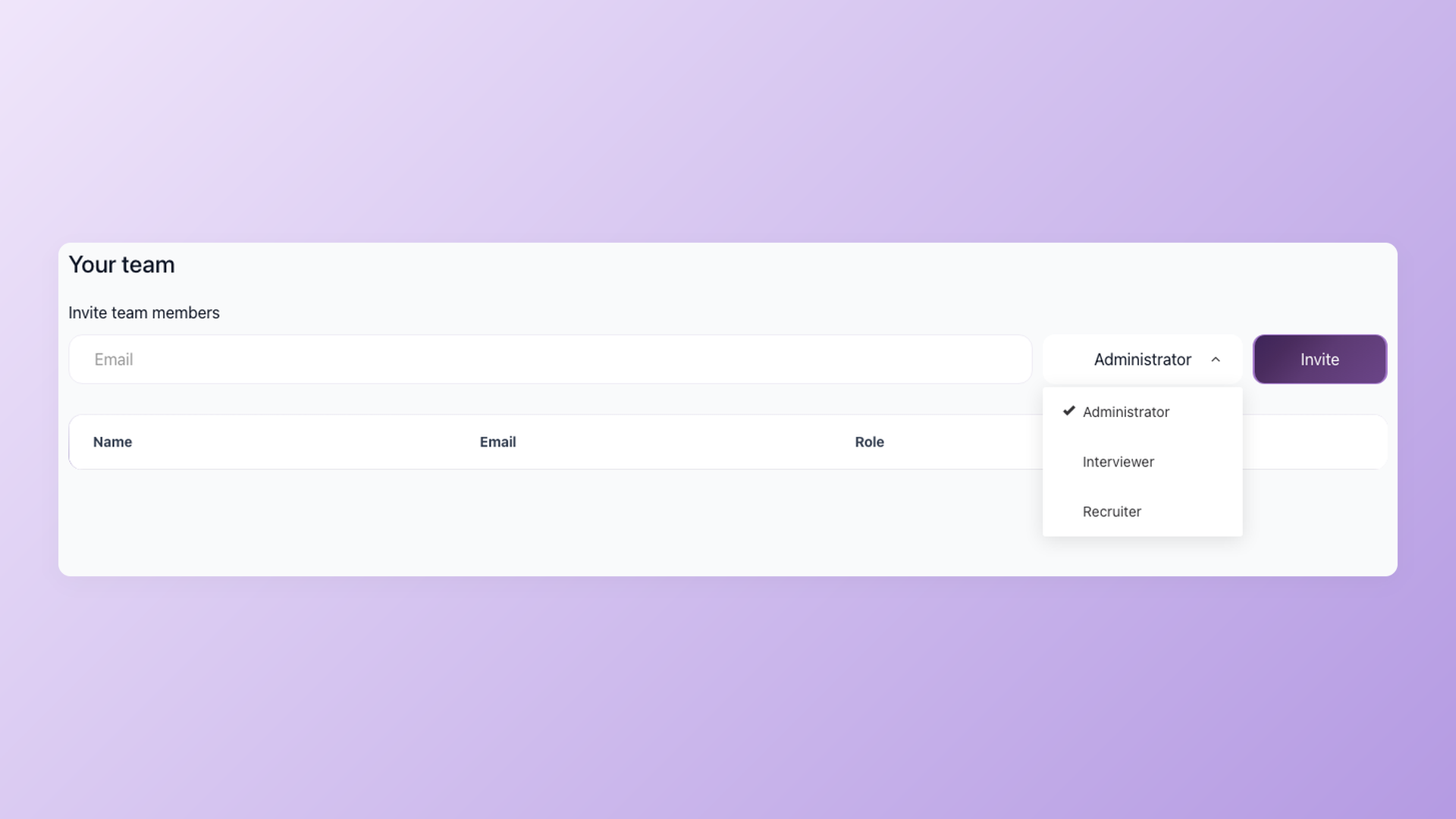
Hiring managers see their jobs. Recruiters see their pipeline. Admins see everything
Shared-login setups break at scale. Hiring managers accidentally move candidates. Interviewers see salary notes meant for recruiters only. Candidates get emailed twice because two people had the same access. 100Hires has three roles with clear boundaries. Administrators run the company account and see all jobs. Recruiters work on the jobs they are assigned to and see only those candidates. Interviewers submit evaluations on specific roles and cannot view messages or make changes. Each job has its own hiring team; add or remove someone without affecting any other job's permissions.
- Administrator, Recruiter, Interviewer: three roles with defined boundaries
- Per-job hiring team controls visibility and notifications
- Interviewers evaluate, cannot view messages or move candidates
- Invite by email with role assigned at invite time
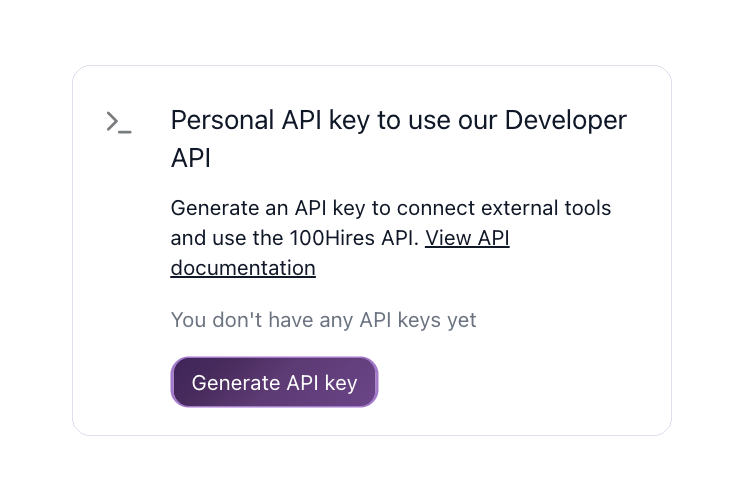
Full REST API on paid plans, no enterprise tier required
Most enterprise ATS platforms lock API access behind their top pricing tier or charge for it as an add-on. 100Hires includes the full REST API v2 with paid plans. Create jobs, import candidates in bulk, push applications through pipeline stages, fire webhooks on stage changes, send messages, and pull source breakdown or time-to-hire data programmatically. Teams building internal dashboards, connecting to HRIS systems, or automating candidate imports from sourcing tools get everything they need without a separate enterprise agreement. The full OpenAPI spec is at https://api.100hires.com/v2/openapi.json (no sales call required to access documentation).
- Full REST API v2 with paid plans, zero add-on cost
- Endpoints for jobs, candidates, applications, messages, webhooks
- Webhooks fire on stage changes, new applications, status updates
- OpenAPI spec publicly available, integrate before you sign up
Enterprise applicant tracking systems: who actually needs one
An enterprise applicant tracking system is the recruiting layer of a large-company HR stack: requisition approvals that span business units, compliance coverage across every hiring region, and native ties into the HCM suite the rest of the company already runs.
Gartner groups these platforms under cloud HCM suites for 1,000+ employee enterprises, and that threshold is a good working answer to who they are actually built for.
The same category shows up as enterprise recruitment software, enterprise recruiting software, or an enterprise recruitment system depending on the vendor's home market - the label changes, the buying question does not.
At that scale, the established choices are Workday Recruiting, iCIMS, SAP SuccessFactors (whose recruiting product is now the acquired SmartRecruiters platform), and Oracle Recruiting, which is replacing Taleo.
Pricing across the category is quote-gated: buyer-reported contracts run five to six figures a year, and buyer-reported iCIMS enterprise deployments take three to six months.
The trade-off shows up when the recruiting team is not the one making the call. When a company standardizes on an HCM suite, recruiting usually inherits the bundled module.
Recruiters who have been through it describe the same pattern: more clicks per hire, a clunkier candidate experience, application drop-off, and reporting that needs a consultant to configure. A recruiting module bundled into an HR suite is not automatically a working ATS.
If you run recruiting at a 50-500 employee company, you rarely need that machinery, and you should not pay for it or wait months for it.
What you need is the enterprise-grade layer of an applicant tracking system: structured scorecards, role-based access, pipeline automation, and an API, at mid-market cost and setup time. That is the lane 100Hires is built for. For a vendor-by-vendor comparison across the 100-1,000-employee band, see our guide to the best ATS for mid-market companies.
New to the category? Start with our guide to what an applicant tracking system is, or see the 10 best ATS platforms we ranked for 5-500 employee companies.
100Hires vs a Typical Enterprise ATS
Large-organization ATS platforms carry implementation timelines measured in months and contracts to match. 100Hires gives growing teams AI scoring, a full developer API, coordinated hiring, and automation without the deployment project.
 100Hires
100Hires is not the right fit for organizations with several thousand employees that require a dedicated HRIS integration team, built-in payroll, or native diversity and inclusion reporting. There is no custom SLA or professional services package.
For companies that need a true enterprise applicant tracking system with a dedicated implementation team, a larger platform is the better choice. For companies hiring 30-200 people a year across a coordinated team, 100Hires covers the full workflow without the overhead.
The hiring playbook, in your inbox
One email a week - benchmarks, AI screening tactics, and short interview templates from the 100Hires team. No product pitches.
For more on how 100Hires handles multi-team hiring coordination, see the collaborative hiring page, or explore recruiting automation for the full automation feature set.