
Retail ATS built for high-volume, multi-store hiring
Fill store and seasonal roles before the best hourly candidates accept somewhere else, post one opening to every location at once, and screen a flood of applications down to the people actually worth a call.
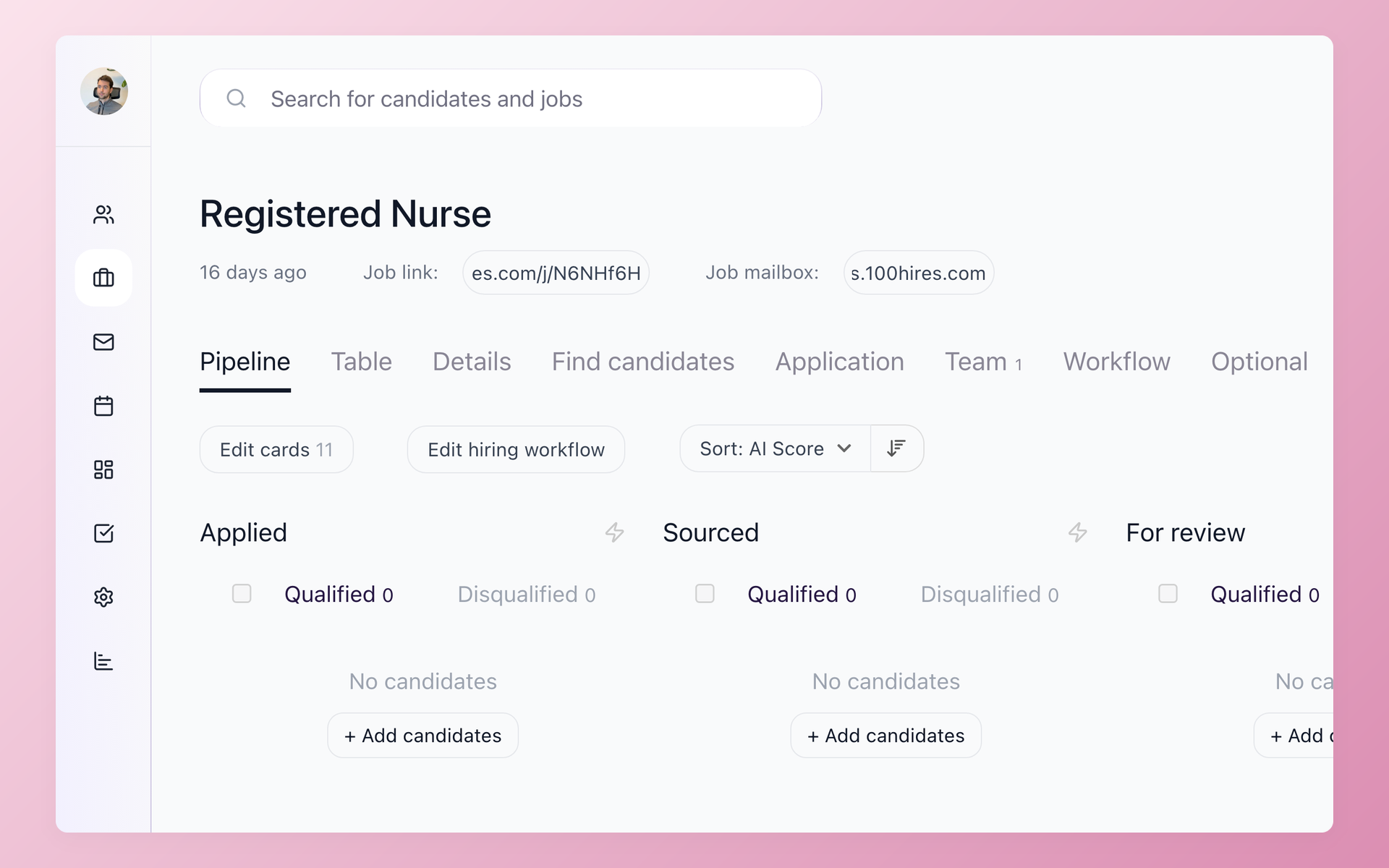






screening candidates
response rates
time to fill
per hire
Retail hiring is a volume game you keep losing on speed
A store posts a cashier role and a few hundred applications land overnight. Most will never reply to a call. The two or three worth interviewing have already applied to three other shops down the street, and they take whichever store moves first.
Then it happens again next month, because the role turned over again. High turnover, seasonal peaks, and openings across many locations at once mean retail teams are not filling a job, they are running a machine that has to keep filling the same jobs all year.
A retail applicant tracking system is the software that runs that machine. It pulls applications from every store and every job board into one pipeline, screens them automatically, and pushes the qualified ones to an interview.
The retail-specific part is doing all of that at high volume, across many sites, through every season, without adding recruiters.
Shops search for this under several names: retail recruitment software, retail hiring software, retail recruiting software. They all describe the same machine.
For the process side, see our guide on how to hire store staff who actually show up; this page covers the software.
100Hires is an applicant tracking system built for exactly that pace. The rest of this page walks through how retail teams use it to reach more candidates, screen faster, and act before a competitor does.
For the multi-location mechanics in depth, see multiposting and Satellite Jobs.
Open one role, fill it in every store
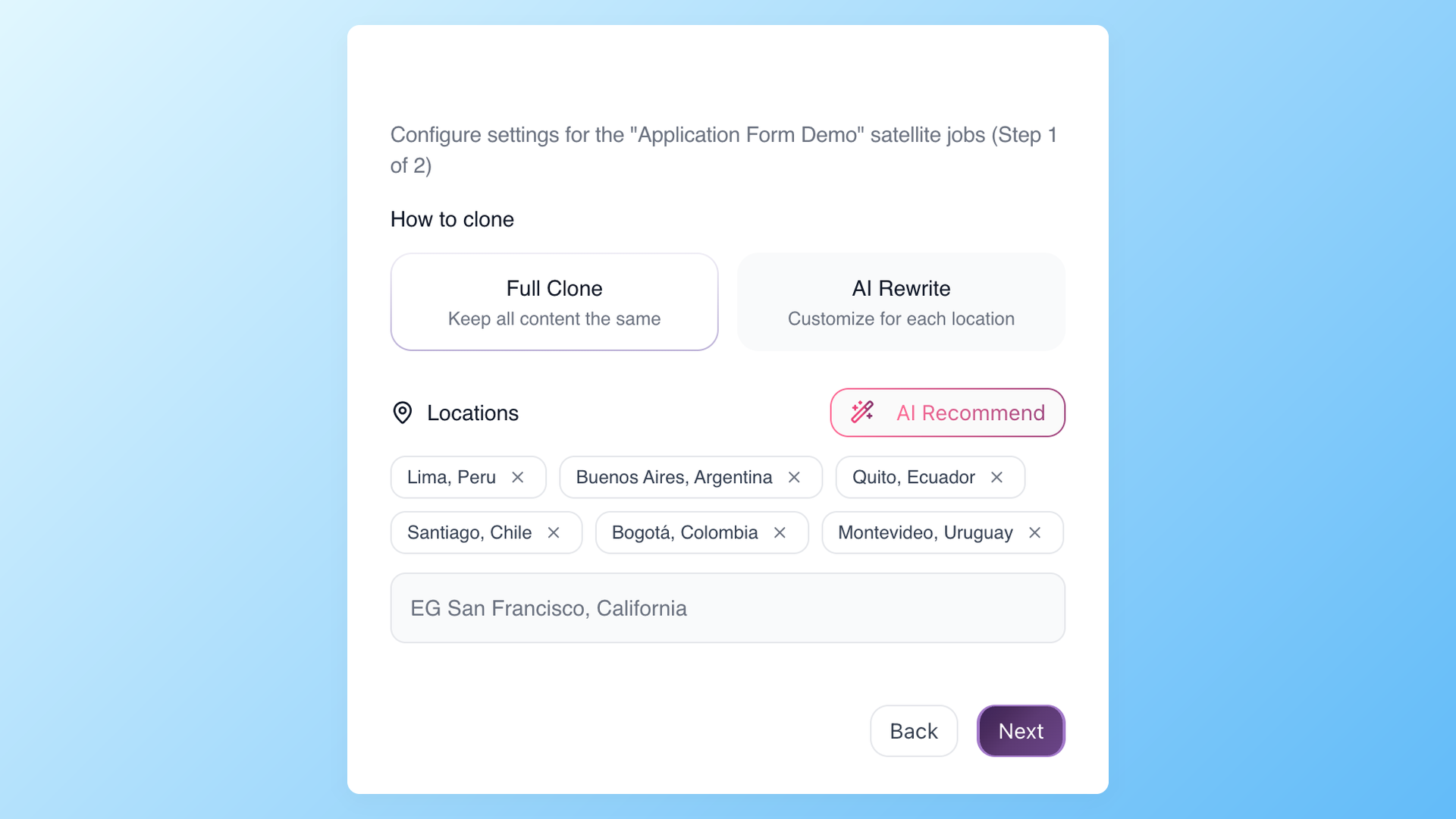
Most retail openings are the same role in twenty places. With Satellite Jobs you build the posting once, then clone it to every city. 100Hires rewrites the title, description, and salary for each local market, publishes them on a staggered schedule so you are not flagged for bulk posting, and funnels every applicant back into one pipeline you control. Distribution to 13 job boards including Indeed, ZipRecruiter, LinkedIn, and Glassdoor is bundled with no per-board or per-site fee, so cost does not triple as you add stores. Walk-in and social traffic land in the same pipeline through a branded career site with trackable links for in-store QR codes.
- One posting, every location
- 13 job boards, no per-board fee
- Branded career site plus in-store QR links
- Every applicant in one pipeline
Reading a thousand resumes is not the job, deciding who to call is
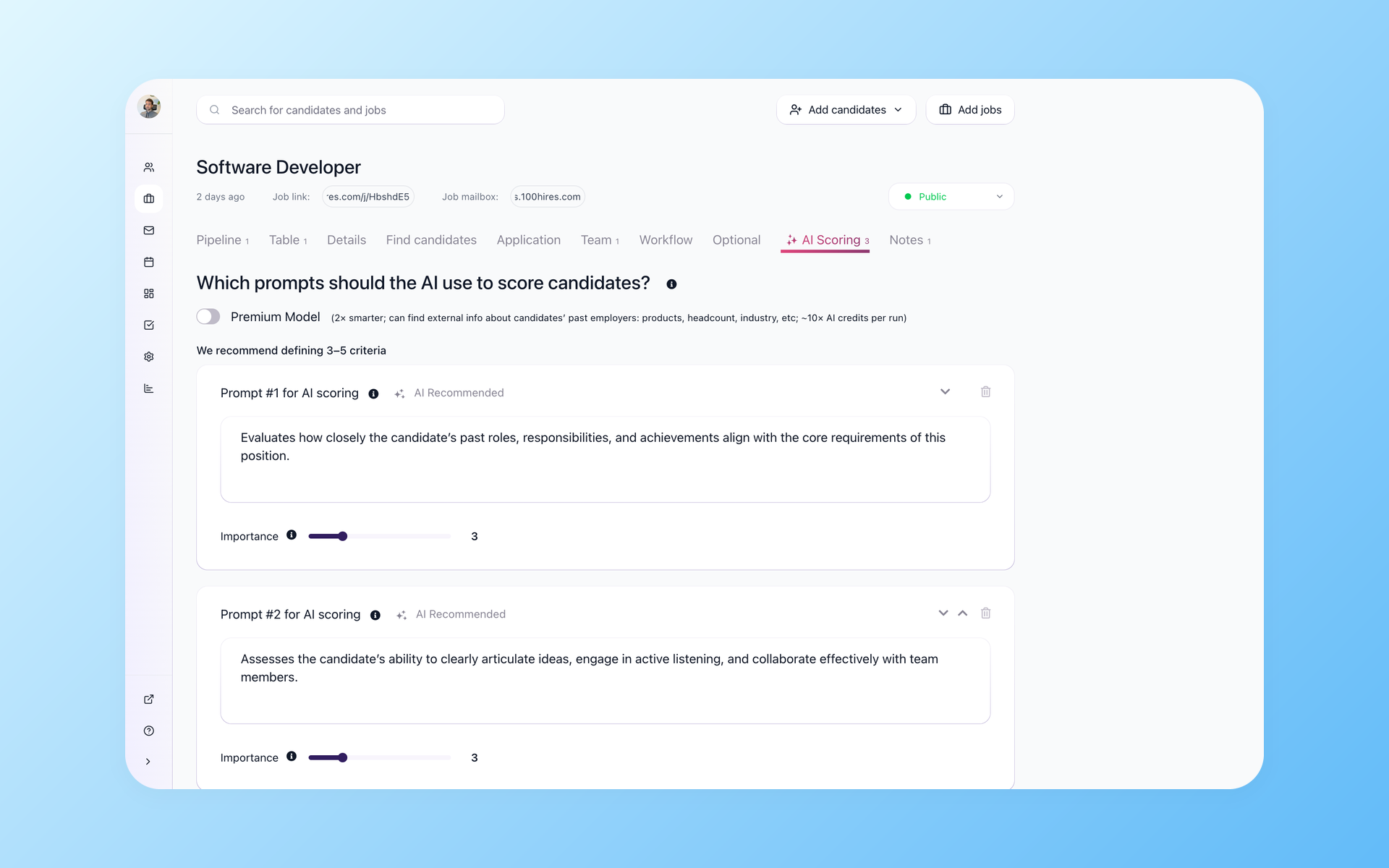
Volume is only a problem if a human has to wade through it. Knockout questions on the application form auto-disqualify anyone who misses a hard requirement like shift availability, commute distance, age for regulated roles, or work authorization, before anyone reads a resume. AI Score then ranks the survivors from 0 to 100 against criteria you define and can auto-disqualify below a threshold you set. Bulk actions clear the rest fast: move, email, or re-stage dozens of candidates at once. The recruiter spends the day on the shortlist, not the slush pile.
- Knockout questions auto-disqualify on availability and distance
- AI Score ranks 0 to 100
- Bulk move, email, and re-stage
- Disqualified tab keeps an audit trail
Knockout questions are best for the objective facts a document will later confirm, and AI Score handles the softer signals where self-reporting breaks down. The two work together on the same workflow tab. See how knockout questions work for the full setup.
Move fast without making store managers log in
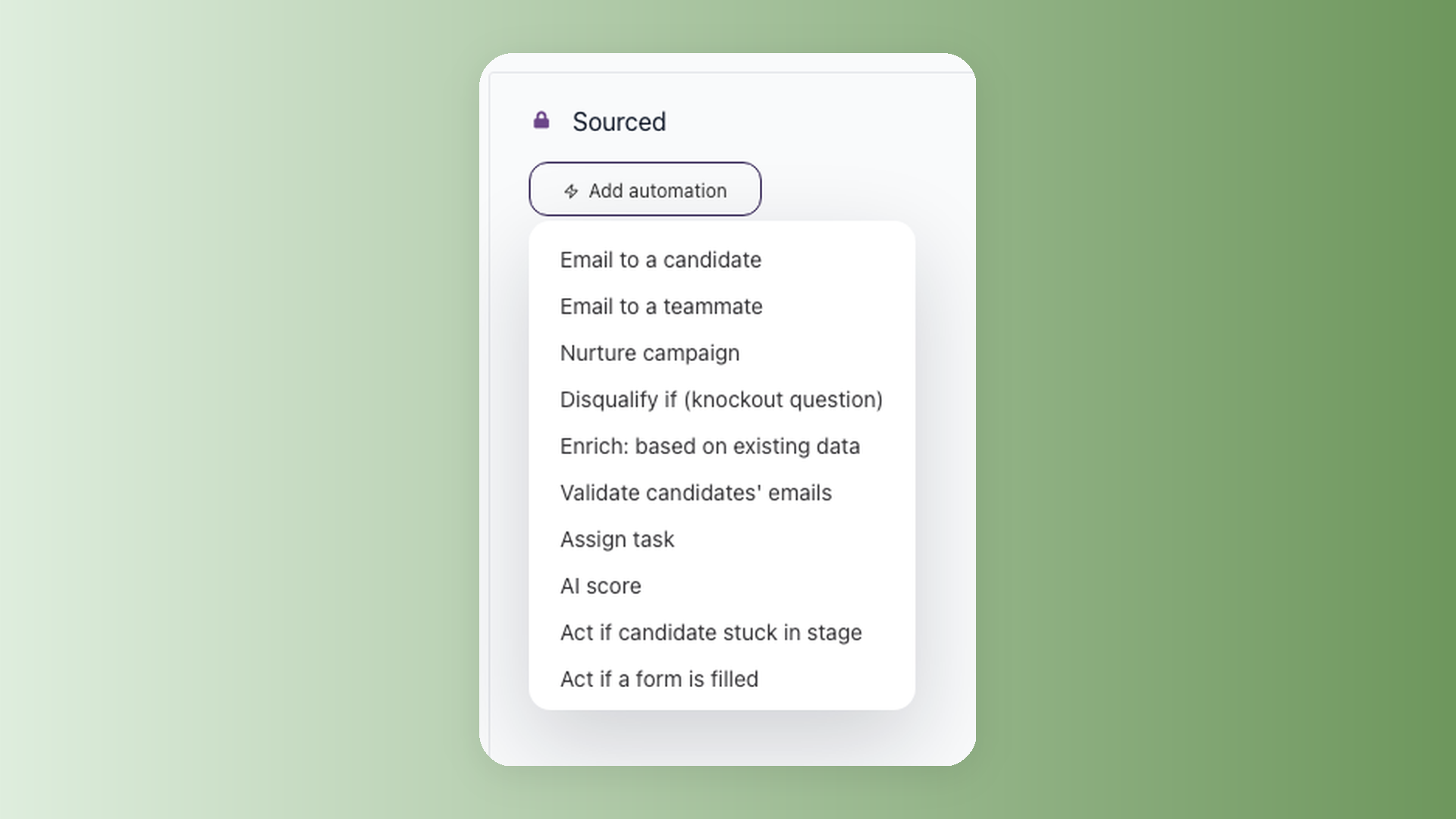
Store and district managers do the interviewing, but they will never live inside an ATS, and waiting on them is where good candidates go cold. 100Hires automations do the chasing instead. The moment a qualified applicant clears screening, the workflow emails the store manager a link to the candidate, assigns a task, and moves the candidate to the next stage, all without that manager opening the tool. Self-scheduling links let hourly candidates book their own interview slot, and calendar sync means whichever manager is free that day takes it. The recruiter sets it up once per job and the pipeline runs itself.
- Auto-email the store manager when a candidate qualifies
- Self-scheduling links for hourly candidates
- Calendar sync across rotating managers
- Screen, email, assign, and advance, automatically
What retail hiring throws at you, and where 100Hires handles it
Every recurring retail hiring headache maps to a specific part of the product. Here is the short version of what goes where. The volume playbook itself lives on our high-volume hiring software page.
| Retail hiring challenge | How 100Hires handles it | Where it lives |
|---|---|---|
| Many stores hiring the same role at once | Satellite Jobs clones one posting to every city with per-market title and salary | Job > Multiposting |
| Hundreds of applicants per opening | Knockout questions plus AI Score filter and rank before a human reads a resume | Workflow tab |
| High turnover means re-hiring the same role all year | Talent Pools keep past applicants warm so you re-hire without re-sourcing | Job status |
| Seasonal surge that ramps up and down | Evergreen postings plus Nurture campaigns re-engage prior seasonal applicants | Candidates |
| Store managers will not log into an ATS | Stage automations email the manager a candidate link the moment screening clears | Workflow automations |
| Scheduling drags and candidates go cold | Self-scheduling links plus calendar sync let candidates book time with any available manager | Candidate |
| Walk-in and in-store sourcing is invisible | Trackable links and a branded career site tie QR and social traffic to one pipeline | Career site |
| Corporate cannot see applicants across stores | Every location funnels into one pipeline the recruiter and head office own | Candidates |
100Hires next to a typical ATS for retail
Most ATS platforms were built for one corporate role at a time, not for forty hourly openings spread across a region. The difference shows up exactly where retail hiring hurts.
Hiring for hotels or resorts too? The same engine powers our hospitality recruiting software for hourly, high-turnover teams.
 100Hires

It solved all of my recruitment problems and offered all of the features I was looking for. It can automate most of my recruitment processes.

I’d happily recommend it to my industry peers. I’m able to use the platform with ease and don’t have to think twice about which function to use.

The system is very user-friendly. Even people with no experience will find it easy to understand its functionality.







 4.7
4.7
 4.8
4.8
Where 100Hires fits in your retail stack
100Hires is the front of your hiring funnel: sourcing, screening, interviewing, and the hire decision. It is not a payroll, scheduling, or workforce-management system, and it does not pretend to be.
It hands off to those tools through Zapier, webhooks, and a REST API once a candidate is hired.
A few honest limits worth knowing up front. Candidate texting runs through the Twilio integration rather than a built-in number, so you connect your own Twilio account, and there is no WOTC tax-credit screening today.
If those are dealbreakers for your stack, a demo is the fastest way to check the fit before you commit.
The hiring playbook, in your inbox
One email a week - benchmarks, AI screening tactics, and short interview templates from the 100Hires team. No product pitches.