
Temporary Staffing Software
Temp agency software that screens a flood of applicants the day they apply, so you fill open roles in days and start the next search with temps you already know.
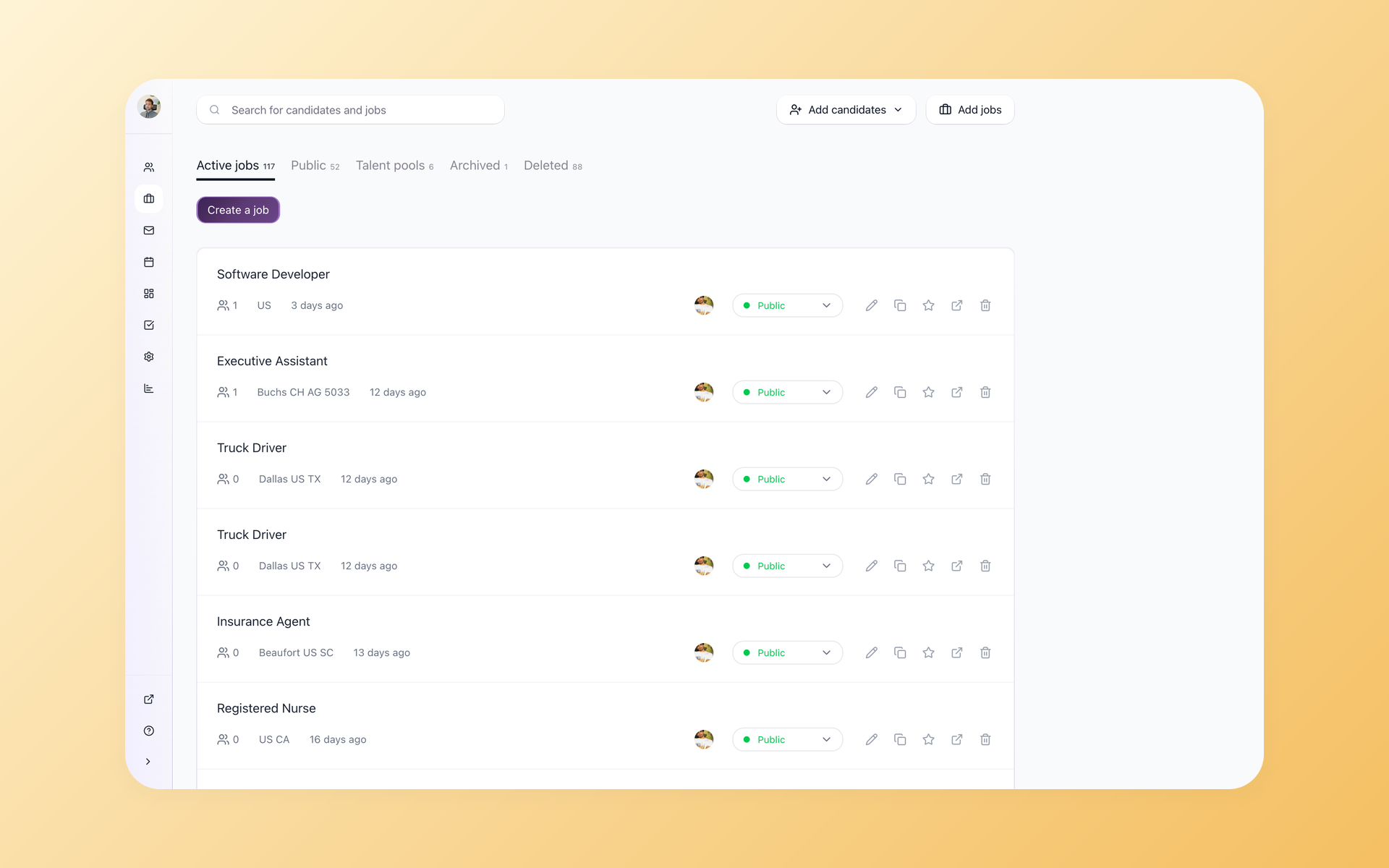






Temp staffing runs on two things: speed and volume. A client needs ten people by Monday, two hundred applicants land by Tuesday, and the agency that screens them first wins the placement.
If you searched for temp staffing agency software, this page covers that category: the recruiting half of the stack, built for a high-volume desk.
Most of the tools sold to temp agencies slow that down. Legacy staffing suites are clunky, take too many clicks for a basic update, and carry an enterprise price tag for a team that just needs to source and screen fast.
The all-in-one temp platforms swing the other way. They bundle payroll, timesheets, and scheduling into a heavy system with a steep learning curve, when the daily job for your recruiters is reading resumes and filling roles before the client calls someone else.
What temp agency software should actually do for a high-volume desk
Temp staffing agency software splits into two halves. The back office handles payroll, timesheets, scheduling, and invoicing. The front office handles sourcing, screening, pipelines, and re-engaging past candidates - the part that decides how fast you actually fill a role.
100Hires is the front office for temp agencies. It moves applicants from job board to shortlist as fast as your recruiters can work, and it pairs with whatever payroll system you already run.
You get speed where it matters for filling roles, without paying for operations modules you do not use.
Vertical desks get the same engine: see healthcare staffing software for medical desks, or high-volume hiring software for the raw volume playbook.
If you run a permanent placement or contract desk rather than a temp book, our staffing agency software page covers that workflow instead.
screening candidates
response rates
time to fill
per hire
Get to the candidates worth calling in minutes, not after hours
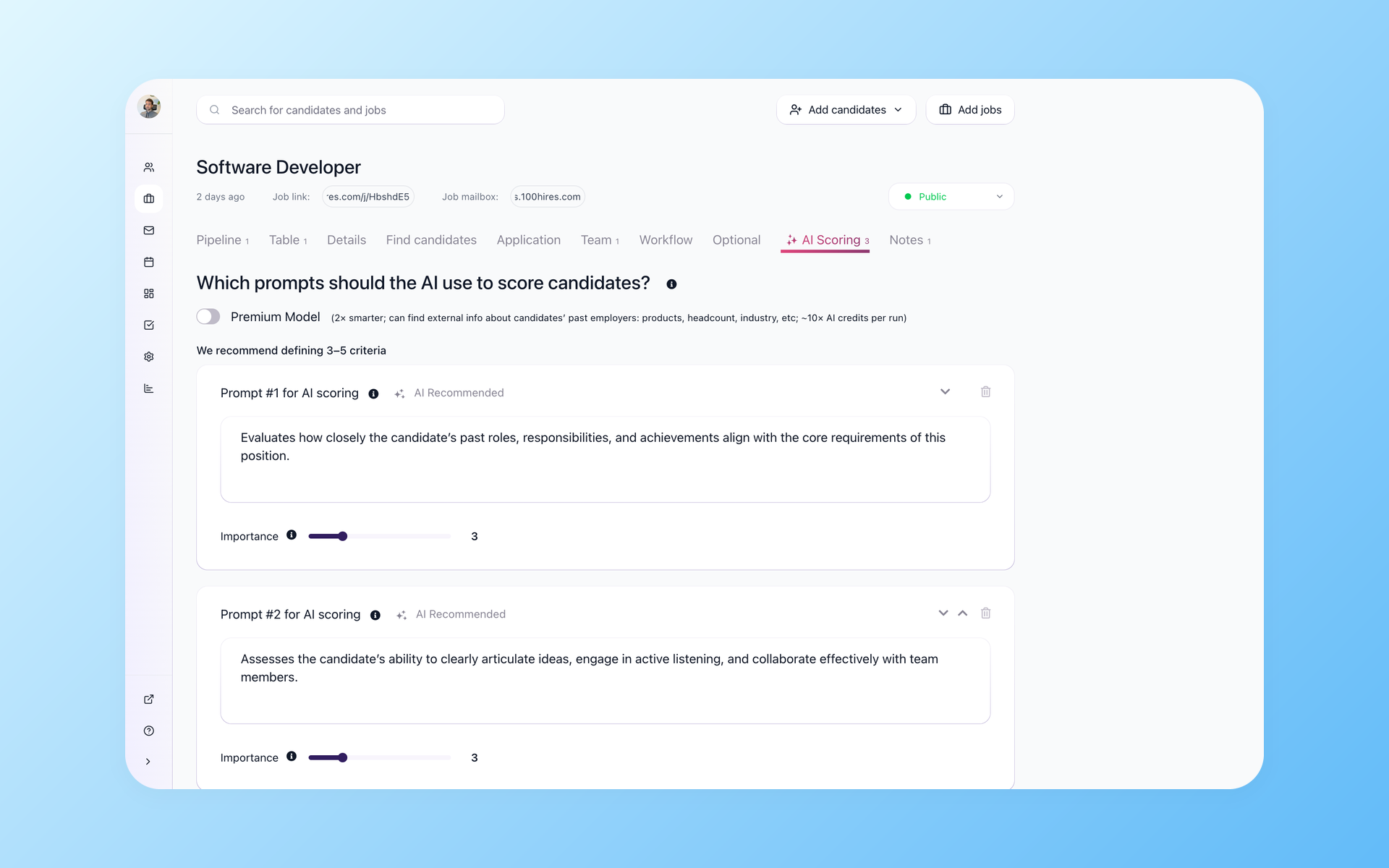
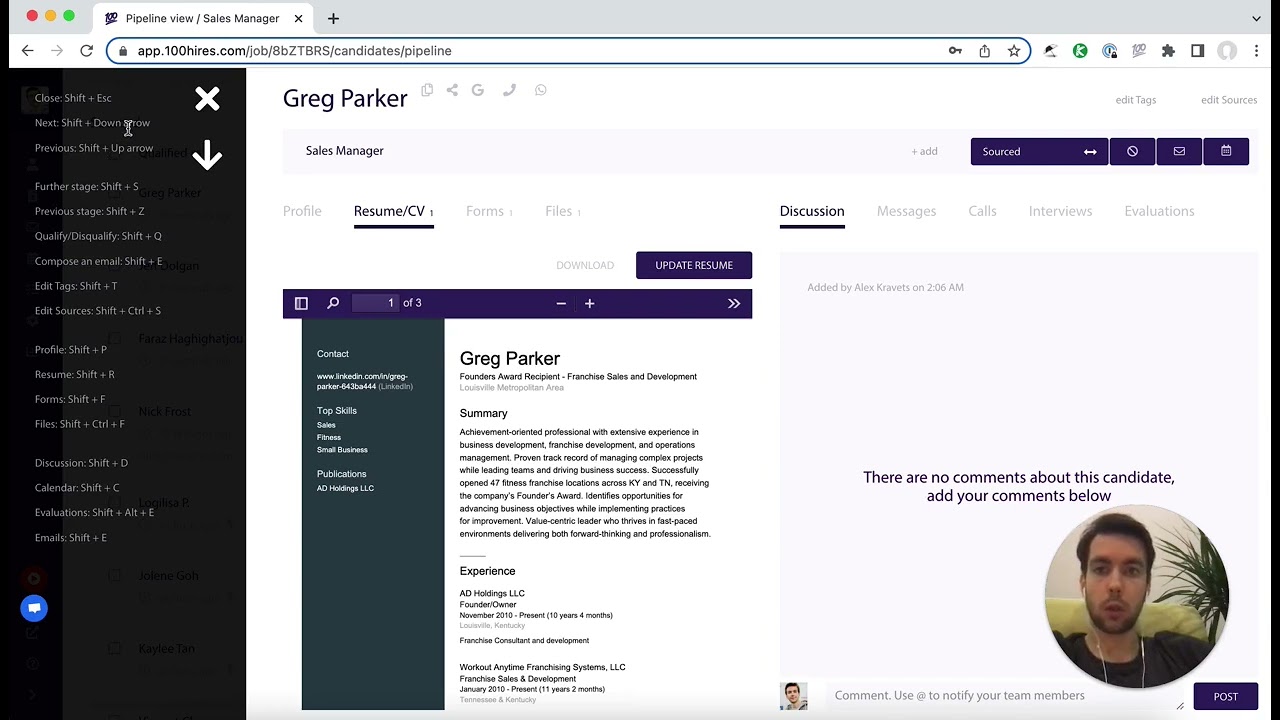
A high-volume temp role pulls hundreds of applications, and reading each one delays the fill. 100Hires AI Score ranks every applicant the moment they apply, scored against the criteria you set for the role. Knockout questions drop anyone who misses a hard requirement before they reach your pipeline. Keyboard-shortcut screening lets a recruiter fly through what is left, advancing or rejecting candidates without touching the mouse. By the time you open the pipeline, the people worth calling are already at the top.
- AI Score on every applicant
- Keyboard-shortcut screening
- Automatic knockout disqualification
- Sort a flood by relevance
Put a new open role in front of applicants in the time it takes to write one email
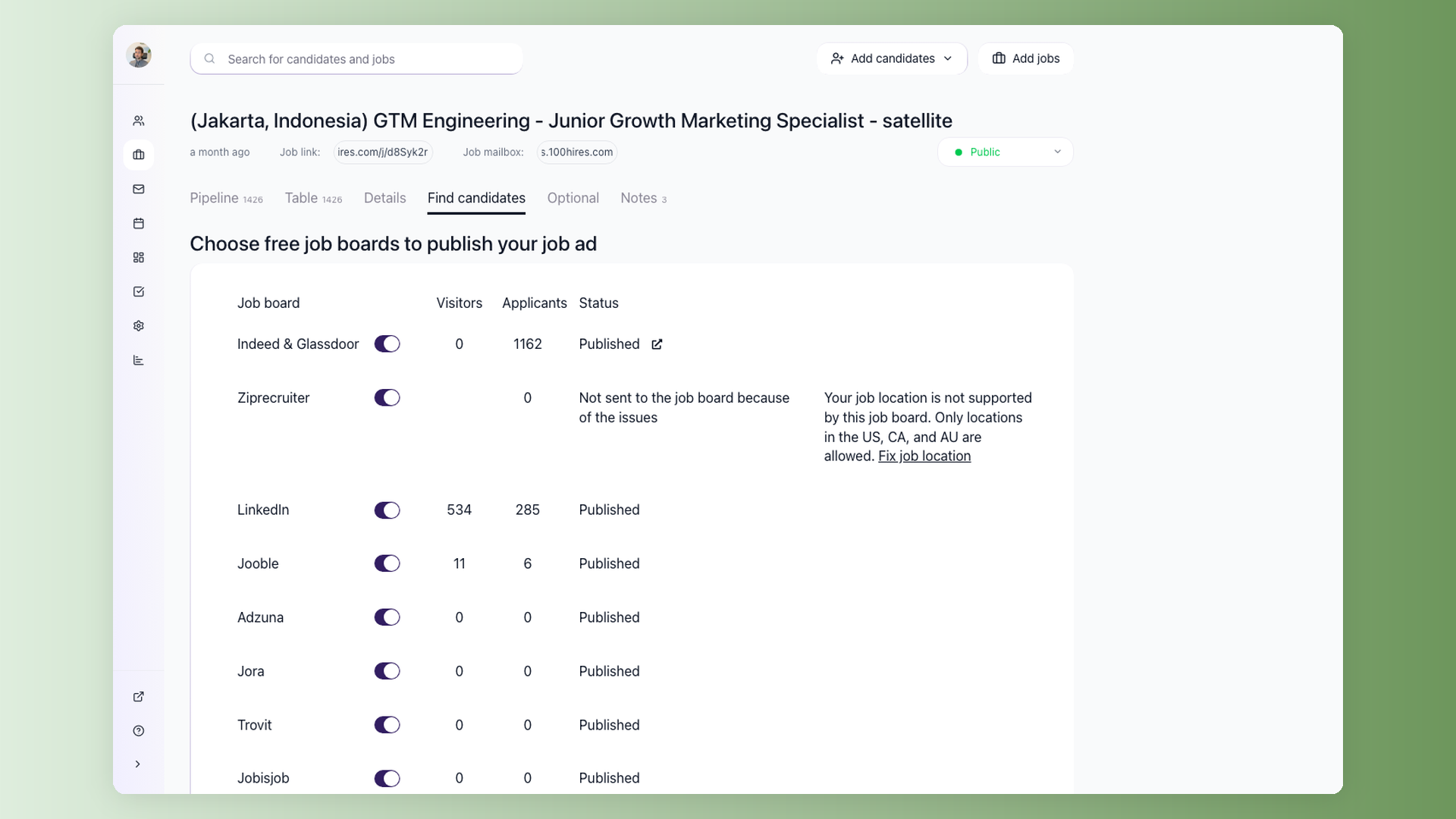
When a client drops three new roles on you at once, every hour before applications start arriving is an hour you fall behind. 100Hires Multiposting sends a role to 13 or more job boards in one click, including Indeed, LinkedIn, Glassdoor, ZipRecruiter, Jooble, and Adzuna. Pipeline stages give every open role its own lane, so a recruiter juggling a dozen open roles never loses track of which candidates are ready to present. Trackable links show which board actually delivers temps, so you spend your next budget where it works.
- 13 named job boards, one click
- A pipeline per open role
- Trackable source links
- See which board delivers temps
Fill the next role from the temps you already know
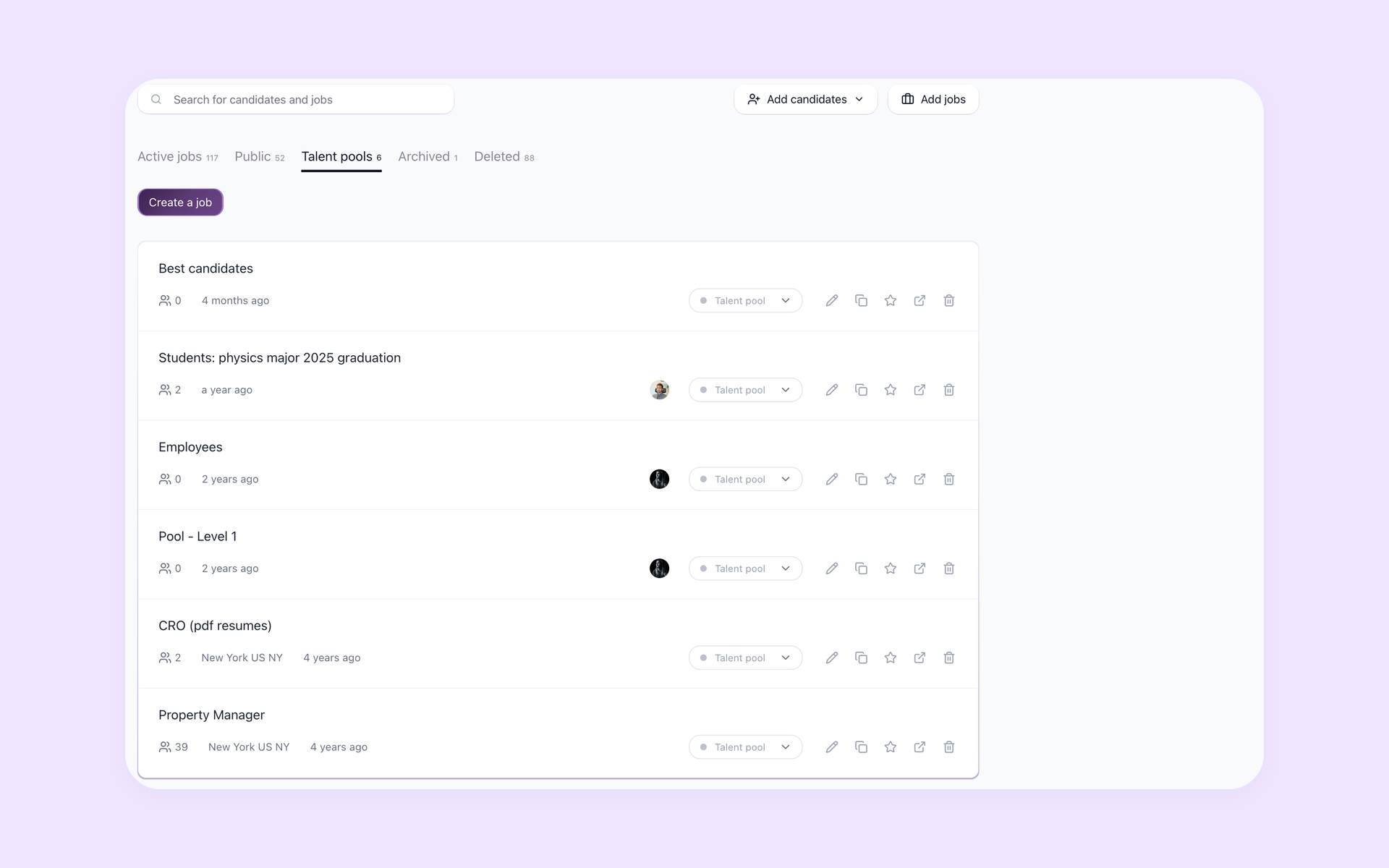
The database you already built is a strong first sourcing channel. Every temp you placed and every near-miss from a past search sits in 100Hires, ready to work again. Keep them grouped in Talent Pools by skill, location, or role type. When a new role opens, a Nurture Campaign re-engages the ones who fit by email, SMS, or both, so you start warm instead of posting to a cold board. Duplicate detection keeps the database clean when several recruiters add the same person.
- Reusable Talent Pools
- Nurture re-engagement
- Email and SMS in one sequence
- Duplicate detection
100Hires vs a typical temp-staffing suite
All-in-one temp suites were built to run payroll and timesheets, with recruiting added later. 100Hires is built to fill roles. Here is how the two compare on the work your recruiters do every day.
 100Hires
Screen hundreds of applicants without reading every resume
Keyboard shortcuts move you through a high-volume pipeline in minutes

It solved all of my recruitment problems and offered all of the features I was looking for. It can automate most of my recruitment processes.

I’d happily recommend it to my industry peers. I’m able to use the platform with ease and don’t have to think twice about which function to use.

The system is very user-friendly. Even people with no experience will find it easy to understand its functionality.
How StratifyIQ screened 100 applicants in 2 hours
StratifyIQ builds and scales technical teams for clients, often launching entire 15-person teams from scratch across the US, the Philippines, and India. They are not a temp agency, but they run the same high-volume screening a busy temp desk does. After switching to 100Hires, the team screened 100 applicants in two hours, ramped new teams 3x faster, and used custom evaluation forms to score each role on its own criteria.
The hiring playbook, in your inbox
One email a week - benchmarks, AI screening tactics, and short interview templates from the 100Hires team. No product pitches.
Related 100Hires resources: Explore post to multiple job boards.