
Candidate Relationship Management System That Turns Past Applicants Into Hires
Fill the next opening from candidates you already vetted, keep silver medalists warm without calendar reminders, and skip the sourcing spend on roles you can fill from your own pool






screening candidates
response rates
time to fill
per hire
What does a candidate relationship management system do?
A candidate relationship management system keeps you connected to candidates between openings, not just during them. It captures every applicant you screen, groups them into pools you can search, and keeps them engaged so the relationship is still warm when the next role opens.
Your ATS is reactive: someone applies, you process the application, the opening closes. The relationship layer works ahead of the next opening: it remembers who impressed you, checks in on a schedule, and tells you who fits when a new job appears.
Most vendors sell those as two products.
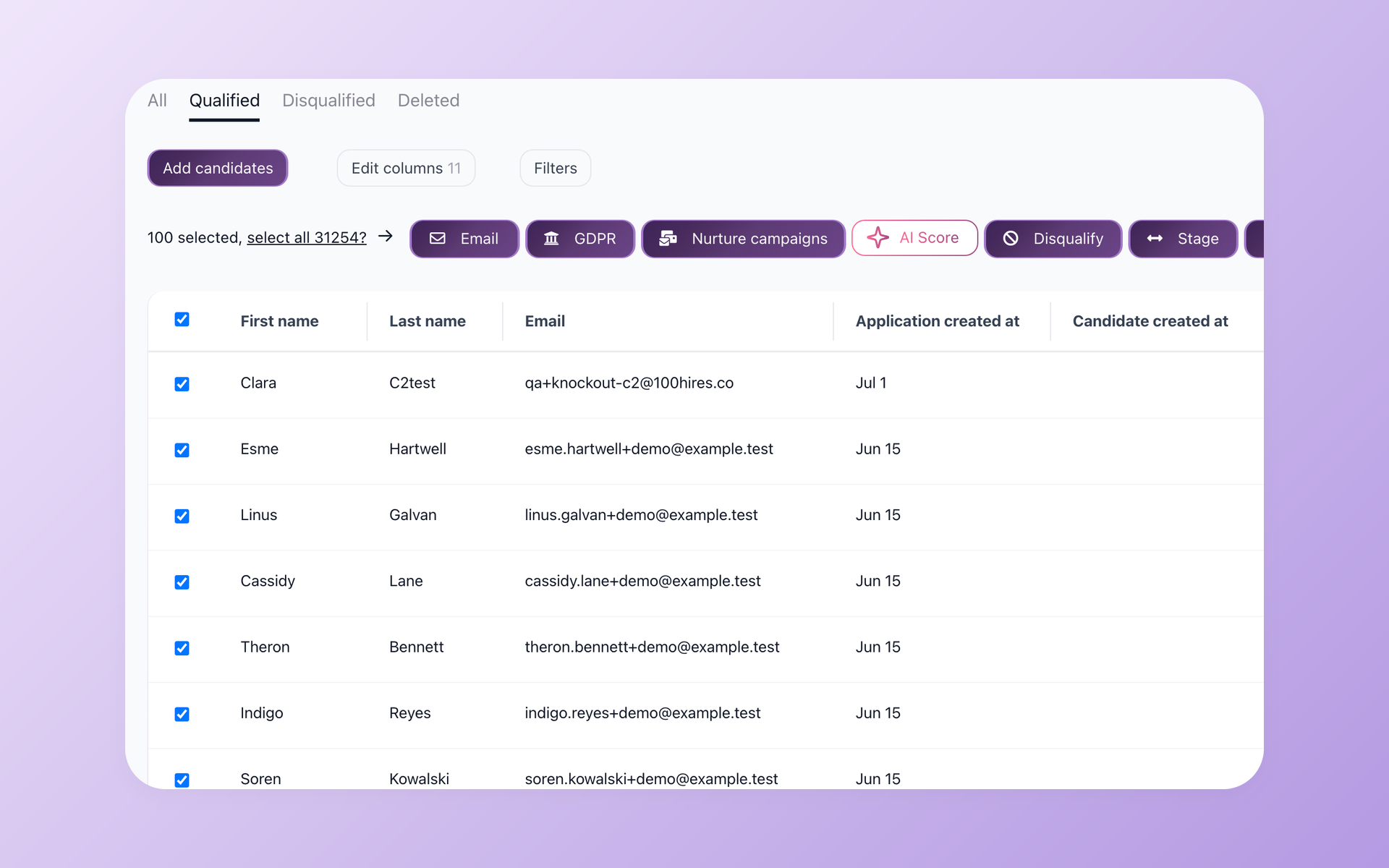
In 100Hires the whole cycle runs inside one candidate record: candidates land in Talent Pools, stay warm through Nurture Campaigns, get re-matched by AI Score, and every interview note from the first process is right there for the second one.
Why past applicants are the cheapest pipeline you have
Recruiters describe the same dead end over and over: a strong runner-up loses to another finalist, the role closes, and that person is gone unless they happen to apply again. The next opening starts from zero, with a fresh job-board budget and a fresh pile of unknown resumes.
The workaround most teams run today is a spreadsheet of "good ones" plus calendar reminders to check in every few weeks. It works until the spreadsheet owner goes on vacation, changes jobs, or simply forgets.
Meanwhile job-board and sourcing-tool costs keep climbing, and a standalone recruiting CRM adds a second subscription on top of your ATS.
Candidates you have already met, screened, and liked take no new job-board budget to re-engage. They are the cheapest pipeline you have - if your system remembers them.
Keep every vetted candidate one search away
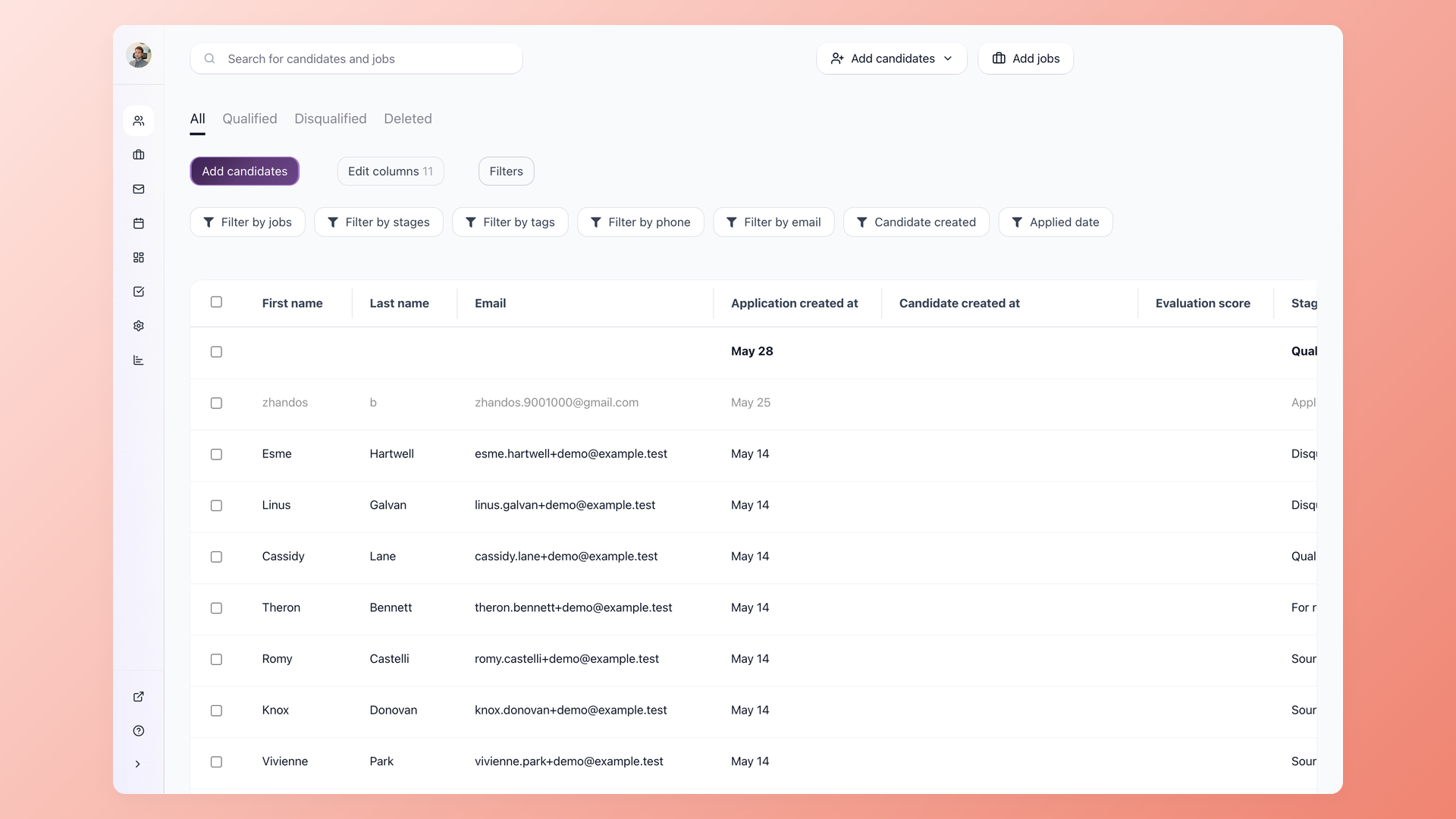
Add anyone you screen to a pool and they stay searchable with the full history attached: resume, emails, interview notes, scores. When a role opens, the shortlist starts warm instead of starting from a blank search bar.
- Segment by role, skill, stage
- Full interview history attached
- Auto-merge by email or LinkedIn
Talent Pools in 100Hires behave like private pipelines with their own stages: the pool never shows on your career site and nobody can apply to it directly.
The deeper mechanics - creating pools, tagging candidates, moving people between a pool and a live job - are covered on the talent pool software page.
Stay in front of silver medalists without calendar reminders
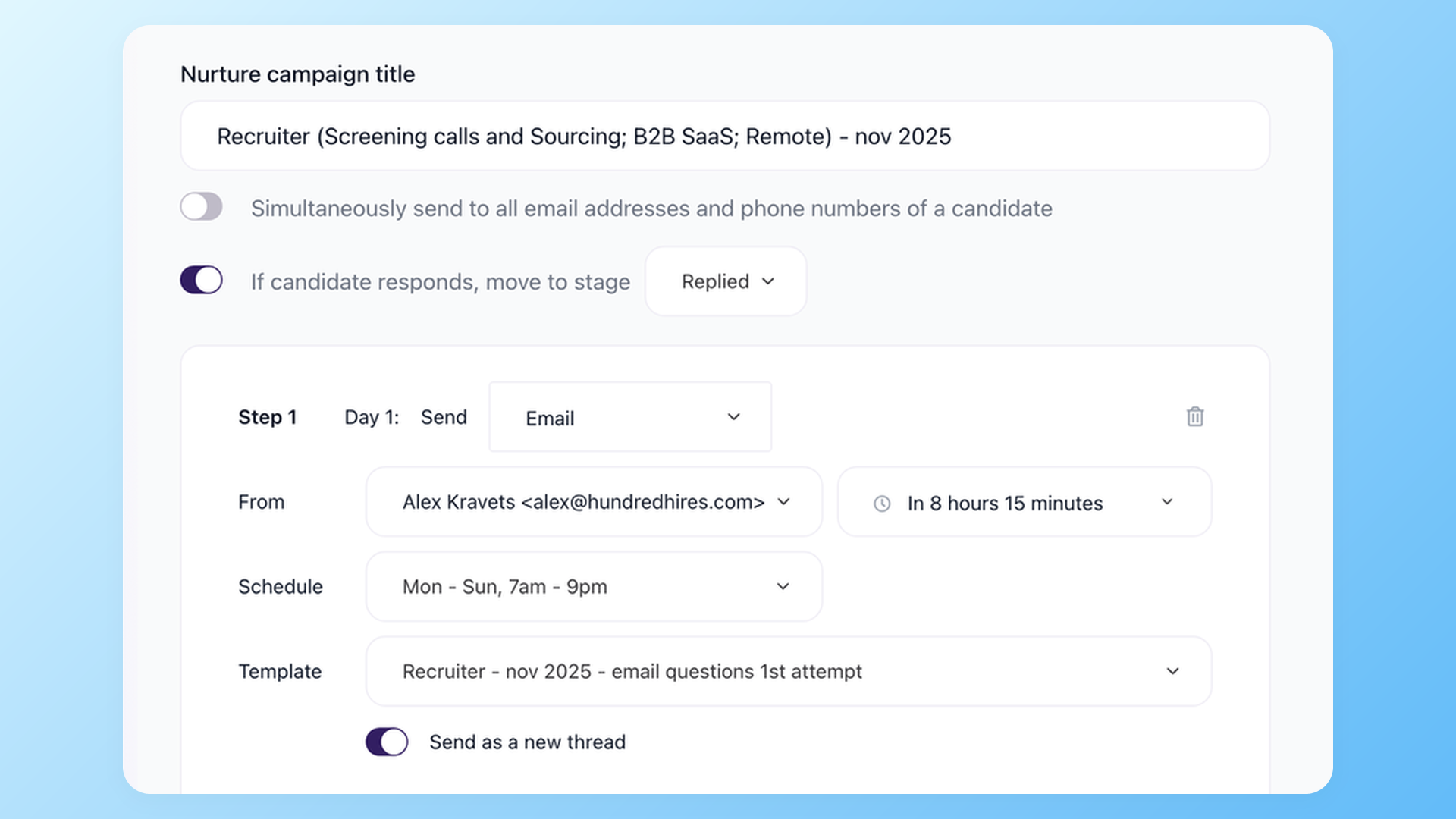
Set the cadence once and candidates hear from you on schedule, inside the business-hours send window you pick. The moment someone replies, the sequence stops and 100Hires moves them to the pipeline stage you chose, so a warm answer never sits unread in a shared inbox.
- Email, SMS, and voicemail steps
- Business-hours send windows
- Stops on reply
How sequences, senders, and reply rules work step by step is on the candidate engagement platform page.
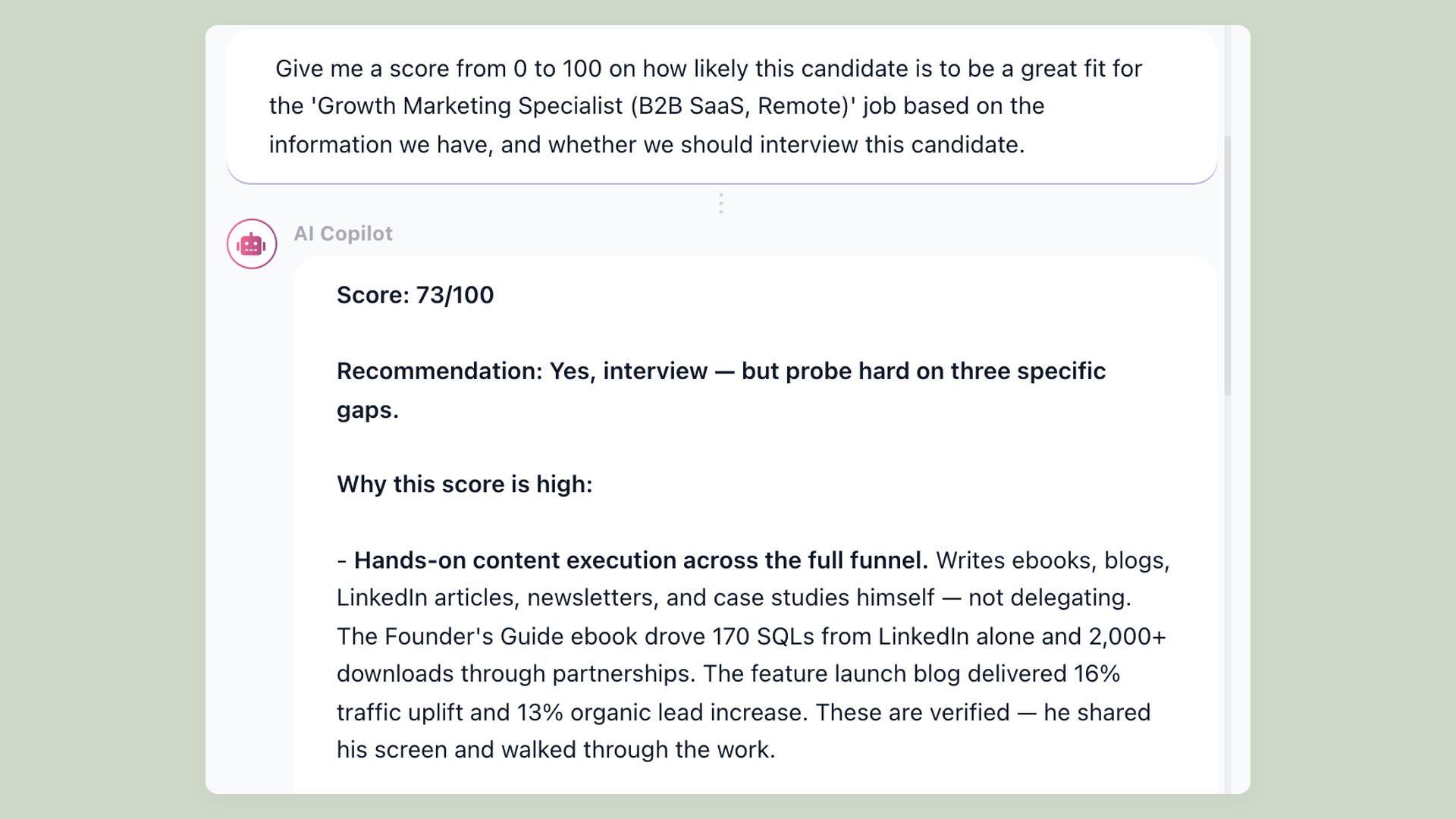
Know who fits the new job before you spend a sourcing dollar
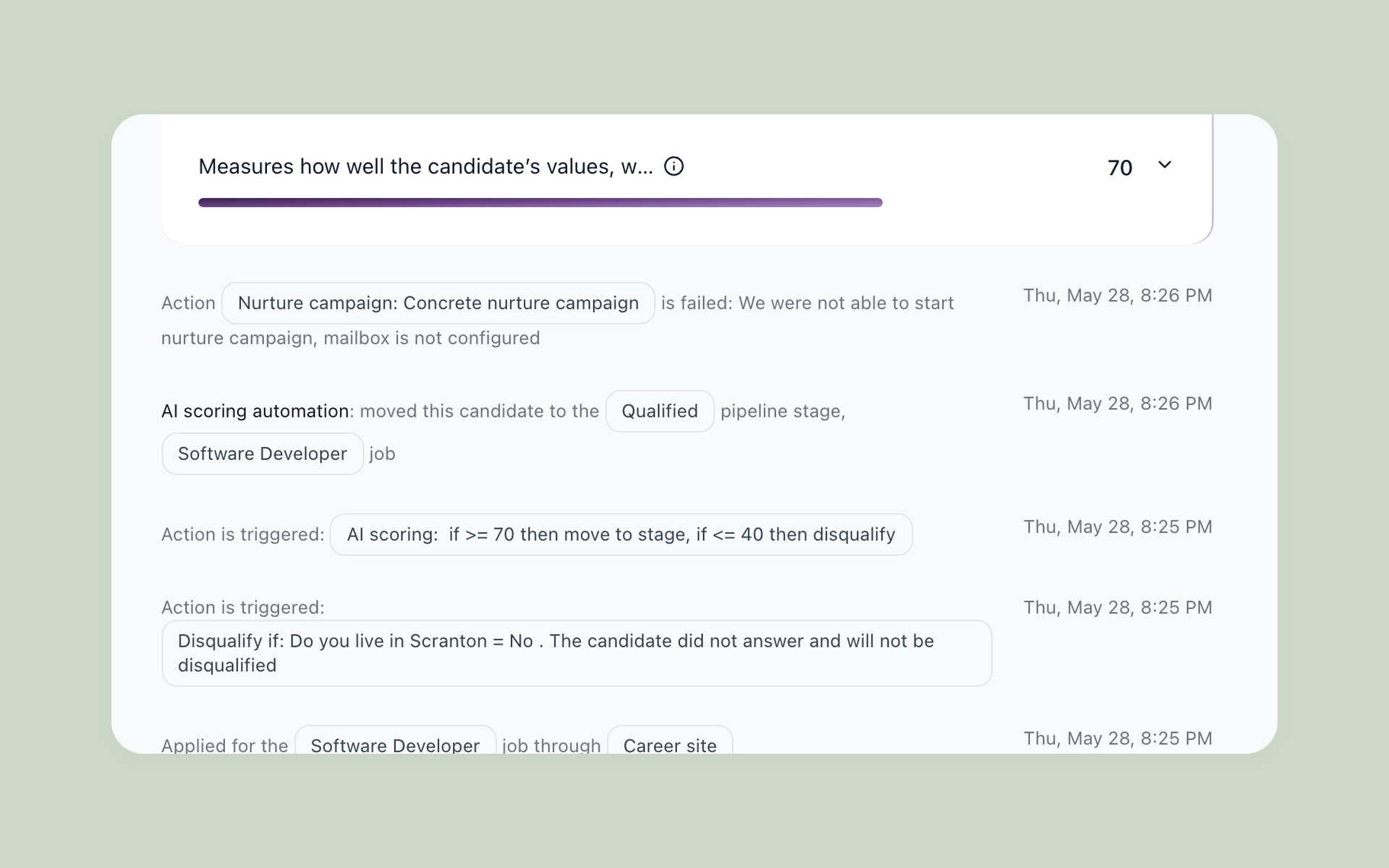
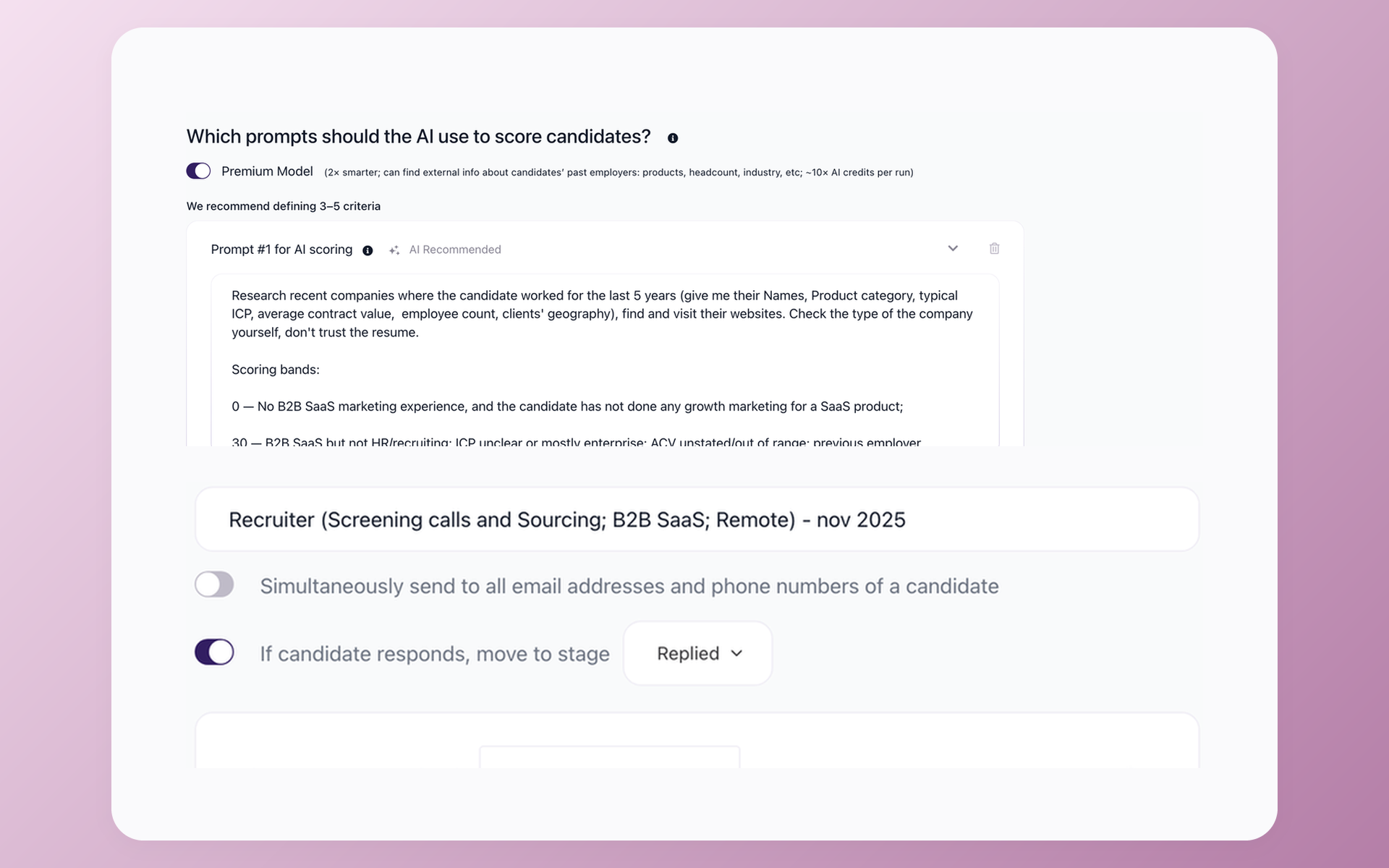
You do not have to remember who was good two quarters ago. Run AI Score on a whole pool in one bulk action and every candidate gets an evidence-backed score against the new opening, with optional thresholds that move or disqualify automatically. Then ask AI Copilot about fit right on the candidate's Discussion tab - it draws on the profile and the history your team already logged.
- Bulk AI Score on any pool
- Evidence-backed report per candidate
- AI Copilot on the Discussion tab
Re-engage months later without sounding like a mail merge
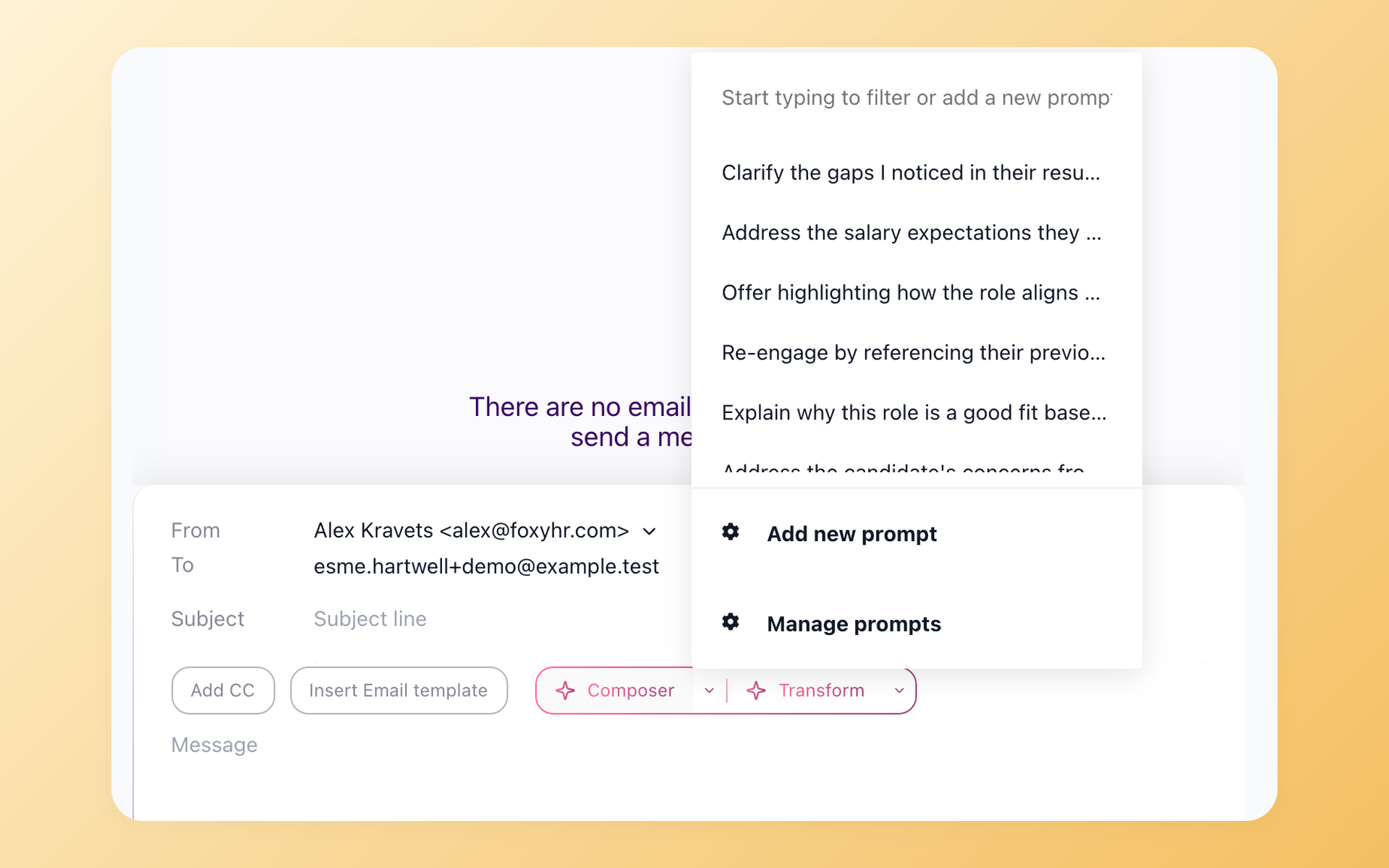
A rejection does not have to end the relationship. AI Email Composer drafts from the candidate's record and the job context, so a no-for-now note still sounds like you wrote it and keeps the door open for the next role. The same drafts work for re-engagement pings months later.
- Drafts from the candidate record
- Rejections that keep the door open
- Re-engagement follow-ups
Candidate relationship management system vs ATS: what is the difference?
An ATS tracks applicants through live openings: apply, screen, interview, offer.
A candidate relationship management system covers the time between openings: keeping past applicants, sourced prospects, and silver medalists interested until there is a job to match them to. Most companies need both.
The common setup is an ATS for live openings and a separate candidate relationship management tool bolted on top. Two logins, two candidate records, and a sync that breaks quietly. Here is what changes when the relationship layer is built into the ATS itself.
 100Hires
Where 100Hires has limits
Fair is fair. Reporting in 100Hires leans basic - third-party reviews flag it - and deep custom dashboards are not the strong suit.
Nurture Campaigns require the Advanced plan or higher. And the product is built for in-house hiring teams: agency workflows like client submittals and placement splits are not the focus.

It solved all of my recruitment problems and offered all of the features I was looking for. It can automate most of my recruitment processes.

I’d happily recommend it to my industry peers. I’m able to use the platform with ease and don’t have to think twice about which function to use.

The system is very user-friendly. Even people with no experience will find it easy to understand its functionality.







 4.7
4.7
 4.8
4.8
How The Tipton Agency keeps virtual candidates engaged
Virtual candidates were ghosting interviews and communication was scattered across email threads and disconnected tools. With Nurture Campaigns, the integrated inbox, and built-in integrations in 100Hires, the team keeps virtual candidates engaged and saves several hundred dollars a month on third-party tools.
The hiring playbook, in your inbox
One email a week - benchmarks, AI screening tactics, and short interview templates from the 100Hires team. No product pitches.