
Best job posting sites for employers in 2026: where to post a job
The best job posting sites for employers in 2026 are Indeed, LinkedIn, Google for Jobs, and ZipRecruiter. The smarter question: how do you get on all of them without filling out the same job form four separate times?
Hiring is slow enough already. SHRM's latest recruiting research puts the median time to fill a nonexecutive role at 39 days.
Board choice matters less than it used to. The big boards now deliver a flood of AI-assisted applications, and they cannot reliably tell you which channel produced your last real hire.
So this guide compares 11 options on pricing and fit, then shows how to run them all from one login.
Key takeaways
The hiring playbook, in your inbox
One email a week - benchmarks, AI screening tactics, and short interview templates from the 100Hires team. No product pitches.
- Best overall reach: Indeed. Three free posts per month, sponsored listings billed per click or per started application.
- Best for professional roles: LinkedIn, the default for salaried and senior hires.
- Best free layer: Google for Jobs. Free for every employer, missing from most lists.
- Best local channel: Facebook's Marketplace jobs tab plus community groups.
- Best way to run them all: 100Hires publishes one job to 13 named boards in one click and tracks which board delivers hires.
Quick comparison: 11 job posting sites at a glance
Here is the whole field in one table. Pricing was checked in July 2026, and vendor-published prices were re-checked in October 2026; the methodology section explains how each figure was sourced.
| Site | Best for | Free posting | Paid pricing (2026) | Watch out for |
|---|---|---|---|---|
| 100Hires | Posting to 13 named boards at once | 14-day trial posts to boards, capped at 10 external candidates | From $49/mo (billed annually; $99 month-to-month), distribution included | Not a job board itself; strongest for US hiring |
| Indeed | Reach and volume | 3 posts per month | Sponsored budget, per click or per started application | Sponsored visibility ends when you pause or close the job |
| Professional and salaried roles | 1 free post at a time | Promoted CPC, reported $1.50-4.50 per click | Free posts pause early at an application cap | |
| Google for Jobs | Free reach for every role | Yes, via careers page or ATS | None | No direct posting option |
| ZipRecruiter | Fast SMB applicant flow | Trial; reported to auto-convert | Reported: $16-24 per job per day, monthly from $299+ per job slot | Custom quotes; auto-renewal complaints |
| Local hourly and service roles | Marketplace jobs tab and local groups | Meta ads, optional | Route applicants to a form or ATS | |
| Craigslist | Local trades | No | $10-75 per post | Spam and no-shows |
| Handshake | Campus and entry-level | Yes | Pro $450/mo; Enterprise on request | Students apply in bulk |
| Monster | Budget supplementary reach | No | From $8/day PPC; Pro $299/mo | CareerBuilder folded into it |
| Glassdoor | Employer brand | Via Indeed | Bundled with Indeed | Not a standalone posting channel |
| Niche boards (Wellfound, Built In, Dice, FlexJobs, Snagajob) | Signal over volume | Wellfound yes; others vary | Dice $399 per 30-day job slot; others vary | Small reach; track per source |
Free tiers are real but capped. Paid tiers often require a quote.
If you plan to use several boards, 100Hires plans include one-click distribution to a 13-board network, plus trackable links for channels outside that list. You can also book a demo to see it live.
Which job site should you use? Match the board to the role
The fastest way to choose: start from the role, not the board. Each site has a lane where it wins.
- Hourly and local roles: Indeed, Facebook groups, Snagajob.
- Salaried office and professional roles: LinkedIn plus Indeed.
- Tech and startup roles: Wellfound, Built In, Dice, LinkedIn.
- Entry-level and campus hiring: Handshake.
- Remote roles: FlexJobs and the remote-first boards.
- Local trades and services: Craigslist, Facebook groups, community channels.
- Every role: Google for Jobs and your own careers page, both free.
Results still vary by role, so test before you commit budget. On our sales calls, a cybersecurity firm got more traction on LinkedIn than Indeed for technical roles, and a healthcare clinic found LinkedIn weak for clinical positions.
Notice the catch. Most companies hire across two or three of those lanes at once, which means two or three sets of logins, invoices, and applicant inboxes.
If your honest answer is "several of these", that is the argument for posting once through an ATS instead of babysitting four dashboards. More on that in the 100Hires entry below.
The best job posting sites for employers in 2026
The ranking weighs four things: reach, real 2026 pricing, applicant-quality signals from practitioner communities, and whether an ATS can automate the posting. The methodology section at the end covers how we checked each one.
1. 100Hires: post to 13 named job boards in one click
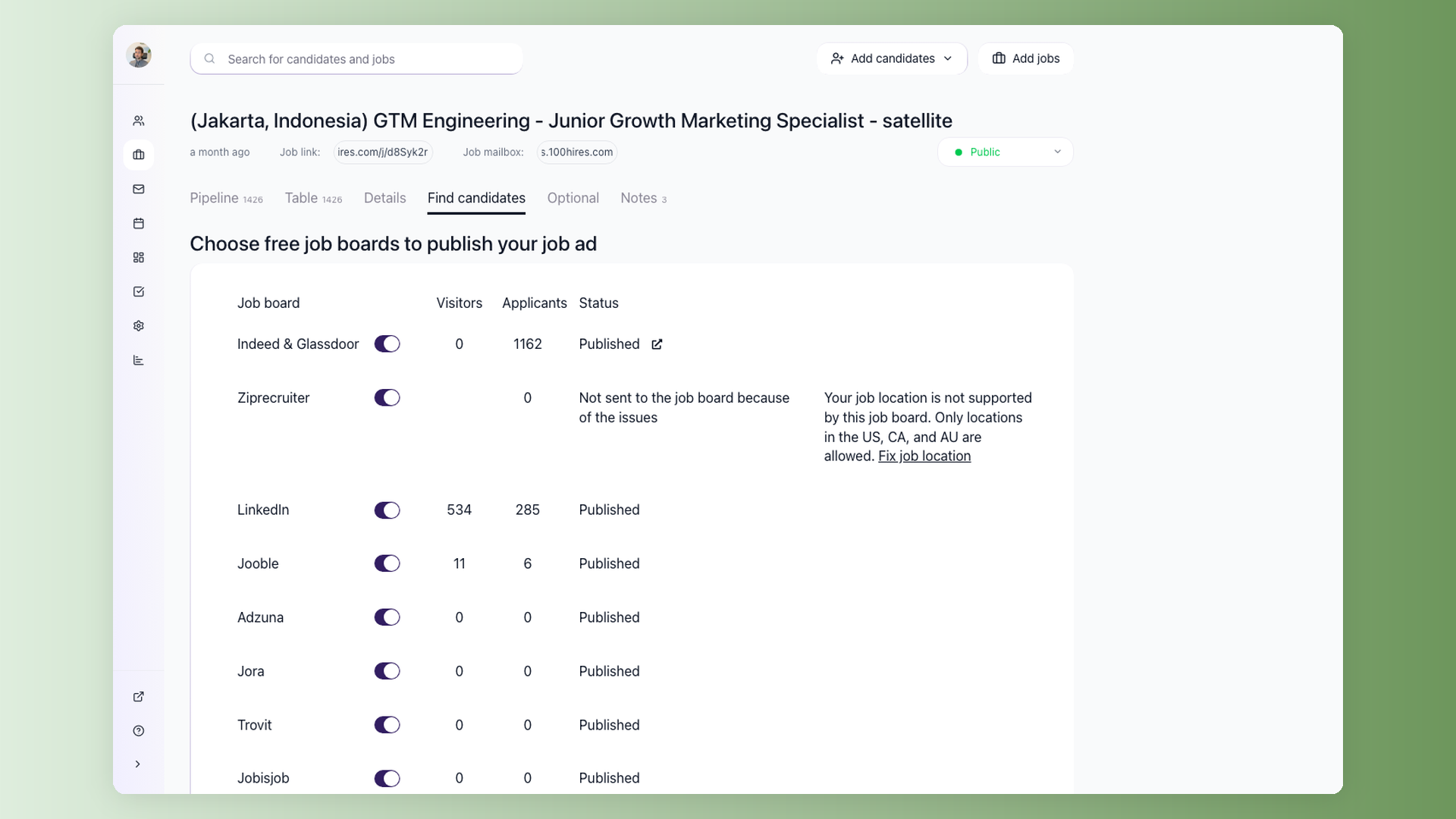
Full disclosure first: 100Hires is our product, and it is not a job board. It is the distribution layer that sits above the boards on this list.
You fill in one job form, and 100Hires publishes it to 13 named job boards: Indeed, LinkedIn, ZipRecruiter, Glassdoor, Google Jobs, Monster, Jooble, Adzuna, Talent.com, and more. Listings go out as free organic posts by default.
Sponsored upgrades stay between you and the board: you pay the board directly, with no markup.
The time savings are the obvious benefit. One small business on our sales calls had been paying an agency just to handle board posting; other teams burn an hour or two a day on it.
Gainey Financial Group ran that exact routine manually before switching, and now saves 10 hours per week on job posting with 100Hires.
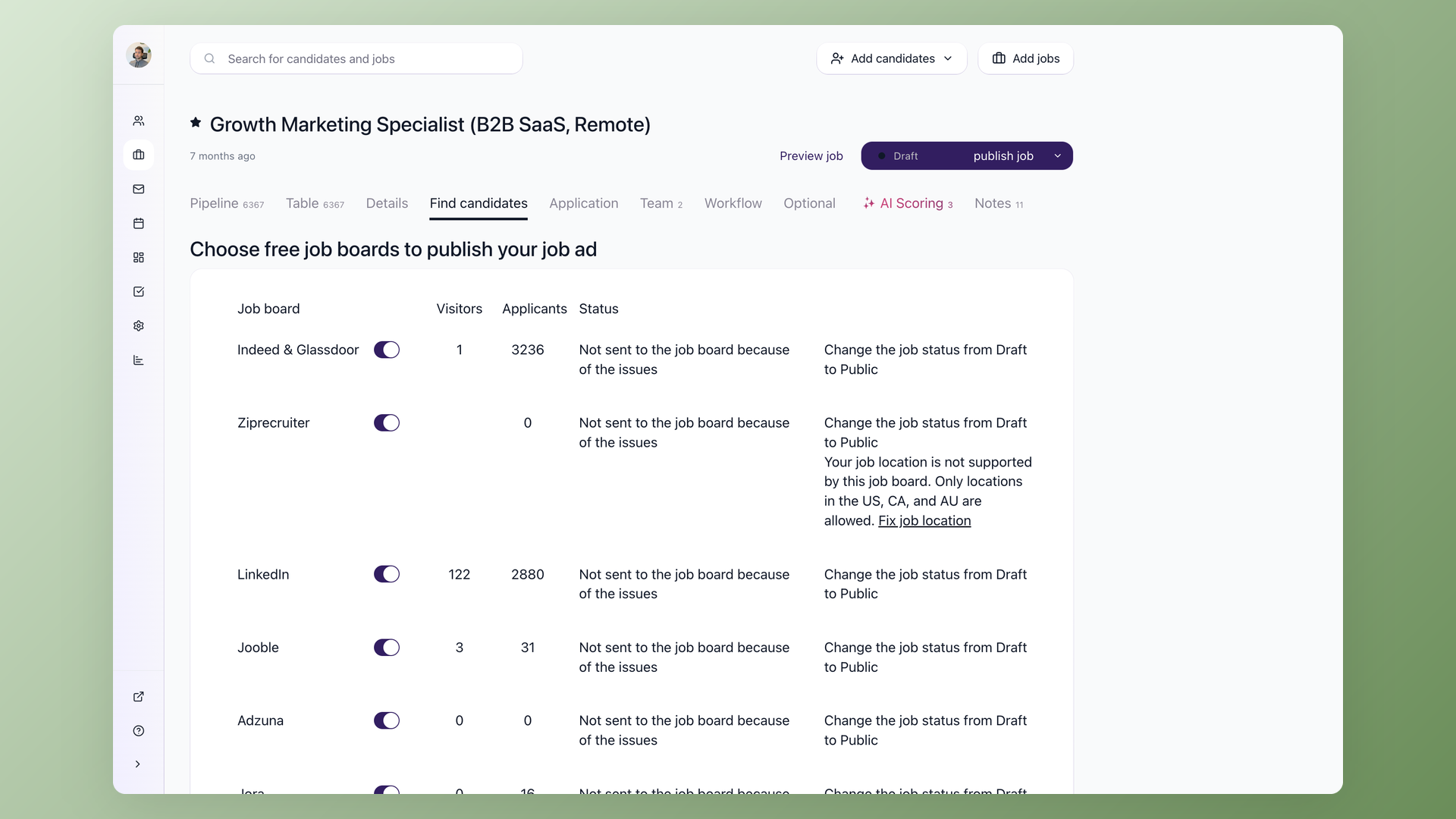
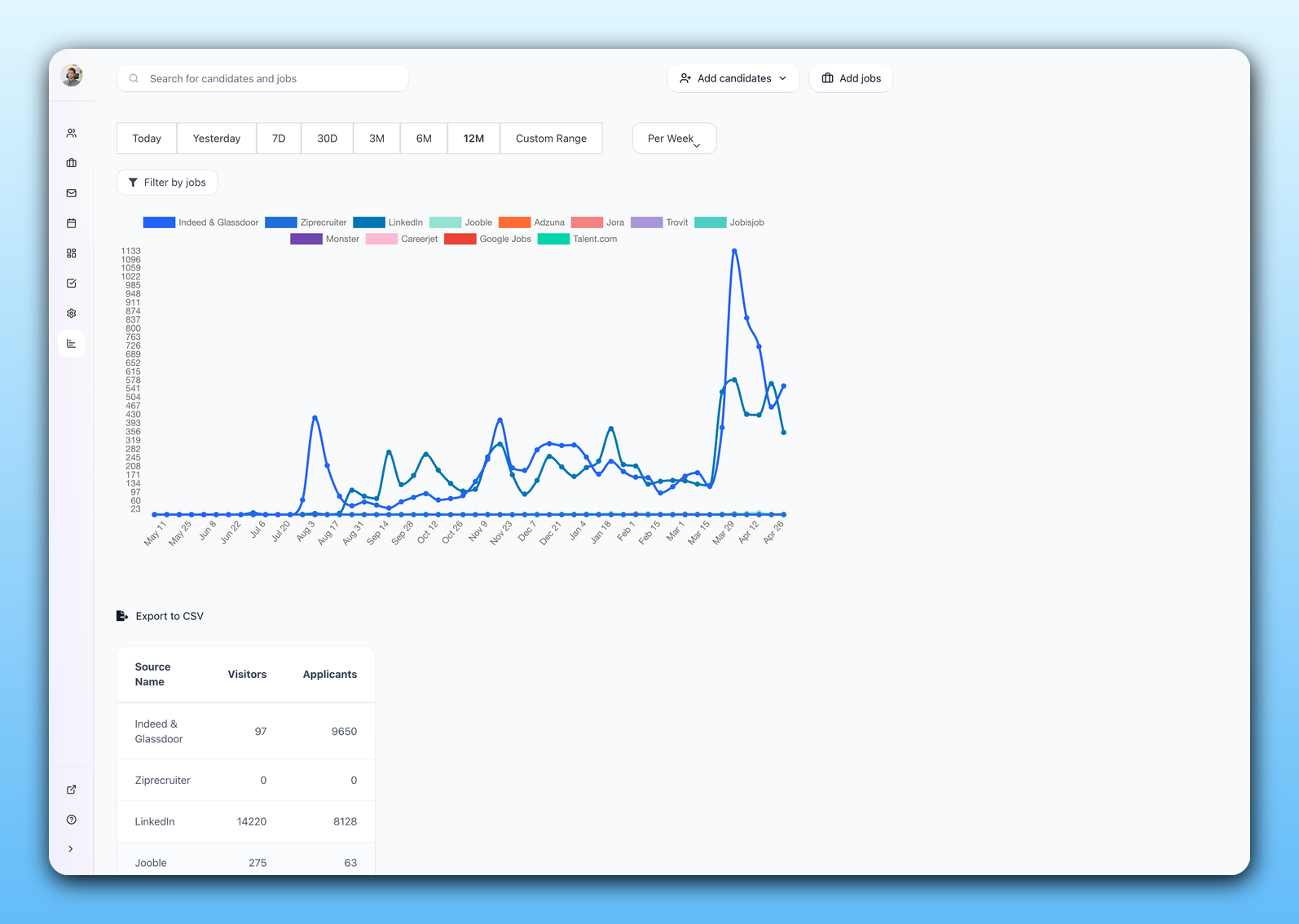
The less obvious win is measurement. Boards can show you clicks, but conversion data lives in your ATS. Reporting in 100Hires shows visitors, applicants, and hires per board, so you stop renewing boards that only deliver traffic.
Then there is the flood. Hiring managers on our demo calls describe 150-200 applications landing within a day of posting.
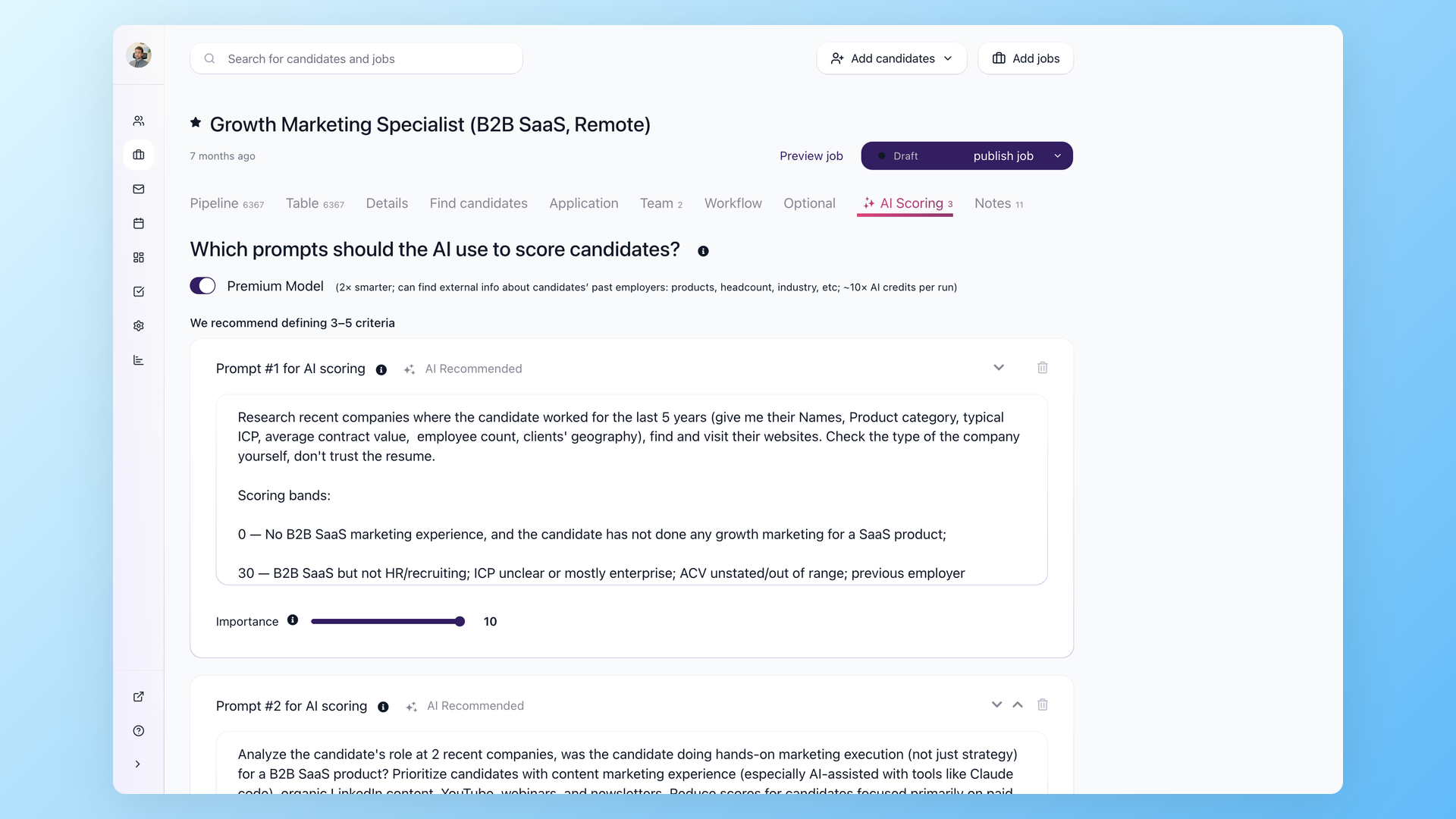
AI Score reads each application against criteria you define per job, each with its own importance weight, and scores it 0-100.
Sort the pipeline by AI Score and the top 30 of the last 200 applications surface at the top, so posting to 13 boards does not mean reading 13 boards' worth of resumes. AI Copilot then answers questions about any single candidate's resume, notes, and interview transcripts.
Channels outside the 13-board list get covered too. Trackable links give each Facebook group, Slack community, or referral source its own URL, with visitors, candidates, and conversion rate reported per source.
Now the honest limits. 100Hires covers 13 named boards, not hundreds; ZipRecruiter claims a network of 100+.
There is no free plan, but the 14-day trial already posts to boards (capped at 10 external candidates), and paid plans that lift the cap start at $49/mo billed annually ($99 month-to-month).
The board mix is strongest for US hiring.
Hiring outside the US? Our guides cover the best job boards in Canada, job sites in the UAE, and the best job posting sites in India.
Best for: SMB teams hiring across several boards who want one pipeline and per-board numbers. Start the 14-day trial to test board publishing right away, capped at 10 external candidates, then upgrade to lift the cap.
Watch out: if you post one job per year to one board, an ATS is more software than you need.
2. Indeed
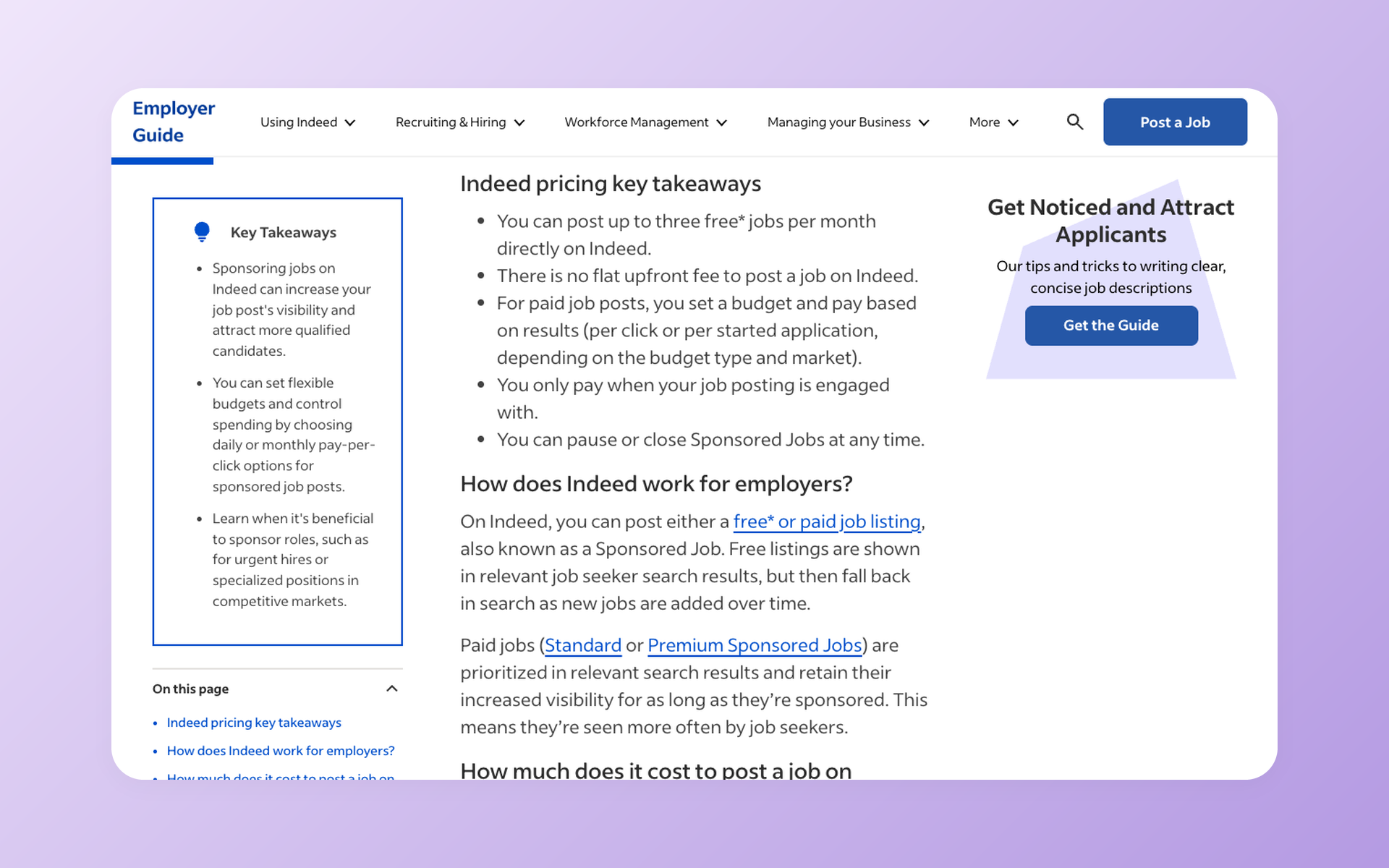
Indeed is where the applicants are. The company reports 685 million job seeker profiles and 3.5 million+ employers, and Comscore ranked it the #1 job site worldwide by total visits in March 2026.
Pricing works in two layers. Direct employers get up to 3 free posts per month, though visibility on free posts fades within days. Sponsored posting runs on a budget you set, billed per click or per started application.
One thing most lists still get wrong: Indeed discontinued its flat pay-per-application pricing in December 2023. Click costs vary widely by role and metro.
The pricing model has flipped before. Indeed announced pay-per-application in 2022, rolled it out, then retired the flat model in December 2023. Today sponsored budgets bill per click or per started application, depending on budget type and market.
Recruiters in hiring communities consistently report the same trade: unmatched volume, especially for hourly roles, paired with heavy triage. Practitioners describe sponsored campaigns costing $25-53 per application and well-paid roles drawing hundreds of unqualified applicants.
Screening questions and scoring are non-negotiable here.
Three policy notes. Staffing agencies cannot use the free listings. Reposting a similar role too soon can get flagged, which stings for high-turnover teams.
And sponsored visibility lasts only while the job is sponsored: Indeed removes the boost when you pause the budget or close the job.
Posting through an ATS keeps all of this in one place: connect Indeed to your ATS and the listing, screening questions, and applicant flow run from a single pipeline.
Best for: high-volume, hourly, entry-level, and local roles. It is the unavoidable first stop.
Watch out: budget for triage time, not just click spend, and set the daily cap deliberately.
3. LinkedIn
LinkedIn is the professional default: the strongest candidate database for salaried, senior, and office roles, with 1 billion+ members by its own count.
The free tier is tighter than most employers expect. You get one free job post at a time; it pauses at 14 days and can pause earlier at an application cap, typically 10-30 applications.
Those limits sit in LinkedIn's own help pages, and most teams discover them mid-hire.
Promoted jobs run on cost-per-click auctions. Practitioners report $1.50-4.50 per click in the US, with daily minimums.
LinkedIn's own pitch: 83% of posted jobs get a qualified candidate within 24 hours, per the company. Take that as a vendor claim, but the candidate database behind it is real.
Recruiters in hiring communities use LinkedIn as a sourcing and outreach database more than as a paid job-post channel. Several agencies report cutting paid job slots and keeping the platform for outbound messaging.
One freshness point in its favor: LinkedIn removes job posts after 6 months, so listings skew fresher than on boards where postings sit indefinitely.
Best for: salaried, professional, and managerial roles, plus passive-candidate sourcing. Publishing to LinkedIn via 100Hires lifts the one-free-post ceiling on every paid plan.
Watch out: free-post caps make it a weak primary channel for volume hiring, and hourly roles get little traction.
4. Google for Jobs
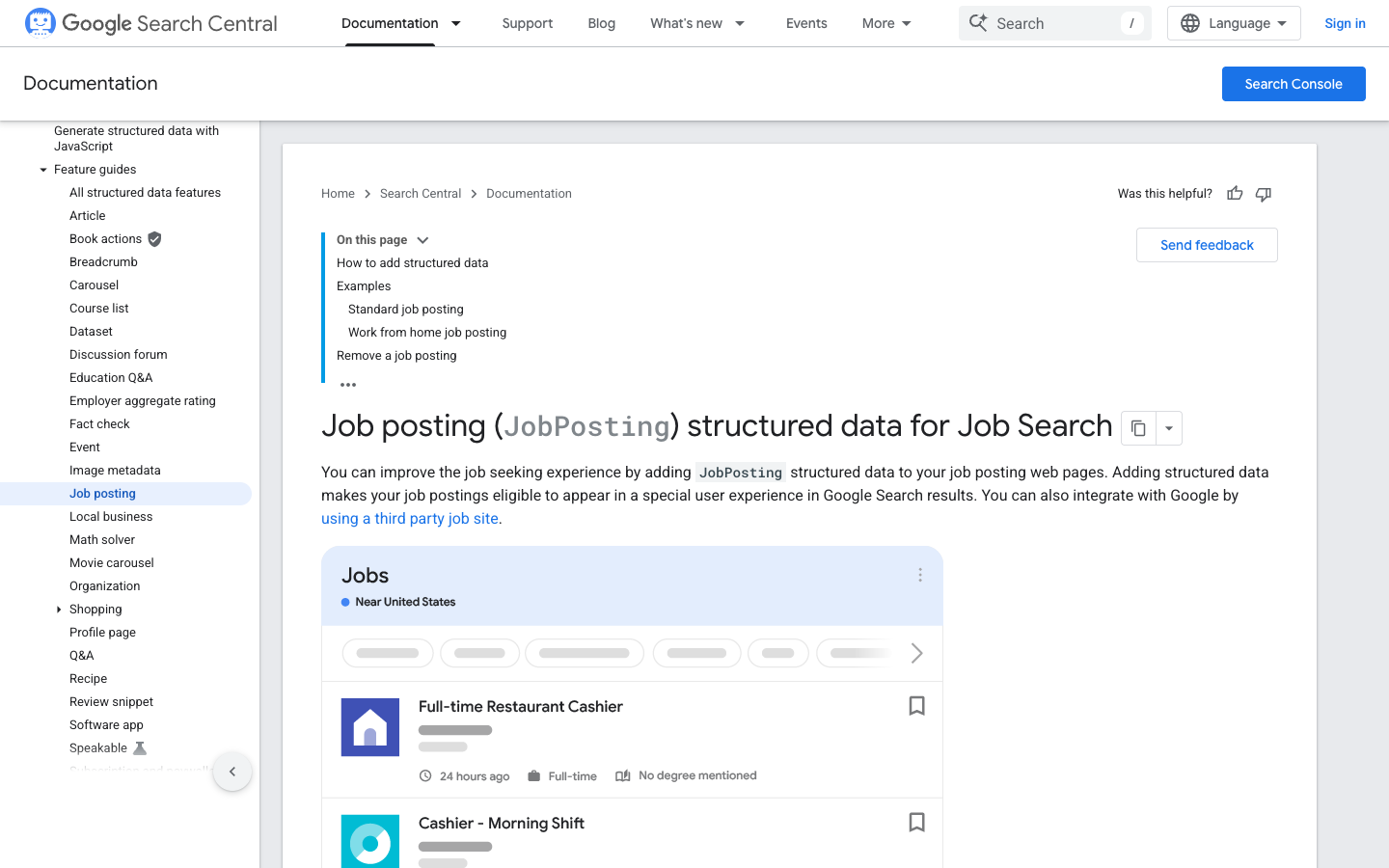
Here is the entry you will not find on most competing lists. Google for Jobs is not a board you log into; it is the jobs layer inside Google Search that aggregates listings from across the web.
It is completely free, and eligible listings can appear in the jobs panel candidates see when they search a role name plus "jobs near me". Candidates often see those results before they open any board.
There are two ways in. The technical route: add JobPosting structured data to your own careers page so Google can read each role.
The practical route for most SMBs: publish through an ATS or job site that is already integrated and emits the markup for you.
Either way, Google wants complete listings: a full description, valid dates, a location, and an apply flow that actually works. Vague postings do not get picked up.
One recruiter on YouTube ran an independent multi-board test, posting an hourly role and a salaried role across the major sites. Google for Jobs produced the best combined volume and quality.
We found few practitioner threads covering it, which means less competition from employers who never set it up.
Best for: every employer. There is no cost and no reason to skip it.
Watch out: you cannot post directly. Eligibility depends on your careers page markup or your ATS; getting your jobs on Google through an integrated system is the shortcut.
5. ZipRecruiter
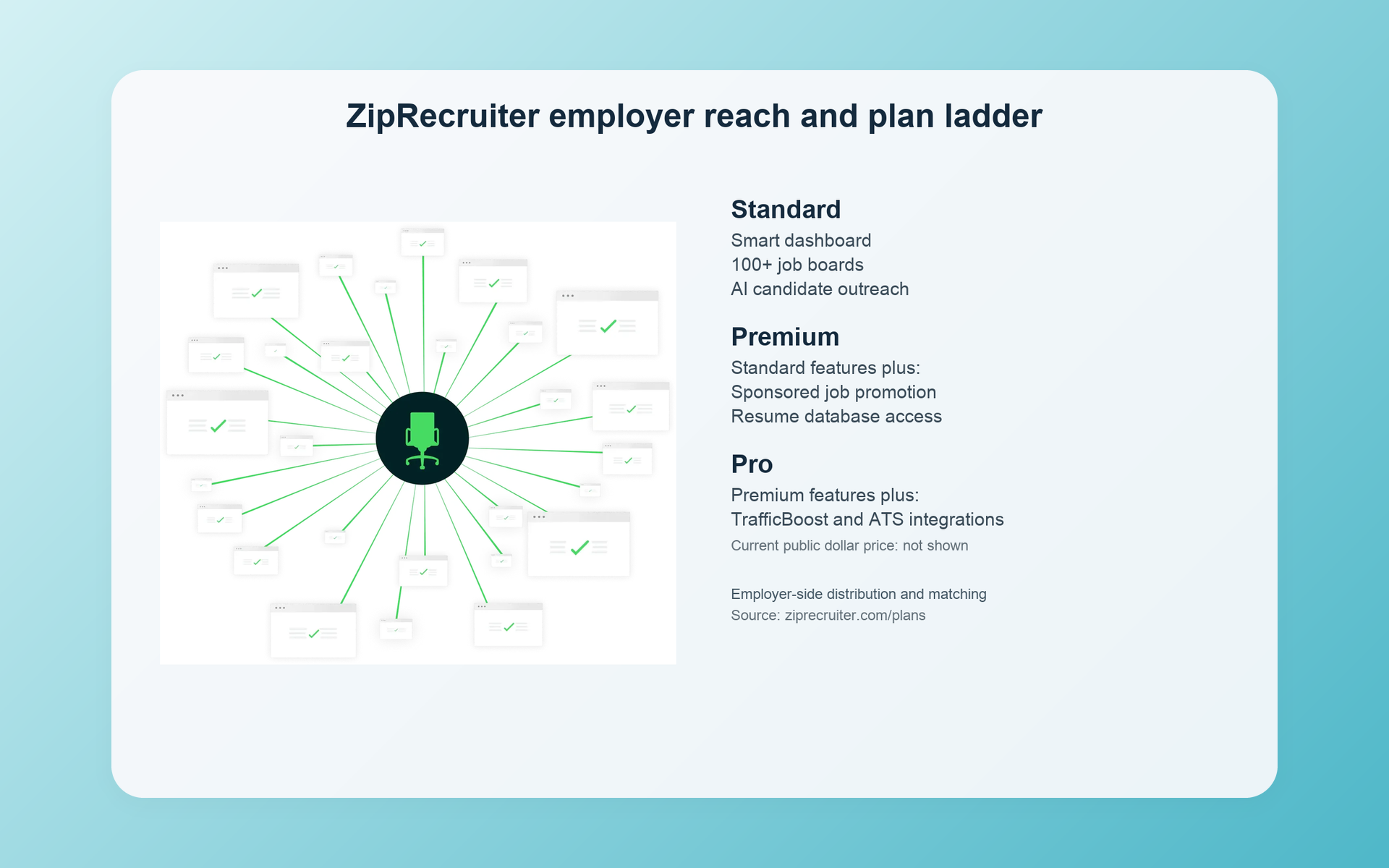
ZipRecruiter is an aggregator marketed to SMBs. You post once, it pushes the job across a partner network the company says spans 100+ boards, and the company markets AI matching that invites likely candidates to apply.
Pricing is quote-based, and the vendor publishes no price list. Reported figures: day passes around $16-24 per job per day, monthly plans from $299+ per job slot, with higher tiers reported past $719 per month.
The trial requires a credit card and reportedly converts automatically.
The practitioner picture is genuinely mixed. Real SMBs on our sales calls use it and like how fast the first applicants arrive; a healthcare clinic told us it performs well for medical assistant roles.
Independent tests and hiring communities are less positive about applicant quality, and much of the glowing coverage online carries affiliate links. Its built-in screening questions do get good marks in employer reviews.
The sane approach: results vary by role and market, so run one role through it, measure cost per hire, then decide.
Best for: SMBs that want fast applicant flow without managing several boards by hand. Our Indeed vs ZipRecruiter comparison goes deeper on the head-to-head.
Watch out: set a calendar reminder for the trial, and confirm what the quote covers. The ZipRecruiter integration in 100Hires posts there alongside the other 12 boards.
6. Facebook (Marketplace jobs and groups)
Facebook is an often-overlooked local hiring channel. Its native Jobs product shut down in 2023. In October 2025 Meta announced that job listings were back as a tab inside Marketplace for US employers.
The durable value was never the official product, though. Local community groups and buy-sell-trade groups fill hourly and service roles fast, free, and with candidates who actually live nearby.
Meta ads can amplify a posting on a small daily budget. One small-business operator we came across reported 10+ hires in a single year sourced through Facebook alone.
Our guide on how to post a job on Facebook covers the setup.
The workflow gap: replies arrive as Messenger chats, so route applicants into a form or an ATS instead of letting them pile up there. A trackable application link per group tells you which community actually produces candidates.
Best for: local, hourly, service, and trade roles at small businesses.
Watch out: post from a real business page with real photos; group members are scam-wary and skip anonymous listings.
7. Craigslist
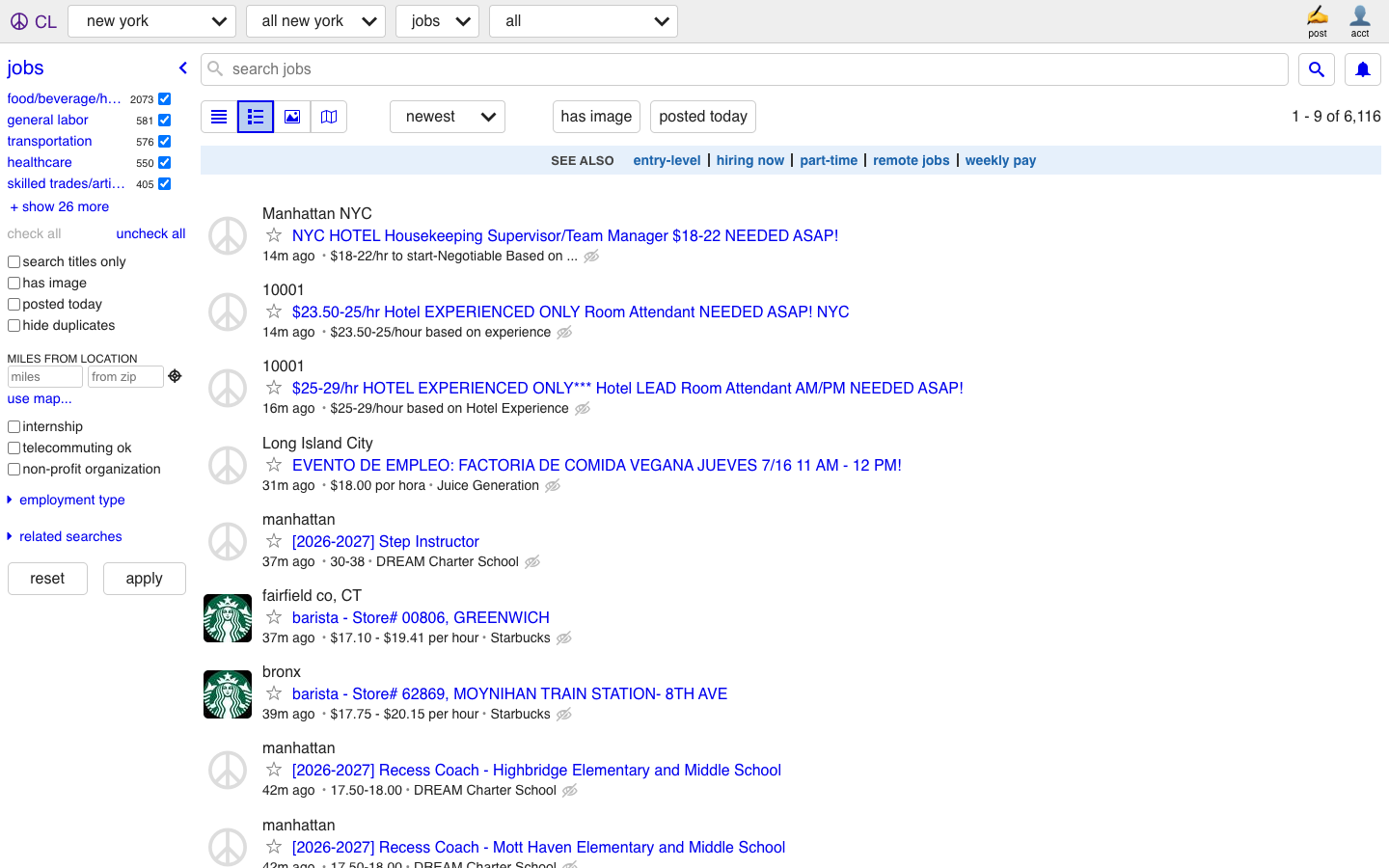
Craigslist still earns its keep for local blue-collar, trades, and immediate-start roles in many metros. Posting costs $10-75 per job depending on city and category.
Employers in hiring communities report plenty of spam and interview no-shows, so phone-screen quickly and confirm twice. It works best as a supplement: cheap enough to test, never the only channel.
One practitioner warning was simple: if Craigslist is your only channel, you keep seeing the same local candidate pool. Rotate it into a wider mix instead.
Best for: local trades and immediate-start service roles where speed beats polish.
Watch out: candidates there are scam-savvy. Use a real company name and a specific title, or the good ones will not reply.
8. Handshake
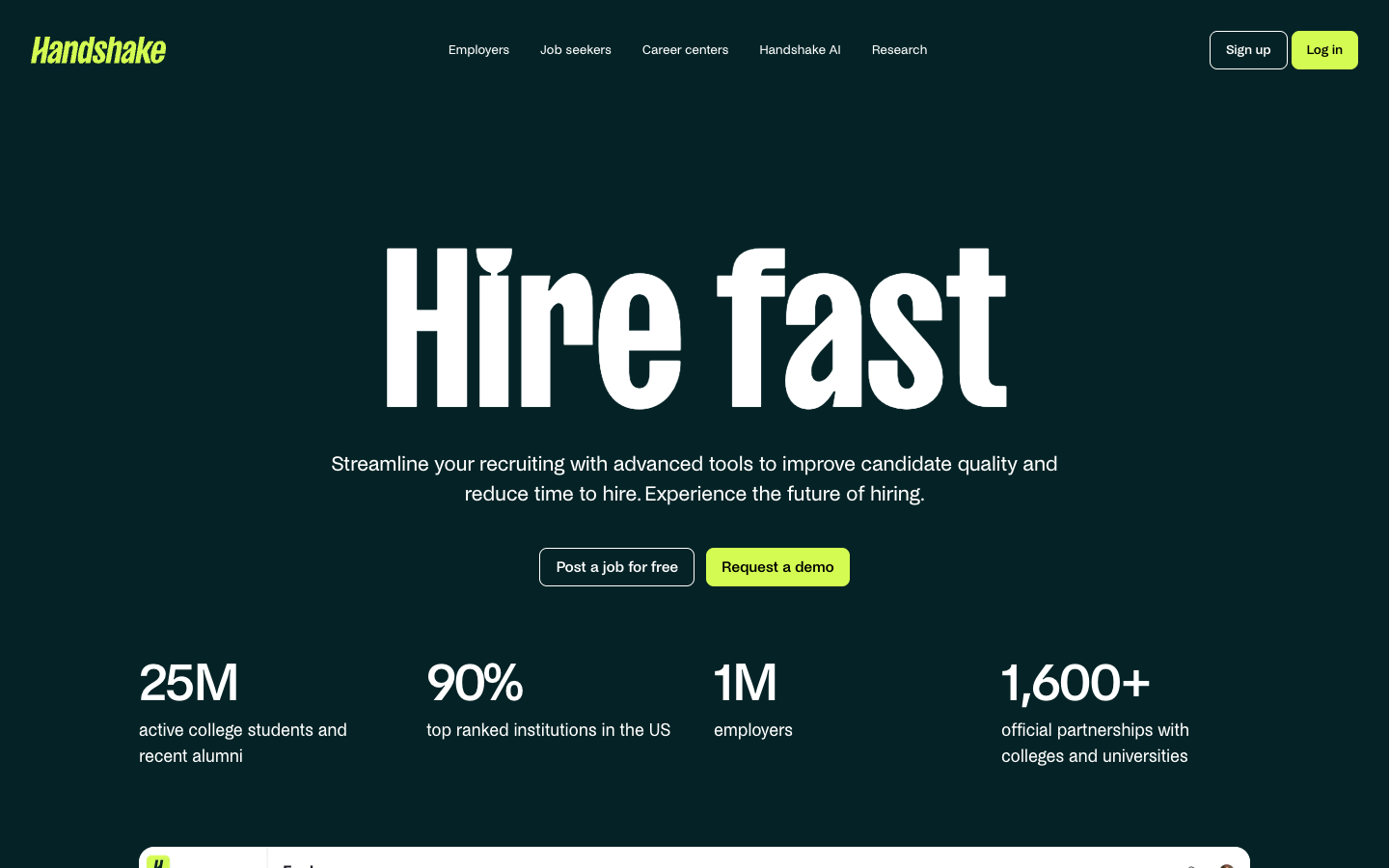
Handshake owns the campus lane. Basic employer posting is free, and Handshake says it reaches 25 million knowledge workers across 1,600+ educational institutions.
Handshake now publishes its paid tier: Pro costs $450 a month, and Enterprise is priced on request. For most SMBs, the free tier is the product.
Campus recruiters in hiring communities treat it as the one board that matters for internships and new-grad roles, and as a dead end for experienced hires. Graduates tend to stop logging in once they land their first job.
Pair a Handshake posting with campus career fairs and the school's own career center for the full pipeline.
Best for: internships, entry-level, and new-grad pipelines.
Watch out: students apply in bulk, so set up response templates before you post, not after.
9. Monster (and what happened to CareerBuilder)

Monster rebuilt itself as Monster+ after absorbing CareerBuilder. The Standard plan is pay-as-you-go from $8 per day per job; Pro runs $299/mo with monthly credits; paid posts cross-post to CareerBuilder automatically.
CareerBuilder is no longer a standalone channel. The merged company filed Chapter 11 in June 2025, BOLD Holdings acquired the job board assets, and CareerBuilder's employer site now redirects to Monster.
We checked that redirect ourselves; some competing lists still sell CareerBuilder as a separate pick.
Practitioners describe fading reach, and the $8/day floor is one of the cheapest paid experiments on this list. Some industries still perform well.
Best for: supplementary generalist reach on a small budget. Monster is on the 100Hires 13-board list, so a distributed job reaches it without a separate purchase.
Watch out: do not buy a separate CareerBuilder product. It does not exist anymore.
10. Glassdoor
Glassdoor stopped being a separate posting destination. Job posting routes through Indeed, its sister company, and free Indeed listings appear on Glassdoor automatically.
What still matters is the employer brand. Candidates who find your job elsewhere cross-check your Glassdoor reviews and salary data before applying, and in the ghost-jobs era they check harder.
Salary data cuts the other way too: candidates who see a range there distrust postings that hide pay.
Managing the company profile costs nothing; the paid product is enhanced employer branding.
Best for: keeping your employer brand credible so every other board performs better.
Watch out: your posting budget goes to Indeed, not Glassdoor. Do not pay twice for the same listing.
11. Niche and specialty boards (Wellfound, Built In, Dice, FlexJobs, Snagajob)
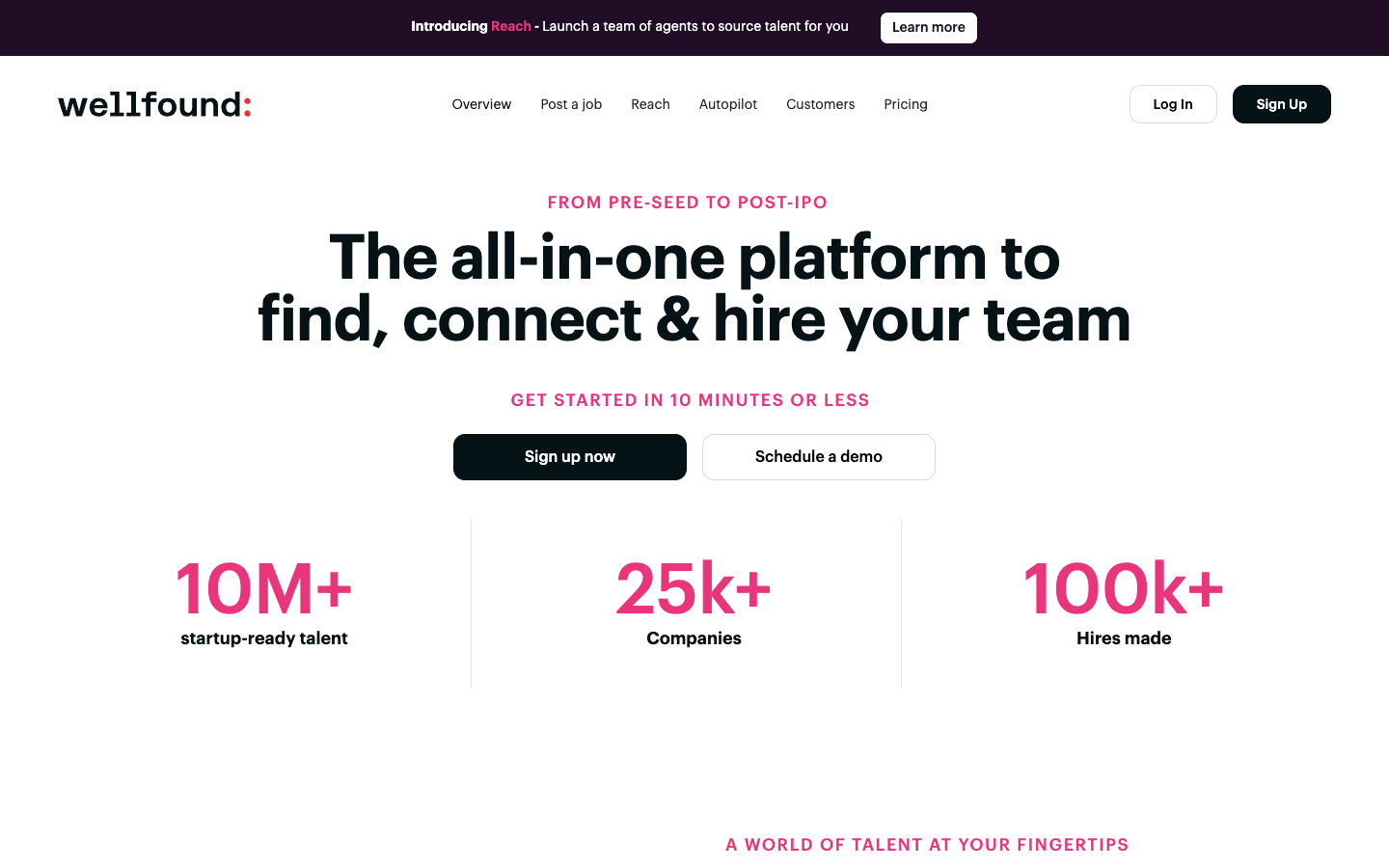
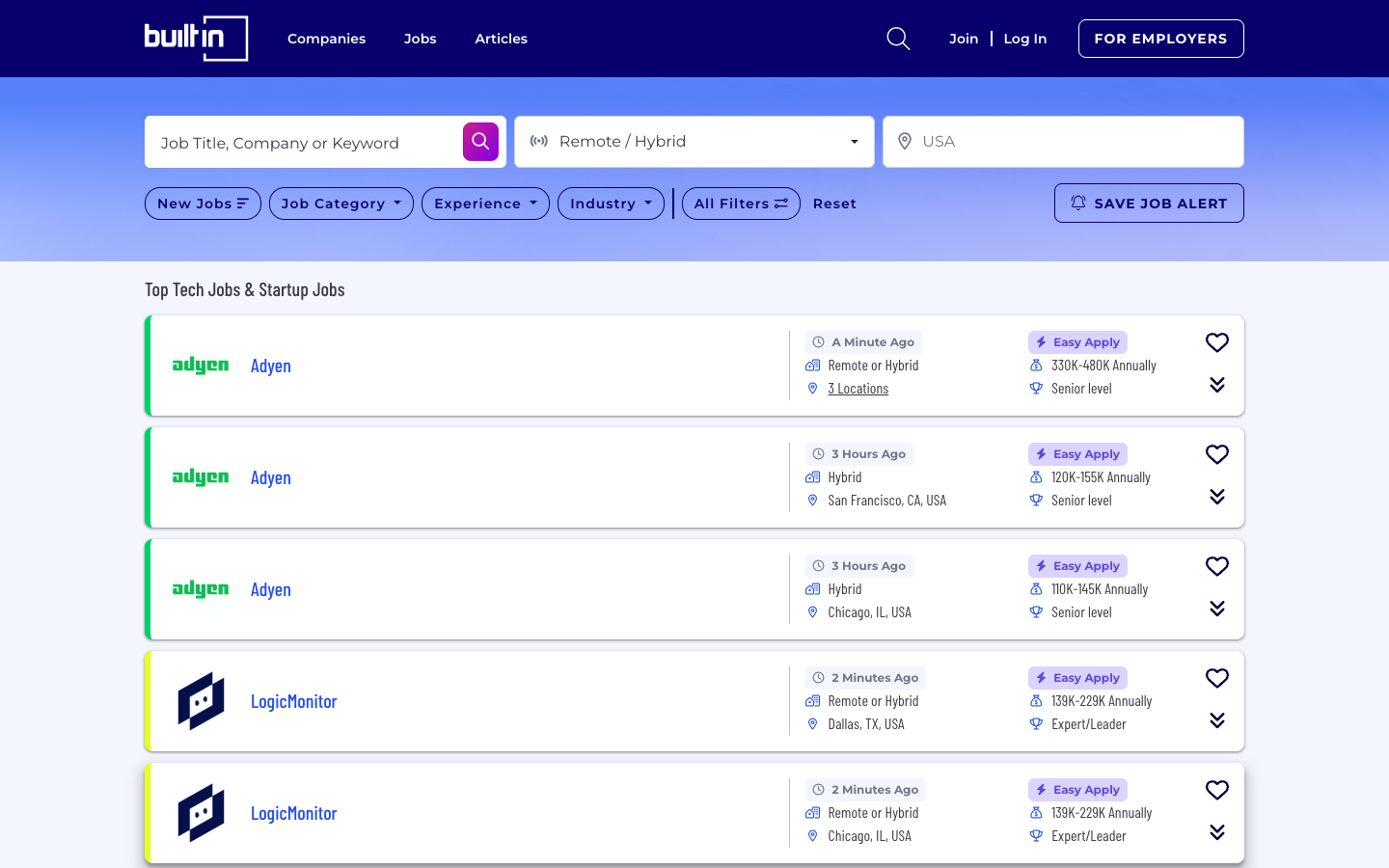
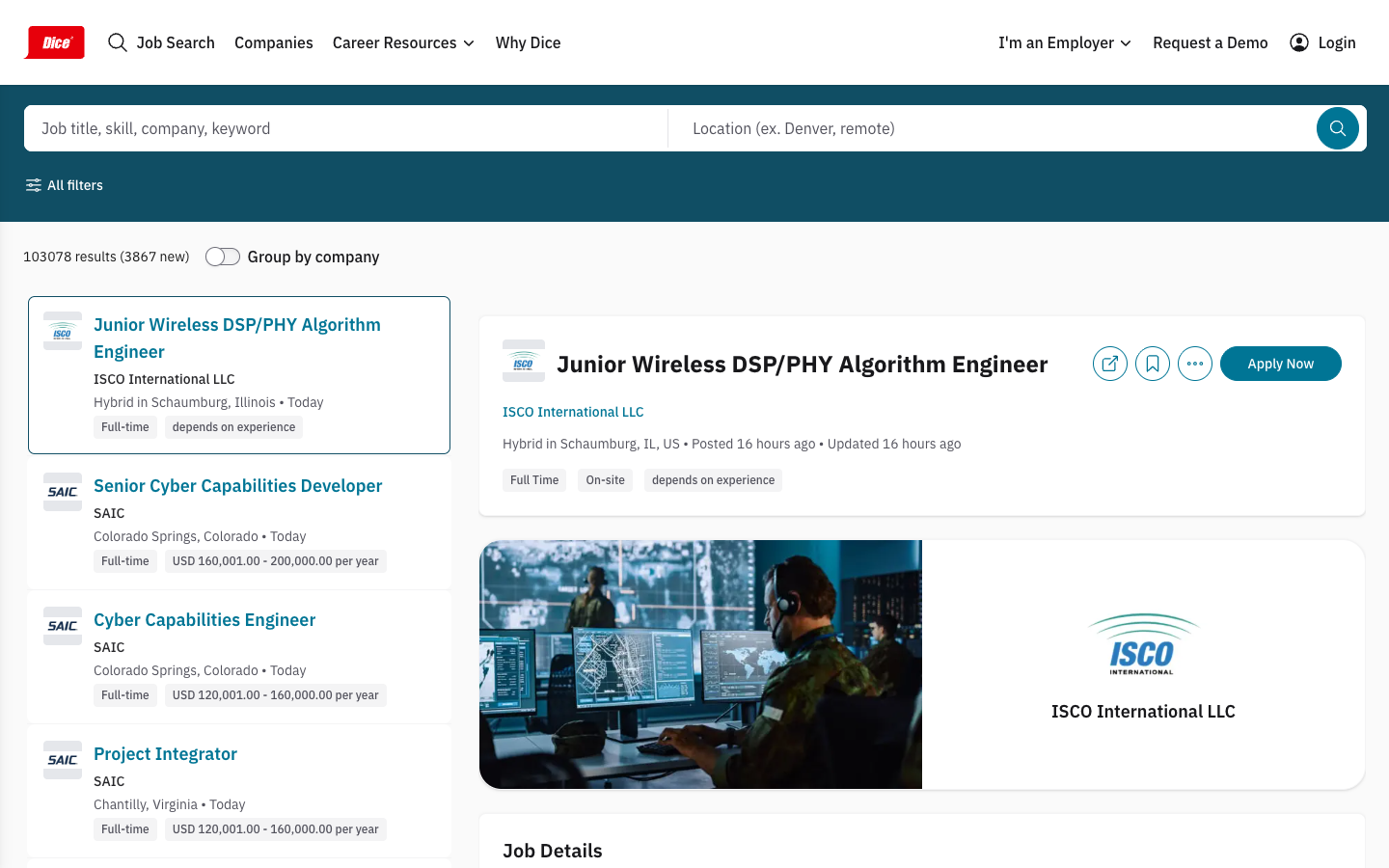
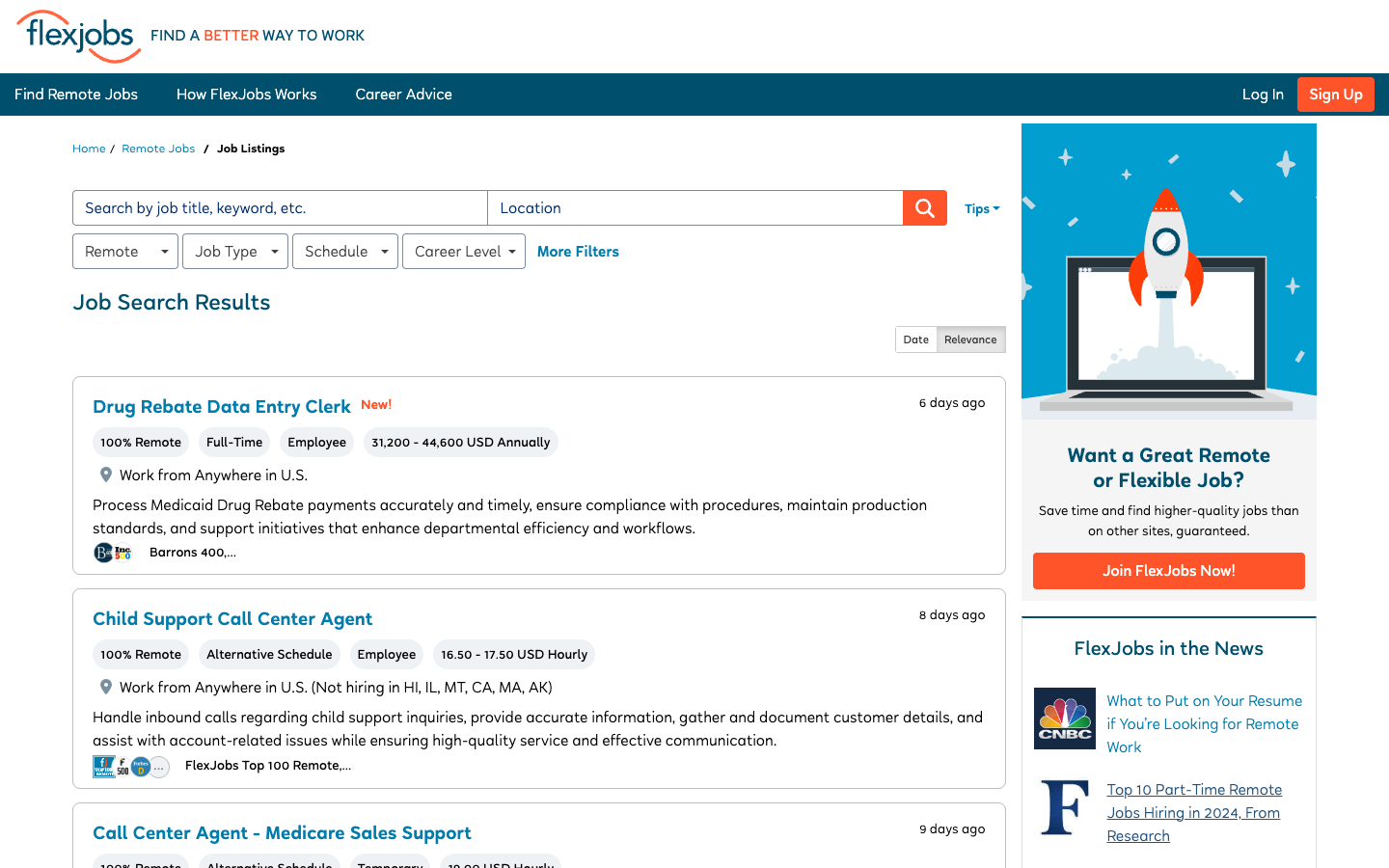
Niche boards are the one category practitioners recommend without much hesitation: smaller reach, but more relevant applicants.
- Wellfound (ex-AngelList): startup roles, free core posting; candidates arrive pre-sorted by appetite for startup risk.
- Built In: tech hiring by metro, with salary data and employer culture pages.
- Dice: tech and IT; a single 30-day job slot costs $399.
- FlexJobs: remote and flexible roles, hand-screened; employer plans reported from $399/mo.
- Snagajob: hourly-work specialist; postings reported from $89/mo.
A service note: SimplyHired now routes employer posting through Indeed, so skip the separate signup.
Ladders shows up on competitor lists for $100k+ roles, but we found no employer reviews or verifiable pricing, so it stays off ours.
Beyond the named five, the same logic extends to industry association boards, VetJobs for veterans, and Idealist for nonprofits: small audiences, high intent.
Best for: roles where one good applicant beats fifty average ones.
Watch out: per-post prices only pay off if you can prove the board produces hires. This is where per-source tracking earns its keep.
How job posting pricing works
Job boards charge in four ways, and most employers end up mixing them.
- Free tiers: Indeed gives direct employers up to 3 free posts a month, LinkedIn allows one active free post, Google for Jobs is free once your job pages carry the right markup, and Handshake Basic is free.
- Pay for performance: Indeed sponsored jobs bill per click or per started application against a budget you set; LinkedIn promoted jobs bill per click, reported at $1.50-4.50 in the US.
- Slots and day passes: Dice sells a 30-day job slot for $399, Monster+ starts at $8 a day, and ZipRecruiter quotes custom plans reported from $299 a month per slot.
- Subscriptions: Handshake Pro costs $450 a month, and ATS plans with built-in distribution, such as 100Hires from $49 a month billed annually, cover many boards for one fee.
Budget per hire, not per post. A board that costs more per click can still be cheaper per hire if it sends the right people; our Indeed job posting cost guide shows the math for the biggest board.
When one board is enough, and when it is not
For a single local role, one commenter's advice in a small-business thread is simply to post on Indeed and skip the rest, and for one opening that can be enough.
It stops working at scale. Indeed caps direct employers at three free posts a month, so a business opening roles in several locations hits the limit fast and has to sponsor, lean on Google for Jobs and its careers page, or add state job banks.
Volume also does not equal hires. Owners describe interview no-shows as a bigger problem than applicant counts, so reply the same day and send a self-scheduling link while candidates are still interested.
Best places to post jobs for small business
Where do most small businesses post jobs? Indeed's free posts, Facebook groups, and their own careers page. That free-first instinct is right.
The typical reader here is an owner or office manager hiring on top of a day job, with no time to babysit four board dashboards. So here is the same idea as a budget ladder.
Tier 1: $0. Start with your careers page so Google for Jobs can index every role. Add Indeed's free posts, the Facebook groups where your customers already are, and Handshake if you hire students.
Keep going down the free list: state job banks and workforce boards, community college and trade school career centers, chamber of commerce boards, and Nextdoor posts for neighborhood service roles.
Ask your staff and customers for referrals too. It costs one conversation.
Tier 2: your first $200-300. Put it into one sponsored Indeed campaign with a hard daily cap, or one Monster+ run at $8/day, plus one niche board matched to the role.
One channel at a time, so you can tell what worked.
Tier 3: the measurement layer. Before spending more, set up per-source tracking so the second hire costs less than the first.
If you repost the same roles continuously, the way insurance agencies, driver fleets, and service businesses do, one-click reposting and easy refreshes matter more than any single board choice.
An ATS built for small teams handles both. Our guide to recruiting software for small business covers the options; 100Hires includes source reporting and 13-board distribution on every paid plan.
One reality check from small-business hiring threads: when a posting gets zero applicants, the posting usually needs work before the board does. Visible pay, a specific title, and concrete duties routinely outperform a bigger ad budget.
Staffing agencies are out of scope for this list. But if a role has sat open past 60 days even with paid boards, a contingency recruiter may beat more ad spend.
Where to advertise for employees beyond job boards
Boards are one channel. The employers who fill roles fastest usually advertise in a few places boards cannot reach.
Your own careers page. It is the upstream asset: candidates cross-check it before applying, and with the right markup it feeds Google for Jobs on its own.
Ghost-job skepticism works in your favor here. A current careers page with salary listed signals a real role, which is exactly what candidates are filtering for now.
Employee referrals. The highest-conversion channel practitioners report, year after year. Formalize the bonus and announce it twice a year, or it quietly stops happening.
Founders and hiring managers posting directly. A person posting the role outperforms the company page. Candidates reply to people.
Local channels for local roles. Chambers of commerce, community colleges, trade schools, and state job banks cost nothing and stay underused.
Paid social. Meta ads work for hourly roles; LinkedIn ads for narrow professional niches. Set spending caps before launch.
Whatever mix you pick, tag every source and compare cost per hire, not cost per click. The per-board reporting covered in the 100Hires entry does the same job for these channels through trackable links.
How we evaluated these job posting sites
We checked the list against four criteria during research in July 2026 and re-checked vendor-published prices in October 2026.
- Pricing read from vendor pages where available. Prices change often; where vendors quote custom deals, figures are labeled "reported" and treated as estimates.
- Reach from vendor-published audience stats, labeled as the vendor's own claims.
- Applicant-quality signals aggregated from practitioner communities on Reddit, LinkedIn, YouTube, and podcasts, paraphrased as patterns rather than quoted.
- Automation compatibility: whether an ATS can post to the board and track applicants per source.
One disclosure, stated plainly: 100Hires is our product. It leads this list because the article's whole thesis is distribution plus measurement, and that is exactly what 100Hires does.
It is not a job board; it covers 13 named boards rather than hundreds, has no free plan, though its 14-day trial already posts to boards (capped at 10 external candidates). If those trade-offs do not fit, the other ten entries stand on their own.
FAQ
What is the best job posting site for employers?
Indeed has the widest reach and is the default first post for most roles; LinkedIn is the pick for salaried and professional hires. The stronger strategy is several boards at once: 100Hires publishes one job to 13 named boards in one click, so you get Indeed's volume and LinkedIn's audience without separate logins.
Where is the best place to post a job?
For most US employers: Indeed for reach, LinkedIn for salaried roles, Google for Jobs as the free layer, and ZipRecruiter when you want one post pushed to many boards. The best place still depends on the role, so hourly jobs lean on Indeed and Facebook groups, campus roles on Handshake, and tech roles on Dice, Built In, and Wellfound. 100Hires posts one job to 13 named boards, so you can test several and keep the ones that produce hires.
Where do most small businesses post jobs?
Most small businesses start with Indeed's free posts, local Facebook groups, and their own careers page, then add one paid board when free channels run dry. On paid plans, 100Hires covers that exact playbook: free organic listings across its 13-board list plus a hosted careers page with Google for Jobs markup.
How much does it cost to post a job in 2026?
Free options exist on Indeed (3 posts per month), LinkedIn (1 active post), and Google for Jobs. On the paid side, Indeed sponsorship runs on a budget you set, billed per click or per started application, ZipRecruiter monthly plans are reported from $299+ per job slot, Craigslist charges $10-75 flat, and Monster starts at $8/day. 100Hires paid plans start at $49/mo billed annually ($99 month-to-month) and include distribution to 13 named boards with no per-board surcharge.
What is a ghost job posting?
A ghost job is a listing with no real hiring intent behind it, and candidates now see enough of them that they cross-check company careers pages before applying. Ghost jobs make candidates skeptical of every listing, including yours. Fresh, complete, salary-visible postings win that trust back, and 100Hires helps by keeping board listings synced and taking closed roles down across boards.
Can I post one job to multiple sites at once?
Yes, through an ATS with multiposting. In 100Hires, you fill in one job form and toggle on any of its 13 named boards; listings go out as free organic posts, and sponsored upgrades stay directly between you and the board. AI Score then triages the combined applicant flow, so posting wider does not mean reading more resumes.
The boards will keep reshuffling. CareerBuilder folded into Monster, Facebook's jobs tab came back, and next year's list will differ again.
The durable setup is simple: post through one workflow, cover every board that fits the role, and keep per-source numbers so you know which channel to renew.
Start a 14-day trial of 100Hires to test the workflow, or book a demo to see how board publishing works.
Try 100Hires for free
No credit card. 14-day trial. Forbes Advisor #1 ATS for SMBs.