Top talent acquisition software: 15 tools compared by hiring stage (2026)
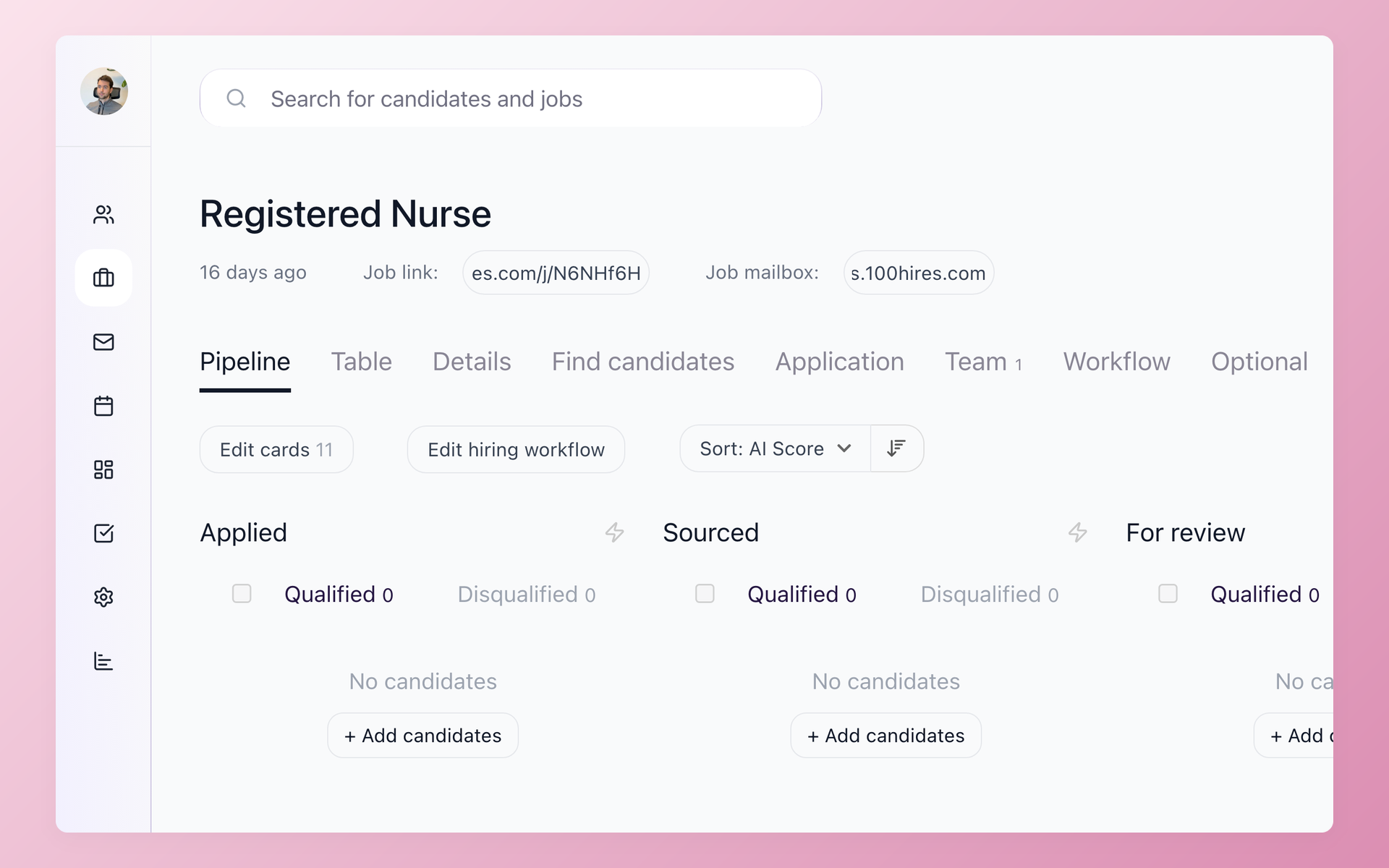
Talent acquisition software is not one product category. It is six: pipeline, sourcing, screening, interviewing, candidate relationships, and reporting.
This guide compares 15 top talent acquisition tools by the hiring stage each one covers, with pricing checked against vendor pages in July 2026 and G2 ratings shown next to their review counts.
It is written for the person we meet on demo calls every week: one recruiter, or a founder recruiting on the side, juggling a job board account, a spreadsheet, and an inbox. Budget: $5k to $20k a year, plus an exec who wants to know why any of it is necessary.
The short answer up front: you do not need 15 tools. For the SMB teams this guide is written for, the practical stack is two to four, picked by stage. Here is the full map.
Top talent acquisition software at a glance
The hiring playbook, in your inbox
One email a week - benchmarks, AI screening tactics, and short interview templates from the 100Hires team. No product pitches.
Every price below comes from the vendor's own pricing page, pulled in July 2026. Where a vendor hides numbers behind a sales form, the table says so instead of guessing.
| Tool | Hiring stage / best fit | Entry price + trial (Jul 2026) | G2 rating (reviews) |
|---|---|---|---|
| 100Hires | ATS + AI screening core for SMB teams | From $49/mo billed annually ($99 month-to-month); 14-day trial, no card | 4.8 (1,341) |
| Workable | ATS, mainstream all-rounder | $299/mo; 15-day trial | 4.4 (705) |
| Zoho Recruit | ATS, lowest entry price | $25/recruiter/mo billed annually | 4.4 (1,843) |
| Breezy HR | ATS, visual pipelines for small teams | $157/mo billed annually; 14-day trial | 4.4 (686) |
| Manatal | ATS, cheapest per-user entry | $15/user/mo billed annually; 14-day trial | 4.8 (147) |
| Juicebox (PeopleGPT) | Sourcing, natural-language AI search | Free plan; $139/seat/mo, or $119/mo billed annually | Too few reviews to rate |
| SeekOut | Sourcing, technical and specialist roles | $149/mo billed annually; free trial | 4.5 (759) |
| hireEZ | Sourcing, high-volume outbound | $494/mo; 7-day trial | 4.6 (264) |
| Gem | Sourcing sequences + recruiting CRM | Custom quote (tiers by company size) | 4.7 (287) |
| TestGorilla | Screening, skills assessments | Free plan; Core $142/mo billed annually | 4.5 (1,441) |
| Calendly | Interviewing, scheduling | Free plan; $10/seat/mo billed annually | 4.7 (2,641) |
| Metaview | Interviewing, AI interview notes | Free tier; Pro $100/user/mo | 4.8 (131) |
| Greenhouse | Enterprise suite, structured hiring at scale | Custom quote | 4.4 (3,923) |
| Lever | Enterprise suite, ATS + CRM combined | Custom quote | 4.3 (2,116) |
| Ashby | Scale-up suite, analytics-first all-in-one | $400/mo; no self-serve trial | 4.7 (114) |
Want to see the AI screening stage working on your own openings before reading 5,000 words? Start a 14-day 100Hires trial - no credit card, no sales call.
How we picked these tools
Three filters, applied in order.
First, verified pricing. Every dollar figure in this guide comes from the vendor's own pricing page, fetched in July 2026. Where a vendor publishes nothing, the entry says "custom quote" instead of a third-party estimate dressed up as fact.
Second, G2 rating and review volume together. A 4.7 from 114 reviews and a 4.4 from 3,923 reviews are different kinds of evidence. The band is narrow across the whole market, so the review count often says more than the score.
Third, practitioner sentiment with the shills filtered out. We read the recruiting subreddits, YouTube reviews, and TA leaders' stack posts on LinkedIn for every candidate tool.
What we found along the way: recommendation threads are heavily astroturfed, with vendor accounts answering their own questions and identical compliments appearing across threads. Tools got no credit here for manufactured recommendations.
Full disclosure: 100Hires is our product. It sits first in this guide since the SMB stack described here is exactly what we built it for, and it has not yet earned a slot in the big third-party roundups.
So we hold it to the same standard as everyone else: published pricing, public review scores, and its limitations listed in plain sight.
The outside proof we can point to: Forbes Advisor ranked it first of ten ATS platforms for startups and small businesses, and Capterra rates it 4.9 across 1,157 reviews.
Two picks need a selection note. TestGorilla appears as the screening-stage representative based on pricing transparency and review volume, not on community chatter - it had almost none in our research.
Metaview earned its slot the opposite way: it was the single most consistently loved tool in the practitioner threads we read.
The talent acquisition funnel: six stages, not one tool
iCIMS's own editorial team puts the typical count at 7 to 12 recruiting tools per TA team. That is a lot of tabs, a lot of invoices, and a lot of candidate data scattered across systems that do not talk to each other.
The fix is not buying a 13th tool. It is knowing which stage of the hiring funnel each category serves, and buying for the stage that is actually broken. The six stages:
- Pipeline (ATS) - the system of record. Buy this first, always.
- Sourcing - buy when inbound applications stop filling roles.
- Screening - buy when application volume outruns your reading speed.
- Interviewing - buy when scheduling ping-pong and empty scorecards become the bottleneck.
- Candidate relationships - buy when you keep re-sourcing people you already interviewed.
- Reporting - rarely a separate purchase; demand it from your ATS.
One more reason to choose carefully at the start: switching later is expensive. As Rec Tech podcast host Chris Russell put it, most implementations with the major enterprise vendors take about a year.
SMB tools onboard in days, and that difference shapes the whole buying decision below.
Stage 1: applicant tracking and pipeline - the core of the stack
If you buy one talent acquisition tool, buy this one. An applicant tracking system is the system of record every other tool plugs into: one pipeline per job, one profile per candidate, every email and score in one place.
We watched a shipping company's TA team live without one: pre-screen notes in Word documents, resumes forwarded by email, and no record of who saw what. Their own summary on the demo call: they were losing track of everything. That is the problem this stage solves.
100Hires - best for SMB teams that want AI screening without enterprise pricing
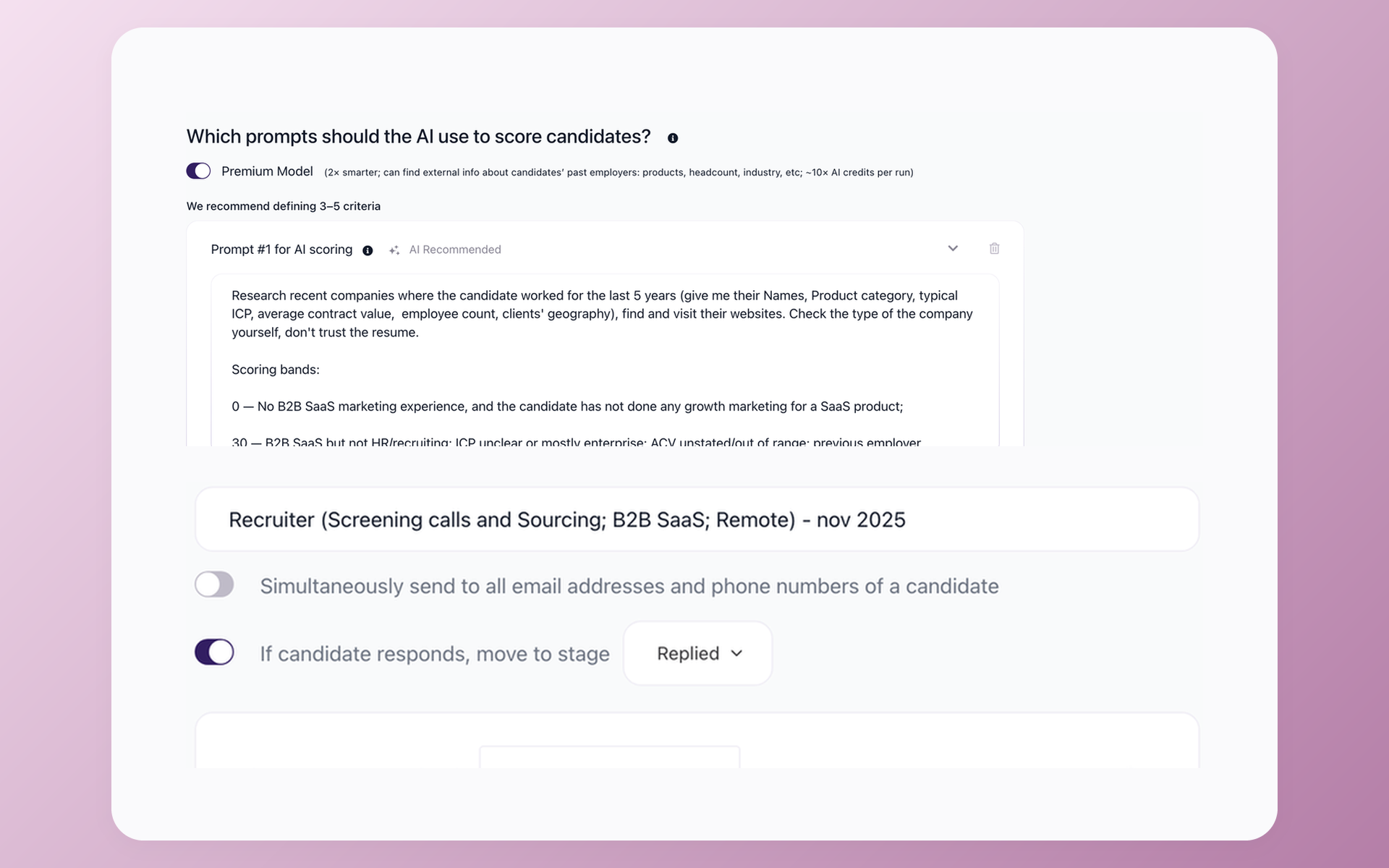
100Hires is an ATS with AI screening built into the core product instead of sold as an enterprise add-on. It fits companies from 1 to roughly 200 employees, plus small agencies.
The standout is AI Score. You define the criteria per job in plain language, weight each one from 1 to 10, and it ranks every applicant from 0 to 100 with reasoning you can read. It is triage you control, not a black box.
Thresholds automate the boring part: score above X advances, score below Y routes to a review queue.
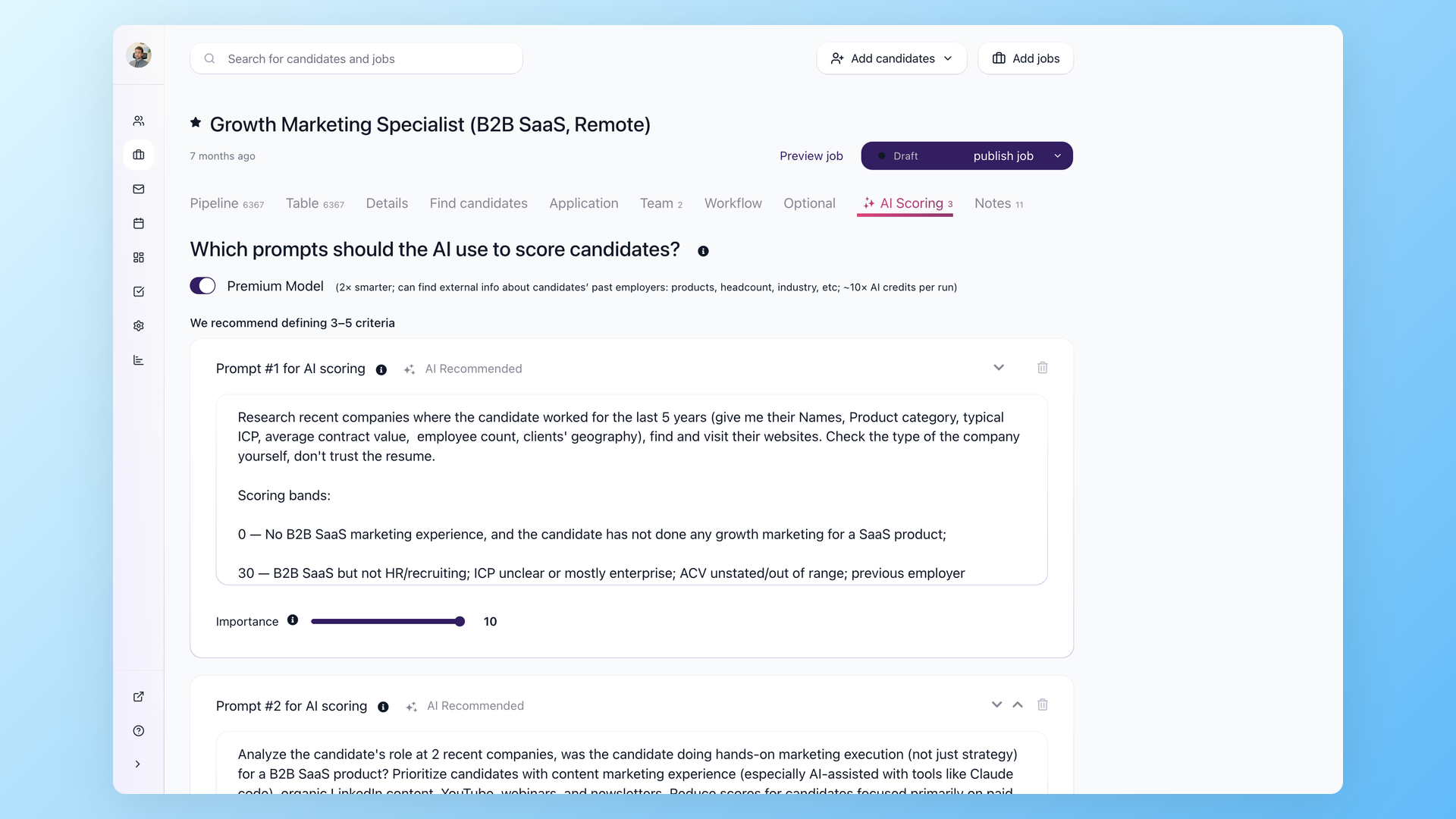
AI Copilot lives in each candidate's discussion tab. Ask it a question and it answers from everything on file: notes, interview transcripts, emails, evaluation forms, the resume itself.
Prompts that work get saved to a company-wide library, so the tenth hire benefits from the first nine.
Beyond the AI: one-click posting to 13 job boards, Talent Pools for candidates worth keeping, trackable links that show which source actually produces hires, and calendar sync for self-scheduled interviews.
Third-party proof: Forbes Advisor ranked it #1 of 10 ATS platforms for startups and small businesses. G2: 4.8 from 1,341 reviews. Capterra: 4.9 from 1,157.
Pricing is public: from $49/mo billed annually for the Start plan ($99 month-to-month), and $199/mo for Advanced billed annually ($249 month-to-month). The 14-day trial needs no credit card and no sales call.
Per the published pricing page, AI usage is capped by volume per tier (Start includes 100 AI operations a month) rather than locked behind an enterprise tier - a genuinely different model from most of this list.
Limitations, honestly: the interface is text-heavy and takes a day to get used to. The Start plan is single-user. And it is built for SMB hiring, not for a 5,000-person enterprise with approval chains and audit committees.
Verdict: the strongest price-to-AI ratio in this category. Run the trial on a live opening and judge the scoring on your own applicants.
Workable - best mainstream pick if budget is not the constraint
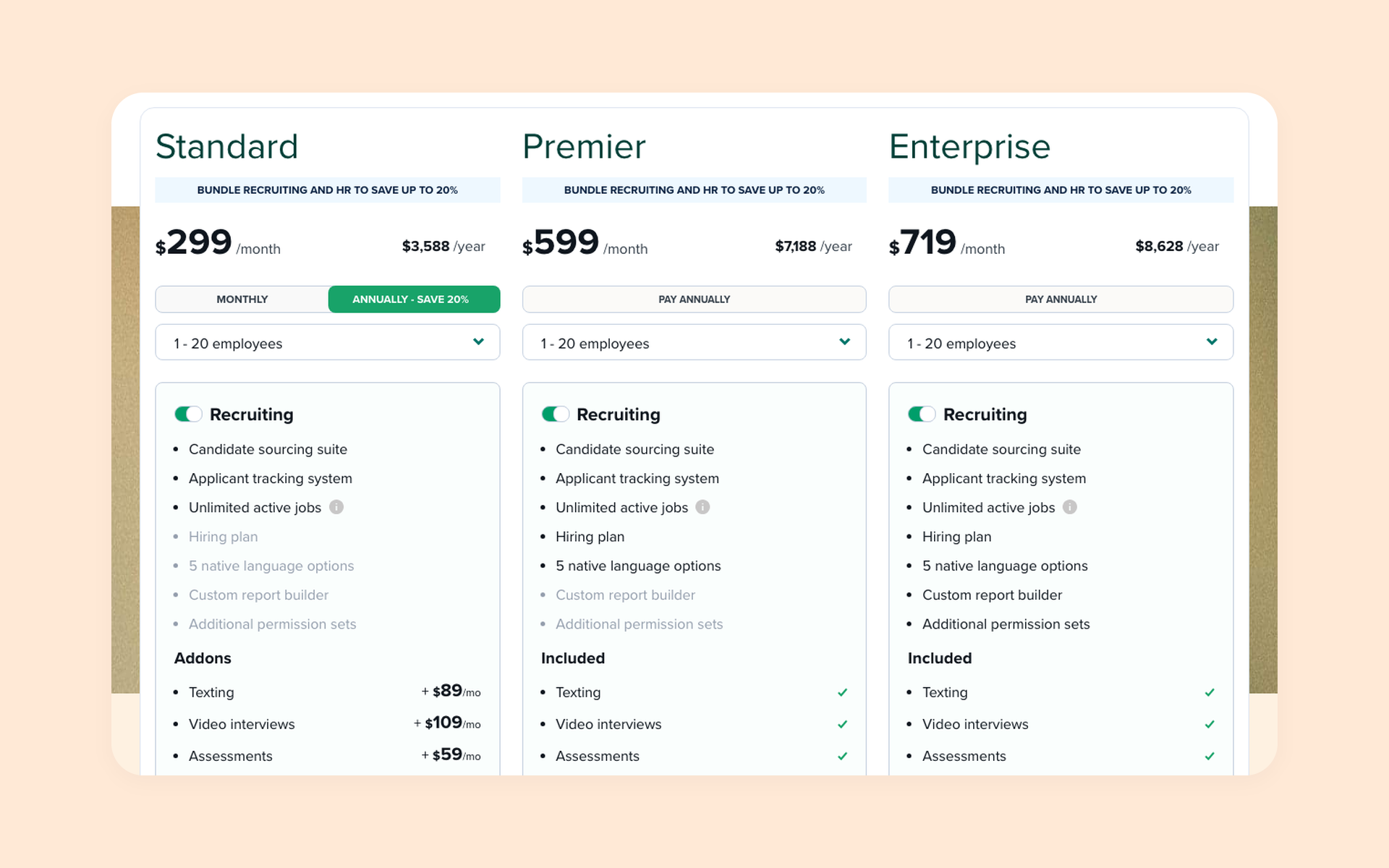
Workable is the safe, polished choice for 20-200 employee companies. Recruiters in buying threads treat it as the default shortlist item: intuitive, month-to-month, easy to roll out.
Verified pricing: $299/mo for Standard, 15-day trial. G2: 4.4 from 705 reviews. Its AI, Workable Agent, is a credit-metered paid add-on for every plan, so AI costs grow with use instead of coming bundled.
Limitations: users flag shallow workflow customization and reporting that stops short of what analytics-minded teams want. Verdict: pick it for polish and brand safety, at three times the entry price of the tools around it.
Zoho Recruit - best budget pick, with an AI asterisk
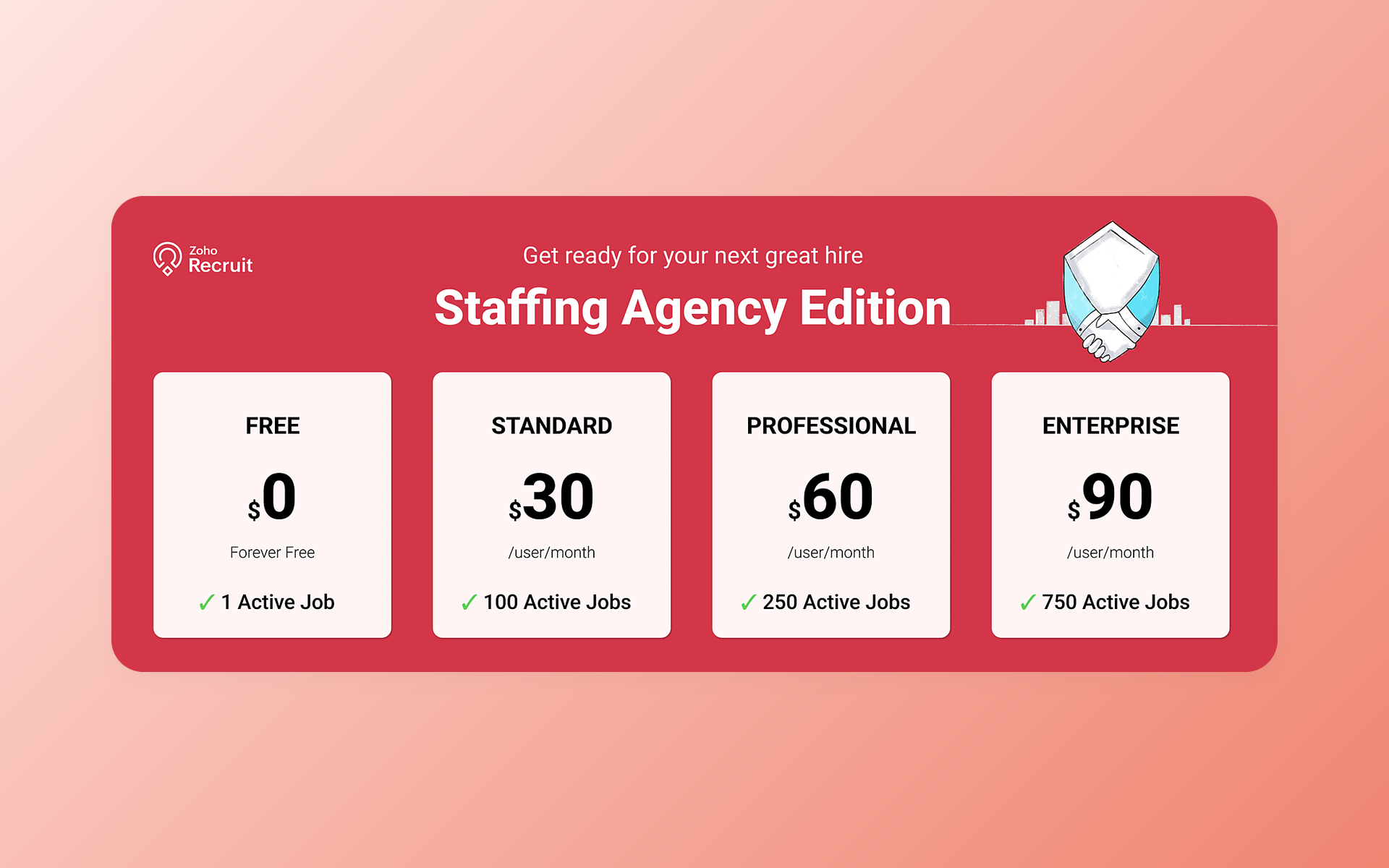
Zoho Recruit is the lowest-priced real ATS on this list and the tool our own prospects cross-shop more than almost anything else. It suits budget-first SMBs and staffing agencies, doubly so if you already live in the Zoho ecosystem.
Verified pricing: $25/recruiter/mo billed annually. G2: 4.4 from 1,843 reviews. The asterisk: Zia, its AI candidate matching, is gated to the Enterprise tier at $50/recruiter/mo. The famous low sticker price does not include the AI.
Limitations: the feature sprawl makes setup feel heavy for a small team. Verdict: unbeatable entry price, as long as you price the tier you will actually need.
Breezy HR - best for visual simplicity
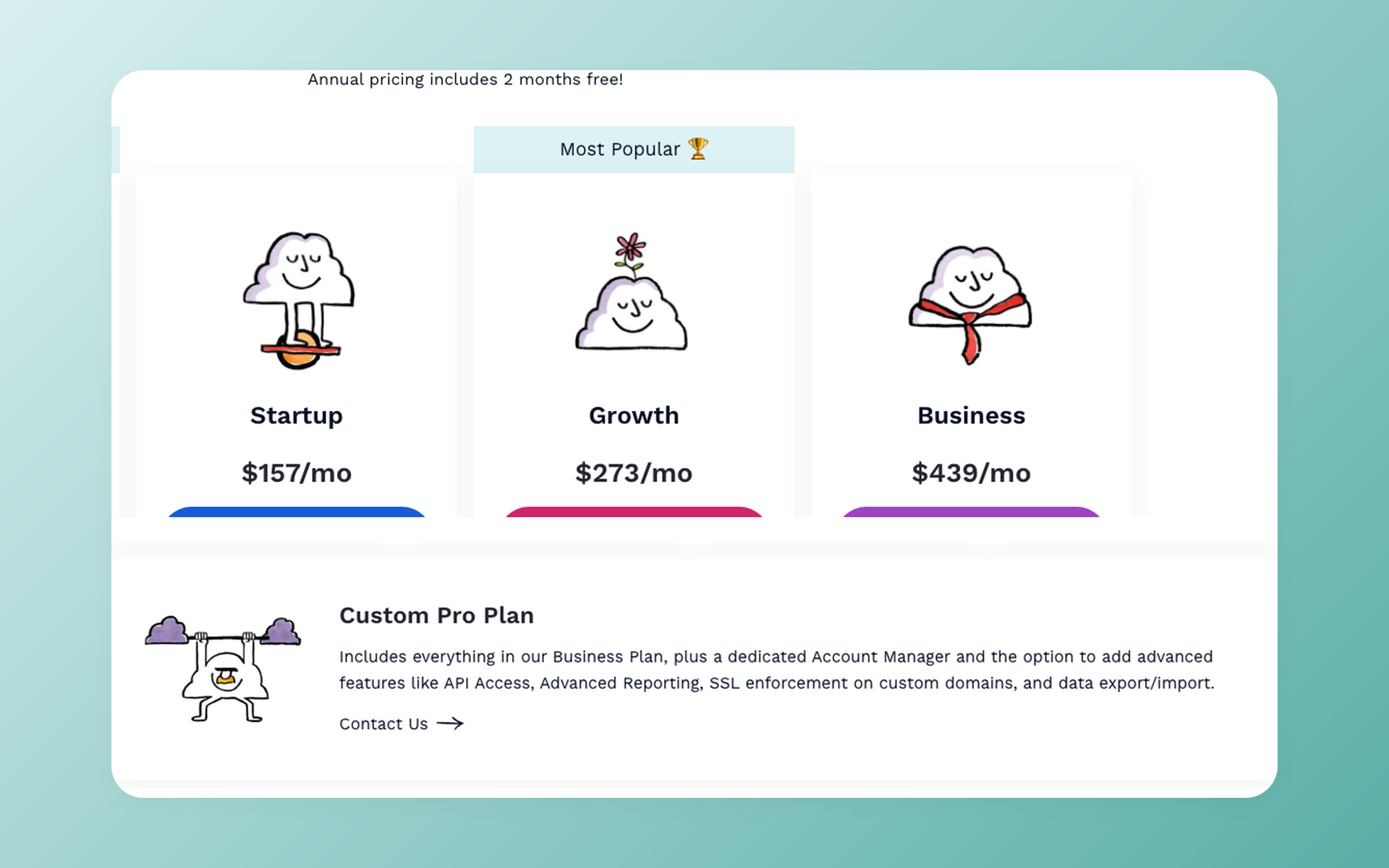
Breezy HR gives small teams a drag-and-drop pipeline that needs almost no training. Recruiters describe it as solid for small teams without much overhead, and it shows up constantly in our own demo conversations as the other finalist.
Verified pricing: $157/mo billed annually for the Startup plan, 14-day trial. G2: 4.4 from 686 reviews. Its AI, Breezy Intelligence, is a credit-based add-on rather than a tier gate.
Limitations: API access sits on the top tier, and depth runs out as hiring volume grows. Verdict: the easiest first ATS to love, with a ceiling.
Manatal - cheapest entry, mind the gates
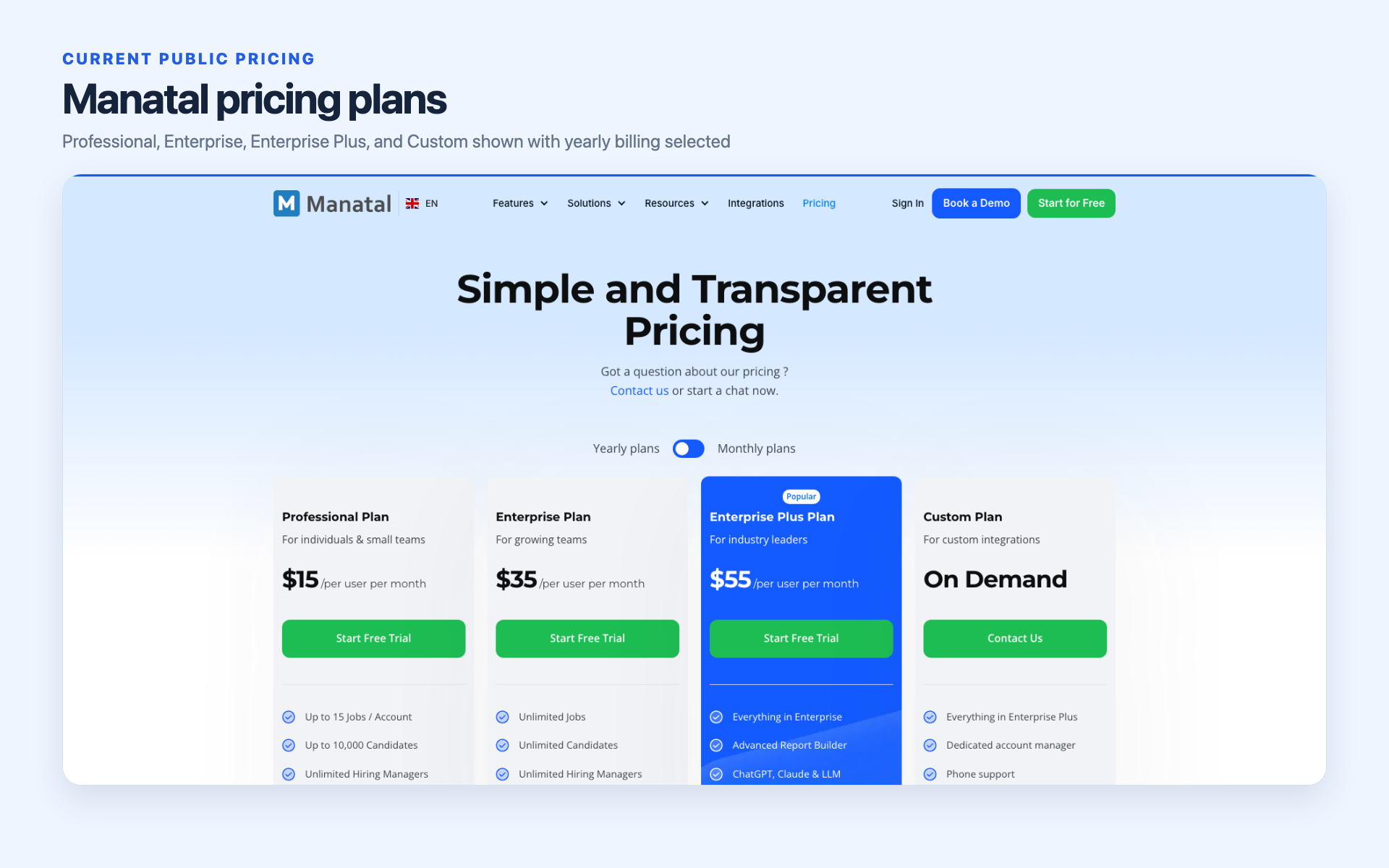
Manatal posts the lowest per-user price of any ATS here: $15/user/mo billed annually, with a 14-day trial. It leans toward staffing agencies, with strong traction in Indian and Southeast Asian markets. G2: 4.8, though from just 147 reviews.
The gates matter more than the sticker. Per Manatal's published plan matrix, the Professional plan caps you at 15 active jobs, and workflow automations, API access, and LLM integrations all sit on the Enterprise Plus tier at $55/user/mo.
For automation-hungry teams the working price is nearly four times the advertised one.
Verdict: honest value at the entry tier for straightforward agency work; read the plan matrix twice before committing.
Choosing between these five and the wider ATS market deserves its own full comparison - we wrote one: best ATS software compared.
Stage 2: sourcing - filling the top of the funnel
Here is where the real pricing anger lives. Not at ATS vendors - at the sourcing incumbents.
Recruiters in the threads we studied describe LinkedIn Recruiter as getting worse and more expensive every year, and Indeed as volume without quality - one hiring manager reported 300-400 applicants per posting with one or two genuinely qualified.
The bottleneck moved: finding names is easy now, and the pain is cost and signal.
Single-channel sourcing has a reach problem too. A ZoomInfo Talent Solutions executive, citing JAMA-published research on a recruiting podcast, noted that only around 40-45% of healthcare professionals have LinkedIn profiles.
Source only there and you miss half of a specialist market.
Practitioners use AI-native sourcing tools as the practical alternative, at a fraction of the cost of a LinkedIn Recruiter seat. Three picks below, plus a CRM hybrid.
Juicebox (PeopleGPT) - best for natural-language AI sourcing
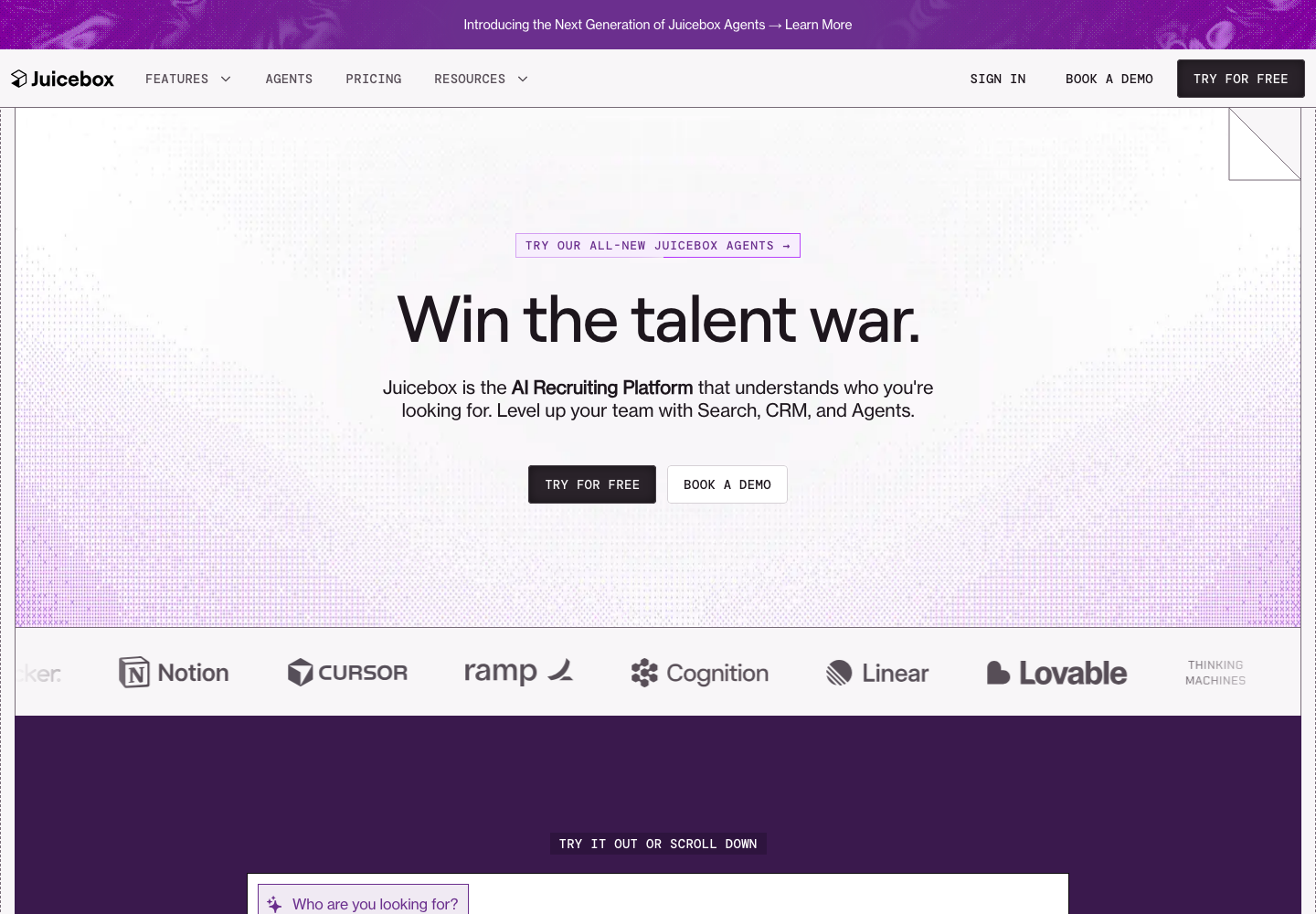
Juicebox lets you type a search the way you would say it - "senior firmware engineer, 3-5 years, medical devices, open to relocation" - and returns matches from what the vendor counts as 800M+ profiles across 30+ sources.
AI explains each match, and the agents add-on drafts and sends outreach.
Solo recruiters in the sourcing threads talk about it warmly as the affordable way off LinkedIn Recruiter. Verified pricing: a free plan, then Starter at $139/seat/mo ($119 billed annually) and Growth at $199/seat/mo. Its G2 presence is too thin to cite responsibly.
One documented caution: a recruiter reported a colleague's LinkedIn account getting banned when using automation tooling alongside it. Any tool that touches LinkedIn at scale carries terms-of-service risk - go in with eyes open.
Verdict: the most exciting sourcing UX of the batch, with a thin review base and platform risk as the trade.
SeekOut - best for hard-to-fill technical and specialist roles
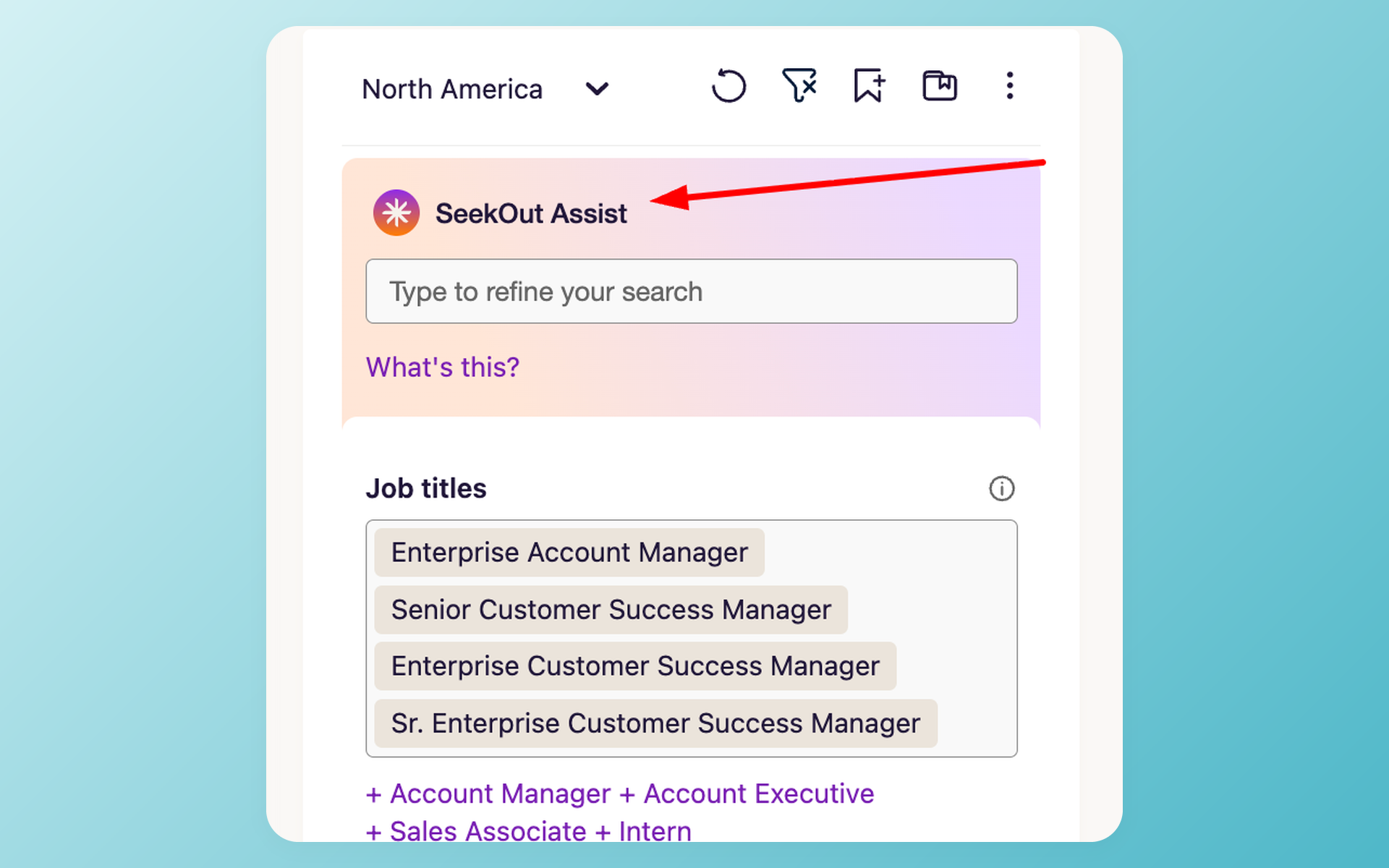
SeekOut indexes 750M+ public profiles by its own count, with deep filters for technical talent, plus a blind-review mode that hides names, photos, and schools for less biased shortlists. It syncs with the major enterprise ATSs.
Verified pricing: $149/mo billed annually ($179 monthly) for Recruit Core, with a free trial - rare pricing transparency for this category. G2: 4.5 from 759 reviews. Limitations: reviewers flag inconsistent data accuracy outside the US.
Verdict: the specialist-role workhorse, and one of the few sourcing tools you can buy without talking to sales.
hireEZ - best for high-volume outbound
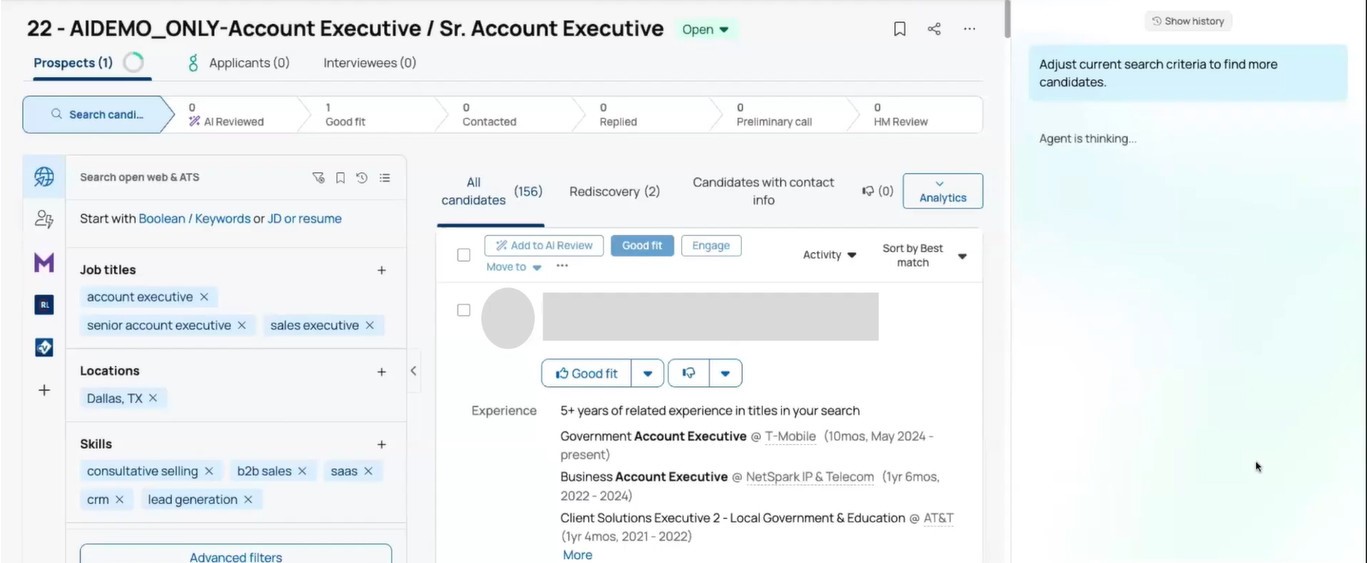
hireEZ claims 750M profiles from 45+ sources and plugs into 30+ ATS and CRM systems, built for teams running continuous outbound across many roles at once.
Verified pricing: $494/mo for solo recruiters, 7-day trial. G2: 4.6 from 264 reviews. Practitioners credit it with hundreds of hires and grumble about creeping feature bloat in the same breath.
Verdict: the step up from Juicebox in both capability and price; overkill below a steady outbound workload.
Gem - best for sourcing sequences plus a CRM layer
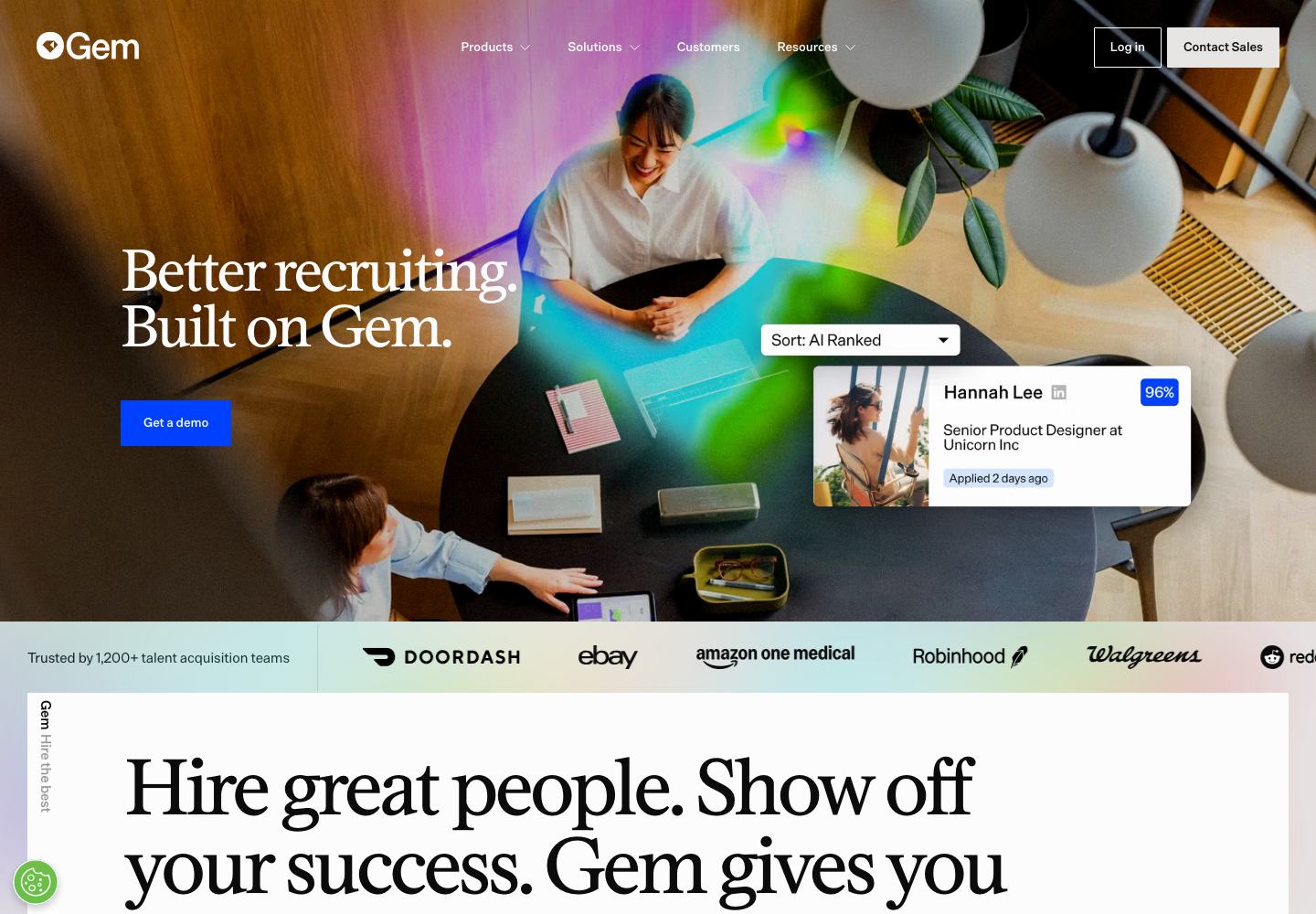
Gem bridges this stage and stage 5: LLM search across a claimed 800M+ profiles, automated outreach sequences, and a recruiting CRM that keeps a record of each candidate interaction.
Podcast veterans of the category describe Gem as part of the "hiring CRM" wave that grew up next to the ATS over the last decade.
Pricing is tiered by company size (Startups, Growth, Enterprise) with exact numbers unpublished. The Startups tier includes 500 AI sourcing credits a month; Growth bundles a year of Metaview Pro. G2: 4.7 from 287 reviews.
Limitations: Gem added its own ATS recently and that side is still raw - treat it as the sourcing and CRM layer next to a dedicated ATS, not a replacement for one. Verdict: the outbound team's memory, priced for funded teams.
Worth watching: several heads of talent independently named Noon AI in their stack posts this summer as an emerging AI sourcer. No public pricing or review base yet, so it stays a watchlist item here.
And LinkedIn Recruiter itself? Even TA leads actively cutting their dependency keep a seat around for relationship-building. The realistic goal is reducing reliance, not cold turkey.
Stage 3: screening and assessments - separating signal from volume
Application volume broke screening. Zapier's global head of talent shared on the Recruiting Future podcast that 20-30% of applications for their technical roles were getting flagged by fraud-detection systems - and that was before counting the merely unqualified.
Two tool approaches attack this. The first is AI resume scoring inside the ATS: 100Hires AI Score, covered in stage 1, ranks the pile against your criteria before you open a single resume. For the wider category, see our guide to AI recruiting software.
The second approach tests what resumes claim. One compliance note before you automate anything here: keep knockout and screening questions within EEOC guidance on pre-employment inquiries, and route borderline candidates to human review rather than auto-rejecting.
TestGorilla - best for skills tests that replace resume guesswork
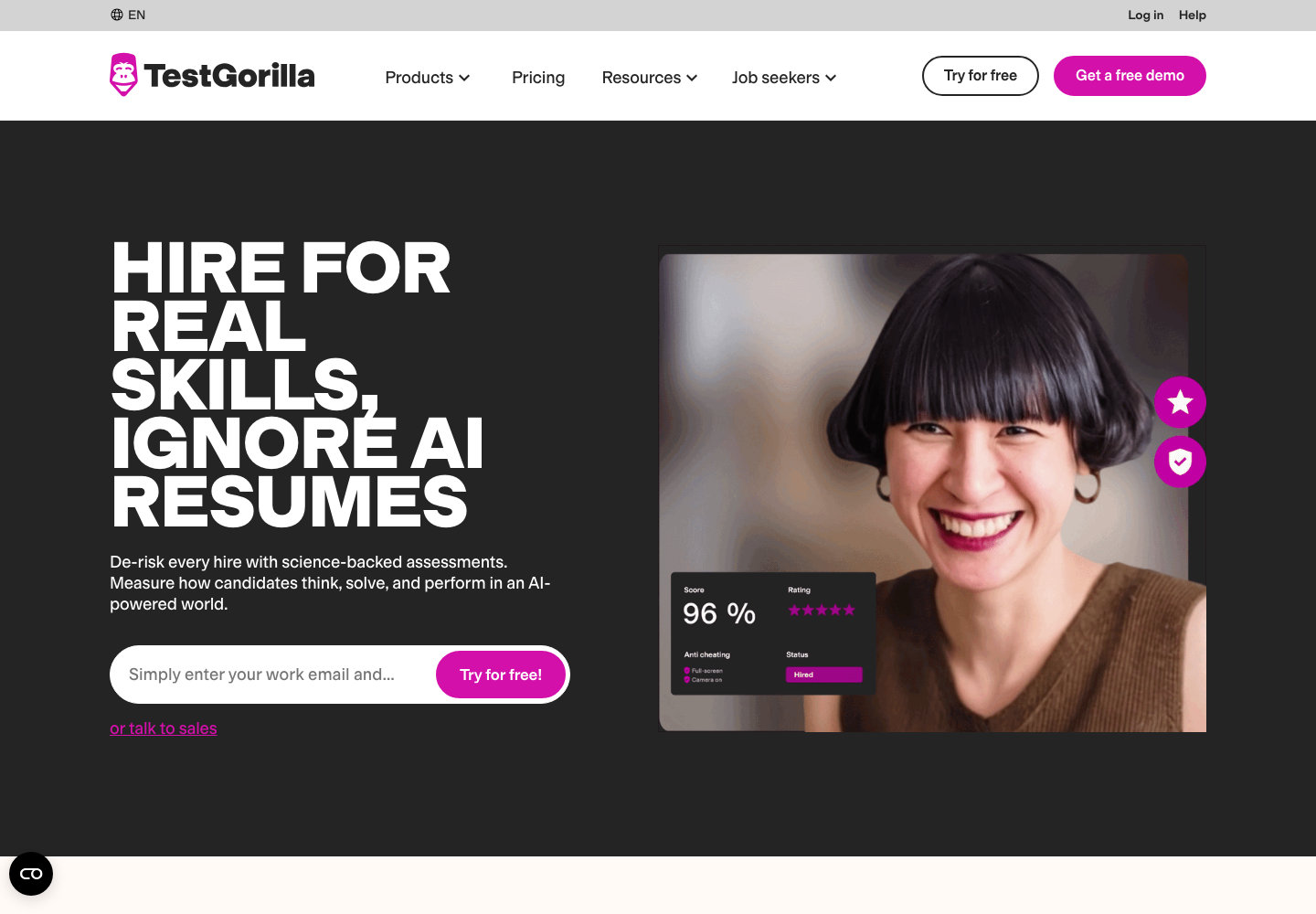
TestGorilla offers a test library of 300+ assessments (per its own catalog) covering role skills, cognitive ability, and personality, with AI-assisted scoring included on every tier. For high-volume roles it flips the funnel: candidates prove skills first, resumes come second.
Verified pricing: a genuinely free plan, then Core at $142/mo billed annually and Plus from $400/mo. G2: 4.5 from 1,441 reviews.
Selection note, in the spirit of our methodology: TestGorilla generated almost no chatter in the practitioner threads we studied. It earned this slot on published pricing, a large review base, and our own hands-on coverage in two prior guides.
Limitations: credit-based pricing takes some math to forecast at volume, and generic tests fit generic roles best.
Verdict: the cleanest way to make screening about evidence instead of resume formatting.
Stage 4: interviewing - scheduling and interview intelligence
Two separate problems hide in this stage: getting interviews booked without email ping-pong, and capturing what actually happened in them. TA leaders' stack posts increasingly list an AI notetaker as a default layer, right next to the ATS.
Calendly - best for scheduling candidates already know
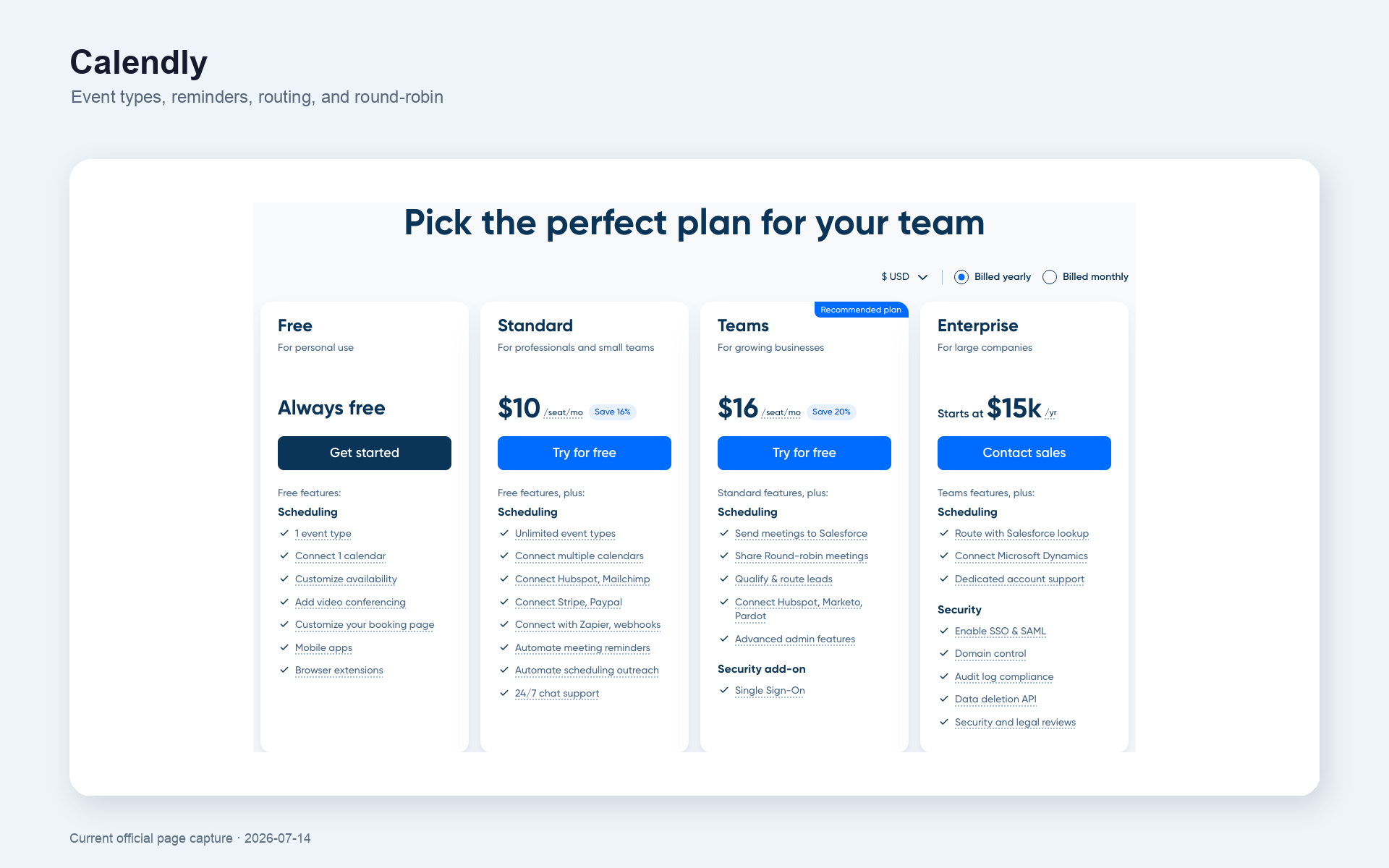
Calendly is not a recruiting tool by birth, and that is its advantage: candidates recognize it and booking just works. Verified pricing: a free plan, then $10/seat/mo billed annually. G2: 4.7 from 2,641 reviews - the largest review base of any SMB-priced tool in this guide.
Limitations: no panel load-balancing, no deep ATS sync, no recruiting-specific logic - enterprise teams outgrow it into tools like GoodTime, which is quoted based on candidate volume. And if your ATS includes self-scheduling (100Hires does), you may not need it at all.
Verdict: the pragmatic default until interview operations get genuinely complex.
Metaview - best AI interview notes
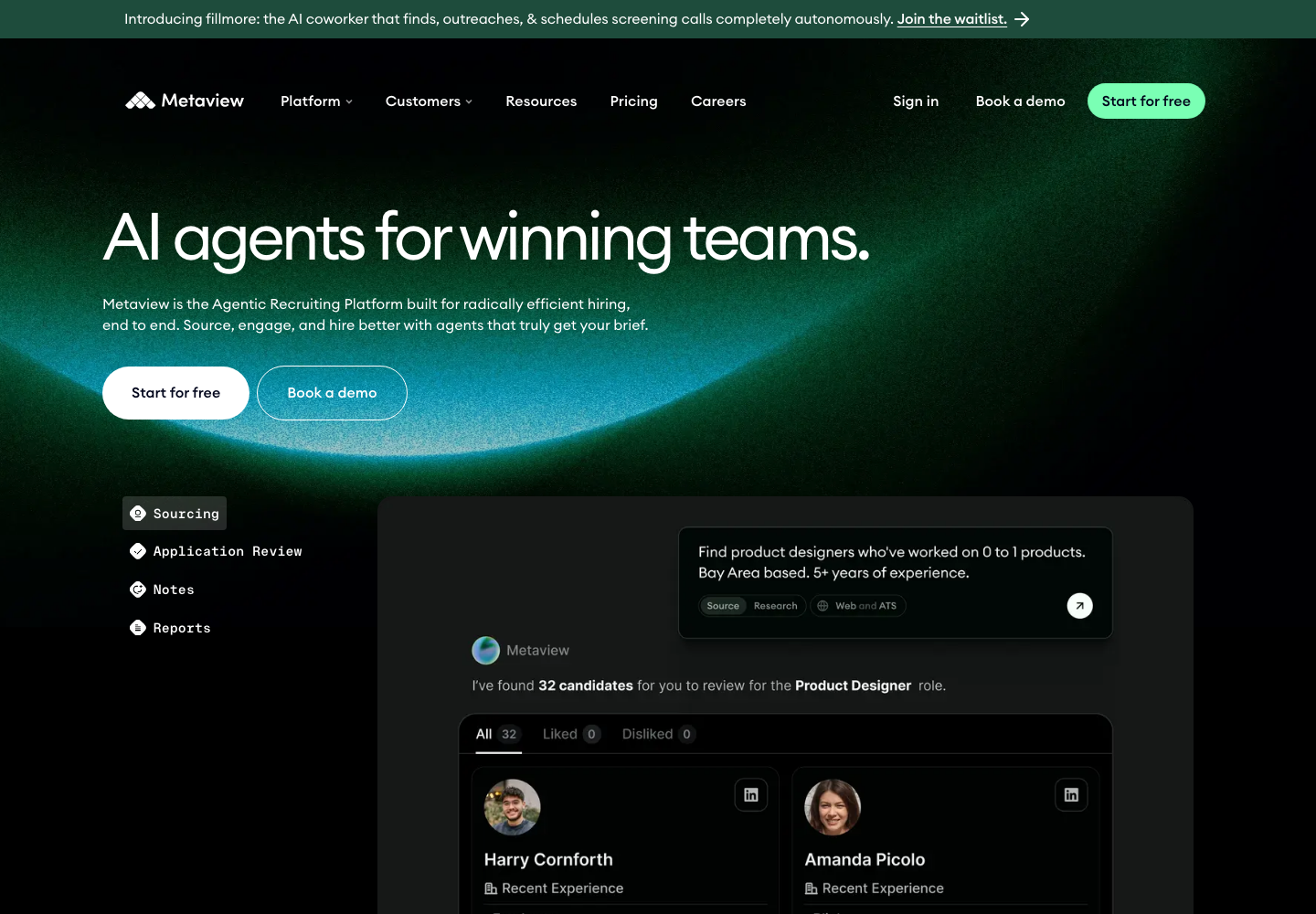
Metaview transcribes interviews and drafts structured notes and summaries straight into your ATS. It was the most consistently loved tool across every practitioner thread we read - recruiters skeptical of AI resume review still volunteer that an AI notetaker changed their week.
Pricing: free tier, Pro at $100/user/mo. Limitations: notes still need human judgment before hiring decisions, and interviewers must consent to recording where the law requires it.
Verdict: if your scorecards come back empty after every interview cycle, this is the fix people actually stick with.
Stage 5: candidate relationships - your cheapest pipeline is people you already know
Every hire leaves behind silver medalists: people who interviewed well and lost to someone marginally better. Re-engaging them costs a fraction of sourcing strangers, yet most teams let that pipeline rot in a closed job's archive.
That re-engagement is exactly what candidate engagement software automates: enroll past applicants in a sequence and the follow-up runs until someone replies.
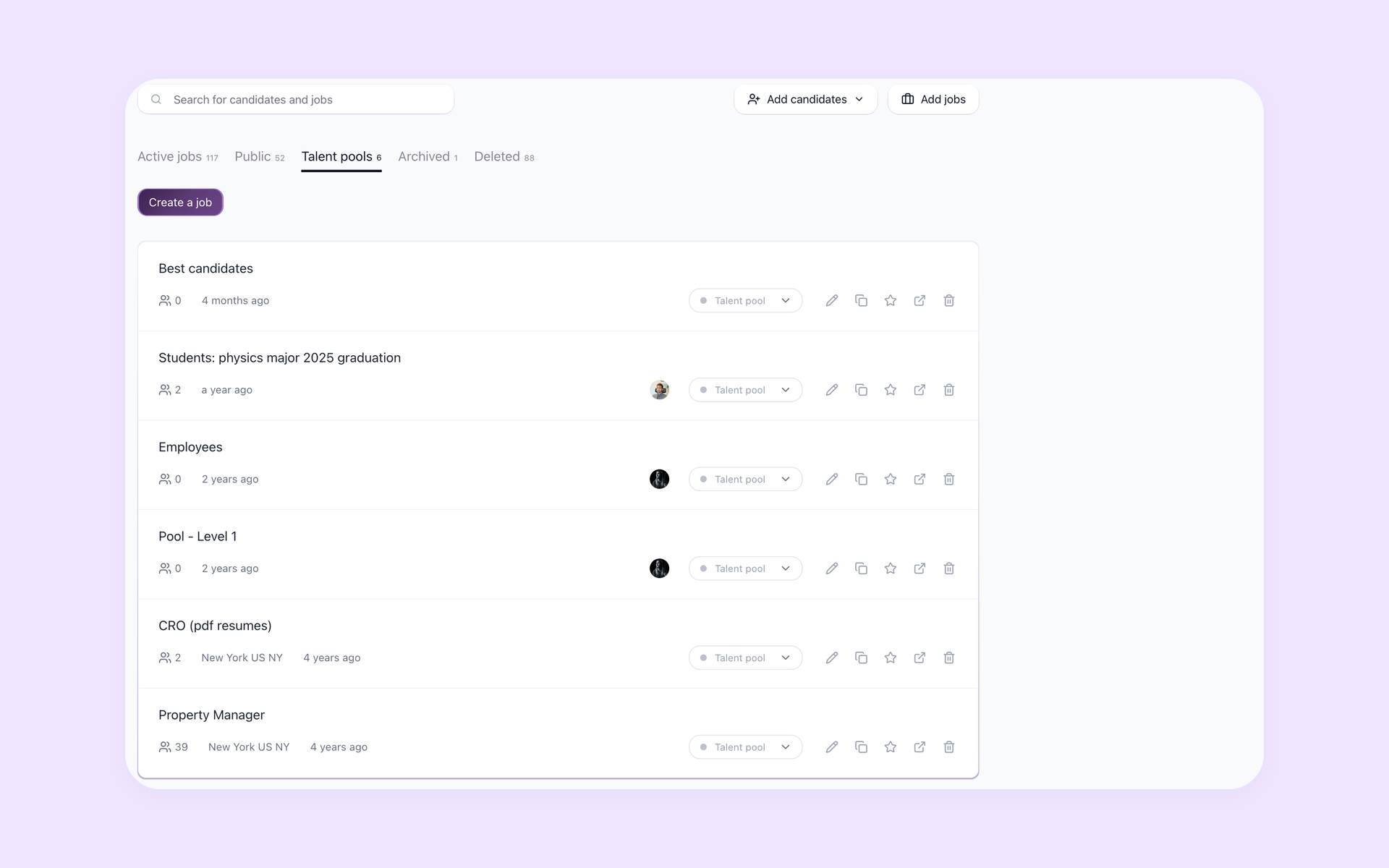
The loop looks like this: capture every applicant, segment the good ones into pools, keep them warm, re-match them when a new role opens.
100Hires runs this natively - Talent Pools keep a closed pipeline alive without reposting the job, and Nurture Campaigns keep candidates warm on a schedule.
Outbound-heavy teams use Gem here for the same workflow across sourced candidates, not just applicants. For the full picture of this category, see our breakdown of candidate relationship management systems.
Stage 6: reporting and analytics - prove the funnel works
This is the stage that pays for all the others - it is how the solo recruiter justifies the budget to the person approving it. Yet weak reporting is the most common structural complaint in the competitor reviews we track, from Greenhouse to JazzHR.
What deserves measuring: source of hire, time to fill, stage-to-stage conversion, offer-accept rate. 100Hires covers these with standard reports plus trackable links that attribute every candidate to the exact source link that produced them.
Honest limit: deep custom BI is enterprise territory, and the SMB tiers here do not pretend otherwise.
The stakes are measurable. Greenhouse's own platform study of 14 million applications, cited by their VP of talent planning, found 31% of rejected applicants never received a rejection notice, and roughly 20% of posted jobs in a quarter qualified as ghost jobs.
Automated candidate communication is not a nicety - it is a measurable funnel fix your reports will catch.
Enterprise talent acquisition platforms: when you outgrow the SMB stack
Past roughly 500 employees, or with serious compliance and governance needs, the enterprise suites earn their keep.
Go in knowing two things: of the enterprise TA vendors whose pricing pages we checked in July 2026, six of seven publish no numbers at all, and implementations run months to a year per the practitioner consensus noted earlier.
Greenhouse - the structured-hiring standard for scale-ups
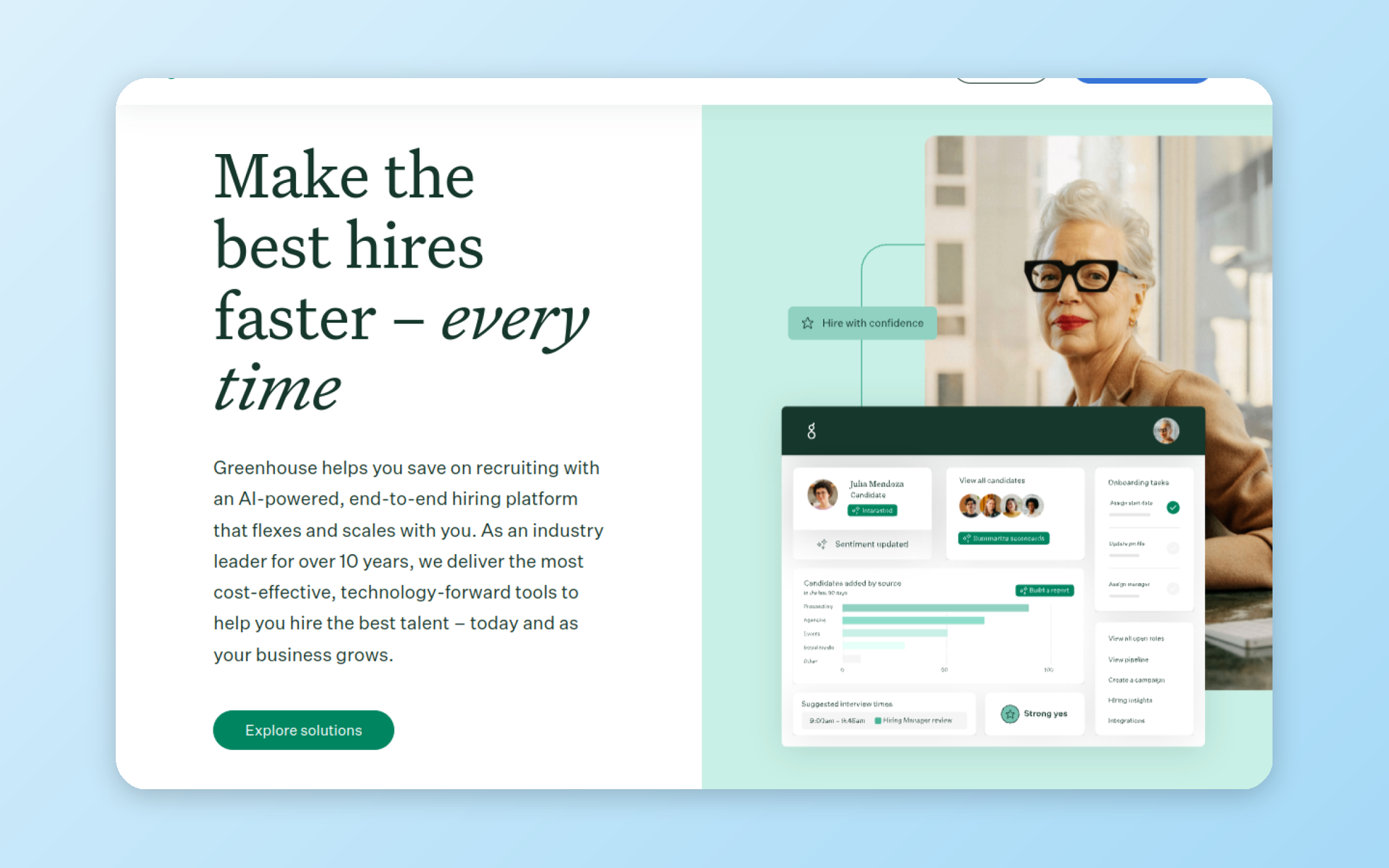
Greenhouse built its reputation on structured interviewing discipline and a deep integrations ecosystem. For 200+ employee companies with dedicated recruiting ops, it is the reference point everything else gets compared to. G2: 4.4 from 3,923 reviews.
The costs, honestly: pricing is custom-quote only (Core, Plus, Pro tiers), and the AI features - report filters, sourcing automation, fraud detection - sit on Plus and above. Core has none.
On our own demo calls, prospects consistently describe it as great but too expensive, right before asking about alternatives. Community threads add that setup without a dedicated implementer is rough.
Credit where due: that 14M-application funnel study from stage 6 is their research. They take hiring data seriously. Verdict: the safest enterprise choice, priced and staffed accordingly.
Lever - ATS plus CRM in one, if you can get a price
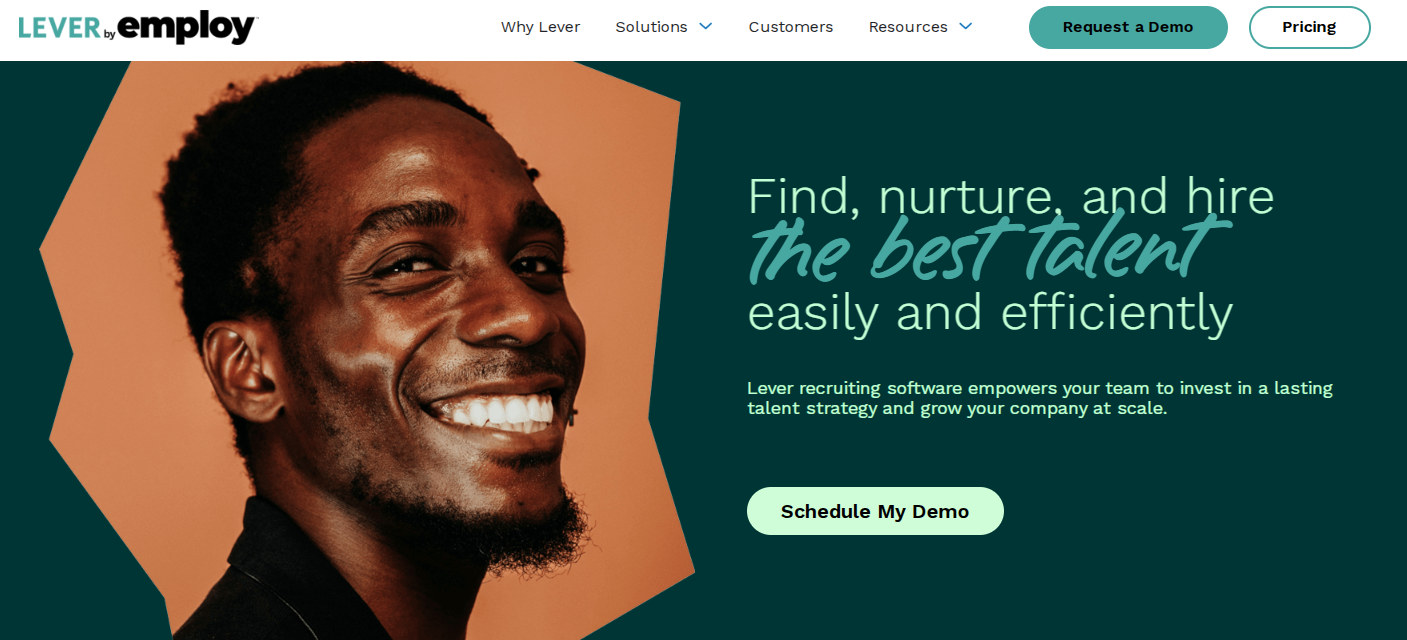
Lever combines the ATS with a native candidate CRM, a fit for collaborative teams that source proactively. G2: 4.3 from 2,116 reviews. Pricing is available on request only.
Its marketing claims AI screening on all plans, though no public tier breakdown backs that up in detail. A current Lever customer on one of our demo calls named inaccurate source reporting and a rigid careers page as the reasons their renewal was in question.
Lever is part of Employ Inc., the same parent as JazzHR and Jobvite.
Verdict: the two-in-one architecture is real; verify the reporting on your own data during evaluation.
Ashby - the startup favorite with an all-in-one pitch
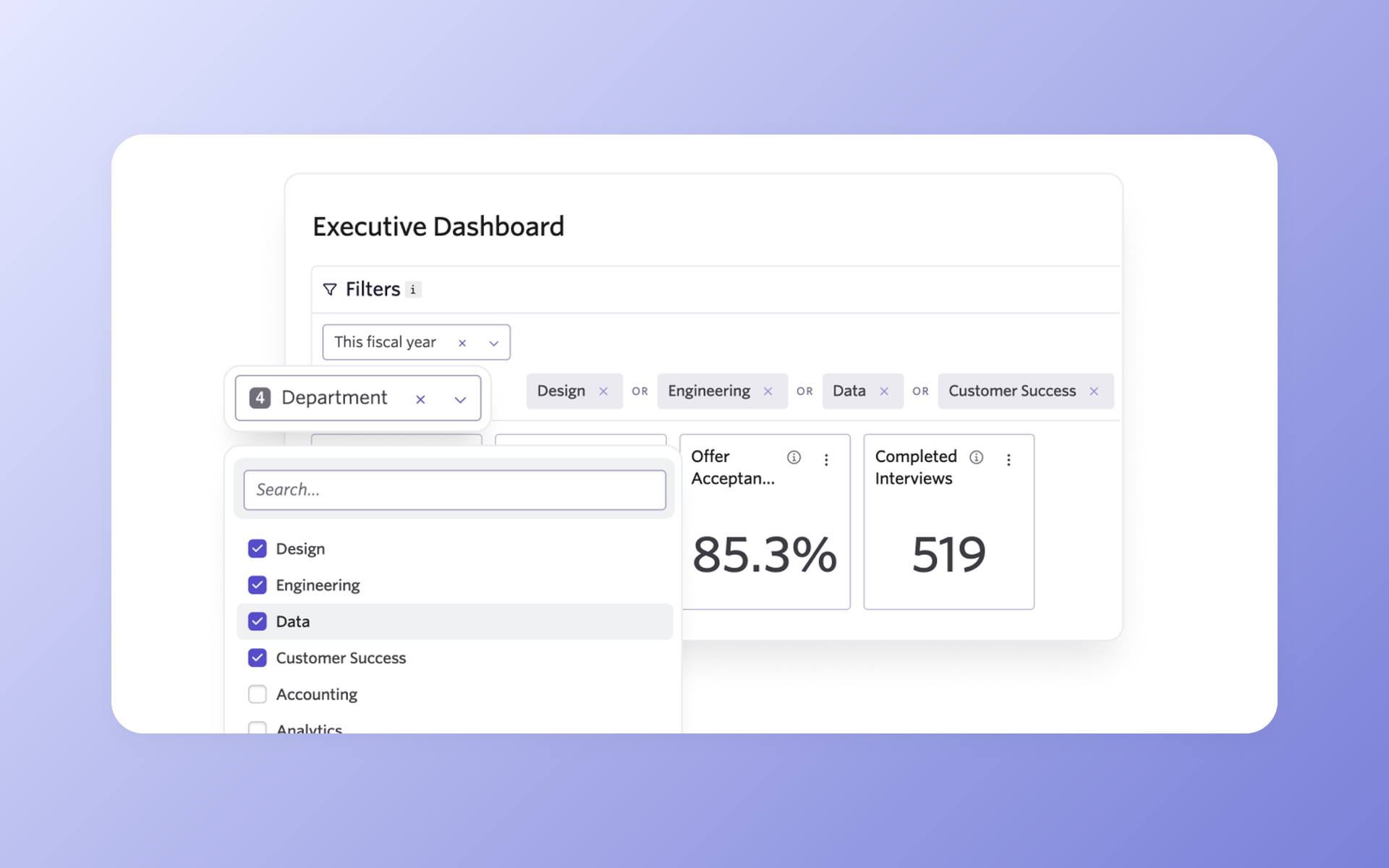
Ashby is what funded startups pick in 2026: ATS, sourcing, scheduling, and serious analytics in one product. Startup circles credit it with drawing attention away from Lever and Greenhouse at prominent tech companies. G2: 4.7, from a still-small base of 114 reviews.
Verified pricing: $400/mo for Foundations (companies up to 100 employees). The balance sheet: there is no self-serve trial - one buyer's public evaluation thread dropped it for exactly that reason - custom fields sit on higher tiers, and the AI Notetaker is sold separately.
Skeptics in the same startup circles argue it wins by clearing a low bar the incumbents set, not by solving recruiting.
One honesty note from our side: Ashby rarely shows up against us on SMB demo calls - it courts a different, better-funded buyer. Verdict: the strongest analytics case in the suite tier; Foundations runs $300 to $900 a month up to 100 employees, larger companies get a quote, and you buy on a guided demo.
The rest of the enterprise field in one line: iCIMS and Workday Recruiting are the quote-only systems of record for thousand-person orgs, and Phenom and Eightfold sell talent-intelligence layers on top. All four sit beyond the budget and needs of the reader this guide serves.
How to choose: a stack for every budget
Map the spend to the funnel stage that is actually broken, not to the shiniest demo.
- Under $2k/yr: one ATS with AI included. 100Hires Start billed annually is $588/yr. Add nothing until inbound stops working.
- $5k-10k/yr: ATS plus one stage-2 or stage-3 tool - a sourcing seat if the pipeline is empty, assessments if it is overflowing.
- $10k-20k/yr: the full four-tool stack - ATS, sourcing, assessments, and an AI notetaker.
Three anti-patterns from the buying threads, so you can skip the tuition. Feature-count buying: tools people do not log into are pure cost, and hiring managers refusing to use the ATS is the most common silent failure.
Stack sprawl: one staffing owner described running seven disconnected tools, one of them a plain spreadsheet - consolidating beat every single-tool upgrade they considered.
HRIS-module complacency: recruiting modules bolted onto HR platforms are built for convenience and hit their limits fast once volume is real - buy a dedicated ATS and keep the HRIS for HR.
The pre-purchase checklist:
- Trial you can run yourself, without a sales call
- Published pricing, including the tier with the features you actually need
- AI included in the plan, not gated to enterprise
- Posts to the job boards your candidates actually use
- Syncs with your calendar and email from day one
- Reports you would show your exec without apologizing
FAQ
What are the tools used in talent acquisition?
Six categories map to the hiring funnel: applicant tracking systems (100Hires, Workable), sourcing tools (Juicebox, SeekOut, hireEZ), screening and assessments (TestGorilla), interview scheduling and AI notes (Calendly, Metaview), candidate relationship management (Gem, 100Hires Talent Pools), and reporting. An all-in-one SMB platform like 100Hires covers pipeline, AI screening, scheduling, and nurture in a single subscription.
What is the difference between an ATS and a recruiting CRM?
An ATS manages candidates inside a specific job's pipeline: applications, stages, interviews, offers. A recruiting CRM manages relationships between jobs: talent pools, outreach sequences, re-engagement. Enterprise teams often buy both. 100Hires bridges the two for SMB teams with Talent Pools and Nurture Campaigns built into the ATS, detailed at https://100hires.com/candidate-relationship-management.html.
What is the best talent acquisition software for small businesses?
For most small teams in 2026, 100Hires is the best fit covered here: AI candidate scoring included from $49/mo billed annually ($99 month-to-month), a 14-day trial with no credit card, and posting to 13 job boards. Zoho Recruit wins on pure entry price at $25/recruiter/mo, and Workable is the polished mainstream pick at $299/mo.
What are the top talent acquisition platforms for enterprise teams?
Greenhouse, Lever, Ashby, iCIMS, and Workday Recruiting lead the enterprise tier. Expect custom-quote pricing (none of the five publishes rates except Ashby's $400/mo entry) and implementation timelines measured in months. 100Hires deliberately serves the other end of the market: companies under 500 employees that want AI screening working within a day, not a year.
Do I need separate talent acquisition tools or one platform?
Start with one platform covering the pipeline stage, then add point tools only when a specific stage breaks. A modern SMB platform like 100Hires covers applicant tracking, AI screening, interview scheduling, and candidate nurture in one subscription, with AI capped by usage instead of gated to enterprise tiers - most teams under 500 employees never need more than that plus perhaps one sourcing tool.
The short version
Buy the ATS core first - it is the system of record everything else plugs into. Add a sourcing tool when inbound dries up, assessments when volume swamps you, an AI notetaker when scorecards come back empty. Skip anything you cannot trial yourself.
That last filter alone eliminates most of the enterprise tier and, conveniently, everything overpriced for a team your size.
100Hires is built to be the first purchase in that sequence: AI Score and AI Copilot included from $49/mo billed annually ($99 month-to-month), published pricing, and a 14-day trial that asks for neither a credit card nor a phone call.
Bring a live opening and let the scoring argue for itself.
Try 100Hires for free
No credit card. 14-day trial. Forbes Advisor #1 ATS for SMBs.