
hireEZ Competitors & Alternatives in 2026: Renewal Pricing and Data Accuracy
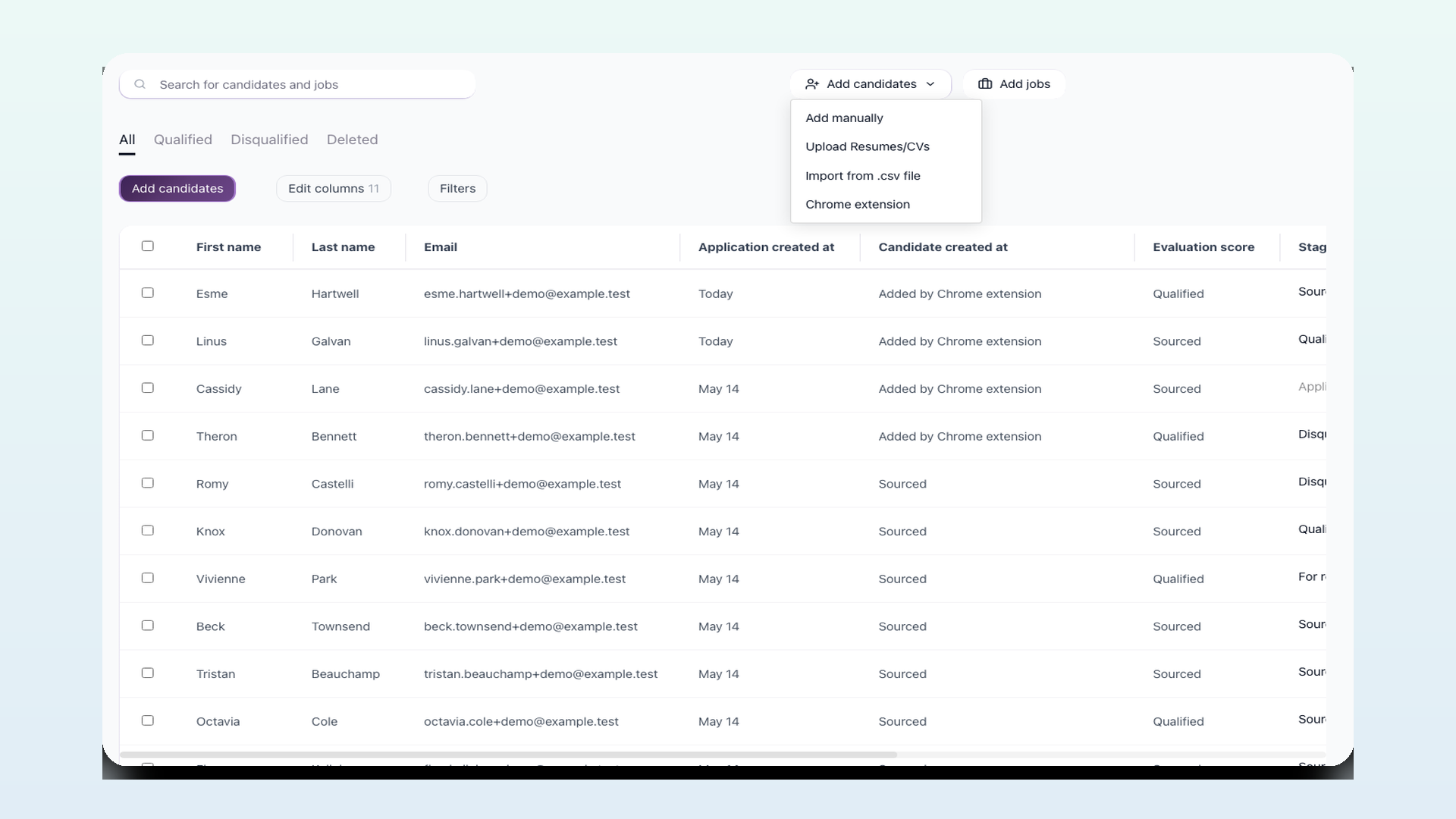
hireEZ is a sourcing platform: candidate search across a large aggregated index, contact reveal, and outreach sequencing in one place. It is a capable product, and the reason people search for alternatives is almost never the features.
It is renewal pricing. The two most detailed accounts recruiters have posted about leaving hireEZ are both about the same experience, and neither is about a missing capability.
What hireEZ costs
The hiring playbook, in your inbox
One email a week - benchmarks, AI screening tactics, and short interview templates from the 100Hires team. No product pitches.
hireEZ now states an entry price on its own site, which is a change from the quote-only posture it held for years. From hireEZ's pricing page, checked on 25 July 2026:
Their own page states that solo recruiters start at $494 per month, with a seven-day free trial.
Third-party pricing research tells a different and more complicated story: list rates of roughly $169 to $250 per seat per month across three licence bands, with a real median contract around $13,000 a year per Vendr marketplace data.
| Source | Figure | What it describes |
|---|---|---|
| hireEZ's own page | $494 per month | Solo recruiter entry, 7-day trial |
| Third-party list rates | $169 to $250 per seat per month | Three licence bands |
| Vendr median contract | About $13,000 a year | What teams actually sign |
Both can be true: a solo self-serve seat priced high, and team contracts negotiated down per seat but up in total. What it means practically is that hireEZ pricing is not a rate card, it is a negotiation, and your leverage at renewal is the whole game.
Why teams leave, in their own words
The clearest account came from an r/recruiting thread titled simply "Hireez alternatives":
Their account combines two complaints in one decision: contact data quality declining noticeably over the previous couple of years, and then a price increase of more than 50 percent at renewal, which settled it.
Two separate complaints in one sentence: data quality declining, and a step change in price. Either alone is survivable. Together they end a renewal.
A second account, from a thread comparing SeekOut and hireEZ, puts a number on it:
Their account puts a number on it. After four years as a satisfied customer, their annual price was moved from a grandfathered $2,500 to roughly $12,000, and they declined to renew, telling the vendor plainly that it read as gouging a loyal account.
That is a 4.8-fold increase for an existing customer, and it lands very close to the $13,000 median contract figure from Vendr.
The likeliest explanation is not gouging in the moral sense but repricing: long-standing grandfathered accounts being moved onto current rates all at once.
A third recruiter in the same conversation:
Their assessment: the platform itself was genuinely enjoyable to use across technical and corporate roles, but the combination of current pricing and email-finding accuracy had become the problem.
Notice the pattern across all three: they liked the product. Capterra reviewers agree, scoring it 4.7 across about 103 reviews. G2 reviewers describe the interface as feature-dense with a steep learning curve, which is a training cost rather than a defect.
The data-quality question nobody markets
Two of the three accounts above mention contact accuracy declining. That deserves context rather than repetition, because it applies to the entire category and not just to hireEZ.
Sourcing tools largely draw on overlapping upstream data. As one in-house recruiter put it in a separate thread about sourcing spend:
Their argument is that most of these products resell overlapping LinkedIn-derived data behind different interfaces, and that the result is the same candidates being contacted by many recruiters using many tools.
If that is broadly right, then switching from hireEZ to another aggregator buys you a different interface and a different price, not a different candidate pool or fundamentally better contact data. Which means the only comparison worth trusting is one you run yourself.
The bake-off that settles it
Every vendor in this category claims the highest accuracy, and the claim is untestable in the abstract. It is trivial to test on your own roles.
- Take 50 real names from a role you are actually hiring for, not a list the vendor picks.
- Run the identical list through two or three tools using free trials or trial credits.
- Count usable contacts, not reveals. A bounce or a switchboard number is a failure that still consumed a credit.
- Divide each plan price by usable contacts. That number, not the sticker price, is your real cost per contact.
- Repeat for a second, different role if your hiring spans very different audiences. Coverage on senior engineers predicts nothing about coverage on field technicians.
Teams that do this usually find the ranking differs from every published comparison, including this one, because coverage is audience-specific.
Alternatives, by what you are replacing
SeekOut, if search quality is what you valued
A talent search engine with its own index rather than a reveal tool. Self-serve Recruit Core is $149 per month paid annually upfront ($1,788 a year) or $179 billed monthly, with custom tiers reported at $10,000 to $30,000 a year. Capterra 4.7 across about 188 reviews.
Recruiters working niche engineering, product and design roles single out its profile-cloning workflow, finding people similar to someone you already like, as the feature that changes how hard searches run.
SignalHire or Nymeria, if you only need contact reveals
SignalHire publishes plans from about $69 per month with a free tier, and Nymeria runs $39, $79 and $159 per month. Both are dramatically cheaper than hireEZ because they do one job. If you have a search source already and only need emails, this is the honest downgrade.
Gem, if you want sequencing and a CRM
Published at $99 to $149 per user per month, with a Vendr median annual contract around $24,900. Gem added an ATS in September 2025.
One existing customer piloted its AI on applicant review, gave the team access, and reported that nobody endorsed using it.
LinkedIn Recruiter, if you want the upstream source
Not published by LinkedIn; third-party consensus puts Recruiter Lite around $170 per month per seat and Corporate between roughly $9,000 and $15,000 per seat per year.
A useful tactic from a retained-search firm: keep one or two Lite seats for graph access instead of many full licences, which they reported cutting spend by around 60 percent.
100Hires, if the pipeline is the actual gap
An ATS with sourcing and enrichment included, from $49 per month. Detail and honest limits below.
Side by side
| Option | Entry price | Published? | Best for |
|---|---|---|---|
| hireEZ | $494 per month solo | Entry only | Sourcing plus outreach in one place |
| SeekOut | $149 per month annually | Yes | Search depth and niche roles |
| SignalHire | From about $69 per month | Yes | Contact reveals only |
| Nymeria | $39 per month | Yes | Cheapest reveal tool |
| Gem | $99 to $149 per user per month | Yes | CRM and sequencing |
| 100Hires Pro | $399 per month annually | Yes | Pipeline with enrichment attached |
How to handle a repricing conversation
A grandfathered account being moved to current rates is the most common trigger for this search, and it is more negotiable than it feels in the moment. Four things move the number.
- Ask for the increase to be phased. Vendors would rather take a smaller rise over two years than lose the account. A 4.8-fold jump in one renewal is an opening position, not a policy.
- Reduce seats before you argue about rate. Pull last-login data and count who has sourced anything in ninety days. Cutting dormant seats lowers the total without a rate concession the vendor has to justify internally.
- Bring a real quote. SeekOut's self-serve tier is published at $149 a month, which makes it easy to put a concrete competing number on the table rather than a vague threat.
- Ask what the increase buys. If contact accuracy on your audience has declined, say so with your own bounce data. It converts an emotional objection into a measurable one.
If none of that moves, you have learned something useful: the account is not one they are trying to keep, and shopping is the right response.
Our verdict
If you are facing a renewal increase, negotiate before you shop. The $2,500 to $12,000 story above is a grandfathered account being repriced. That is a conversation, not a fact of nature. Ask for a phased increase, a longer term at a lower rate, or a reduced seat count.
If accuracy on your audience is the complaint, do not assume a competitor fixes it. Run the 50-name test first. Most of this category draws on the same upstream data.
If you use maybe a third of what hireEZ does, downgrade the category rather than the vendor. A reveal tool at $39 to $149 a month does the narrow job for a fraction of a $13,000 contract.
If you are pasting revealed contacts into a spreadsheet, the sourcing tool is not your bottleneck. Everything after the reveal is where the hours go.
Where 100Hires fits, and where it does not
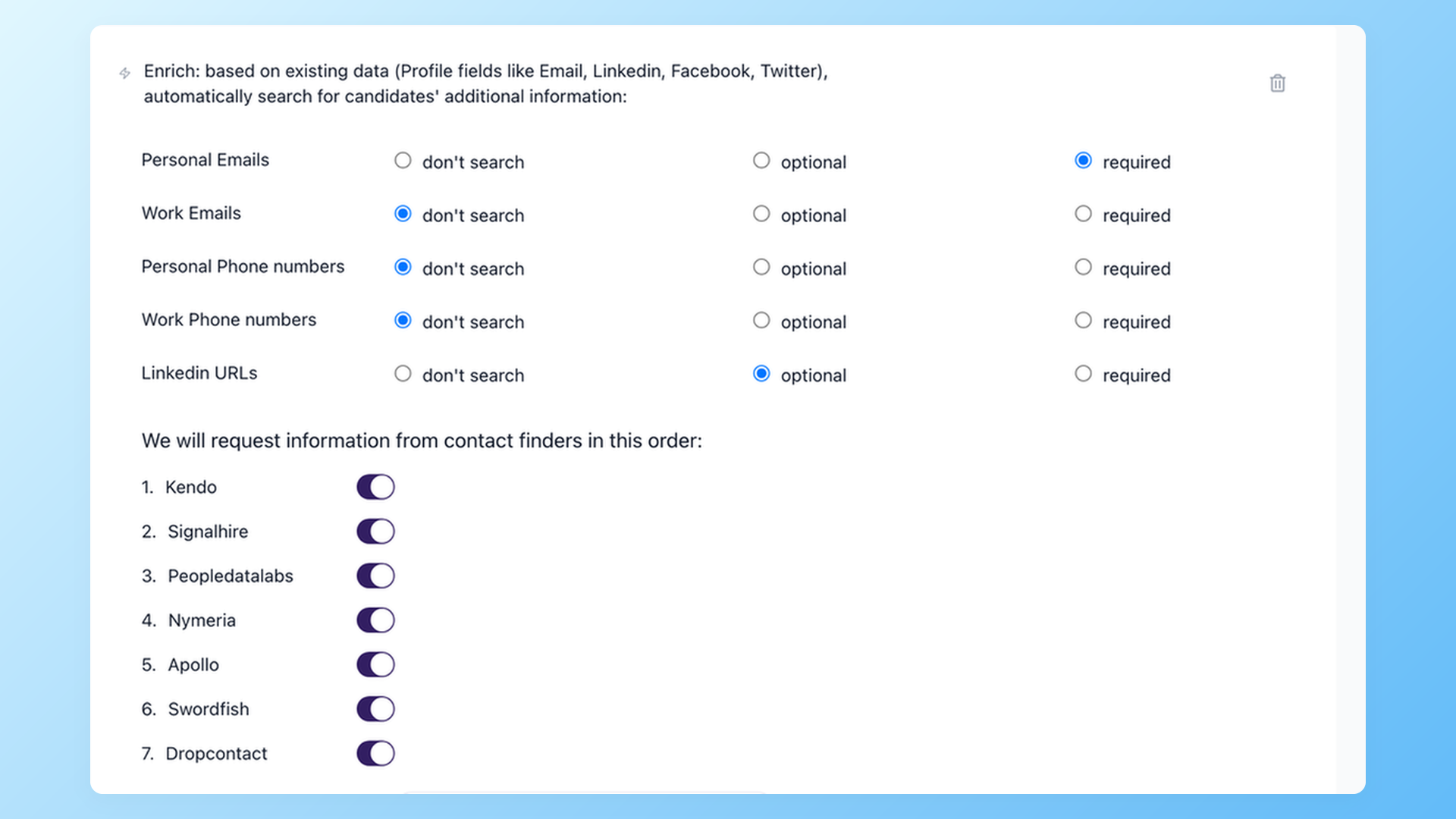
100Hires is an applicant tracking system with sourcing, contact enrichment and multichannel outreach included, not a standalone sourcing platform. Start is $49 per month billed annually ($99 monthly) for up to 100 candidates a month.
Advanced at $199 annually ($249 monthly) covers unlimited jobs, candidates and users. Pro at $399 annually ($499 monthly) is the tier that adds sourcing tools and contact enrichment. Capterra rating is 4.9 from more than 1,100 reviews as of July 2026.
100Hires is the wrong choice if:
- Deep search is the job. hireEZ and SeekOut index and filter candidates in ways a general ATS does not. If boolean depth and niche technical search are what you pay for, keep paying for them.
- You need high-volume contact reveals. If you reveal thousands of contacts a month, a dedicated credit tool is cheaper and more focused.
- You already have an ATS you like. Then you need a sourcing tool, not a second system of record.
- Diversity sourcing filters are a requirement. SeekOut in particular is stronger here.
- You are an agency selling into client accounts. Loxo or Recruit CRM combine sourcing with client-side workflow.
Where we fit is the team whose sourcing spend outgrew its pipeline tooling. See 100Hires pricing or start a free trial. For the narrower comparisons, see our SeekOut alternatives and SignalHire alternatives guides.
Frequently asked questions
How much does hireEZ cost?
hireEZ's own site states that solo recruiters start at $494 per month with a seven-day free trial. Third-party research reports list rates of roughly $169 to $250 per seat per month across three licence bands, and Vendr marketplace data puts the real median contract around $13,000 a year. Team pricing is negotiated rather than fixed, so the published figure is a starting point rather than a rate card.
Why did hireEZ raise prices so much?
The reports that circulate describe grandfathered accounts being moved onto current pricing. One recruiter described going from $2,500 a year to roughly $12,000, and another was told their price would rise by more than 50 percent. Both figures line up with a median contract near $13,000, which suggests repricing of legacy accounts rather than an across-the-board increase. If this happens to you, it is negotiable.
Is hireEZ's contact data accurate?
Reviews are strong overall at 4.7 on Capterra, but multiple long-term users have reported a decline in contact accuracy over recent years. Accuracy in this category is audience-specific rather than absolute, since most vendors draw on overlapping upstream sources. The only reliable test is running the same 50 names through two or three tools and counting usable contacts rather than reveals.
What is the cheapest hireEZ alternative?
Nymeria at $39 per month is the cheapest published option for contact reveals, and SignalHire has a free tier plus paid plans from about $69 per month. Both do less than hireEZ: they reveal contacts but do not provide the same search index or outreach sequencing. SeekOut at $149 per month annually is the cheapest option that still includes a genuine talent search engine.
Do sourcing tools all use the same data?
Not identically, but the overlap is substantial and recruiters notice it. In-house recruiters describe the category as largely one underlying dataset behind competing interfaces, with the result that the same candidates are contacted by many recruiters using many different tools. That is an argument for competing on speed and message quality rather than on which reveal tool you own.
Try 100Hires for free
No credit card. 14-day trial. Forbes Advisor #1 ATS for SMBs.