
14 Best Social Media Recruiting Tools in 2026: AI-First Guide
Recruiters say most resumes in their inbox now read AI-written. Candidates say the same about the job posts.
That arms race is the backdrop for this list: the 14 best social media recruiting tools for 2026, covering AI sourcing from social profiles, job ad distribution, content scheduling, and per-channel source tracking.
The picks favor small and mid-size teams, founders, and agencies. If you run an enterprise employer-branding budget, you will still find the category anchors here, clearly labeled.
One warning before the list: guides still ranking for this topic keep recommending Facebook and TikTok hiring programs that shut down years ago. The platform reality check below is current as of publish.
How we picked these tools
The hiring playbook, in your inbox
One email a week - benchmarks, AI screening tactics, and short interview templates from the 100Hires team. No product pitches.
Every page ranking for this keyword is written by a vendor. Ours is too, so here is the methodology you can check.
- Real social capability, not a multiposting checkbox buried in a feature grid
- Public pricing wherever it exists; "custom quote" stated plainly where it does not
- Independent review depth on G2 and Capterra, with review counts shown, since several polished vendors in this niche have fewer than ten reviews
- What recruiters name in practitioner communities when nobody is selling to them
Full disclosure: 100Hires is our product, and it tops this list. Treat that card as the maker's claim, backed by proof you can verify: Forbes Advisor ranked it first of ten ATS platforms for startups and small businesses, and Capterra rates it 4.9 across 1,157 reviews.
One more honest note: 100Hires is newer to the social recruiting conversation than category names like CareerArc. The review counts and pricing sources are all checkable.
Social media recruiting tools at a glance
Prices below come from vendor pricing pages, checked at publish. Where a vendor hides numbers behind a sales form, the table says so instead of guessing.
| Tool | Best for | Pricing and trial | Social recruiting strength |
|---|---|---|---|
| 100Hires | AI-first hiring hub | From $49/mo billed annually ($99 month-to-month); 14-day trial | Capture from LinkedIn + 13 other sites, AI job ads, per-channel Trackable links |
| Juicebox | Natural-language AI sourcing | Free tier; paid from $139/mo | Plain-English people search across the public web |
| SeekOut | Sourcing beyond LinkedIn | $149/mo billed annually | AI search across public and professional profiles |
| hireEZ | Outbound sourcing + CRM | Custom quote | Sourcing, sequences, and talent CRM in one |
| LinkedIn Recruiter Lite | Native LinkedIn sourcing | $170/mo single license | Official search filters and InMail |
| ChatGPT | Job post and copy drafts | Free; Plus $20/mo | Fastest first draft for ads and outreach |
| Canva | Job ad creatives | Free; Pro $144/yr | AI visuals plus light scheduling |
| Buffer | Budget scheduling | Free plan; paid from $5/channel/mo | Employer-brand calendar for near zero cost |
| Hootsuite | Team-scale scheduling | $99/mo; 14-day trial | Approvals and analytics across 5+ networks |
| CareerArc HireSocial | Category anchor: automated distribution, mid-size+ | $196/mo; 30-day trial | Auto-posts jobs to company pages on schedule |
| Adway | Category anchor: EU programmatic job ads | EUR 299/mo; 14-day trial | AI-generated ads bought across social feeds |
| GoHire | Simple SMB ATS + sharing | GBP 89/mo | Multi-board posting with social share links |
| Manatal | Budget staffing-agency ATS | $15/user/mo billed annually | Candidate profiles enriched from public social data |
| Recruiterflow | Recruiting agencies | $149/user/mo | LinkedIn capture extension + outreach sequencing |
Want the hub first? Start a free 14-day 100Hires trial, no credit card needed. Setup takes about 15 minutes.
What counts as social media recruiting software
The label covers three different jobs. Knowing which one you are hiring for saves you from buying the wrong tool.
- Distribution and ad tools push jobs and employer content into social feeds: CareerArc, Adway, and the programmatic niche
- Social sourcing tools pull candidate data out of public and professional profiles: SeekOut, Juicebox, hireEZ, and capture extensions
- Repurposed content tools were never built for recruiting but run the employer-brand calendar anyway: Canva, Hootsuite, Buffer
A useful way to keep brand and tooling straight: your employer brand is the story, and social media recruiting software is the delivery system that gets the story into feeds where candidates already scroll.
Enterprise employer-brand suites like Teamtailor, Phenom, or Radancy are a different purchase: brand-layer platforms sold to large TA teams. They sit outside this list on purpose.
Underneath all three buckets sits your ATS, the system of record that catches what social channels produce. For the full stack picture, see our guide to recruiting tools for small teams.
The platform reality check for 2026
Before you buy anything, know what the platforms natively offer. Much of what ranks on this topic was written before late 2025 and gets the basics wrong.
LinkedIn. The free tier gives you one active job post at a time, an applicant cap between 10 and 30 depending on the role, and about 14 days of search visibility, per LinkedIn's own help pages. Past that, you are paying: promoted posts or the Recruiter products covered below.
Facebook. Job posting on Facebook shut down in February 2023, then returned on October 13, 2025 as Local Jobs, per Meta's announcement.
It is US-only and aimed at entry-level, trade, and service roles, living inside Marketplace, Pages, and Business Suite. Our Facebook job posting guide covers the mechanics.
Instagram. No native jobs product exists. Employers run Stories, Reels, and feed content, then route interest through a link in bio to a careers page.
X. X Hiring lets organizations post jobs on their profile, but posting requires a paid Verified Organizations subscription, which X restructured in October 2025 into tiers running $200 to $1,000 per month. In practice, X is a paid channel.
TikTok. TikTok Resumes was a three-week pilot in July 2021, announced on TikTok's own newsroom, and never returned. Treat TikTok as an employer-brand content channel, not a job-posting channel.
One more platform reality: trust. Small businesses report fielding calls about job ads they never posted on Facebook or Instagram, and companies keep publishing warnings about scammers impersonating their recruiters in LinkedIn DMs.
The fix is boring and effective: drive every channel to a branded careers page you control, so applicants can tell your real postings from fakes. Per-channel tracking links tell you which platform actually delivered them.
The 14 best social media recruiting tools for 2026
100Hires - best AI-first hiring hub for social-sourced candidates
Best for: small and mid-size teams and agencies that source from social channels and want one system to capture, score, and track those candidates.
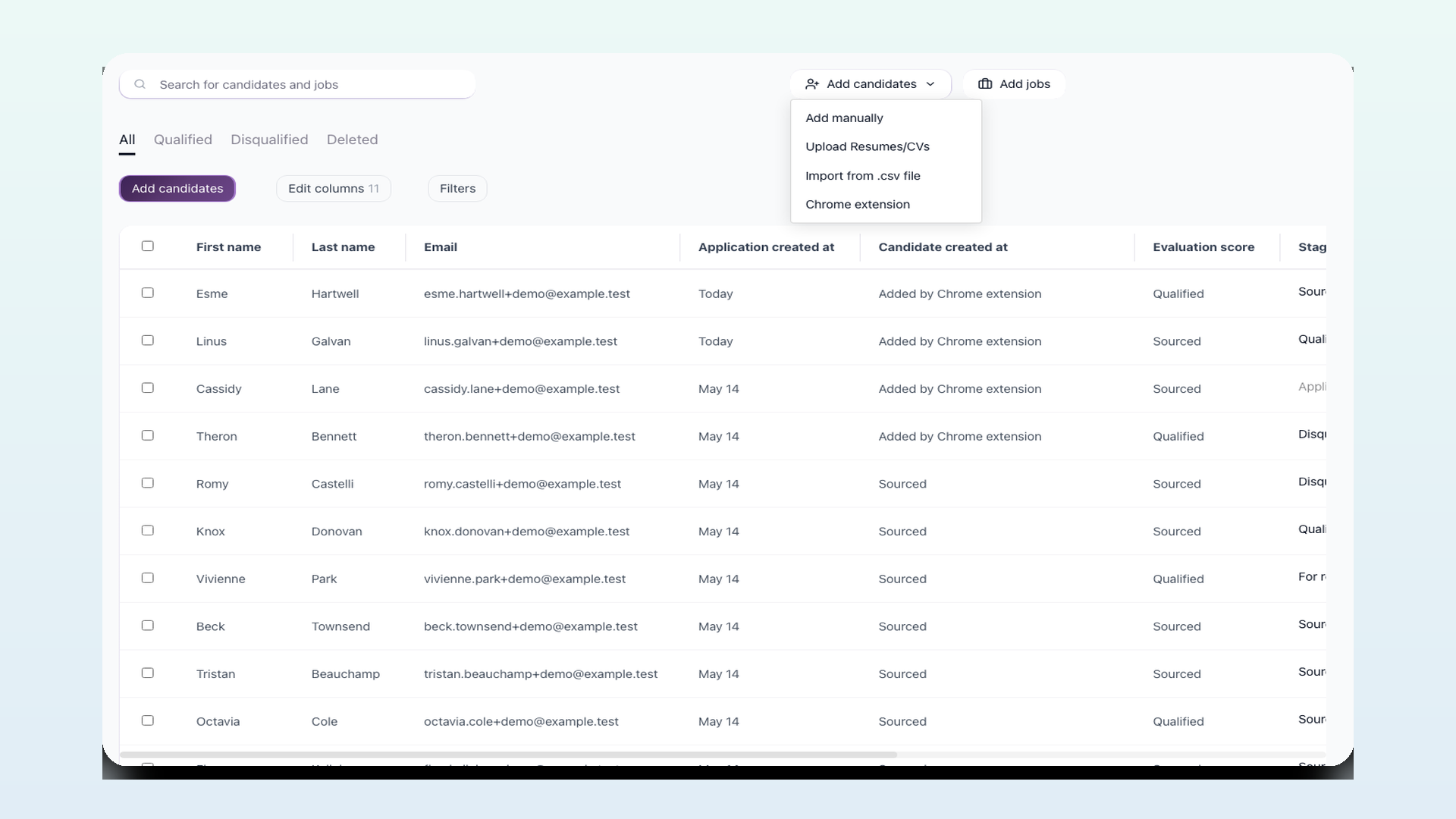
The capture layer is the Chrome extension. One click imports a candidate from 14 sites, including LinkedIn, Facebook, X, GitHub, AngelList, and Stack Overflow, then a seven-provider enrichment waterfall hunts down a personal email.
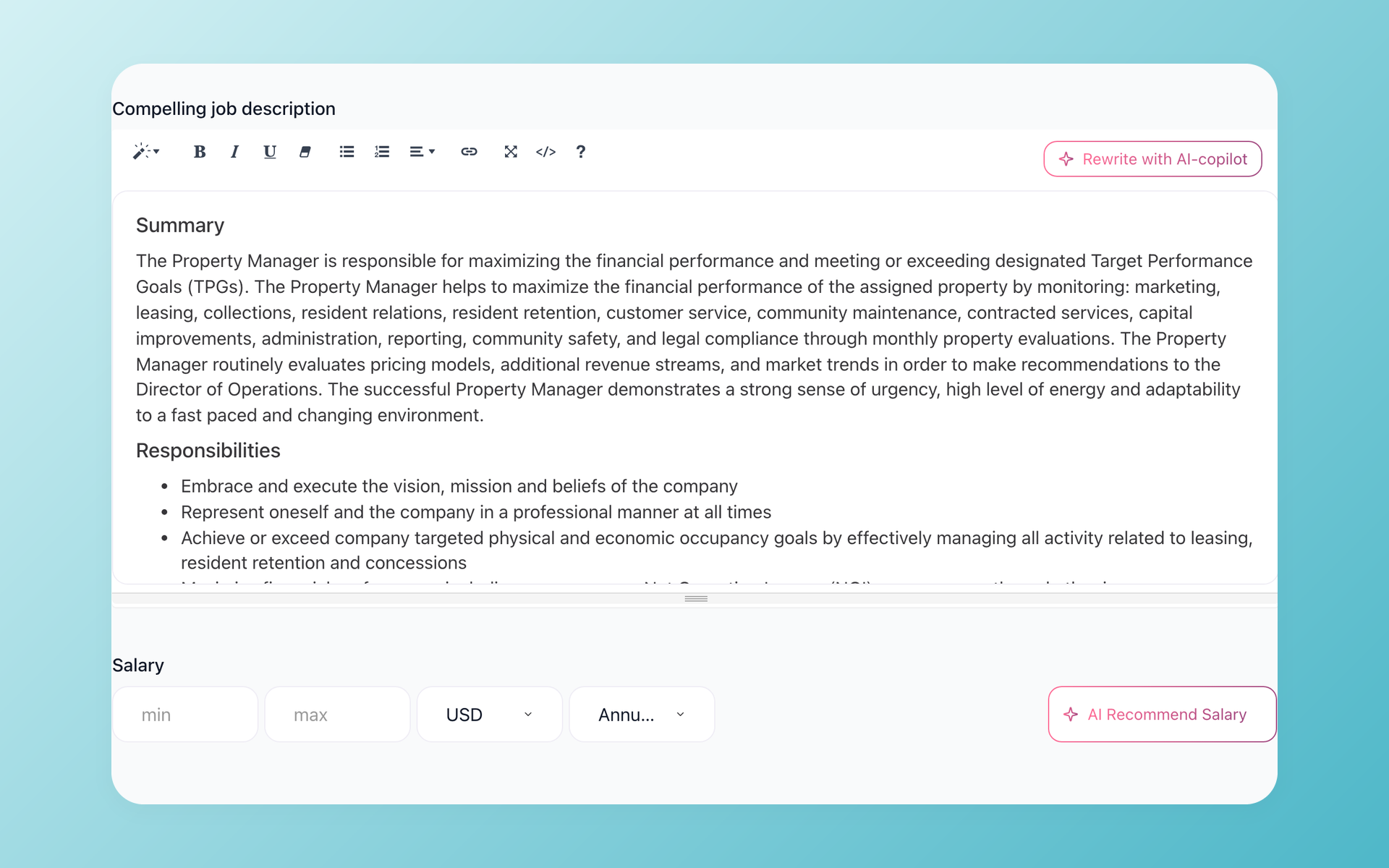
AI Copilot drafts and rewrites job descriptions right in the job editor, so the ad you share to social channels starts from your role details instead of a blank page.
AI Score then ranks every applicant 0 to 100 against criteria you write in plain language, which is the triage layer for social-sourced volume.
Attribution is where most social recruiting falls apart, and it is the quiet star here.
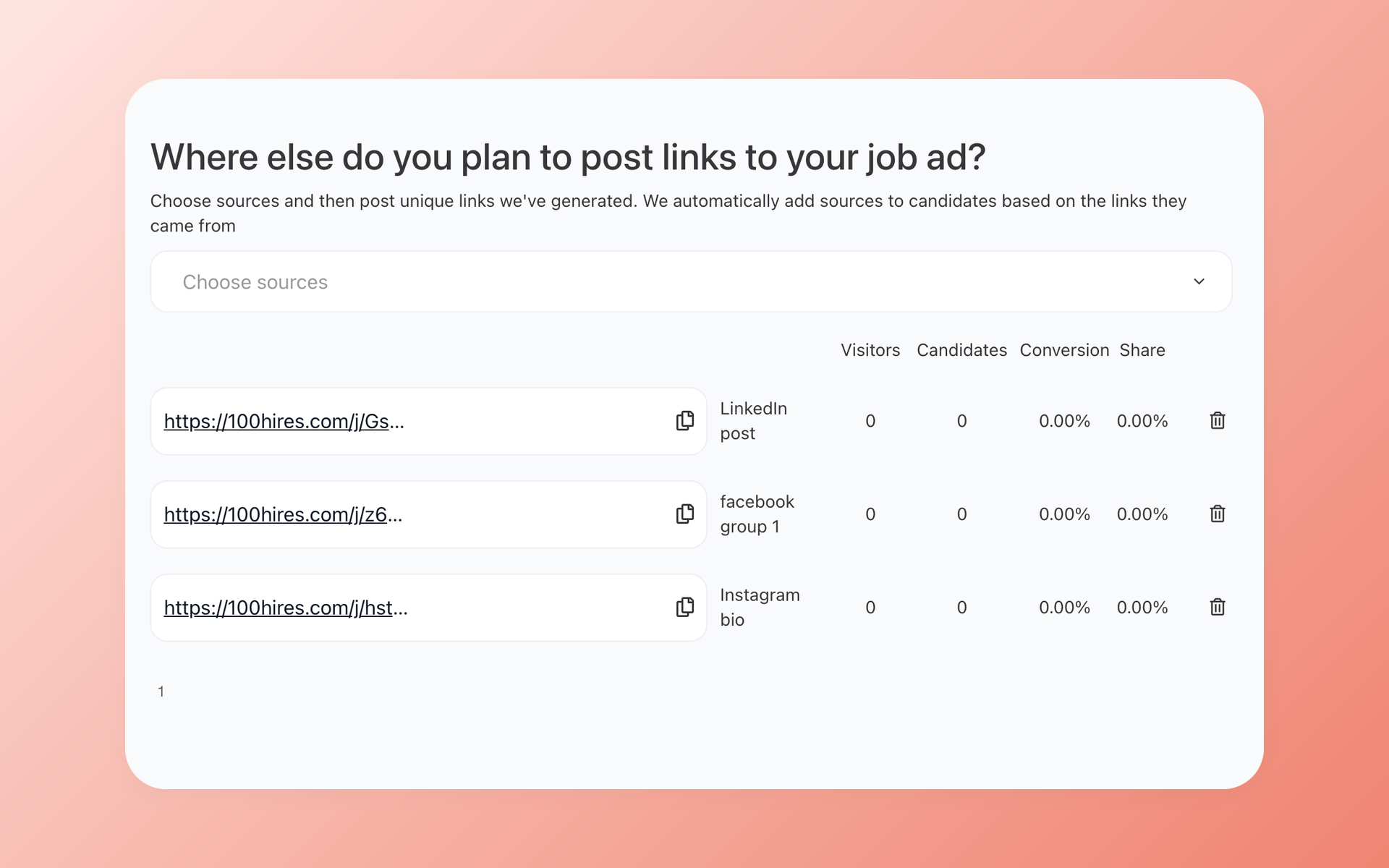
Trackable links generate a unique URL for each channel or placement, such as a Facebook group, an Instagram bio, or a LinkedIn post, and report visitors, candidates, and conversion rate per link.
Your hosted Career Site acts as the landing page for all of it, with a custom link preview image per job. One toggle distributes the same job to the major job boards.
Third-party proof, not just our word: Forbes Advisor ranked 100Hires first of ten ATS platforms for startups and small businesses. G2 rates it 4.8 across 1,341 reviews; Capterra 4.9 across 1,157.
Pricing is public: $49 per month billed annually on the Start plan ($99 per month month-to-month), with a 14-day trial and no credit card.
Limitations, honestly: there is no social post scheduler, so you share links manually or pair with Buffer. Meta lead ads arrive through Zapier rather than a native connector. The Start plan is single-user, and the product is built for SMB teams, not 1,000-employee enterprises.
Verdict: pick 100Hires if you want capture, AI screening, and per-channel attribution in one hub for under $100 a month.
Juicebox - best natural-language AI sourcing
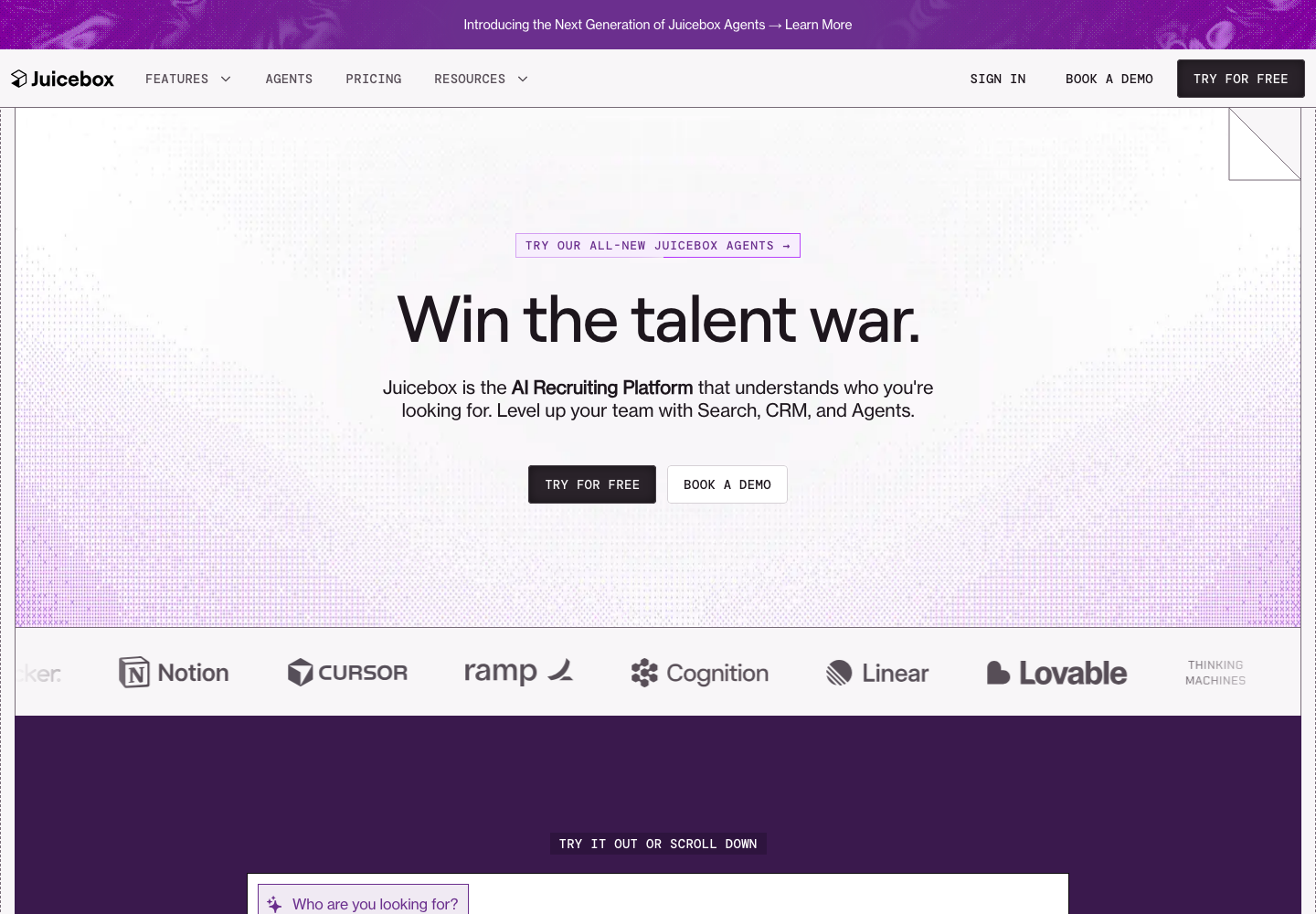
Best for: solo recruiters and small agencies replacing a LinkedIn Recruiter seat to cut costs.
You describe the candidate in plain English, and Juicebox (its search engine is called PeopleGPT) scans the public web and professional profiles, then drafts personalized outreach. A free tier exists; paid plans start at $139 per month, or about $119 per month billed annually.
The practitioner signal is hard to miss. In the recruiter threads and creator reviews we checked, Juicebox came up more than any other tool as the lower-cost answer to a Recruiter seat, and two recruiting YouTubers independently describe migrating to it over price.
Limitations, honestly: it is a young product drawing on the same public-profile data sources as everyone else, and its AI outreach still needs a human edit to avoid sounding like every other AI outreach.
Verdict: pick Juicebox if sourcing is your day job and the LinkedIn Recruiter renewal quote made you flinch.
SeekOut - best sourcing beyond LinkedIn
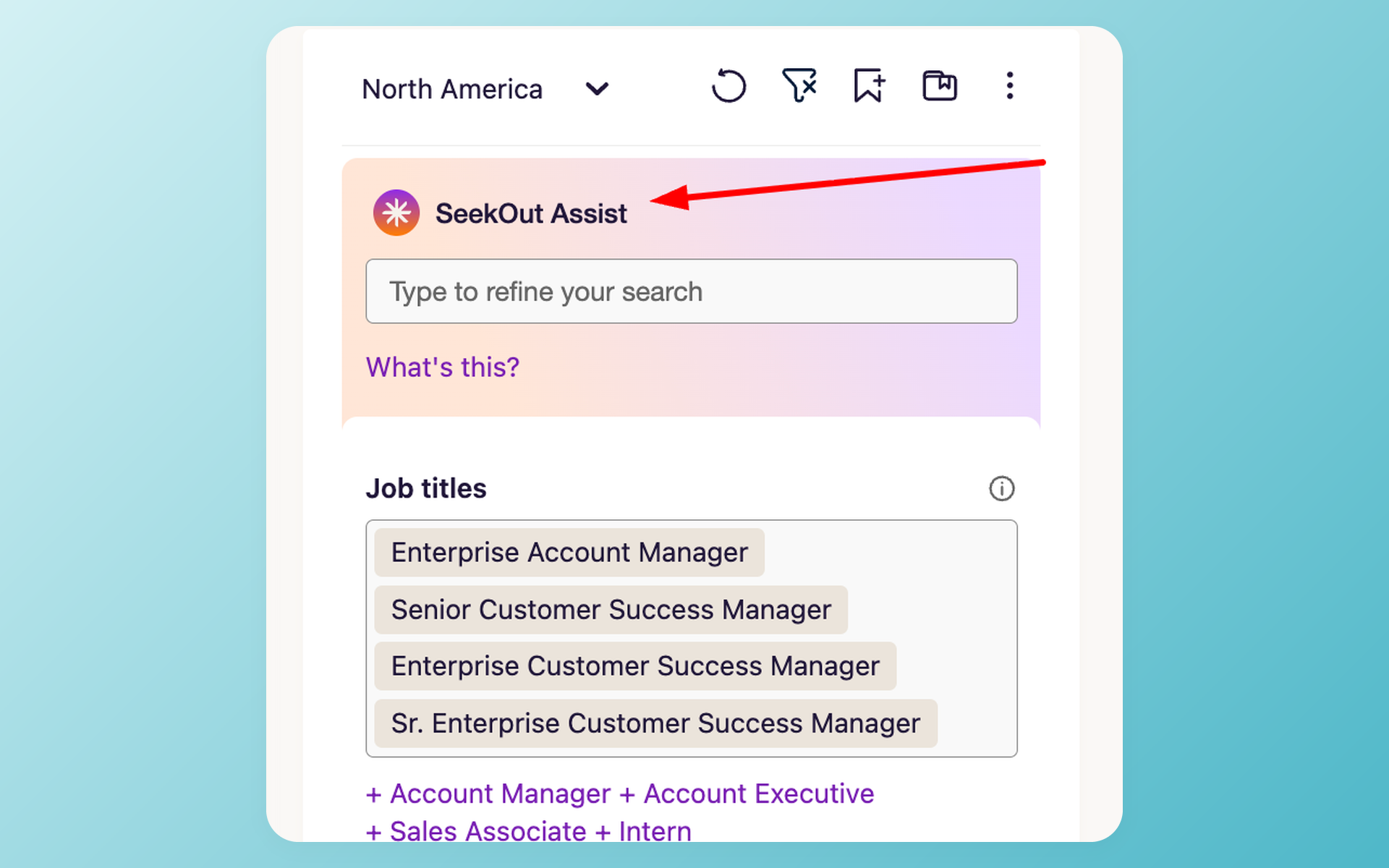
Best for: technical and diversity-focused pipelines sourced across public and professional profiles.
SeekOut runs AI people search across dozens of public networks, GitHub included, with diversity filters and verified contact data. Engineering recruiters lean on it when LinkedIn's index misses the candidates who live in code, not feeds.
It has real review depth for this niche: G2 rates it 4.5 across 759 reviews. The self-serve Recruit Core tier costs $149 per month billed annually; team and enterprise tiers require a custom quote.
Limitations, honestly: it sources candidates out of social platforms and stops there. No posting, no ads, and data freshness depends on public-profile crawling.
Verdict: choose SeekOut for hard-to-find technical talent that a LinkedIn-only search keeps missing.
hireEZ - best outbound sourcing with a CRM attached
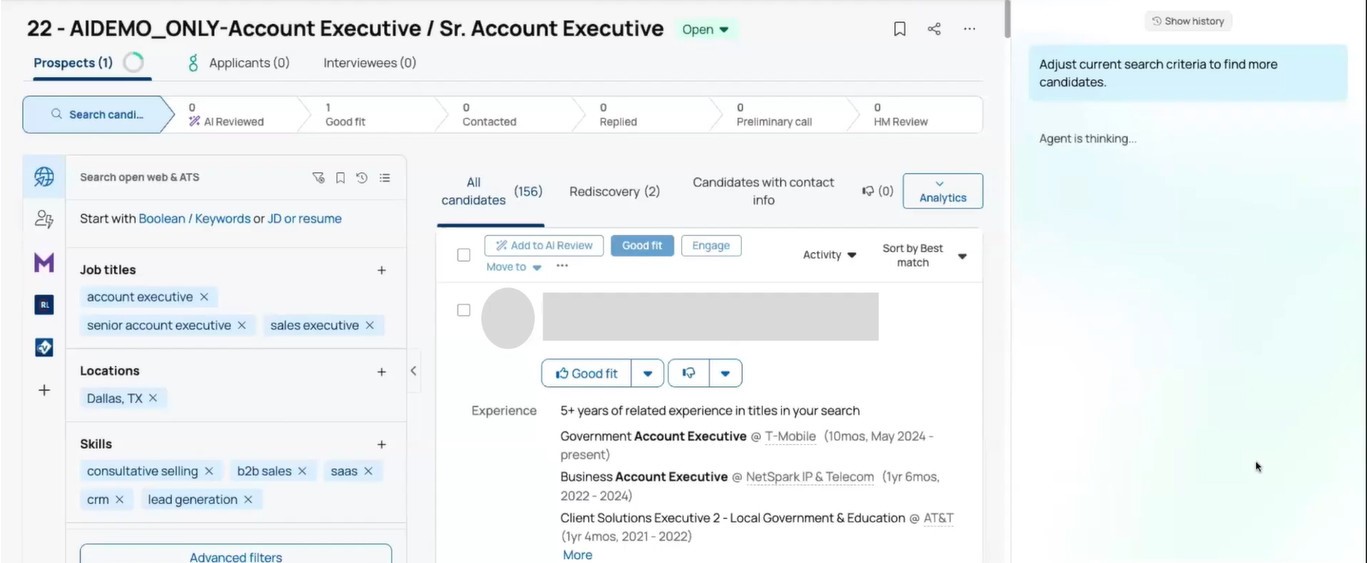
Best for: outbound-heavy teams that want sourcing, sequences, and a talent CRM in one place.
hireEZ combines AI sourcing across public profiles with contact finding, email sequencing, and pipeline management. In the sourcing threads we reviewed, recruiters name it in the same breath as SeekOut as the standard pair of LinkedIn Recruiter alternatives.
Gem plays in the same lane: strong sourcing and outreach CRM, with an ATS side that is a recent addition and still maturing.
Worth knowing with either: recruiter forums carry real anxiety about LinkedIn account bans tied to aggressive extensions, so stay inside LinkedIn's terms and skip bulk automation.
Limitations, honestly: hireEZ pricing is custom quote only, and the strongest features sit in higher tiers.
Verdict: go with hireEZ if outbound sequences and CRM depth matter more to you than pricing transparency.
LinkedIn Recruiter Lite - best for native LinkedIn sourcing
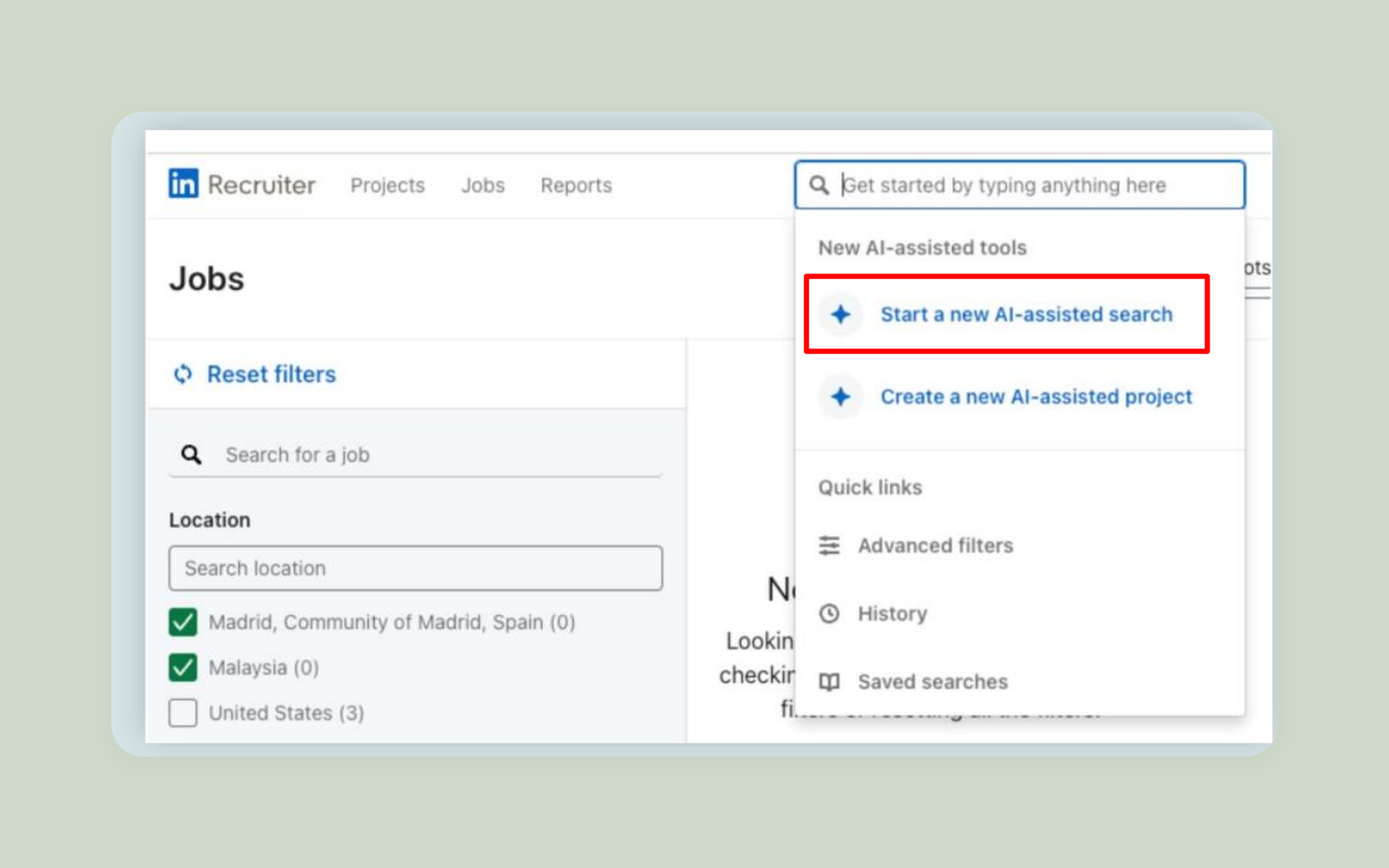
Best for: teams whose candidates live on LinkedIn and answer InMail, with official access and zero scraping risk.
Recruiter Lite costs $170 per month for a single license, per LinkedIn's own comparison page, and includes 20+ search filters, third-degree network access, and 30 InMails a month.
The full Recruiter and RPS products require a custom quote, with 40+ filters and 150 InMails per seat.
The honest read from recruiter communities: renewal quotes for full seats run into five figures a year, sales reps push multi-year terms, and response rates swing wildly by niche. InMail open rates have trailed plain email for years.
Limitations, honestly: even Lite caps your InMail volume, and none of the tiers track what happens after the reply. Most small teams pair the free tier or Lite with an ATS hub instead of buying full seats.
Verdict: pick Recruiter Lite if your candidates only answer InMail and $170 a month is where the budget stops.
ChatGPT - best low-cost AI for job posts and social copy
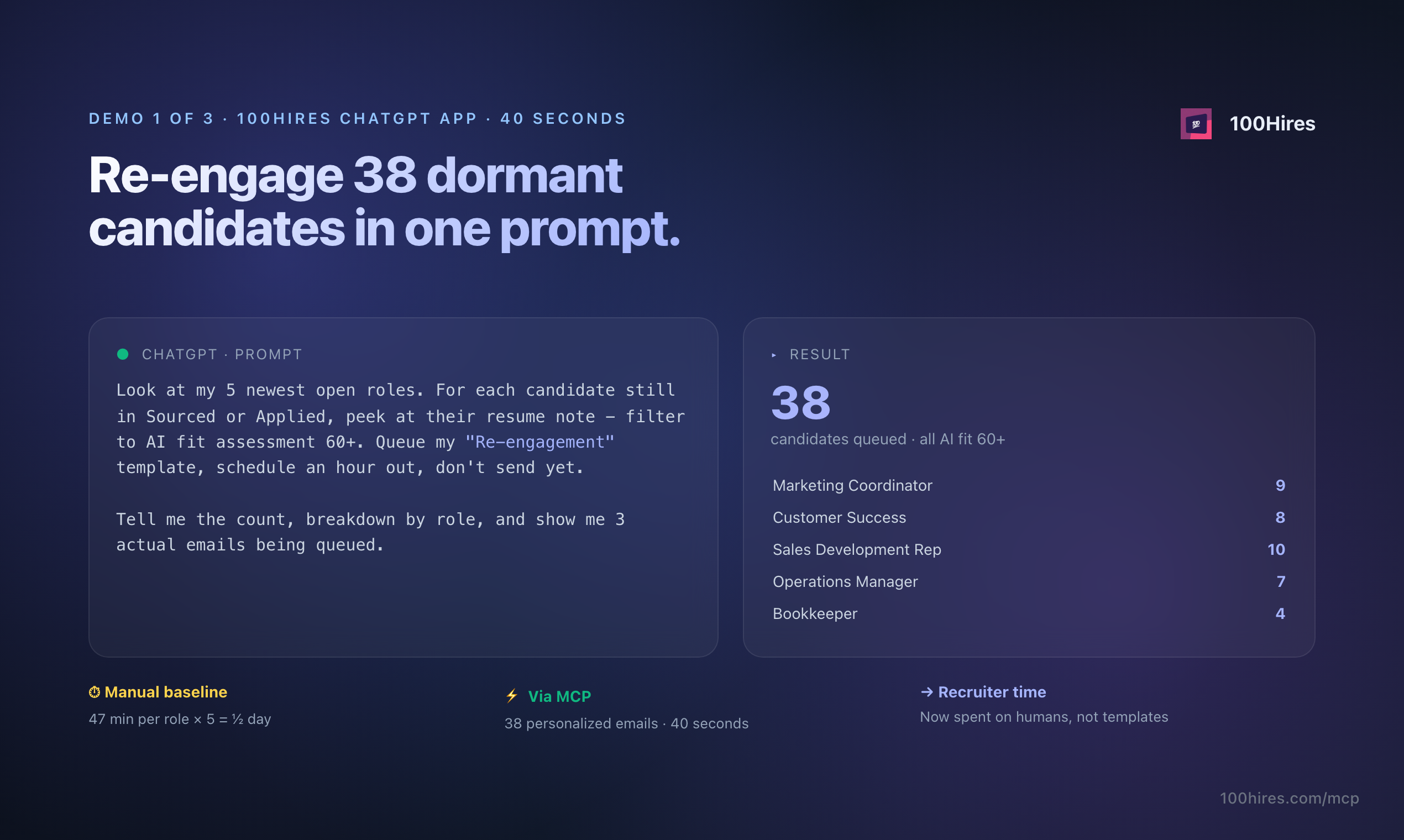
Best for: drafting job ads, platform-specific post variants, boolean strings, and outreach first drafts on a $0 to $20 budget.
It is the fastest path from an intake call to a working job ad plus five social variants. It is free to start; Plus runs $20 per month.
It is the same tool making your feed feel like a template, though. Hiring managers in HR communities describe most inbound resumes reading identically AI-written, and candidates say the same about job posts. Generic output is now the noise floor.
Use it as a co-pilot: feed it your real role details and your voice, edit hard, and never paste unedited output.
Limitations, honestly: no recruiting data, no attribution, no compliance guardrails. Inside an ATS, 100Hires AI Copilot does the same drafting with the job context already loaded.
Verdict: use ChatGPT as the drafting co-pilot, never the autopilot.
Canva - best for job ad creatives, with light scheduling
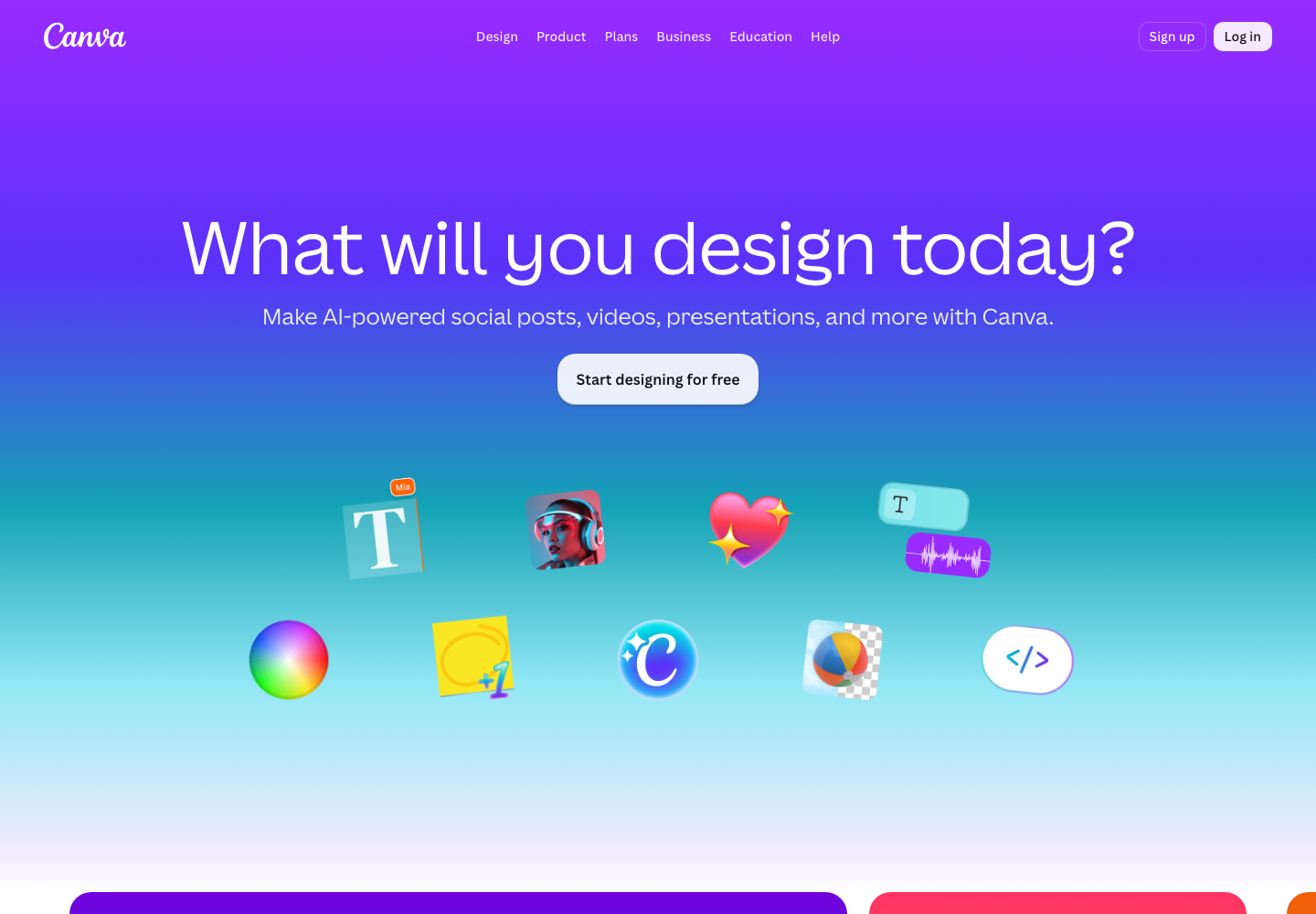
Best for: producing job ad visuals, carousels, and careers-page banners without a designer.
Templates plus the Canva AI suite (Magic Write, Magic Resize, and friends) turn one job ad into platform-sized creatives in minutes. Pro now bundles social content scheduling too, which quietly moves it into Buffer territory for simple calendars.
Review depth is mainstream-scale: G2 rates it 4.7 across 7,572 reviews. The free plan covers a lot; Pro is $144 per year.
Limitations, honestly: it is a general design tool. No recruiting workflow, no source tracking, and brand consistency depends on your discipline, not the software.
Verdict: pick Canva if job ad creative is the bottleneck between you and posting consistently.
Buffer - best budget scheduler for the employer-brand calendar
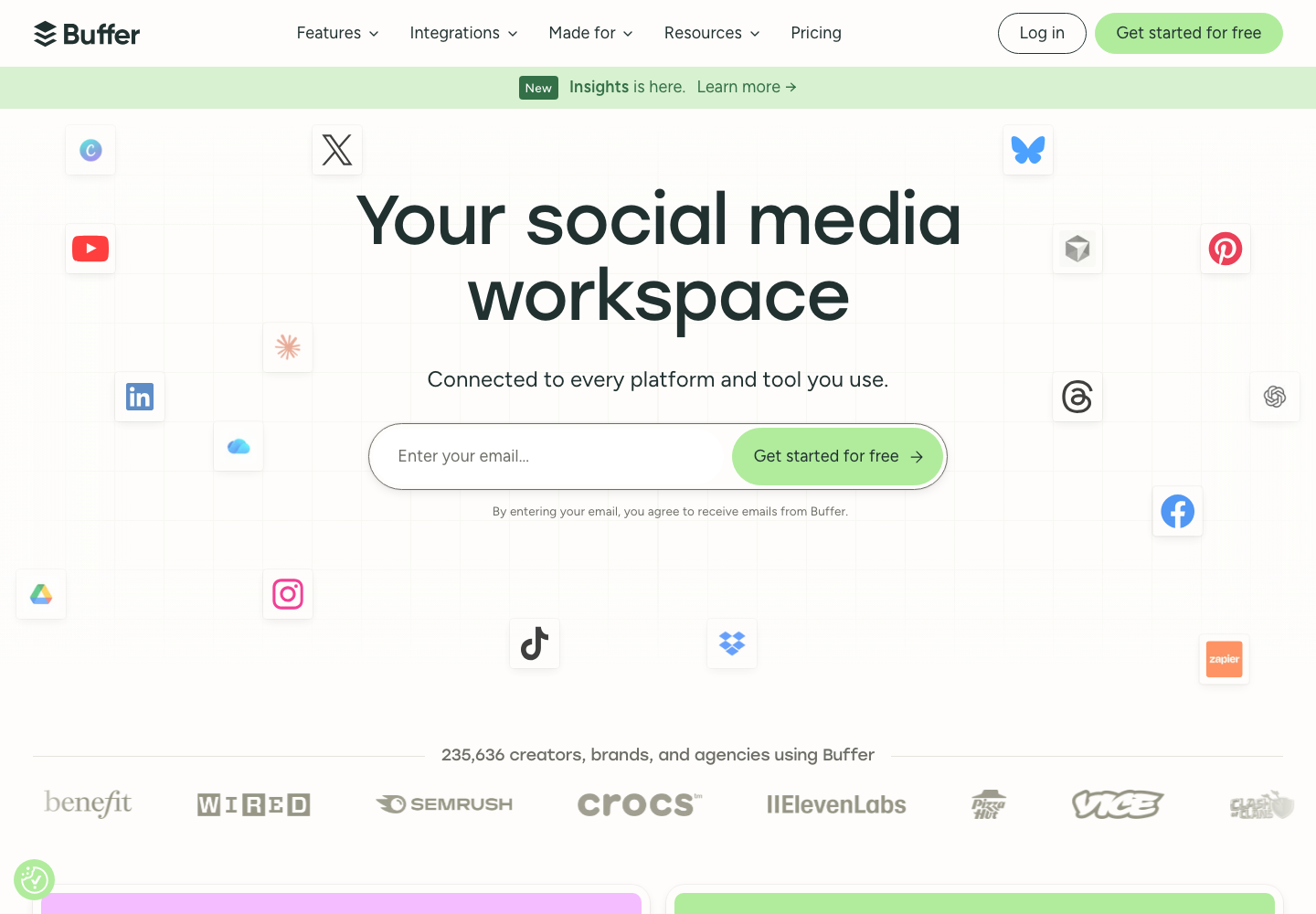
Best for: SMBs that want a consistent posting rhythm for near zero cost.
Like Hootsuite below, Buffer is a general social media manager that recruiting teams repurpose, not recruiting-specific software. The free plan covers three channels with ten scheduled posts each; paid starts at $5 per channel per month.
Worth knowing: according to Buffer's own analysis of 18.8 million posts, roughly half of non-Premium X accounts now get zero engagement per post. Organic reach is earned with distinctive content, not granted by scheduling.
Limitations, honestly: no recruiting features at all, and analytics run thinner than Hootsuite's. G2 rates it 4.3 across 1,085 reviews.
Verdict: Buffer earns its spot by keeping the employer-brand calendar alive for free.
Hootsuite - best team-scale scheduling and approvals
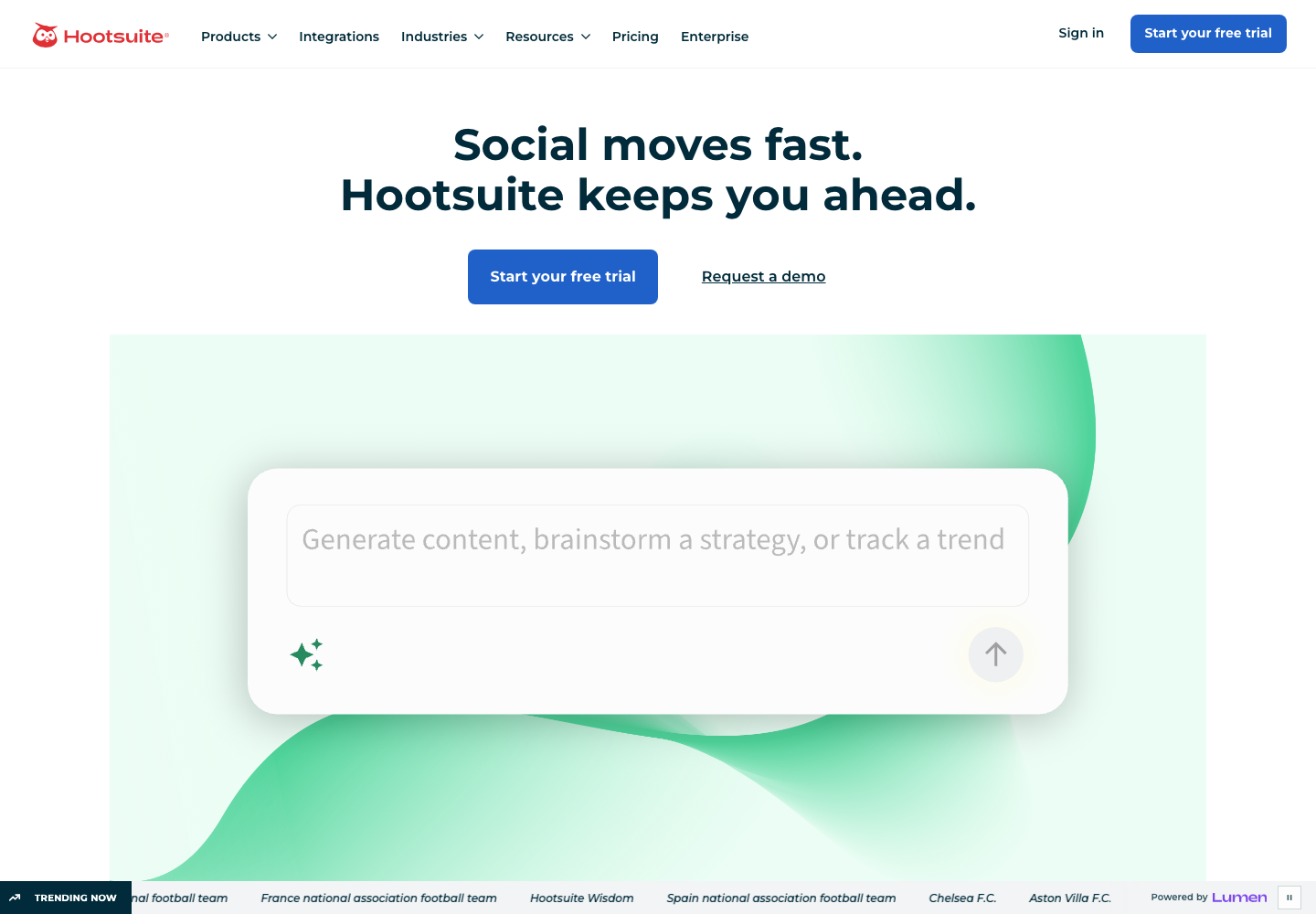
Best for: teams running a steady content calendar across four or more networks with approval flows.
Same category as Buffer: a repurposed general tool, and that is fine for the content layer. You get scheduling, approvals, analytics, and social listening across LinkedIn, Facebook, Instagram, X, and TikTok.
The review base is large: G2 rates it 4.3 across 7,315 reviews. Compare that with the one-to-seven-review ratings some dedicated social recruiting vendors carry, and you see why teams default to the mainstream option.
Standard starts at $99 per month with a 14-day trial; no permanent free plan.
Limitations, honestly: cost climbs fast with seats and channels, and there is no candidate capture or hire-level attribution. Pair it with your ATS tracking links.
Verdict: pick Hootsuite when several people manage the calendar and approvals matter.
CareerArc HireSocial - best automated social job distribution
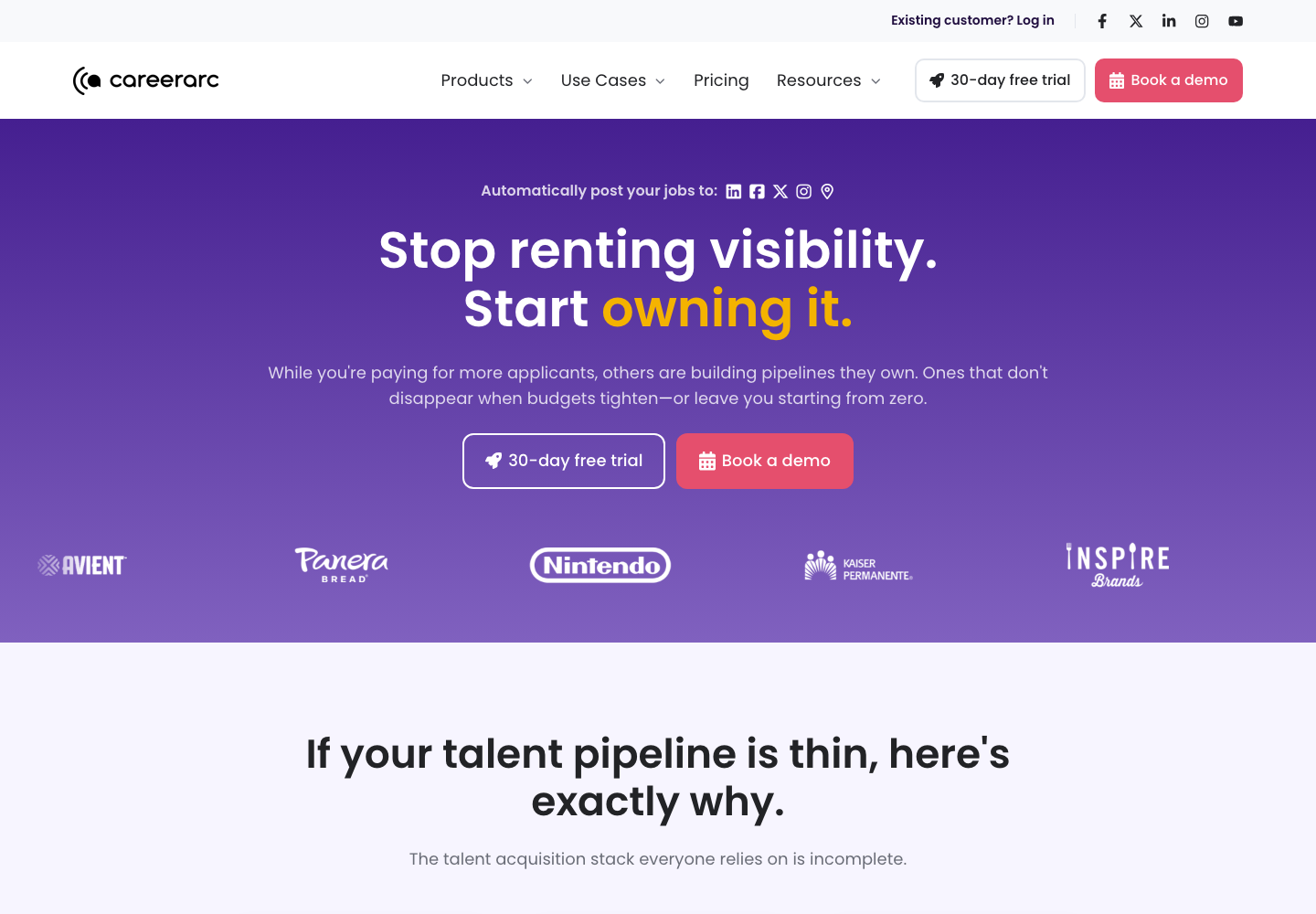
Best for: mid-size and enterprise TA teams that want jobs auto-posted to company social pages on a schedule. This is the category anchor for automated distribution, not the default SMB starting point.
CareerArc, relaunched as HireSocial in early 2025, syncs your ATS and careers site, auto-generates job and employer-brand posts in large batches, and schedules them to LinkedIn, Facebook, and Instagram company pages.
A click dashboard reports performance per platform, profile, and post. The vendor claims 80+ ATS integrations.
Pricing is public: Starter at $196 per month ($167 billed annually), Growth at $959 per month, with a 30-day trial. G2 rates it 4.8, though across just 29 reviews.
Limitations, honestly: users cite social-platform reauthorization friction and limited customization, review momentum is thin, and recruiters in practitioner communities barely discuss it. The brand is well known, but public user discussion is limited.
Verdict: CareerArc makes sense when posting volume across company pages justifies $196+ a month on autopilot.
Adway - best programmatic social job advertising
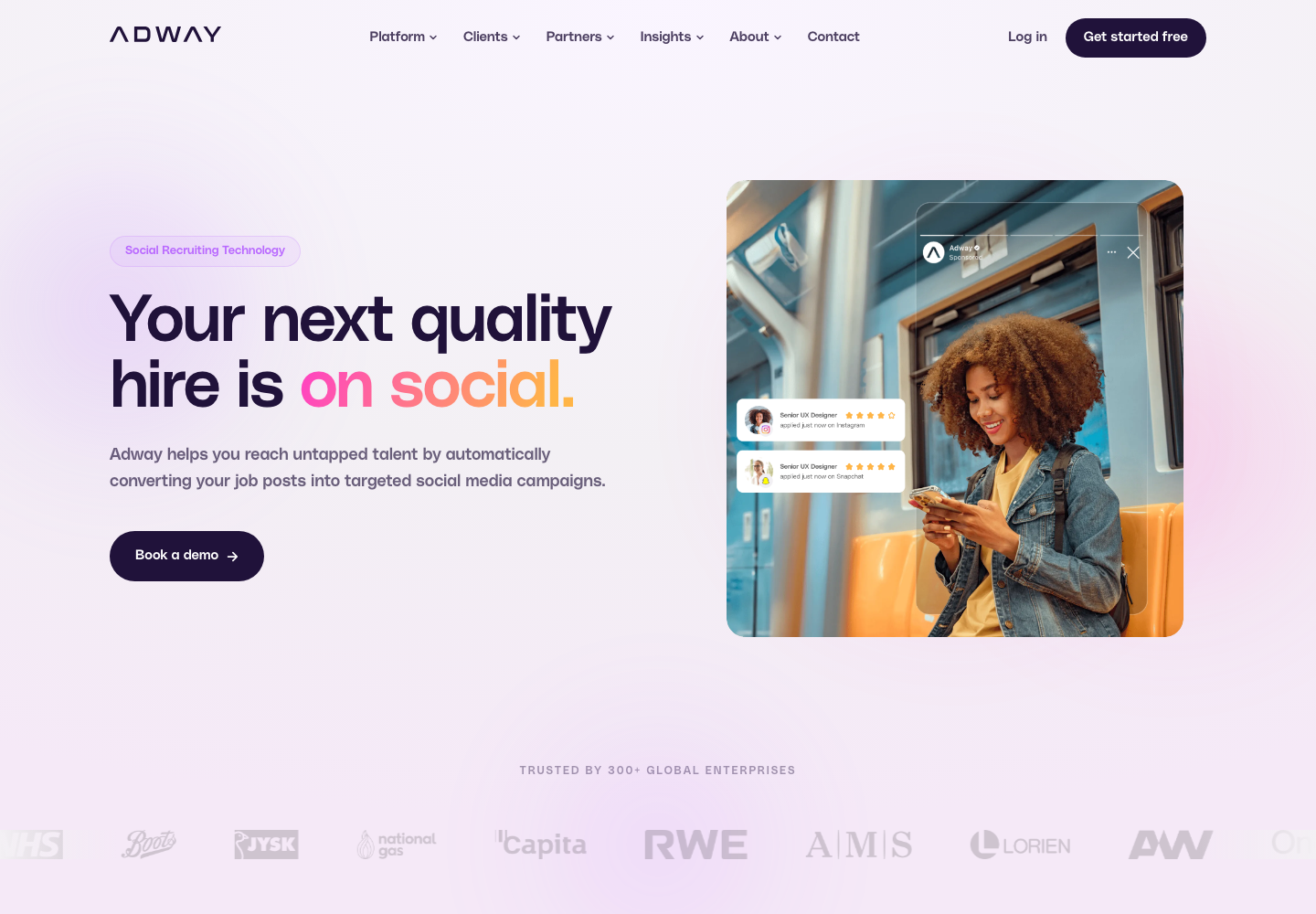
Best for: EU employers running always-on paid job campaigns across Meta, LinkedIn, TikTok, and Snap. It is the main programmatic option in this category, but it requires both ad spend and a subscription, so it is not the default choice for SMBs.
Adway's agentic AI reads your careers site, generates ad creative and copy, then buys and optimizes social placements on its own.
It is the rare programmatic vendor with public pricing: Grow at EUR 299 per month with 300 ad credits, Scale at EUR 799, and a 14-day trial with 100 credits.
Limitations, honestly: G2 shows 4.9 but from only 7 reviews, so treat the rating as directional. Adway has a stronger footprint in Nordic and EU markets, with less US presence, and results still depend on your ad budget on top of the subscription.
Verdict: pick Adway for hands-off paid social job ads in Europe with pricing you can actually see.
GoHire - best simple SMB ATS with social sharing
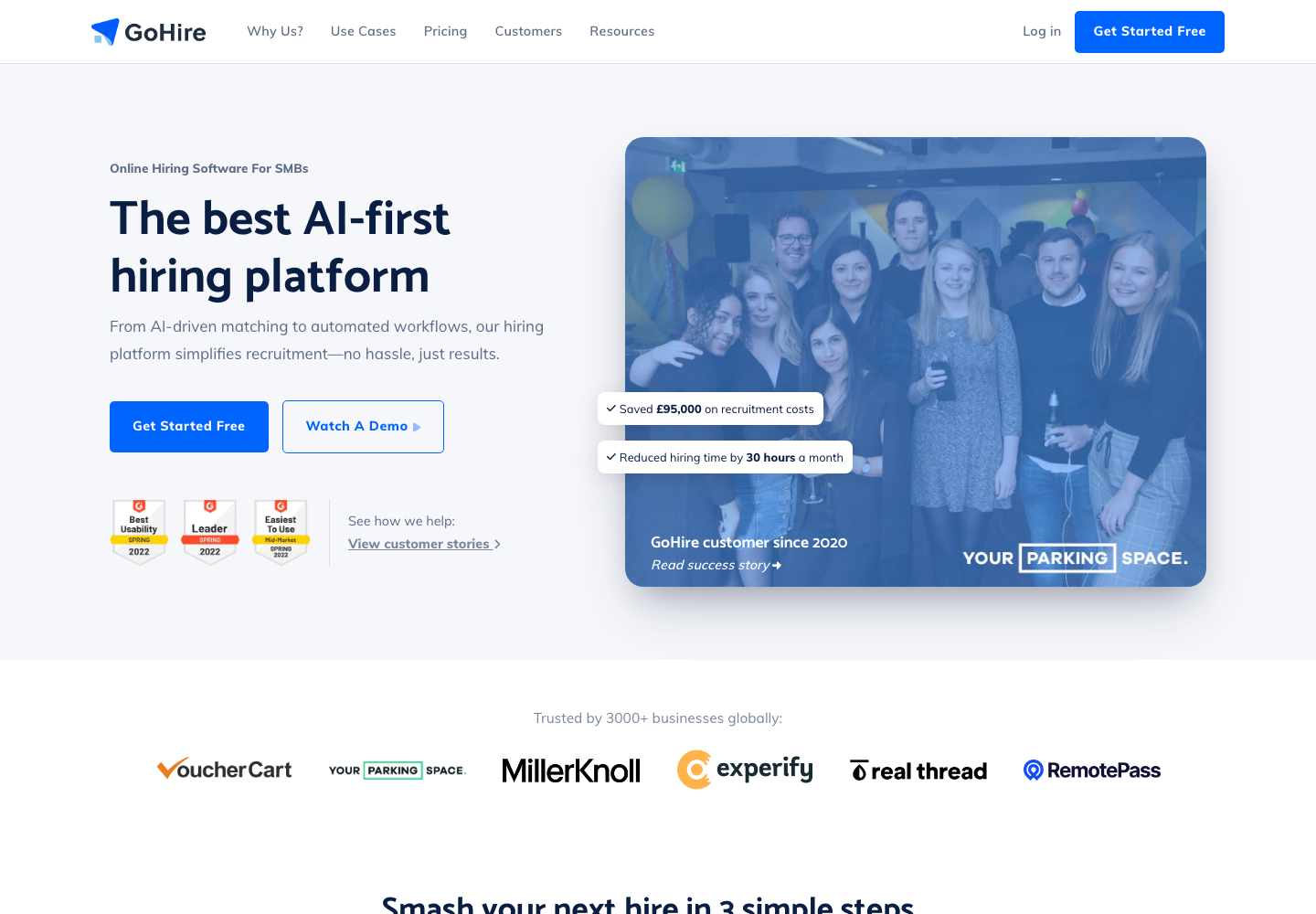
Best for: UK and EU small businesses that want easy multi-board posting plus social share links.
GoHire is a straightforward SMB ATS: job multiposting, a careers page, and share links for social channels. Its social recruiting page ranks well, though the product is a general ATS rather than a social specialist.
Ratings diverge in an unusual way: Capterra shows 4.5 across 153 reviews, G2 just 3.7 across 11. Weight the larger sample. Pricing starts at GBP 89 per month.
Limitations, honestly: its own reviewers cite light reporting and limited careers-page customization, and there is no per-channel attribution.
Verdict: pick GoHire as a simple UK-based ATS where social is a nice-to-have, not the strategy.
Manatal - best budget ATS for staffing agencies
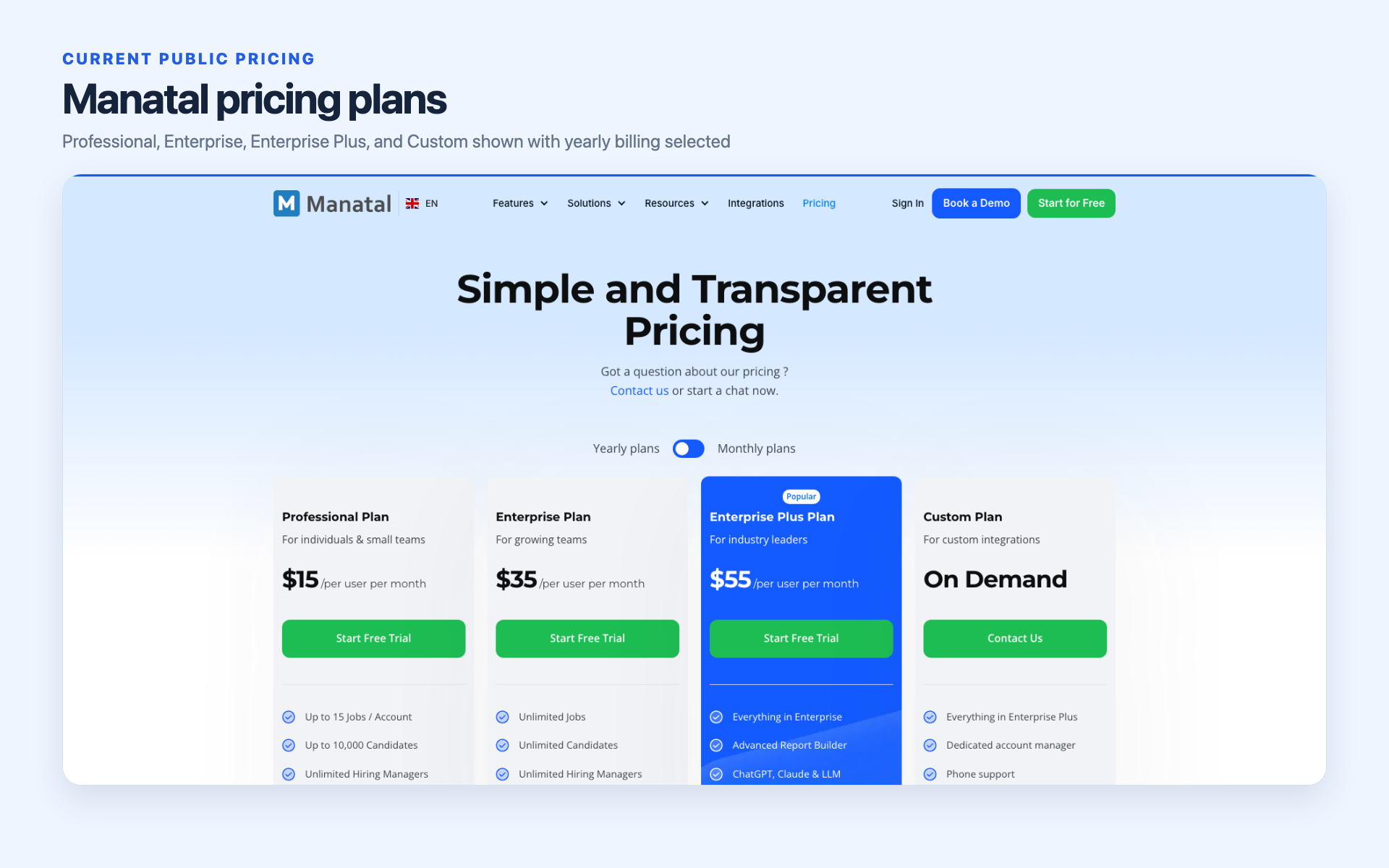
Best for: staffing agencies that need the cheapest credible ATS entry with social profile enrichment.
Manatal is built for and adopted overwhelmingly by staffing agencies; most of its reviewers are sub-50-employee shops, with a strong footprint among agencies in India and Southeast Asia placing candidates into US and European clients.
At $15 per user per month billed annually, budget is the draw and polish is the tradeoff.
The social angle: it auto-enriches candidate records with public social profiles.
Current state, from the vendor's own documentation: LinkedIn job posting through its Job Board Connect is broken after LinkedIn-side changes. Reviewers report bugs in the enrichment feature and ask for deeper social integration.
Limitations, honestly: workflow automation and API access are gated to enterprise tiers, and the quality gaps above are documented in its own review corpus.
Verdict: Manatal fits if you run a staffing desk on a tight budget and can live with rough edges.
Recruiterflow - best for recruiting agencies
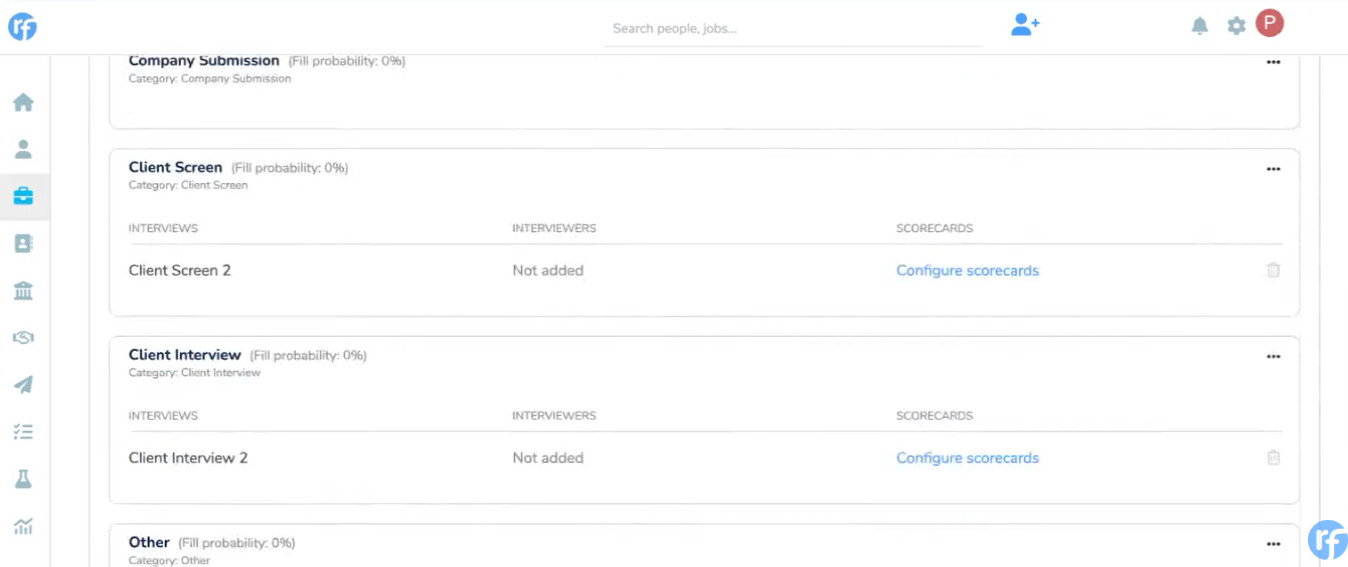
Best for: staffing and recruiting agencies that source on LinkedIn all day and run client and candidate pipelines in one system.
Recruiterflow pairs a Chrome extension for bulk LinkedIn capture with outreach sequencing, send-time optimization, and a new AI-agent tier called AIRA.
Agency recruiters rate the sequencing highly; one prominent recruiting creator calls it her ATS of choice and the source of truth for where her candidates live.
Use the independent numbers, not the vendor's homepage claim: G2 rates it 4.6 across 183 reviews, Capterra 4.7 across 332. Pricing is $149 per user per month; AIRA is custom.
Limitations, honestly: it is built around agency workflows, with client and BD features in-house teams will never touch, and there is no self-serve trial, just a demo.
Verdict: choose Recruiterflow if you run an agency desk; in-house teams pay for agency features they do not need.
Tools that did not make the list, and why
What we weighed and set aside, with reasons.
- Programmatic job ad platforms (Wonderkind, VONQ, SmartDreamers, PandoLogic; Appcast has real review depth): substantive products for enterprise campaign budgets, sold through sales teams on custom quotes, and most carry fewer than five independent G2 reviews. Small note: Wonderkind, the Amsterdam recruitment ads company, is not Wunderkind, the US e-commerce vendor
- Employer-brand suites (Teamtailor, Phenom, Radancy): brand-layer platforms for enterprise TA, a different purchase from this list
- Employee advocacy platforms (EveryoneSocial, DSMN8, Sociabble): employees telling their own story is the highest-trust social channel, and these tools scale it for large orgs. The SMB version costs nothing: employees sharing jobs with per-channel tracking links
- Fetcher: solid AI sourcing, covered in our AI recruiting tools guide; it did not show enough social recruiting relevance for this list
- ATS suites with a social checkbox (Workable, softgarden, Jobvite): capable systems whose social features amount to generic multiposting. Jobvite practically invented the social recruiting ATS category; its own reviewers now call the social share features underwhelming
- LinkedIn automation bots: deliberately excluded. Recruiters report account bans even with tools marketed as safe, and a banned sourcing account costs more than any subscription saves
How AI actually changes social recruiting, and where it backfires
What AI genuinely moves. Drafting: a job ad plus platform variants in minutes instead of an afternoon. Sourcing: natural-language people search across public profiles.
And screening: scoring the applicant wave that social channels produce, so a human reads a ranked shortlist instead of the whole pile.
The realistic ceiling looks like one pattern recruiters describe in sourcing communities: outreach-writing time dropping from around six hours a week to two, with response rates holding. Useful. Not magic.
Where it backfires. Both sides now automate. Recruiters mass-post AI job ads, candidates mass-apply with AI resumes, and hiring managers describe inbound applications that read word-for-word alike.
The loudest recruiting thread of the past year argued AI sourcing tools still do not beat a good human at finding people, and it was full of working recruiters agreeing. The bottleneck was never volume. It is trust.
The working posture. Treat AI as a co-pilot with guardrails. Generate drafts, keep your voice, verify every claim, and spend the saved hours on the parts machines flatten: calls, communities, referrals, and posts that sound like a person wrote them.
That is the lens this list uses. Tools that compress busywork inside the hiring workflow, the way 100Hires AI Copilot and AI Score do, beat tools that just multiply output into an already noisy feed.
How to choose: a six-point checklist
- Paying enterprise prices for one LinkedIn seat? Price the stack alternative first: ATS hub plus one AI sourcing tool plus a Lite seat usually lands cheaper
- No idea which channel produces hires? Demand per-channel tracking links and source reports, not platform vanity metrics
- Candidates arriving from Facebook or Instagram ads? Confirm the lead-form ingestion path, whether native or through Zapier, before you buy anything
- Getting a wave of AI-written applications? A scoring and knockout layer at the ATS level sorts it faster than another posting tool
- Posting manually to five networks? A scheduler handles content; a distribution tool handles job ads. Different jobs, different tools
- Want to stay compliant and keep your accounts safe? Official APIs and terms-safe capture only. No bulk automation bots
By team type: an in-house SMB team does well with the hub plus ChatGPT or Canva plus free platform tiers. A sourcing-heavy agency adds one AI sourcing tool and maybe a Lite seat.
A local or service-industry employer pairs the hub with Facebook Local Jobs and a tracking link per channel.
Most small teams end up with the hub, one sourcing tool, and one content tool. At list prices from the table above, that trio runs about $243 a month, under what practitioners report paying for one full LinkedIn Recruiter seat.
FAQ
What is social media recruiting software?
It is software that helps employers hire through social platforms, in three flavors: distribution tools that push job ads into feeds, sourcing tools that pull candidate data from public profiles, and schedulers that keep employer-brand content flowing. An AI hiring hub like 100Hires sits underneath, capturing and scoring the candidates those channels produce.
Do I need social media recruiting tools if I already have an ATS?
Check what your ATS already covers. If it captures candidates from social profiles and attributes applicants per channel, you may only need a scheduler. 100Hires handles the capture half with its Chrome extension and the attribution half with Trackable links, so many teams skip a separate social recruiting tool entirely.
Which social media platform is best for recruiting?
LinkedIn wins for professional and technical roles. Facebook Local Jobs, relaunched in October 2025, works for US entry-level, trade, and service hiring. Instagram and TikTok build employer brand more than they collect applications. Rather than guessing, 100Hires Trackable links show which platform actually produces candidates for your specific roles.
Are there free social media recruiting tools?
A workable free stack exists: one active free LinkedIn job post, Facebook Local Jobs in the US, Buffer's free plan for scheduling, and ChatGPT's free tier for drafts. 100Hires has no free plan, just a 14-day trial, then flat pricing from $49 per month billed annually.
How do I measure ROI from social media recruiting?
Track hires, not likes. Give every channel its own application link, then compare visitors, applicants, and hires per channel against what you spend there. In 100Hires, Trackable links report conversion per link and the Sources report rolls it up per job, so cutting a dead channel becomes a data decision.
Is it still worth posting jobs on Facebook?
For local, entry-level, and service roles in the US, yes: Local Jobs returned in October 2025 and costs nothing. Groups still work for niche roles. Route every post to a branded careers page, since applicants report scam listings impersonating real employers. A 100Hires Career Site with per-job link previews gives them a destination they can trust.
Start with the hub
The stack logic is simple: one hub that captures and scores candidates from every social channel, one sourcing tool if outbound is your game, one content tool to keep the calendar alive.
100Hires covers the hub in one subscription: Chrome extension capture from 14 sites, AI Copilot job ads, AI Score screening, attribution through Trackable links, and a hosted careers page. Setup takes about 15 minutes.
Start your free 14-day trial, no credit card required, and see which social channel has been earning its keep all along.
Try 100Hires for free
No credit card. 14-day trial. Forbes Advisor #1 ATS for SMBs.