
How to post a job on Facebook in 2026: Local Jobs, Pages, groups, and ads
Yes, you can post a job on Facebook again, and most guides still tell you to do it the wrong way.
Facebook shut its jobs feature down in early 2023, then brought it back on October 13, 2025 as Local Jobs, a tab inside Marketplace for US employers. The catch: it is still a limited test, and you create listings from the phone app, not your computer.
This guide covers four ways to get a role in front of local candidates: the new Local Jobs tab, a business Page post, Facebook groups, and boosted posts. It works best for hourly, trade, and service hiring. Here is each method, step by step, as of July 2026.
Key takeaways
The hiring playbook, in your inbox
One email a week - benchmarks, AI screening tactics, and short interview templates from the 100Hires team. No product pitches.
- Local Jobs is back: relaunched October 13, 2025, US only, still a limited test, and you create posts in the phone app because Facebook says it "isn't available on computers"
- Three methods work everywhere: a business Page post, group posts, and boosted ads do not depend on the test rollout
- Applications land in Messenger: the relaunch describes no applicant inbox, so send candidates to one link you control
- Groups do the heavy lifting: for local and hourly roles, community groups outperform the official feature
- Pair it with job boards: Facebook covers local reach while an ATS like 100Hires posts the same role to 13 boards at once
Can you still post a job on Facebook?
Yes. Facebook Jobs has a messy history, so the short version helps. As of July 2026, here is the timeline.
- 2017: Facebook Jobs launches in the US and Canada, later reaching 40-plus countries
- February 2022: the feature closes outside the US and Canada and the jobs API for partners ends
- February 2023: Facebook Jobs shuts down entirely, including the US and Canada
- October 13, 2025: Meta relaunches it as Local Jobs on Facebook, a US-only tab inside Marketplace
Why did the first version die? Recruiting-industry commentators point to a few reasons: job posts felt like spam in a personal feed, applications carried thin profile data, and vendors got burned when Meta pulled the plug.
What is different this time? Local Jobs lives inside Marketplace, where people already buy and sell, so hiring fits the context. Candidates reach you through Messenger, and the focus is squarely on entry-level, trade, and service roles.
One honest caveat sets up everything below. Facebook's own Help Center still calls Local Jobs "a new feature currently being tested for select people in select cities in the U.S." So this guide gives you all four methods, not just the tab that may or may not appear for you.
The four ways to post a job on Facebook
Each method reaches candidates differently. This table is the fast way to pick one, and none of the top-ranking guides give you a side-by-side view.
| Method | What it is | Cost | Availability | Where applications land |
|---|---|---|---|---|
| Local Jobs on Marketplace | The relaunched native jobs tab | Free | US limited test, app only | Messenger |
| Business Page post | A normal post from your Page | Free | Everyone, everywhere | Your link or Messenger |
| Facebook groups | Posting in local and niche groups | Free | Everyone, everywhere | Wherever your link points |
| Boosted post or ads | Paid reach on a job post | From a few dollars a day | Everyone, everywhere | Your link or a lead form |
Short on time? Start with a Page post shared into a few local groups. Add Local Jobs if the tab shows up for you, and boost only a post that already gets replies for free.
How to post a job with Local Jobs on Marketplace
This is the relaunched native product. If the Jobs tab is live in your area, here is the flow.
- Update the Facebook app. Job creation is app only. Facebook's Help Center states plainly that the feature "isn't available on computers," so you need the Android or iPhone app
- Open Marketplace and find the Jobs tab. If you do not see it, you are outside the test area, so skip to the next three methods
- Create the listing. Add the title, details, pay range, and schedule. Listings appear in local searches automatically and can surface in relevant groups
- Publish. The post is public to adults 18 and older on and off Facebook, including on Instagram
- Watch Messenger. Candidates message you to ask questions or set up interviews. Reply fast, or add an application link so people land somewhere you can track
Two rules matter here. Local Jobs blocks certain categories, including adult entertainment, in-person childcare, modeling, personal training, physical therapy, and travel roles. And like any job post, yours cannot discriminate.
One more reality check. When a recruiting-tech podcaster tried it on launch day, he could not find a way to post from a business Page inside the app and ended up creating the listing from a personal account through Marketplace. The path exists, but it is not obvious yet.
Don't see the Jobs tab? Here's why
If the Jobs tab never appears, nothing is broken on your end. Local Jobs is a limited test in select US cities, and it is app first, so some US employers and every employer outside the US will not have it.
That is exactly why the next three methods matter. A Page post, group posts, and boosted ads work for everyone, everywhere, no rollout required. If you are hiring outside the US, treat those three as your main Facebook toolkit.
The Marketplace "item for sale" trick you'll see on YouTube
Search YouTube and you will find tutorials telling you to list a job as an item for sale, priced at zero, because the jobs category is not available to them. Roughly half the recent videos teach this.
It exists to fill the gap between the 2023 shutdown and the 2025 relaunch. One creator who teaches it warns that Facebook may remove posts that break its rules. Treat it as a workaround you will run into, not a method to rely on. The paths above are safer.
How to post a job on your Facebook business Page
A Page post is the method that works for every employer, in every country, with no test rollout to wait on. It is a normal post, not a special job tool.
- Polish the Page first. Use a real business name, real photos, and current contact info. Group members are scam-wary and skip anonymous listings, so a legitimate Page matters
- Write the post. Include the role, pay, shift, location, one honest reason to join, and an application link. Simple ads beat clever ones for hourly roles
- Publish or schedule. Post directly, or schedule it through Meta Business Suite, the Page management console Meta names as a posting path
- Amplify it. Share the post into relevant groups, and boost it later if it earns replies
Meta Business Suite deserves a mention because almost no other guide covers it. Meta lists it as one of the ways to create a job listing, alongside Marketplace and your Page.
Public step-by-step docs are thin, so treat it as the scheduling and Page tool where the posting option lives.
One warning saves you time. If a guide tells you to add a "Jobs" tab through your Page settings, it is out of date. That tab went away with the February 2023 shutdown and has not come back.
How to post jobs in Facebook groups
Ask people who actually hire on Facebook and they point here. For local and hourly roles, groups consistently do more than the official feature. This is where the method earns its place.
- Find the right groups. Search for "[city] jobs" and "[trade] jobs," then add the less obvious winners: community groups, buy-nothing and yard-sale groups, and trade or veteran groups. Operators report ordinary community groups often beat saturated job groups
- Read the rules before posting. Admins gatekeep hard. One recruiter got removed and blocked from a group for posting advice that competed with the admin's paid service
- Keep the post short and concrete. Two sentences with pay and a link can outperform a polished ad. One equipment-company owner threw a two-line post into a heavy-equipment group on a whim and heard from more than 40 operators
- Reply fast, withdraw gracefully. Answer in the thread quickly, and if an admin objects, pull the post and move on
- Use a different link per group. A unique application link per group tells you which one actually sends candidates
Why does this work so well? The people filling hourly, trade, and service roles are here, not on LinkedIn. Recruiters describe hiring franchise front-desk staff, manufacturing workers, locksmiths, and cleaners straight out of local groups.
Be honest about the mixed results, though. Some employers call social hiring low quality and a waste of time. Others pull steady candidates from groups every week.
It is role dependent, so the smart move is to measure each source instead of arguing about it. For the wider picture, see our social media recruiting guide.
Should you boost a Facebook job post?
Boosting can help, but only for a post that already earns free replies. Spending money to amplify a dud just buys you a bigger dud. Here is how to do it without wasting budget.
- Post organically first. Publish the Page post and see if it gets replies for free before you pay
- Fix the audience. The default sends your boost to "people who like your Page," which is the classic waste trap. Switch it to a location radius and relevant criteria
- Expect employment ad limits. Meta runs hiring ads under a special ad category that restricts targeting, so plan for coarser reach than a product ad. Do not target by age, even where a tool seems to allow it, since age-targeted job ads invite discrimination complaints
- Cap your spend. Set a small daily budget and a cost per applicant you will not cross. Kill the versions that miss it and keep the winners
There is a paid route beyond boosting: lead-form ads that collect applications inside Facebook, then feed them into your hiring system. One recruitment agency we spoke with fills most of its roles this way across Meta platforms.
On cost, be skeptical of round numbers. One recruiter estimates 20 to 50 dollars to boost a post, but no reliable public figure exists for job boosts, so test with a small budget and trust your own numbers.
Common mistakes when posting jobs on Facebook
Most of these come straight from employers who learned the hard way.
- Following outdated guides. The old Jobs tab died in February 2023, yet top-ranking guides and even AI answers still cite pre-relaunch steps like adding a Jobs tab in settings
- Posting anonymously. Without a real Page and real photos, scam-wary group members scroll past. Fake postings have made people cautious
- Boosting on default settings. Paying to reach people who already like your Page rarely finds new candidates
- Letting replies die in Messenger. With no applicant inbox, chats get buried fast. Route people to one link instead
- Never tracking sources. Posting once and hoping tells you nothing about which group or method worked
- Treating Facebook as the whole plan. It is a strong local layer, not a replacement for job boards. See our roundup of the best job posting sites for employers
Where do applications go, and how do you stay organized?
On Local Jobs, candidates reach you through Messenger, one chat at a time. Meta's relaunch materials describe Messenger contact only, with no applicant inbox and no mention of an ATS or feed integration.
The 2017 version had an inbox and apply forms. The relaunch does not mention them.
The fix works no matter which method you use: put one application link in every post, every group share, and every boosted ad. That way replies land somewhere you can see them, sort them, and follow up.
This is where an applicant tracking system earns its keep. To be clear, 100Hires does not auto-post to Facebook. It closes the gap a different way.
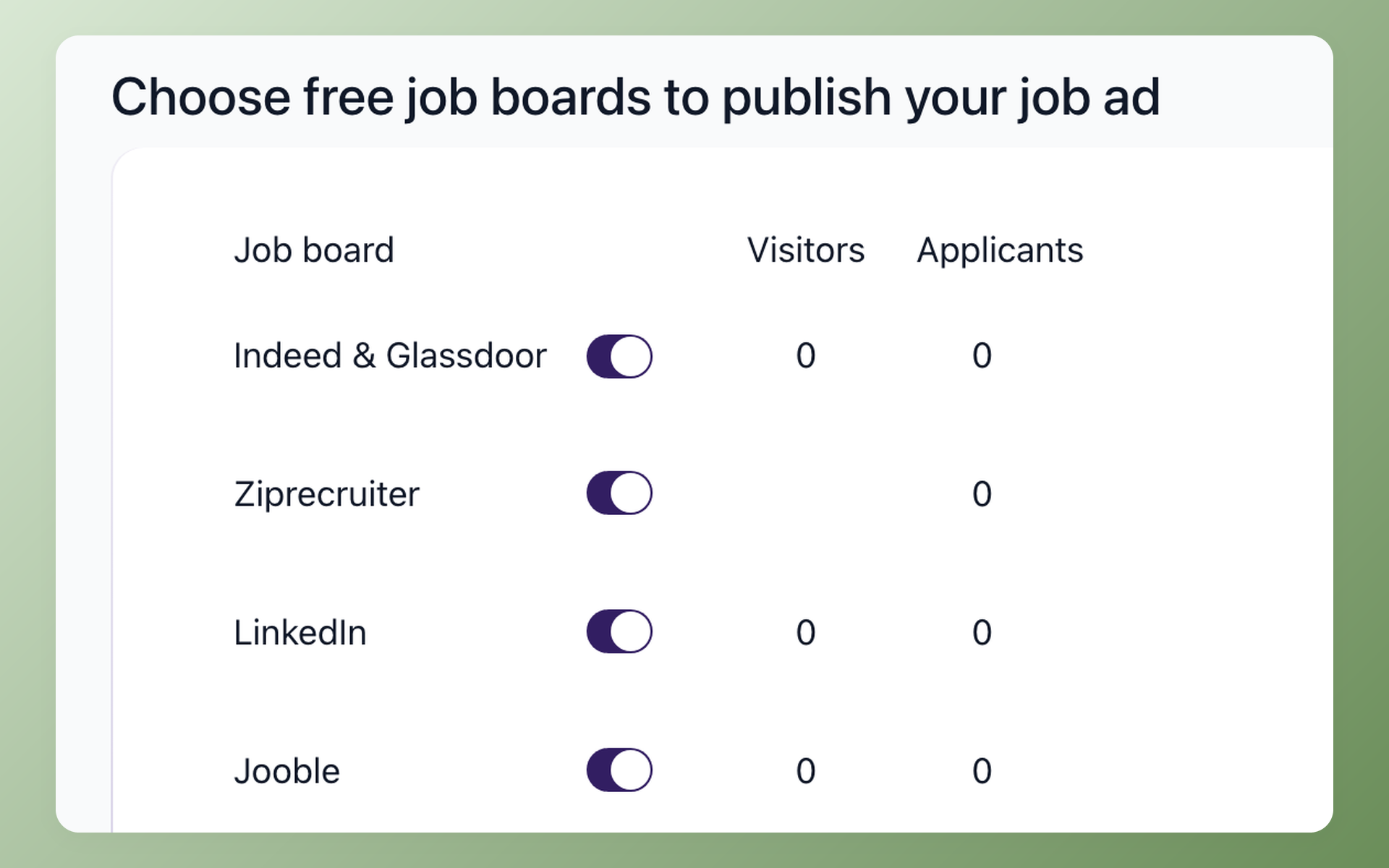
- Trackable links: create a unique link per group or post, and Reporting shows visitors, candidates, conversion rate, and hires by source
- One-click job boards: post the same role to 13 boards at once, including Indeed, LinkedIn, ZipRecruiter, Glassdoor, Monster, Google Jobs, and Talent.com
- One inbox: every applicant from every source lands in the same place instead of scattered Messenger threads
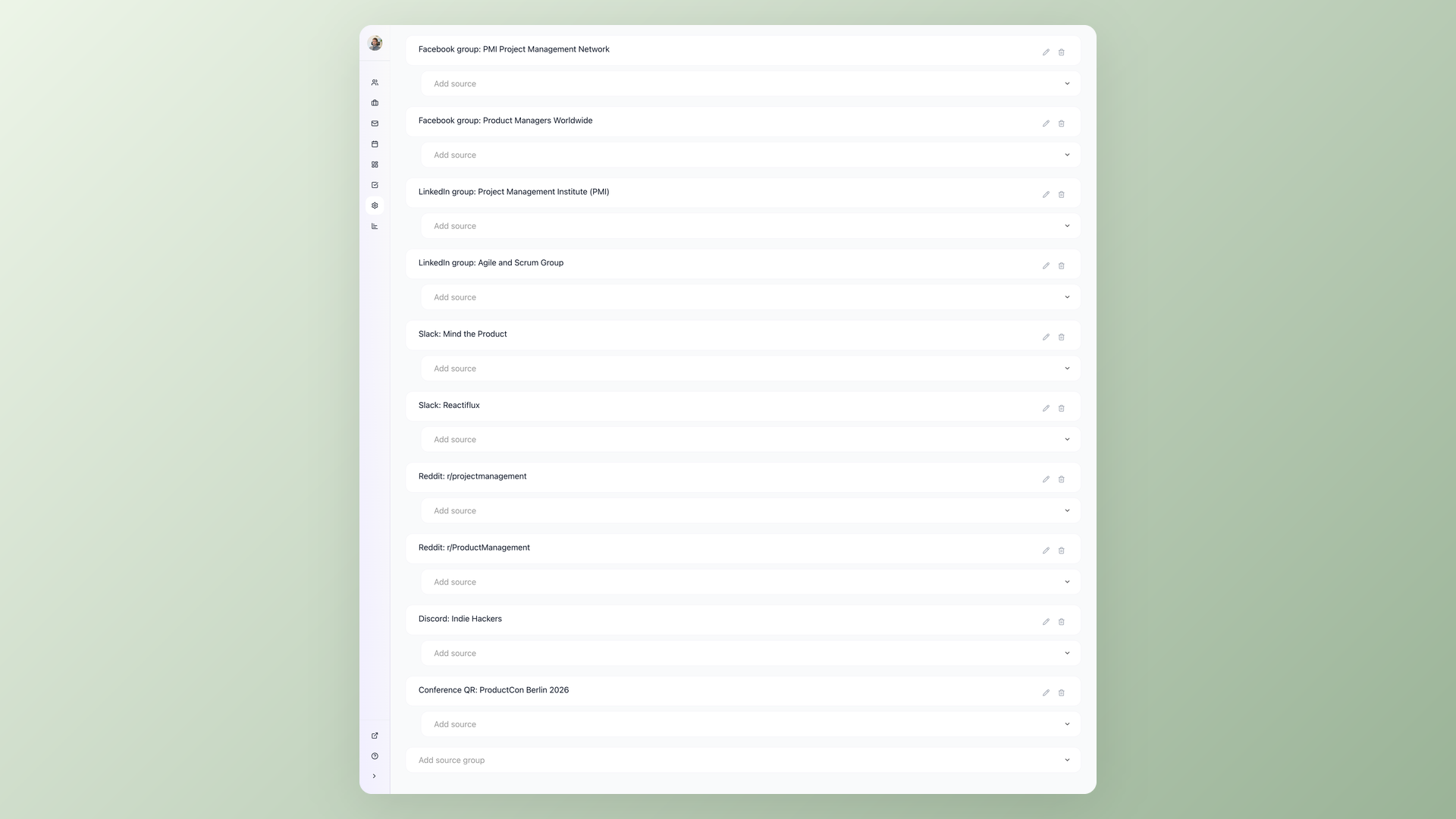
Here is the math, and treat it as illustrative. Three groups, one Local Jobs listing, and 13 boards add up to 17 sources, built in about 20 minutes of setup. With one link per source, by Tuesday you know which three to double down on.
The problem is real. One employer we spoke with ran paid Facebook ads next to Glassdoor and Indeed and could not recall which postings were even paid. Source reporting exists for exactly that moment.
You can try it free for 14 days, no credit card, with job-board posting included, on plans that start at 49 dollars a month. Start a free trial, or see how 100Hires can post one job to 13 boards at once.
Frequently asked questions
Is posting a job on Facebook free?
Yes. Local Jobs, business Page posts, and group posts are all free, and boosting is an optional paid add-on. To learn which free channel actually delivers, route each one through a trackable 100Hires link and check the source report.
Why can't I post a job on Facebook from my computer?
Facebook's Help Center says job creation "isn't available on computers," so you use the Android or iPhone app. If you manage hiring from a desktop, run the role in an ATS like 100Hires and share its link to Facebook from anywhere.
Why don't I see the Jobs tab on Facebook Marketplace?
Local Jobs is a limited US test in select cities, and it is app first, so many employers will not see the tab yet. Fall back to a Page post, groups, and ads. Adding a 100Hires trackable link to each one keeps them measurable.
What happened to the old Facebook Jobs?
It shut down in two stages, outside the US and Canada in February 2022 and everywhere in February 2023, then relaunched on October 13, 2025 as Local Jobs. Through the gap, employers using 100Hires kept posting to stable job boards while the social feature came and went.
Do Facebook job posts actually work?
It depends on the role. Employers report the strongest results for local, hourly, trade, and service jobs, usually through groups, while office and remote roles do better on boards. Measure each source with 100Hires reporting instead of guessing.
Does Facebook Jobs integrate with an ATS like 100Hires?
The old jobs API closed in February 2022 and Meta's relaunch materials do not mention a new one, so 100Hires bridges that gap with a trackable application link in every post rather than a native feed. That link also feeds every reply into one inbox.
Try 100Hires for free
No credit card. 14-day trial. Forbes Advisor #1 ATS for SMBs.