
Healthcare applicant tracking system: how to choose one + 7 best options for 2026
Your best nurse applicant applied to three other employers the same afternoon. The clinic that replies first usually books the interview.
This guide ranks 7 healthcare applicant tracking systems by the organization they actually fit: independent clinics and practices, multi-location care groups, and hospital systems.
You get real pricing where vendors publish it, verified review counts, and a checklist of what to require before you sign.
The stakes are bigger than software. NSI Nursing Solutions' national retention benchmarks put average RN time-to-fill at 78 days, over two and a half months, and the cost of one RN departure in the mid five figures. A meaningful share of that delay is process, and process is fixable.
Full disclosure before anything else: 100Hires is our product. We rank it first, we explain how we picked everything further down, and we tell you where our own evidence is thin. You get the receipts and make the call.
7 healthcare applicant tracking systems at a glance
The hiring playbook, in your inbox
One email a week - benchmarks, AI screening tactics, and short interview templates from the 100Hires team. No product pitches.
The short answer first. The rest of the article shows the work.
| Tool | Best for | Pricing | Reviews (G2 / Capterra) |
|---|---|---|---|
| 100Hires | Clinics, practices, and care organizations up to ~100 staff | From $49/mo billed annually ($99 month to month) | 4.8 (1,341) / 4.9 (1,157) |
| ApplicantStack | Budget-first small facilities | Public: $29.99 to $159.99/mo | 4.4 (811) / 4.4 (1,555) |
| Hireology | Multi-location healthcare and dental groups | Custom quote | 4.5 (1,372) / 4.2 (127) |
| symplr Recruiting | Hospital systems on the symplr stack | Custom quote | 4.1 (65, under symplr Talent Management) / too few reviews to rate |
| iCIMS | Enterprise health systems with high volume | Custom quote | 4.2 (989) / 4.3 (824) |
| Workday Recruiting | Health systems standardizing on Workday HCM | Custom quote | Rated as an HCM suite, not a standalone ATS |
| Greenhouse | Structured hiring at larger organizations | Custom quote | 4.4 (3,923) / - |
Notice the pattern in the pricing column. Five of the seven vendors publish no dollar figures at all. In this category, a visible price is the exception, and that alone tells you a lot about who each tool was built for.
1. 100Hires - best for clinics, practices, and care organizations
100Hires is an AI-first applicant tracking system built for in-house healthcare teams that want enterprise-grade screening without enterprise procurement. The sweet spot: clinics, practices, home care and senior living organizations with roughly 5 to 100 employees.
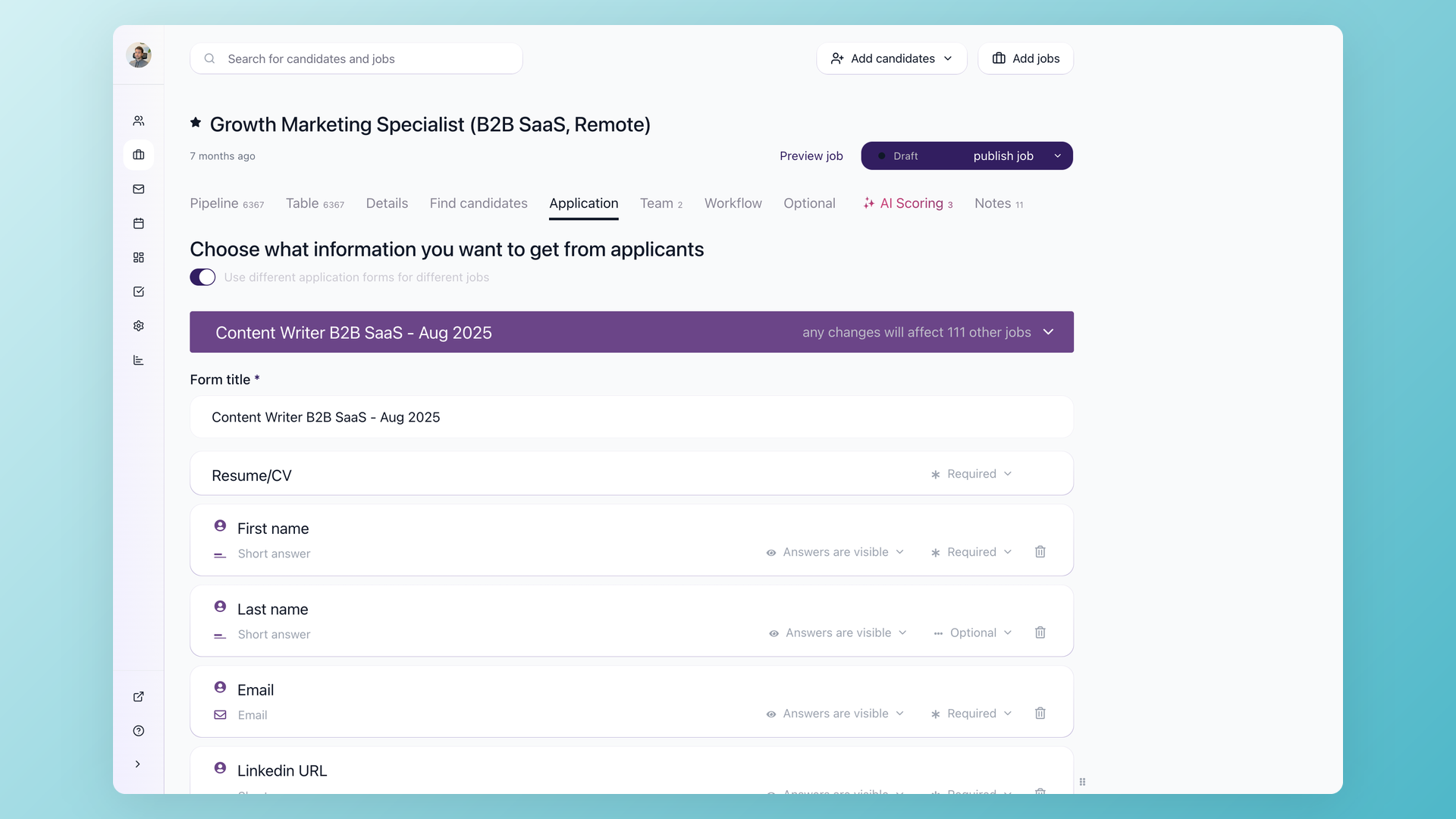
Three things stand out for healthcare hiring. First, knockout questions filter for an active RN license, CPR certification, or work authorization the moment someone applies, so nobody screens unqualified resumes by hand.
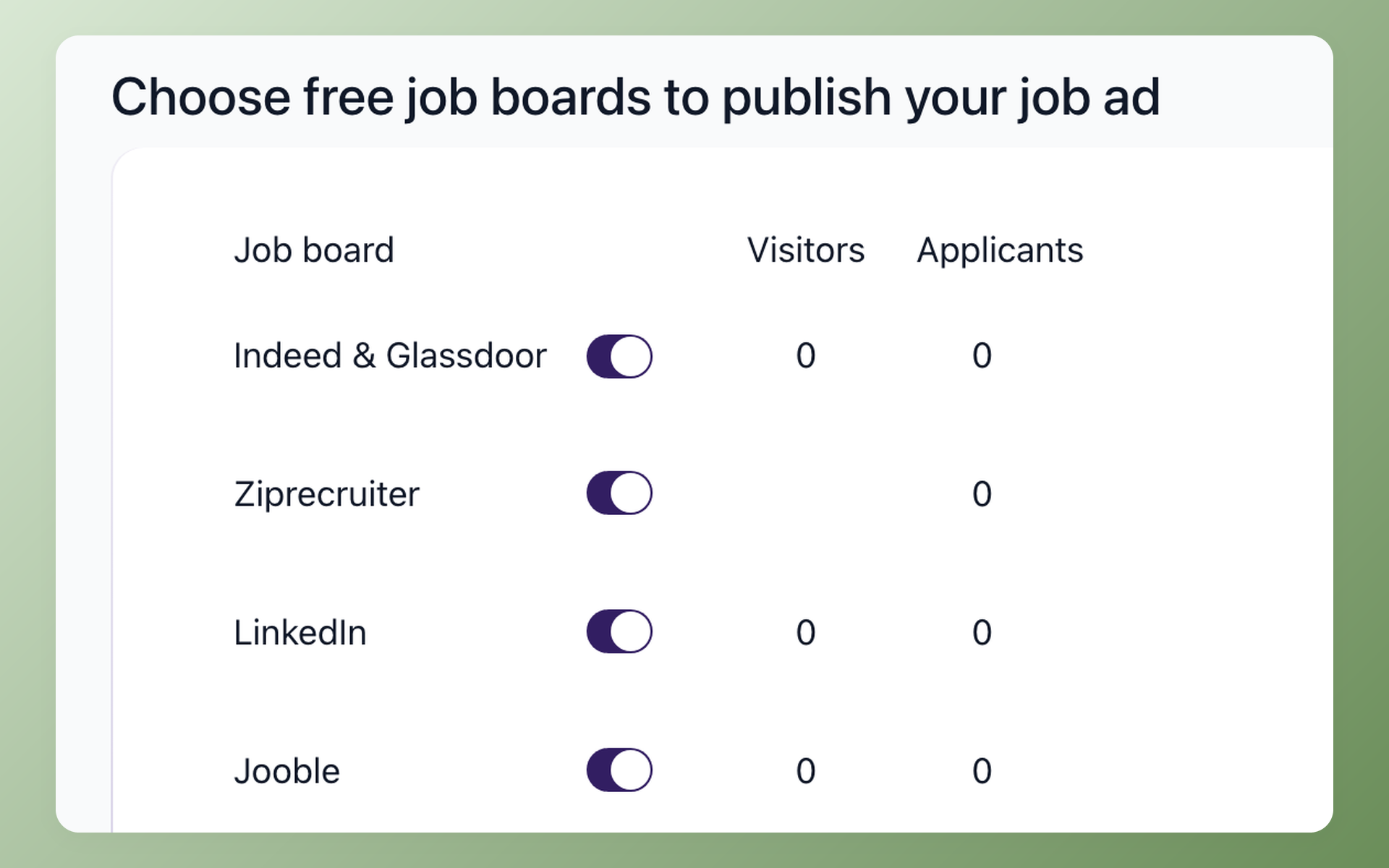
Second, you can go live quickly: one-click posting to 13 named job boards, candidate texting, and a pipeline you can configure within an hour of signing up.
Third, AI Score and AI Recruitment Copilot rank candidates in high-volume CNA, MA, and front-desk pipelines with per-criterion scoring you can audit, on every plan.
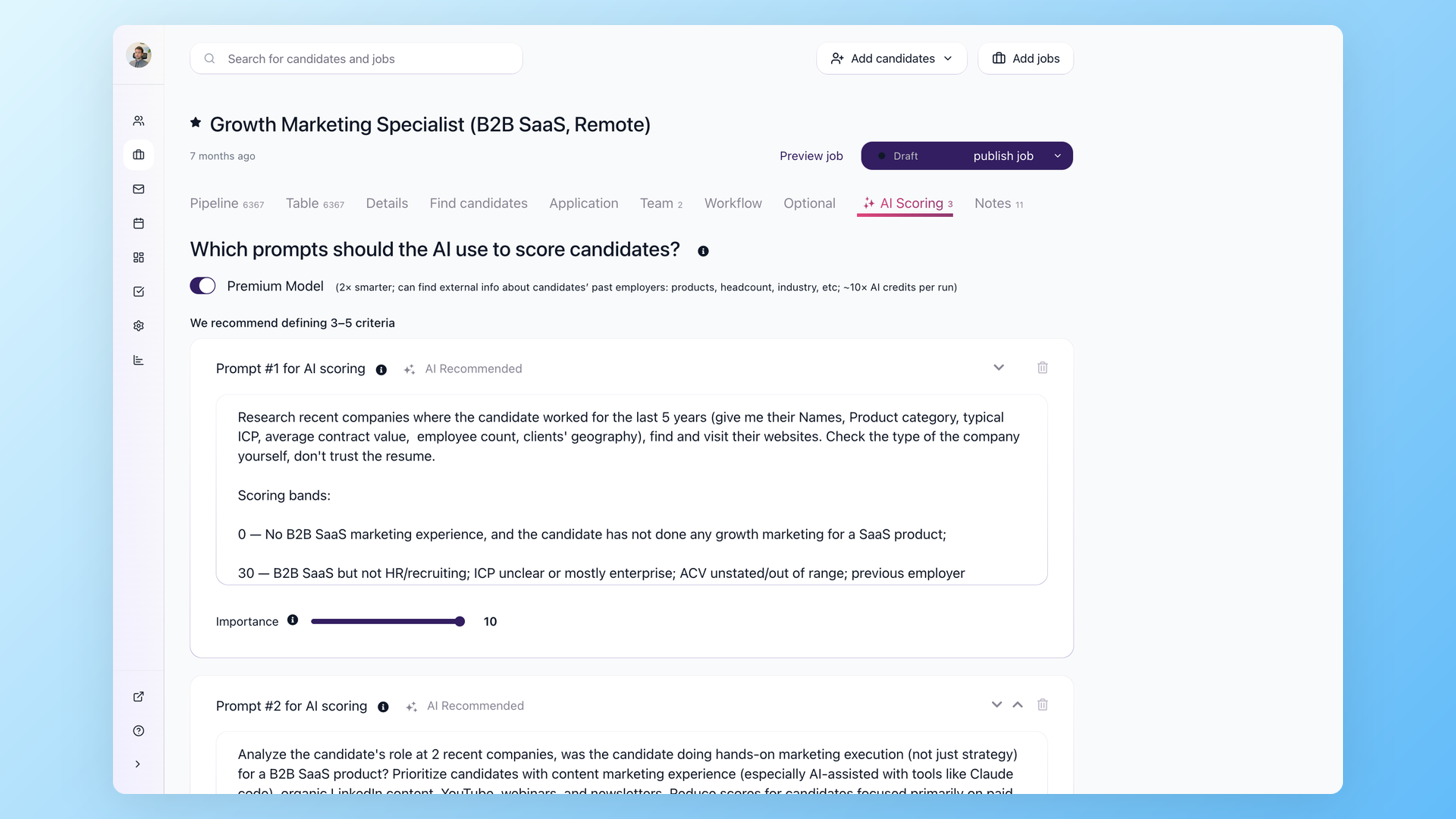
Pricing is published: from $49/mo billed annually ($99 month to month), with the Advanced plan at $199/mo annual. That makes 100Hires the only tool on this list with public pricing and a full AI screening layer.
The honest limits: the text-dense interface takes a day to get used to, the Start plan covers one user and gates candidate emailing, and the integration catalog is smaller than Greenhouse-class suites, with no native HRIS module.
Background checks route through email templates today rather than a native integration.
Verdict: the transparent-pricing pick for clinic-scale healthcare employers that need candidates moving this month, not hospital-enterprise modules. Forbes Advisor ranks it #1 for startups and small businesses; G2 shows 4.8 across 1,341 reviews.
See the healthcare recruiting software tour for the vertical specifics.
2. ApplicantStack - best budget pick with public pricing
ApplicantStack, part of the Swipeclock workforce suite, is one of only two vendors in this roundup that publish real prices: Starter at $29.99/mo for one open job, up to $159.99/mo for the bundle with onboarding.
There is a 14-day trial and a self-serve signup, no sales call required.
Its dedicated healthcare page leans on credential document tracking and EEOC-aware screening, and the tool fits small facilities, nursing homes, and home care agencies that count every dollar. Reviews back the volume claim: 4.4 on Capterra across 1,555 reviews.
The trade-off is ambition. The interface has a dated reputation, and the AI story is light-touch resume filtering rather than a scored ranking system. Teams that expect modern screening automation will feel the ceiling within a year.
Verdict: the budget floor for healthcare hiring software that still behaves like a real ATS.
3. Hireology - best for multi-location healthcare and dental groups
Hireology comes up unprompted when healthcare operators compare tools. In our own sales conversations with senior living and nursing home buyers, it is a name that keeps landing on the shortlist.
The product earns that: multi-location hiring workflows, license and credential tracking, background checks in-suite, and compliance reporting framed around survey readiness. Its AI layer covers candidate matching, structured AI interviews, and job description drafting.
G2 shows 4.5 across 1,372 reviews, the strongest review base of any healthcare-focused vendor here.
Two caveats. Pricing is quote-only: the packages page details Essentials and Professional features and then stops short of a single dollar figure. And single-site practices end up paying for multi-location structure they may never use.
Verdict: the multi-site operator's pick, from dental groups to home care franchises.
4. symplr Recruiting - best for hospital systems on the incumbent stack
symplr Recruiting, which carries the HealthcareSource lineage, is the household name in hospital talent acquisition. It sits at the top of page one for this exact search, and iCIMS's own roundup describes it as the only purpose-built healthcare recruitment platform in that list.
The suite thinks in hospital terms: HRIS integrations for onboarding, candidate texting (symplr's own page cites a 45% SMS response rate against roughly 8% for email), and recruiting dashboards built around time-to-fill and pipeline health for health systems.
Know what is and is not in the box. Credential verification and licensure compliance live in symplr's separate credentialing products, not inside symplr Recruiting itself. Budget for two purchases if you want both.
The surprise is the review base: G2 shows 4.1 from just 65 reviews, listed under the symplr Talent Management umbrella. For a brand this dominant, public proof is thin, and we found zero organic practitioner chatter about it in recruiter communities.
Pricing is quote-only with an enterprise implementation cycle.
Verdict: the incumbent choice for hospital TA teams already invested in the symplr ecosystem.
5. iCIMS - best for enterprise health systems with high-volume hiring
iCIMS appears in both of the listicles that rank on page one for this keyword, one of which it wrote itself. The enterprise pitch is real: dynamic talent pools, an ATS plus CRM plus employer branding bundle, and text engagement at scale.
Its healthcare page reads as a vertical landing on top of a horizontal enterprise product. We found no credential or license verification claims on it, and the feature list mirrors the generic enterprise offer with hospital customer quotes layered on.
That is not a dealbreaker for a large health system that wants one vendor for high-volume clinical and corporate hiring. G2 shows 4.2 across 989 reviews, Capterra 4.3 across 824. Pricing is quote-gated with a named-account sales motion and real implementation lift.
Verdict: a high-volume health-system pick, sized for enterprise procurement rather than a 40-person clinic.
6. Workday Recruiting - best when hiring lives inside the HCM suite
Workday Recruiting is less an ATS purchase and more a module decision.
If your health system already runs Workday for HR, payroll, and scheduling, recruiting inside the same system of record has obvious appeal, and iCIMS's roundup credits Workday with hundreds of healthcare organizations as clients.
The strengths are suite strengths: workforce planning, one employee record from applicant to alumnus, and enterprise governance. The weaknesses are suite weaknesses too.
Recruiting UX is not the product's center of gravity, and in our broader ATS research it was the most consistently criticized enterprise incumbent among recruiters and candidates alike.
Implementation is the longest on this list, and the module only makes sense at suite scale.
Verdict: for health systems standardizing on Workday HCM. Nobody should buy it as a standalone applicant tracking system.
7. Greenhouse - best structured-hiring discipline for larger orgs
Greenhouse is the generalist heavyweight on this list. Its healthcare story is configuration rather than purpose-built tooling: structured scorecards, interviewer scheduling automation, and standardized interview kits that keep 20 hiring managers evaluating the same way.
That discipline is exactly what large, multi-department organizations need, and the integration marketplace is among the deepest in recruiting software. G2 shows 4.4 across 3,923 reviews.
The costs: pricing is a custom quote, the Core tier includes no AI features at all, and there is no native credentialing concept, so healthcare specifics depend on integrations and custom fields.
For a clinic-scale team, both the price and the process overhead are more than the job requires.
Verdict: the process-discipline pick for larger organizations with a dedicated talent acquisition function.
Also considered
SmartRecruiters and Jobvite show up in the page-one listicles for this keyword. Both are capable enterprise generalists, and the segment they serve is already covered here by iCIMS, Workday, and Greenhouse.
Talent Pathway and UKG Pro Recruiting get ranked too; UKG matters most where elder-care scheduling already runs on UKG.
Apploi deserves a mention as a healthcare-specific, high-volume hiring tool that surfaced in a practitioner-curated software list on Reddit. We have not verified it hands-on this round, so it sits outside the ranking.
One routing note: Bullhorn, Ceipal, and Avionte serve healthcare staffing agencies that place travel nurses and locum tenens clinicians. Agency workflows (VMS, credentialing submissions, invoicing) are a different problem from in-house hiring, covered in our healthcare staffing software guide.
For a generalist shortlist beyond healthcare, see our best ATS software comparison.
Why healthcare hiring needs a different ATS setup
Healthcare hiring is structurally harder than hiring in most industries, and the numbers say so.
According to Bureau of Labor Statistics occupational projections, healthcare occupations will keep growing much faster than the average across the next decade, which means competition for talent will intensify every year.
Speed is the first structural problem. The NSI National Health Care Retention Report tracks RN vacancies taking 78 days to fill on average, over two and a half months, and provider credentialing can stretch a start date by weeks or months after the offer.
Every day of delay is paid in agency shifts and overtime.
Volume cuts the other way at the entry level. A single CNA or front-desk posting can bury a small HR team in applications within days, and healthcare HR media currently talks less about sourcing and more about post-application drop-off: candidates who applied, heard nothing for a week, and moved on.
Channels differ too. In our own sales calls with healthcare buyers, one theme repeats: nurses and caregivers barely maintain LinkedIn profiles. Job boards, texting, and your careers page carry the funnel, so an ATS built around LinkedIn-style sourcing solves the wrong problem.
Finally, clinical candidates carry credentials that move through stages. An internationally recruited nurse can pass through many sequential milestones, from licensure exams to visa screening to clinical orientation.
Your tracking system either models those checkpoints or someone rebuilds them in a spreadsheet.
What to look for in a healthcare ATS
Knockout questions for licenses and certifications. The highest-leverage feature in healthcare screening: ask about an active RN license, CPR certification, or work authorization at apply time, and let unqualified applications filter themselves.
Ask about work authorization, not citizenship; the EEOC's pre-employment inquiry guidance explains why citizenship questions on an application invite discrimination claims. See how knockout questions work in 100Hires.
Speed-to-first-touch automation. Auto-acknowledgments, interview self-scheduling, and texting decide who interviews your best applicants first. As a practical rule of thumb, the first employer to respond wins the candidate.
Multi-channel job distribution. Clinical talent lives on job boards, not LinkedIn. Look for one-click syndication across boards; 100Hires posts to 13 named boards from a single job record.
A careers page that converts. Practitioners in healthcare recruiting talk about the embedded careers mini-site as the make-or-break conversion point. If your ATS cannot host a clean mobile apply flow, candidates leak out before the pipeline starts.
Credentialing clarity: screening vs verification vs compliance. Three different jobs get blurred under one word. Screening (asking about licenses at apply) is ATS-native everywhere. Verification (checking licenses and running background checks) runs through specialized vendors.
A compliance system of record is a dedicated credentialing platform; symplr, for one, sells that separately from its ATS.
The buying question is simple: can the ATS hold a credentialing checkpoint as a pipeline stage and connect to your verification process? Distrust any ATS that claims it "does credentialing" outright.
Integration surface. Map your HRIS or payroll, background-check vendor, and calendar before you buy. SMB tools often bridge gaps with Zapier-style connectors; enterprise suites do it natively and charge for it.
Security posture for candidate data. Look for role-based access, per-job visibility, retention controls, and clean deletion: the HIPAA-ready checklist covered in the compliance section below.
Pricing you can actually see. Six of the eight healthcare ATS vendors we checked publish no pricing at all. If budget certainty matters at your scale, the shortlist writes itself.
How we picked these tools
Here is our bias, stated plainly. 100Hires is our product.
For this guide we analyzed the pages ranking for healthcare ATS searches, read healthcare hiring threads across recruiter forums, and watched 10 video breakdowns. We reviewed posts from healthcare talent leaders and drew on our own sales calls with clinics and care organizations.
100Hires appeared in none of that organic chatter.
We are a newer entrant, and we would rather tell you that than fake it.
The #1 ranking leans on third-party evidence instead: Forbes Advisor ranks 100Hires #1 for startups and small businesses (a general SMB ranking, not a healthcare-specific one), G2 shows 4.8 across 1,341 reviews, Capterra 4.9 across 1,157.
Selection favored segment coverage, verified review volume, and healthcare capability over feature-count scoring. Weigh that against our bias however you see fit.
How to choose the right healthcare ATS for your organization
Solo clinic to ~100 staff. You need visible pricing, a system live in days, knockout questions, and texting. Shortlist 100Hires and ApplicantStack; skip anything with an implementation project.
Multi-location groups. Dental groups, senior living, and home care operators need per-location workflows with centralized oversight. Shortlist Hireology and 100Hires.
Honest note: per-location reporting is an area 100Hires is still building out, and home care hiring has its own dynamics, covered in our home care recruiting software page.
Hospital systems. You are buying integrations and governance: credentialing hooks, HRIS and ERP alignment, enterprise security review. Shortlist symplr, iCIMS, and Workday, and budget for a sales cycle measured in quarters.
Staffing agencies. None of the above. Agency platforms model placements, not employees; start from the staffing software guide linked in the section above.
A three-question sanity test before any demo: Can you see the price? Can you go live this month? Can a candidate apply from a phone in under five minutes? If a vendor fails all three, keep looking. You can run the test against the 100Hires healthcare tour first.
Compliance and candidate data in healthcare hiring
Start with the distinction most vendor pages blur: an ATS stores candidate data, not patient records. Health information an employer holds about applicants for hiring purposes sits outside HIPAA's definition of protected health information in most cases.
So the honest standard is HIPAA-ready, not "HIPAA compliant". Compliance is a status your organization holds; software supports it with controls. Require role-based access, per-job visibility, configurable retention, and clean deletion on request.
Our HIPAA-ready ATS breakdown covers what that means in practice and what it deliberately does not claim.
Two adjacent obligations belong in the same conversation. Keep defensible hiring records of who was screened and why, with retention windows you control.
And treat background checks and license verification as specialized vendor work: the ATS's job is to hold the checkpoint stage and the audit trail, not to replace the verifier.
Frequently asked questions
What is an ATS in healthcare?
An applicant tracking system in healthcare is software that collects applications, screens for role requirements like an active license or certification, and moves candidates through interview stages to offer. The healthcare twist is requirement screening and volume: tools like 100Hires use knockout questions and AI Score to separate a licensed RN from 90 unqualified applications automatically.
What are the top 5 ATS systems for healthcare?
By organization type: 100Hires for clinics, practices, and care organizations up to about 100 staff (with ApplicantStack as the budget alternative in that segment); Hireology for multi-location healthcare and dental groups; symplr Recruiting for hospital systems; iCIMS for enterprise health systems with high volume; Workday Recruiting where hiring lives inside the Workday HCM suite.
How much does a healthcare applicant tracking system cost?
Published prices run from about $30/mo (ApplicantStack Starter) to $199/mo (100Hires Advanced billed annually), with 100Hires starting at $49/mo on annual billing. Most healthcare-branded vendors publish nothing and quote after a demo; enterprise healthcare ATS contracts typically land far higher once implementation is included. If the price is not on the website, plan for a sales cycle.
Is there a free healthcare applicant tracking system?
Free tiers are rare in this vertical and usually cap you at one job or strip the screening features healthcare needs. A more realistic path: run a full-featured trial against a live requisition. 100Hires offers a 14-day free trial with no credit card, which is enough time to post a role to 13 named job boards and test knockout screening on real applicants.
Do healthcare applicant tracking systems auto-reject candidates?
Mostly no. The keyword auto-reject story is largely myth; recruiters who have shown real ATS backends on camera confirm applications get sorted by date, not silently deleted by AI. What screening tools do is rank and flag. 100Hires AI Score, for example, scores candidates per criterion and routes low scores to a review queue, and a human makes the call.
Does a healthcare ATS need to be HIPAA compliant?
Not in the way vendor marketing implies. An ATS holds candidate data, which usually falls outside HIPAA's protected health information, so the practical standard is HIPAA-ready security: role-based access, per-job visibility, retention controls, and clean deletion. That is the posture 100Hires documents publicly, including what it does not claim: no compliance certificate and no patient records in the system.
Fill your open clinical roles faster
The routing is simple. Hospital systems: evaluate the enterprise trio with a realistic implementation budget. Multi-location groups: start with Hireology and 100Hires. Clinics, practices, and care organizations: pick a tool you can see the price of and go live this week.
If that last profile is you, start the 100Hires 14-day free trial or take the healthcare tour first.
No credit card, and your candidate data leaves with you as a CSV export if we are not the right fit.
Try 100Hires for free
No credit card. 14-day trial. Forbes Advisor #1 ATS for SMBs.