
WizeHire vs Indeed 2026: Which fits SMB hiring? - 100Hires
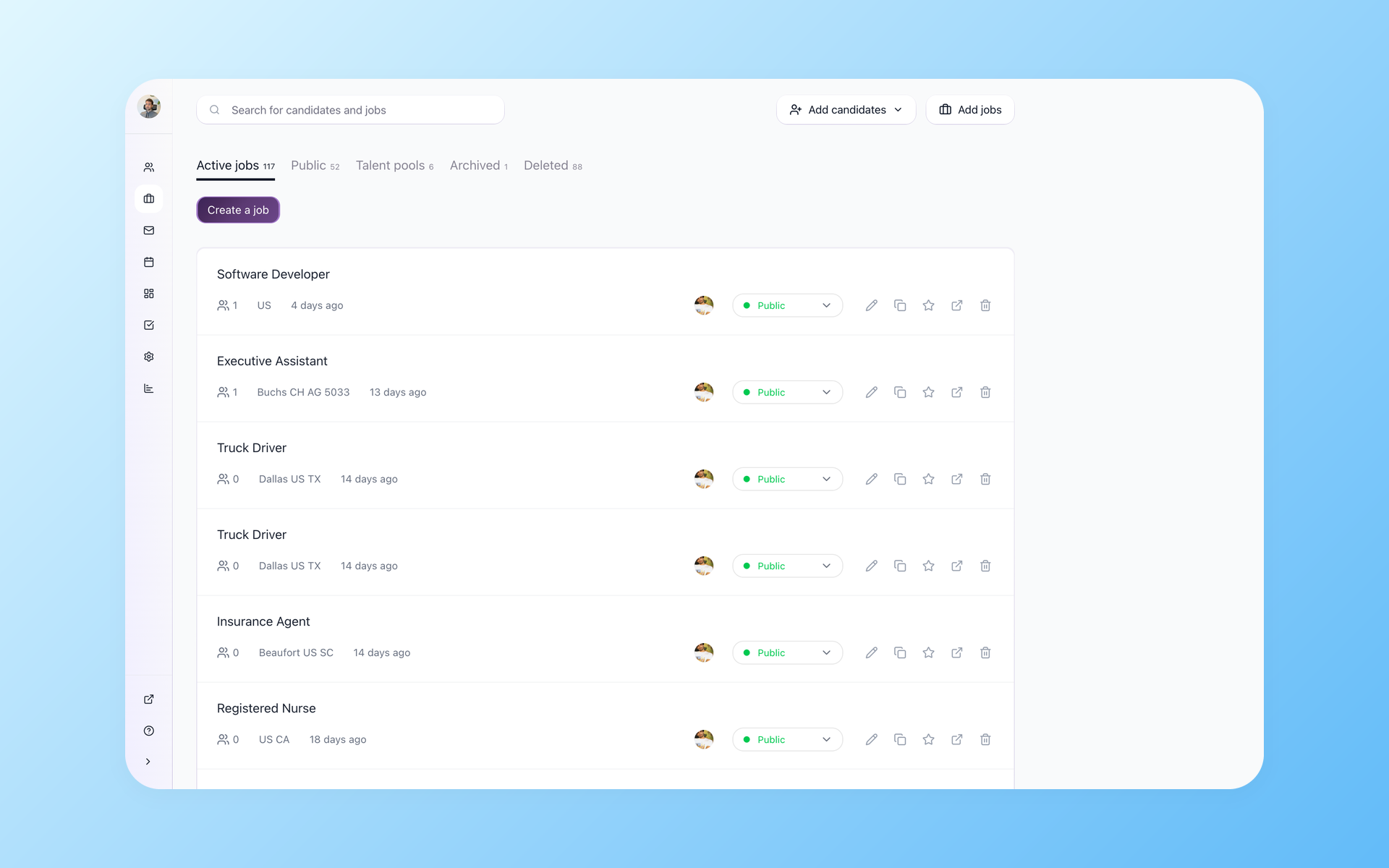
Indeed is the better first choice when your immediate need is applicant reach for one or a few jobs. WizeHire is the better fit when you need guided job setup, screening, assessments, interview support, and applicant management.
You do not always need to pick one. Current WizeHire material describes an active Indeed integration, so an employer can run the hiring process in WizeHire and use Indeed for marketplace reach.
This comparison reviews current official pricing and help material, product demonstrations, operator discussions, and internal product documentation. Vendor performance claims are treated as claims, not measured results.
Independent, current WizeHire practitioner evidence is sparse. That evidence gap limits any broad claim about support quality, applicant quality, or hiring outcomes.
The practical distinction is simple. Applicant reach and applicant workflow are separate purchases. A marketplace can feed a hiring system without replacing it, and a hiring system can organize applicants without creating a marketplace audience.
WizeHire vs Indeed at a glance
The hiring playbook, in your inbox
One email a week - benchmarks, AI screening tactics, and short interview templates from the 100Hires team. No product pitches.
The choice turns on the first bottleneck. Indeed starts with audience access. WizeHire starts with a guided hiring process that can send jobs to Indeed and bring applicants back into one workflow.
That makes the combined option more than a compromise. It keeps the products in their strongest roles, provided the team chooses one publishing route and knows which dashboard owns job edits, sponsorship, and applicant status.
The table separates capability from outcome. It describes what current product material supports, not which channel will produce a better hire for a given role or location.
| Criterion | Indeed alone | WizeHire | WizeHire + Indeed |
|---|---|---|---|
| Best for | One or a few roles where reach comes first | Owners who want hiring guidance and structure | Teams that need reach plus a managed workflow |
| Core role | Job marketplace with employer tools and sourcing | Guided SMB hiring system and ATS-style workflow | Indeed reach managed through WizeHire |
| Applicant reach | Direct access to the Indeed marketplace | Distributes to supported boards, including Indeed | Indeed supplies reach; WizeHire manages the process |
| Guided job setup | Employer guidance and job-description tools | Templates, compensation guidance, Scout, and coaching | WizeHire guidance feeds an Indeed listing |
| Screening and assessment | Screeners and assessments near the application channel | Screening questions, DISC+, Talent Match, and interview guidance | WizeHire adds a guided layer to Indeed applicants |
| Applicant tracking | Employer Dashboard, statuses, exports, and interviews | Candidate records, stages, templates, and scheduling | Synchronized applicants move through WizeHire stages |
| Active sourcing | Smart Sourcing search, matching, contacts, and outreach | Scout, Talent Match, invites, and past-applicant re-engagement | Use each product for its distinct sourcing path |
| Candidate communication | Indeed messaging and interview tools | Email, templates, scheduling, and plan-dependent texting | Channel intake plus guided follow-up |
| Interview support | Indeed Interview and employer notes | Interview guides, scheduling, and recommended next steps | WizeHire runs the structured interview workflow |
| Pricing model | Eligible free posts, sponsored budgets, sourcing subscription | Monthly or annual software plans by scope | WizeHire subscription plus optional Indeed spend |
| Setup effort | Low for one eligible direct post | More setup for stages, templates, and team process | Integration reduces duplicate handling once configured |
| Main limitation | Reach can create a heavy review burden | Subscription, job caps, and limited independent evidence | Duplicate posts and separate sponsorship costs need control |
Choose Indeed alone when reach is the immediate constraint and your internal process is simple.
Choose WizeHire when guidance and repeatability are the constraint. Use WizeHire with Indeed when the business needs both reach and a managed hiring process.
WizeHire and Indeed work together
Current WizeHire sources state that the Indeed integration is automatically enabled for WizeHire customers. Job and candidate data can synchronize, and employers can manage Indeed sponsorship from the WizeHire dashboard.
That relationship changes the buying question. WizeHire can be the operating layer for job setup, applicant review, communication, and interviews. Indeed can remain the marketplace where many applicants discover the role.
Indeed sponsorship remains optional and separate from the WizeHire subscription. The employer can manage that spend from WizeHire, but the media budget still belongs to the Indeed side of the workflow.
Synchronization matters most after the application. A useful connection should preserve the applicant record, resume, screener details, and later disposition without making a recruiter copy data between dashboards.
A simple combined flow looks like this:
- Build and manage the role in WizeHire.
- Send the opening to Indeed and other supported boards, with sponsorship optional.
- Review synchronized applicants and move them through the WizeHire workflow.
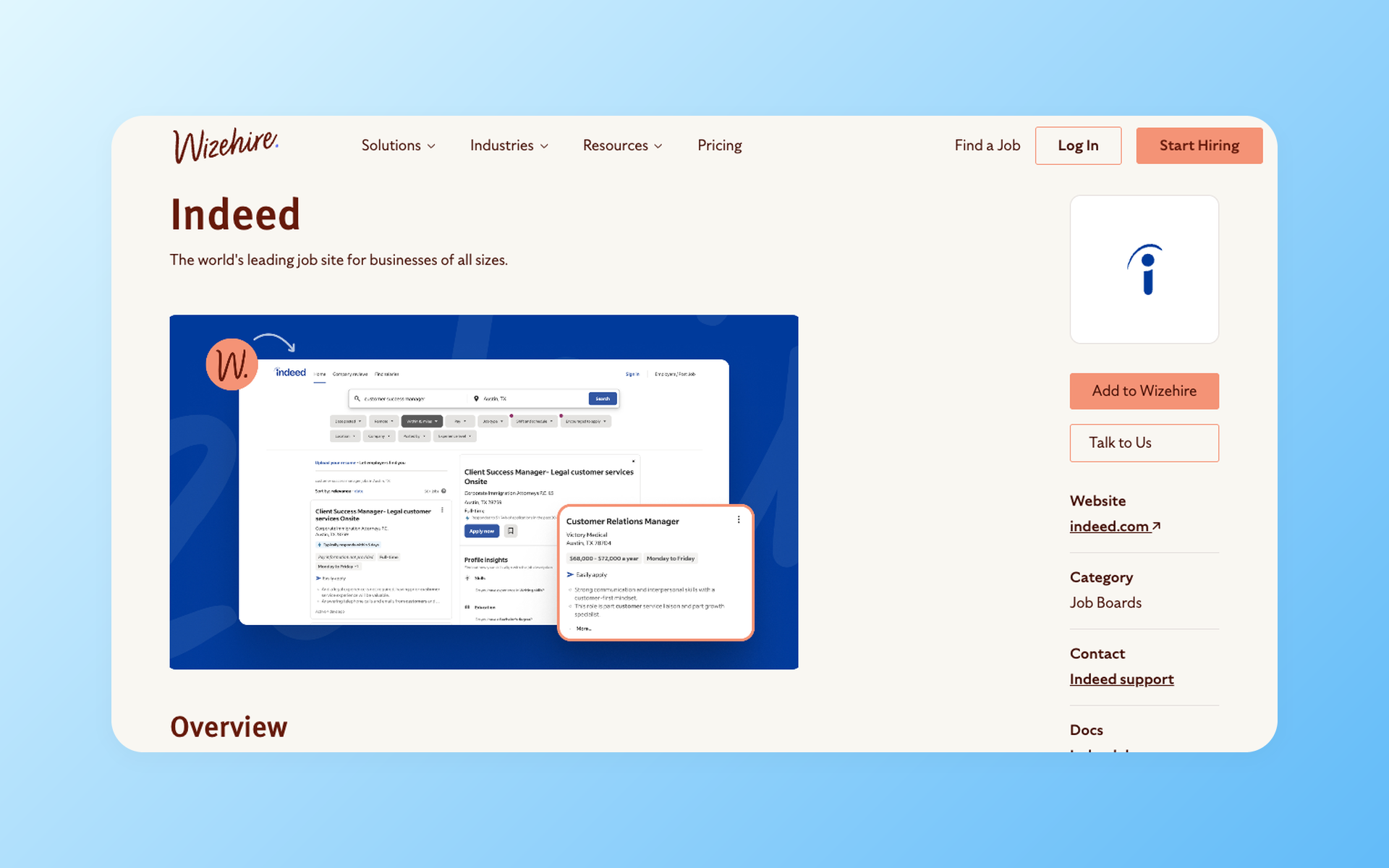
One legacy detail causes confusion. WizeHire says the older Indeed Linking connection is deprecated and cannot be reconnected after disconnection. Its primary current Indeed integration remains active.
Avoid sending the same opening directly to Indeed and through WizeHire. WizeHire warns that duplicate ads can be hidden. Pick one publishing route, then manage edits and sponsorship from that route.
Test the connection before a high-priority opening goes live. Publish a private or low-risk test role, submit one test applicant, change a status, and confirm that the expected fields arrive in the expected system.
Then record the owner for four actions: editing the job, pausing it, changing the sponsored budget, and closing it. A clear owner prevents stale listings and avoids two people changing the same campaign from different screens.
WizeHire vs Indeed feature by feature
Indeed has moved far beyond passive job posting, yet the products retain different centers of gravity. The table gives the short verdict, then each section explains the boundary.
| Criterion | Indeed | WizeHire |
|---|---|---|
| Applicant reach | Edge: direct marketplace reach | Different role: manages distribution |
| Guided setup | Useful employer guidance | Edge: guided SMB workflow |
| Screening | Practical tools close to the application | Edge: broader guided assessment layer |
| Applicant workflow | Enough for a simple direct hire | Edge: repeatable ATS-style process |
| Communication | Direct marketplace messaging | Depends: more follow-up control |
| Active sourcing | Dedicated Smart Sourcing product | Workflow-based sourcing and re-engagement |
| Data and reporting | Broad ATS connection program | Plan-dependent workflow reporting |
| Support and setup | Lower-friction self-service start | More setup with coaching and support |
Applicant reach and job distribution
Indeed has the edge for direct audience reach. Eligible employers can begin with free direct posts, sponsor a job for more visibility, or send openings through supported ATS and feed relationships.
Those routes are not interchangeable. A free direct job receives basic visibility, a Sponsored Job receives prioritized visibility under its budget, and an ATS-delivered job remains subject to Indeed's acceptance and sponsorship rules.
WizeHire says it distributes openings to more than 100 boards, including Indeed. That is a vendor-stated board count, not proof of equal visibility or applicant quality on every destination.
The decision is clean: use Indeed when direct reach is the product you need. Use WizeHire when you want one workflow to manage distribution and the applicants it produces.
Job setup and hiring guidance
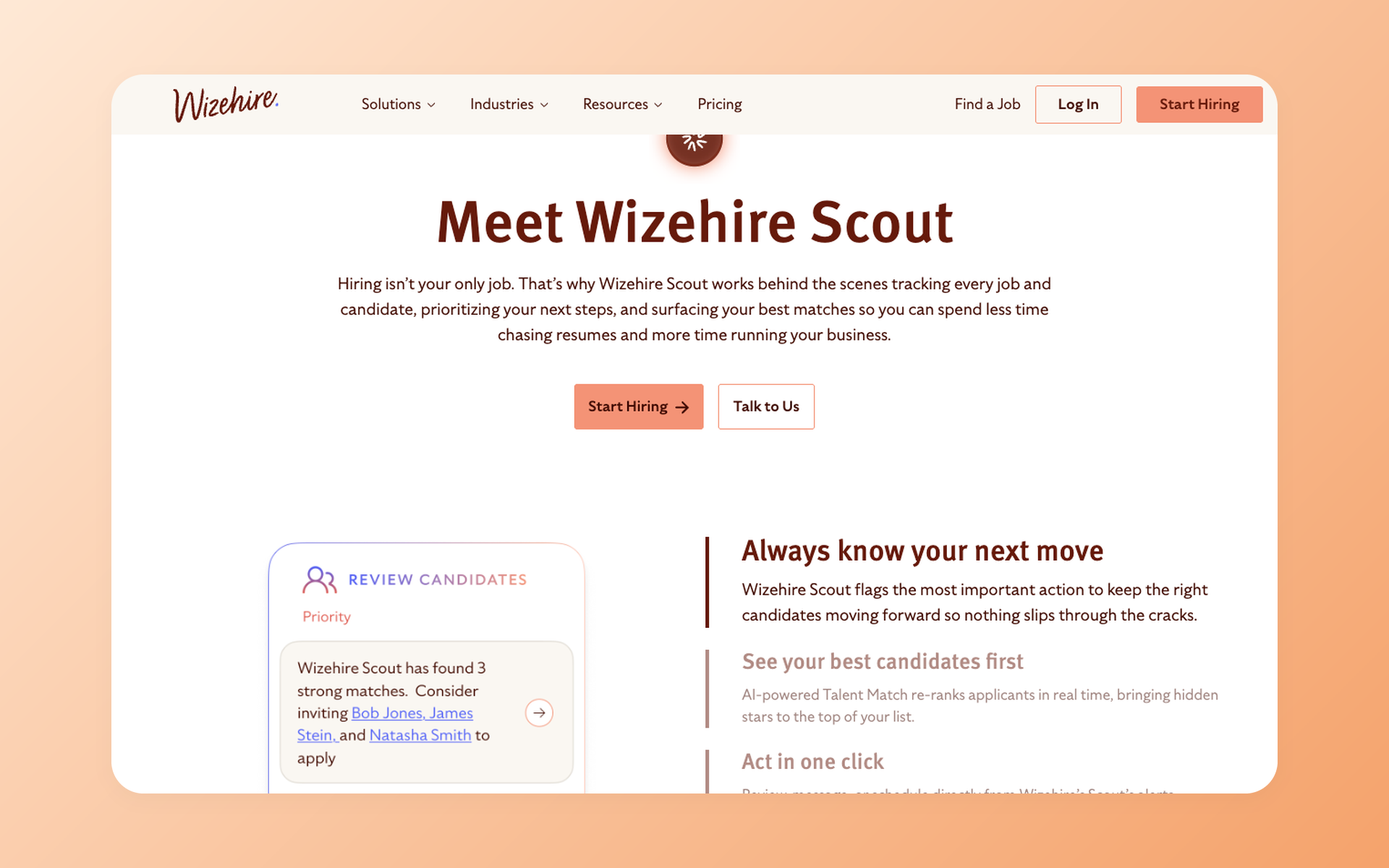
WizeHire has the edge for a first-time or intermittent hiring manager. Its current product scope includes role templates, job-description and compensation guidance, Scout recommendations, interview guides, and coach support.
Indeed offers employer guidance and tools for writing a job description. Its main value still begins with marketplace access and extends into screening, interviews, sourcing, and ATS connections.
Pick WizeHire when the owner wants a suggested process, not just a place to advertise. The public demonstrations support the workflow scope, but they do not prove faster or better hires.
During a demo, build one real role instead of accepting a polished sample. Check the title suggestion, compensation context, screening setup, interview guide, and Scout recommendations against what the hiring manager would use.
Screening and assessments
Indeed keeps screeners and assessments close to the application channel. WizeHire adds screening questions, DISC+, Talent Match, candidate ranking, and interview guidance within a more structured workflow.
WizeHire's limits matter. DISC+ can be turned on or off by job, yet DISC+ and screening questions cannot be mandatory. Applicants may submit without every step, and screening responses do not automatically disqualify them.
Turning DISC+ off stops new invitations. Turning it back on does not create results for earlier applicants. Teams should decide how they will handle incomplete assessment records before using fit data to sort a live pool.
Keep the final decision with an employer. The EEOC guidance on employment tests and selection procedures supports job-related, validated use of selection tools rather than an unexamined single signal.
Applicant tracking and team workflow
Indeed's Employer Dashboard covers screeners, messaging, candidate statuses, exports, and interviews. That may cover a small number of direct hires, mainly when one person owns the process.
WizeHire goes further into ATS-style work: candidate records, stages, templates, scheduling, guided next steps, and CRM functions on higher plans. This structure pays off when the same process repeats across roles or reviewers.
Indeed can handle a simple direct-hire flow. WizeHire has the edge when the team needs a shared record of what happened, what comes next, and who owns it.
Ask each product to show the same ordinary task: reopen a candidate, assign a next step, find the last message, export the record, and explain the source. Small actions expose workflow gaps faster than a long feature tour.
Candidate communication and experience
Indeed shortens the path from listing to application, then provides messaging and interview tools. WizeHire adds email, reusable templates, scheduling, follow-up, and texting on eligible plans.
Operator discussions point to a practical risk: high applicant volume becomes expensive when nobody can review and respond soon. That pattern is directional evidence, not a measured response rate for either product.
There is no universal winner. Indeed reduces distance between discovery and application. WizeHire gives the employer more control over what happens after an applicant enters the process.
The better fit depends on review capacity. A team that responds from one inbox may prefer Indeed's shorter path. A team with several stages, reviewers, and scheduled follow-ups gains more from WizeHire's structured record.
Candidate sourcing and past-candidate re-engagement
Indeed is not limited to waiting for applications. Smart Sourcing supports search, matching, shortlists, candidate contacts, invitations, and customizable outreach, with access shaped by market and subscription tier.
WizeHire keeps Scout recommendations, Talent Match, candidate invites, and past-applicant re-engagement inside its guided workflow. Current demonstrations show the tools, not independent outcome proof.
Indeed has the dedicated marketplace sourcing product. WizeHire gives an SMB one place to combine inbound applicants, suggested next steps, and earlier candidates. Broader outbound sequences call for a different ATS layer.
Smart Sourcing can operate without an active job, and attaching a job can improve its matching according to Indeed. WizeHire's re-engagement value grows from applicant history already stored in its system.
Integrations, data flow, and reporting
Indeed says ATS Sync supports hundreds of ATS connections. The program can transfer postings, screener and EEO questions, applications, resumes, candidate data, and disposition status, with exact behavior set by each ATS.
WizeHire's Indeed integration is the key connection in this comparison. Growth adds analytics and a deeper CRM scope. Concierge adds custom reporting, advanced integrations, and a relationship manager under custom pricing.
The pair can share useful data, yet reporting depth depends on plan and configuration. Test the exact path for a job edit, applicant record, screener answer, and disposition update before signing.
Support and setup effort
Indeed is easier to start for one eligible direct post. Its employer tools and help resources suit a self-service launch, and an existing ATS can receive applicants through the supported connection.
WizeHire asks the buyer to pay for software and configure a fuller process. In return, its plans stress templates, guided steps, coaching, and plan-dependent dedicated support.
Do not turn those positions into a support-quality ranking. Independent, current WizeHire practitioner evidence remains sparse, so the safest test is a live role, real reviewers, and the support path included in your plan.
Pricing depends on the buying model, not the sticker price
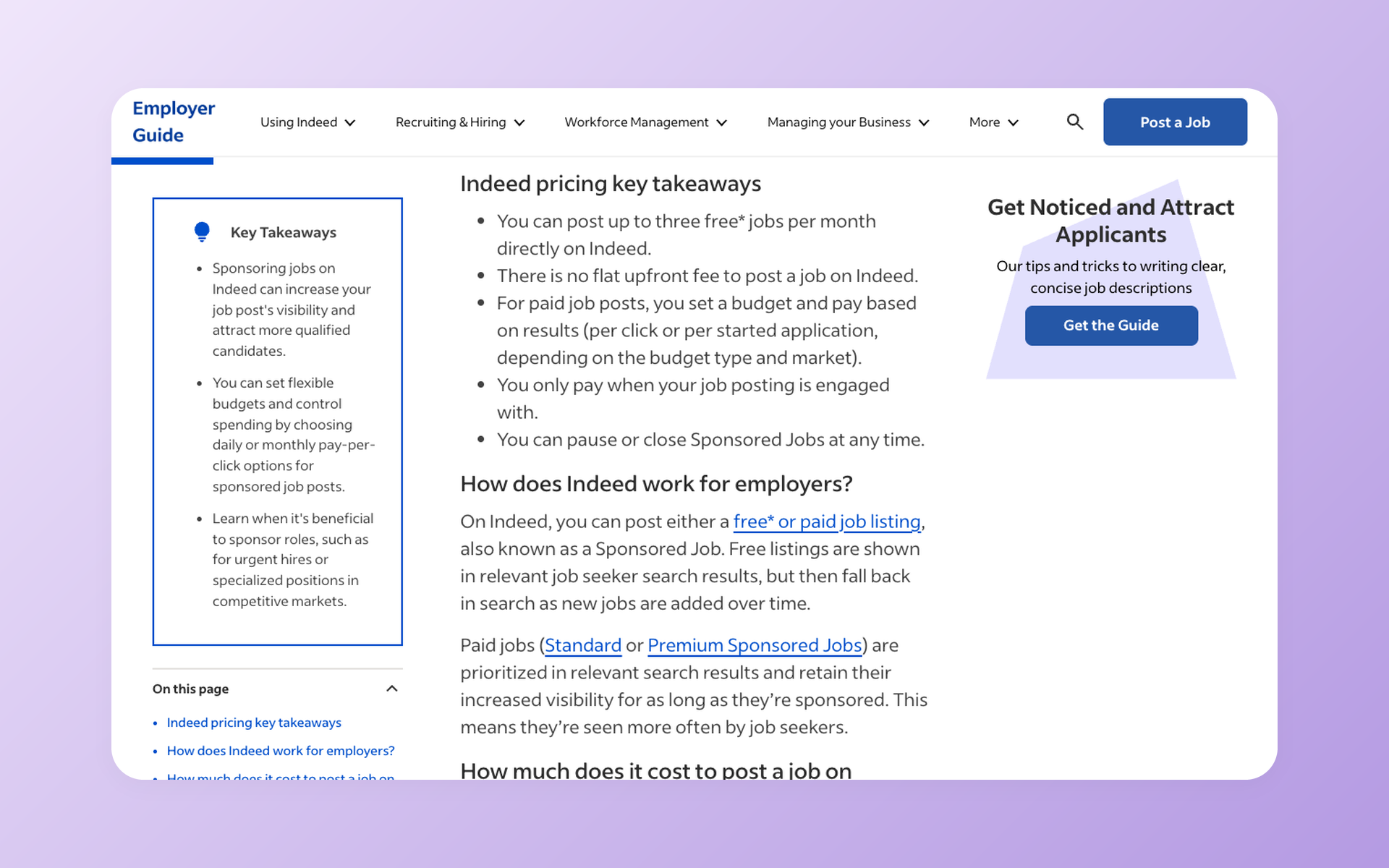
A one-row monthly-price comparison would mislead. Indeed prices marketplace visibility and sourcing usage. WizeHire prices a guided ATS and workflow, with Indeed sponsorship available as a separate cost.
Indeed's daily and monthly sponsored budgets use different charge events. Daily budgets charge when someone clicks to view the job. Monthly budgets charge when someone clicks to start an application.
Sponsored spending renews by period and continues until the job is paused or closed. That is why the $1,800 annual arithmetic below is only a comparison aid, not a forecast of what an employer should spend.
| Option | Public starting point | What it buys | Main caveat |
|---|---|---|---|
| Indeed eligible free direct jobs | $0 upfront; annual equivalent and annual total not applicable | Up to 3 eligible direct jobs per calendar month, each live up to 30 days | Terms, quality rules, usage limits, sponsorship exceptions, and Indeed discretion apply |
| Indeed Sponsored Jobs | From $5/day or $150/month; $1,800 derived only if a $150 budget stays active for 12 months | Click-based promoted visibility with a renewing budget | Higher minimums may apply; the derived figure is not expected spend or a contract forecast |
| Indeed Smart Sourcing | Monthly price, annual equivalent, and annual total not publicly shown | Search, matching, contacts, invitations, and customizable outreach | Subscription, market, tier, and selected ATS access affect scope |
| WizeHire Quickstart | $249/month billed monthly; $2,988 derived if maintained for 12 month-to-month payments | Up to 3 active jobs, guided workflow, Scout, and vendor-stated distribution | Annual-equivalent price is not publicly shown; sponsorship can add cost |
| WizeHire Essentials | $209/month equivalent billed annually; $2,508 derived annual total | Annual plan with career-page and payroll-integration scope | Month-to-month price is not publicly shown; this is a different plan, not an annual Quickstart discount |
| WizeHire Growth | $449/month equivalent billed annually; $5,388 derived annual total | Up to 6 active jobs, CRM, custom screening, texting, support, and analytics | Month-to-month price is not publicly shown |
| WizeHire Concierge | Custom annual pricing; no public monthly or annual total | Relationship manager, custom reporting, compliance support, and advanced integrations | Scope and price require a custom proposal |
Three small-business scenarios make the difference clearer:
- One occasional eligible hire: Indeed may be the lower-commitment start when its own workflow is enough.
- Up to 3 active jobs with an owner-led process: Quickstart buys guidance and ATS workflow. Indeed sponsorship stays a separate variable.
- Repeated hiring with texting, custom screening, CRM, and analytics: Growth is the relevant WizeHire comparison, not the lower Essentials headline.
There is no responsible raw-price winner. Job limits, annual commitments, sponsorship, add-ons, and role or location economics change the answer. See the deeper Indeed job posting cost guide before setting a budget.
Compare the scope you will use, not the lowest headline. Quickstart suits a small active-job count on monthly billing. Essentials changes the annual plan scope. Growth becomes relevant once CRM, custom screening, texting, and analytics enter the requirement list.
The right choice follows your hiring bottleneck
Company size alone is a weak rule. Hiring frequency, review capacity, need for guidance, sourcing model, and your current systems give a better answer.
An employer with a capable ATS may need only Indeed reach. An owner with no recruiting process may get more value from WizeHire guidance, even at a lower hiring volume. The bottleneck matters more than headcount.
Ask these questions before comparing feature lists:
- Do you need applicant reach or process help first?
- How many active jobs will run at the same time?
- Can someone review applicants and follow up soon?
- Do you need active sourcing beyond inbound applicants?
- Do you already have an ATS that receives Indeed candidates?
Choose Indeed when reach is the immediate constraint
Choose Indeed when you need to advertise one or a few roles, can use an eligible free post or controlled sponsored budget, and can manage the process in Indeed or your current ATS.
This route works best when someone can review the pool and respond. Applicant volume does not guarantee applicant quality, and free visibility can fall as newer jobs enter search.
For one occasional hire, another subscription may add more process than you need. Start with the reach problem, measure what arrives, then add structure only when the process calls for it.
Set a stop rule before sponsoring. Define the review date, budget ceiling, and signal that tells you to change the title, location, compensation, or sourcing channel instead of letting the campaign renew without inspection.
Choose WizeHire when guidance and workflow are the constraint
Choose WizeHire when an owner hires intermittently and wants help with role setup, compensation context, screening, interview questions, applicant ranking, and next steps.
The tradeoff is a subscription, plan and job caps, configuration work, and optional assessment completion. WizeHire screening answers do not automatically reject applicants, so a person still owns the decision.
Treat support and applicant-quality promises with care. Current independent practitioner evidence is too sparse for a broad winner claim. Test the workflow and the support access named in your plan.
Check the plan ceiling against the next quarter, not just today's opening. Three active jobs may fit now and become a constraint when a replacement role overlaps with planned hiring.
Use WizeHire with Indeed when you need both
Use the pair when Indeed reach matters and your team needs a repeatable system for setup, screening, synchronized candidates, communication, interviews, and disposition data.
The combined path is often the most accurate answer to WizeHire vs Indeed. It does not remove sponsorship spend, and it can create hidden duplicate ads if the same opening is posted through both routes.
Choose one publishing route, confirm the sync on a test applicant, and decide who owns job edits and sponsorship. That small operating rule prevents many of the problems blamed on the tools.
Keep source reporting consistent too. If one person changes sponsorship in Indeed and another edits the role in WizeHire, document both actions so the team can explain any change in applicant flow.

When neither is enough, 100Hires adds a fuller ATS and outbound workflow
Disclosure: 100Hires publishes this article, and 100Hires is our product. 100Hires does not replace Indeed's marketplace reach. The external evidence reviewed here supports that boundary.
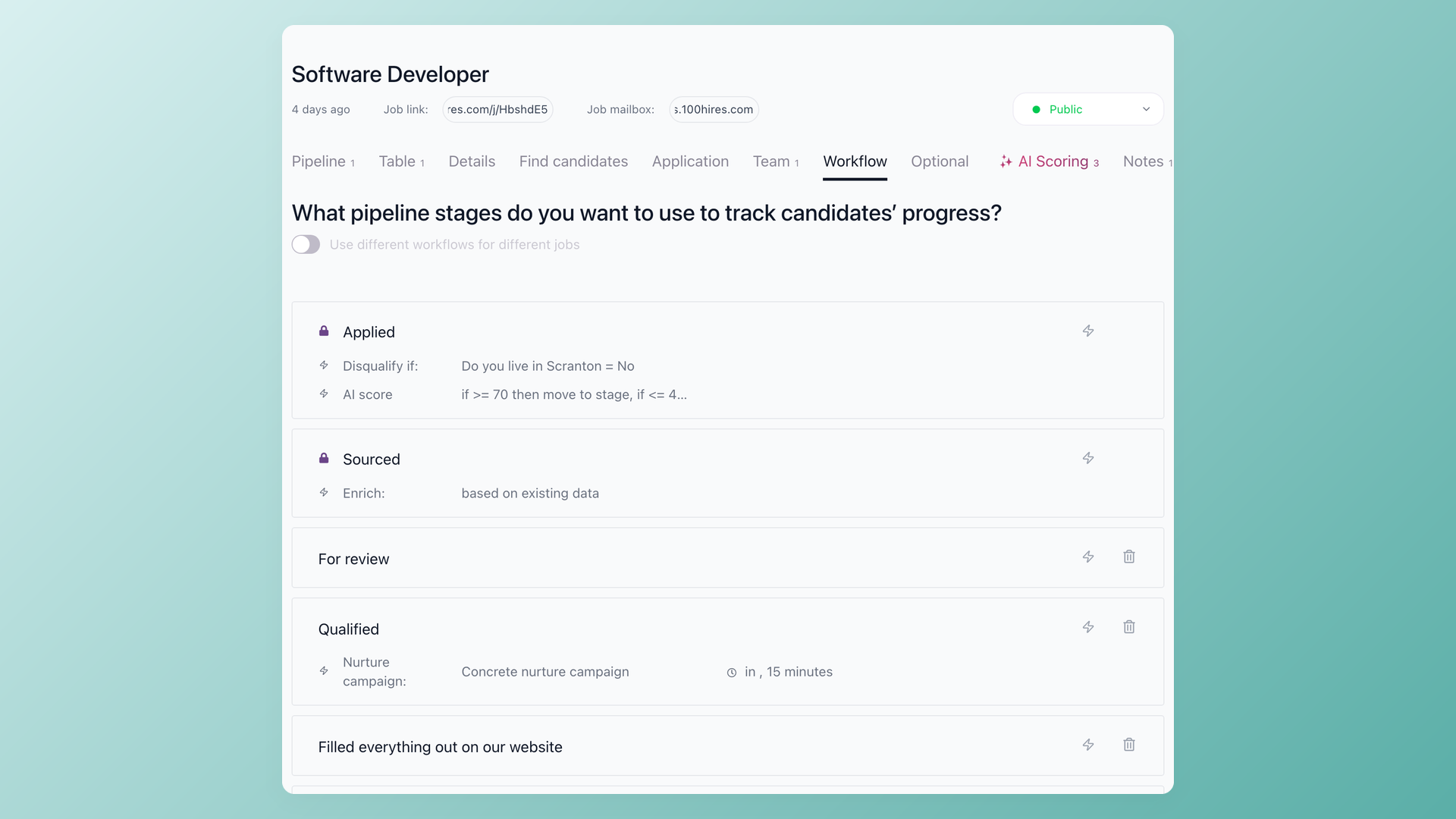
100Hires is recruiting software for teams that need one ATS for applicant intake, workflow automation, AI-assisted evaluation, resume parsing, re-engagement, reporting, and sourcing.
AI Score is available on paid plans under plan-specific AI quotas. Product documentation covers bulk resume parsing into configured fields with a preview before import. Higher plans add automated email, calling, texting, enrichment, and broader candidate outreach.
This is a different buying position from WizeHire coaching or Indeed marketplace access. It fits a team that wants applicant intake and outbound work in one shared ATS, with automation tied to stages and candidate records.
The plan table keeps price and quota cadence together. A lower annual-equivalent rate may carry a larger monthly AI allowance, so compare the expected scoring, drafting, parsing, and enrichment workload rather than price alone.
| 100Hires plan | Month to month | Annual equivalent | Derived annual total | Scope and limits | Monthly AI credits |
|---|---|---|---|---|---|
| Start | $99/month | $49/month, billed annually | $588, derived as $49 x 12 | 3 jobs, 100 candidates, 1 user | 100 |
| Advanced | $249/month | $199/month, billed annually | $2,388, derived as $199 x 12 | Unlimited jobs, candidates, and users; automated email, knockout questions, calling, and texting | 300 on monthly billing; 1,000 on annual billing |
| Pro | $499/month | $399/month, billed annually | $4,788, derived as $399 x 12 | Advanced scope plus enrichment, email carousel and warmup, onboarding, and data migration with an annual contract | 3,000 on monthly billing; 5,000 on annual billing |
Prices are in USD. Annual totals are arithmetic from the annual-equivalent monthly prices, not extra vendor claims.
The limitations are material. Start has the caps shown above. The 14-day no-card trial accepts only 10 candidates from external job boards across all jobs, AI use is quota-based, and job-board terms can restrict trial posting.
100Hires does not create Indeed reach by itself. Review the full limits on 100Hires pricing, then compare the workflow with the job volume and sourcing work your team actually has.
Frequently asked questions
Is WizeHire better than Indeed for a small business?
Neither is better for every small business. Indeed is the stronger first choice for applicant reach, and WizeHire is stronger for guided setup, screening, interviews, and applicant workflow. One occasional role may need only Indeed. 100Hires is a later option when the team needs a fuller ATS with published pricing, automation, and outbound sourcing.
Is WizeHire connected to Indeed?
Yes. Current WizeHire material describes an active Indeed integration and Platinum Partner relationship, with automatic enablement, job and candidate synchronization, and sponsorship management. The older Indeed Linking connection is deprecated, but the primary integration remains active. Avoid duplicate posting through two routes. 100Hires can serve as a separate ATS workflow, but it does not replace Indeed's marketplace audience.
How much does WizeHire cost compared with Indeed?
WizeHire Quickstart starts at $249 per month billed monthly for up to 3 active jobs. Essentials is $209 per month equivalent billed annually, and Growth is $449 per month equivalent billed annually. Indeed offers up to 3 eligible free direct posts per calendar month, and Sponsored Jobs start at $5 per day or $150 per month. 100Hires Start is $99 month to month or $49 per month equivalent billed annually, with caps of 3 jobs, 100 candidates, and 1 user.
Can I use Indeed without an ATS?
Yes. Indeed's Employer Dashboard includes screening, messaging, statuses, interviews, and exports, which may be enough for a simple hiring process. A separate ATS helps when roles overlap or several people need one record. 100Hires adds tracking, AI Score, and workflow automation, but its Start and trial caps still apply.
Does WizeHire replace Indeed?
No. WizeHire can manage the hiring process and distribute a job to Indeed, but Indeed supplies marketplace reach and related employer products. 100Hires follows the same boundary: it manages recruiting workflow and outreach, yet it does not recreate Indeed's audience.
What should I use if neither WizeHire nor Indeed fits?
Start with the missing layer. An existing ATS plus Indeed may work, or a fuller platform may fit when you need automation and outbound sourcing. 100Hires publishes this comparison and offers AI Score, resume parsing, and recruitment automation software, but Start has usage caps and the trial limits external-board intake to 10 candidates across all jobs.
Indeed is the first choice for reach. WizeHire is the first choice for guided process. Use both for integrated reach and workflow, then consider a fuller ATS such as 100Hires only when automation or outbound sourcing is the missing layer.
List the next 3 roles, note where the last hiring process stalled, and choose the product that fixes that bottleneck. The right tool is the one that removes the next piece of work, not the one with the longest feature list.
For a fair test, use one real role and one week of team activity. Track where applicants came from, how long review took, which steps needed manual copying, and whether the chosen workflow kept every candidate decision visible.
Written by Alex Kravets, founder of 100Hires.
Try 100Hires for free
No credit card. 14-day trial. Forbes Advisor #1 ATS for SMBs.