
Recruiting insurance agents: an agency playbook for 2026
How do you hire producers who are still writing business after their first renewal cycle?
That question is the whole game in recruiting insurance agents, and this guide is the playbook: comp design, sourcing channels, license-aware screening, structured interviews, and first-year retention, step by step.
It's written for agency owners and small carriers hiring producers.
One promise up front: a lot of the recruiting advice ranking on page one runs on numbers with no source behind them. Every figure here is labeled with exactly where it came from.
Key takeaways
The hiring playbook, in your inbox
One email a week - benchmarks, AI screening tactics, and short interview templates from the 100Hires team. No product pitches.
- Comp structure is the pitch. Decide base, draw, splits, and W-2 vs 1099 before you write the job post.
- Post wide, then look sideways. Job boards bring volume, and practitioners keep finding their best producers in service and sales jobs, not in agent resumes.
- Verify licenses before interviews. A free NIPR lookup plus license knockout questions on the application kills most wasted phone screens.
- Screen hard, decide fast. Washouts are common even with a good process, and sunk-cost thinking keeps bad hires on payroll too long.
- Day one decides year one. Leads in hand, a named mentor, and a visible growth path beat any perk you can list.
Why is recruiting insurance agents harder than other sales hiring?
This niche is tougher than it looks, and the reasons are structural.
First, the bar to get licensed is low. Practitioners describe exam prep as roughly a week of study. The exam tests state law and product definitions, not prospecting or closing.
A license tells you almost nothing about whether someone can sell, so credentials-first screening quietly filters for the wrong thing.
Second, commission-heavy pay creates cash-flow strain in the first year, before renewals compound. Practitioners argue about the root cause of early quits: some blame thin lead flow, others blame hiring the wrong profile, and plenty point at weak management.
One widely shared LinkedIn post from an agency owner reframed the entire problem: most agencies don't have a recruiting problem, they have a development problem.
Third, honest turnover data barely exists.
The attrition percentages that circulate at industry events don't trace back to any named study we could find, and one page-one guide even answers the agent-retention question with a client policy-renewal figure, which measures something else entirely.
The most credible number we found is an attributed one: a commercial P&C owner with 15 years in the business and 50-plus hires reports on Reddit that over 60% of his hires washed out even when he did everything right.
That's one shop's experience, not a benchmark, and that is exactly the point: watch your own cohort numbers.
There's a timing angle too. Captive carriers are squeezing their own agents right now. State Farm cut base compensation for its roughly 19,000 agents and ended long-standing benefit programs, according to WGLT's reporting.
Farmers announced plans to appoint nearly 1,700 new agency owners in a single year, per Insurance Journal, a pace that one producer recruiter publicly doubts the captive model can support. Experienced captive agents are more recruitable today than they've been in years.
Your comp structure decides whether they pick you.
Step 1. Design the comp structure before you write the job post
Most guides tell you to state the commission clearly and move on. Clarity isn't the hard part. The hard part is picking a structure that attracts the producer you actually want.
Start with classification. A W-2 producer on a base gives you loyalty and schedule control; a 1099 commission-only arrangement trades those for lower fixed cost and more independence for the producer.
Misclassifying a controlled, full-time producer as a contractor is a compliance risk, so settle this with your accountant before posting. None of the seven competing guides we analyzed even mentions worker classification.
The captive-vs-independent split shapes the pitch too. A captive producer sells one carrier's products and usually gets brand, leads, and training in exchange for lower splits and less freedom.
An independent producer sells across carriers for higher splits and owns more of the outcome. Know which story you're selling, since candidates compare you against the other model.
What do real structures look like? In one agency-owner hiring thread, several practitioners shared the actual numbers they use. Treat these as reference points from working agencies, not industry standards:
- A 30% new / 30% renewal split on top of a base, graduating to 50/50 with no base once the producer is established
- A $50K unrecoverable draw, capped at three years, with the producer expected to validate (earn enough commission to cover the draw) at trailing-twelve-month revenue above $165K
- An hourly variant: $32 per hour base plus 20% on new business and renewals
- One owner's margin math: base plus 20% of new revenue keeps about a 25% agency margin, with roughly 2.5 years to earn back twice the all-in cost of the hire
Experienced producers evaluate you as hard as you evaluate them. Before moving, they want a credible path to $100K in year one, clarity on book ownership and renewals, and honest vesting and release terms.
Some independents sweeten the pitch further: one Georgia brokerage recruits on an employee-ownership model where more than half the staff hold shares.
Publish the answers in the job post itself. Sophisticated candidates arrive with a due-diligence checklist covering carriers, splits, lead ownership, E&O, and non-compete terms. Answering before they ask separates you from every recruiter who dodges.
Step 2. Build your candidate sourcing mix
No single channel fills a producer desk. The working mix looks like this.
Job boards do the volume work. According to CareerPlug's report on its own insurance clients, boards drove 86% of applicants and 55% of hires for those agencies. The takeaway isn't "boards are magic," it's that posting to one board at a time wastes the channel.
Push each opening to many boards at once; a tool that can post to 13 named job boards in one click turns an afternoon of copy-paste into a single form submission. If you're choosing boards manually, start with our rundown of the best job posting sites for employers.
Referrals deserve structure, not a poster. Producing agents know other producers, and satisfied clients know ambitious salespeople. A small, paid, written referral bonus beats a vague ask at the Monday meeting.
Pay it on a milestone (for example, when the new hire passes 90 days) and re-announce the program regularly so people remember it exists.
Licensing schools and campus career fairs put you in front of new licensees before the big carriers absorb them. The relationship costs a phone call and a pizza budget.
Look outside insurance. In the top-ranked community thread on this exact topic, three separate practitioners said their best hires came from bartenders, servers, and car salespeople rather than licensed veterans.
Sales aptitude and rejection tolerance transfer; product knowledge is teachable.
Time your outreach to carrier shocks. When a captive carrier cuts comp, its experienced agents start listening. Lead those conversations with career goals, not a job pitch.
One insurance-agency recruiter described dropping job-first messages entirely, since a LinkedIn profile can't tell you what someone wants from the next stage of their career.
Inbound content works, slowly. One agency builder reports that 80-90% of his new recruits now come from his educational YouTube channel, per his own internal survey.
He got there over years and thousands of videos. It's a real strategy for the patient, not a fix that pays off in a quarter.
One channel to skip: cold-DMing agent communities. Forum moderators remove recruiting solicitations on sight, and agents read unsolicited recruiting texts as scams. The reach isn't worth the hit to your reputation.
Step 3. Screen for licenses and sales aptitude at the application
Here's the screening mechanic almost nobody on page one explains: verify the license before you ever get on the phone.
The National Insurance Producer Registry and your state insurance department's producer search let you confirm an applicant's license status, line of authority, and state in minutes, free.
The lookup shows whether the license is active and which lines it covers, so you know a life-licensed applicant can't bind commercial auto on day one.
A claimed license that turns out lapsed, or authority in the wrong line, wastes an interview slot you never needed to book. Check first.
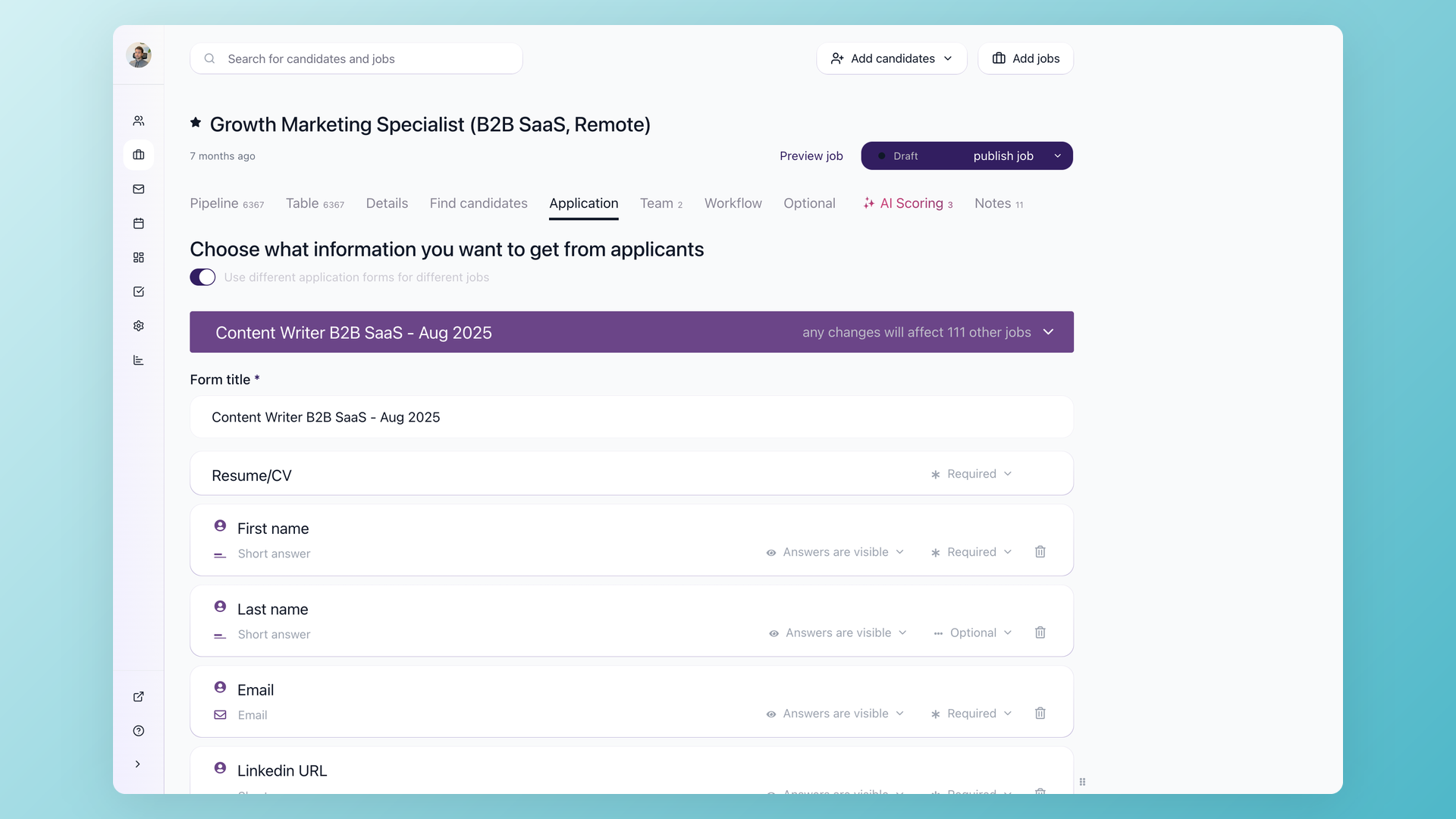
Then move the rest of your dealbreakers onto the application itself. Knockout questions can ask about license status or willingness to get licensed, line of authority, state, and readiness to work under the comp structure you published in Step 1.
In 100Hires, knockout questions sit on the application form and can disqualify automatically or route borderline answers to a review queue; start in review mode and tighten once you've calibrated. Fair warning: knockout questions are available on the Advanced plan and up.
Keep every screening question tied to the job. Work-authorization screening asks whether the candidate is legally authorized to work in the US, and nothing more; the EEOC's pre-employment inquiry guidance covers what stays off an application.
If you want the full paper trail treatment, our guide to recruitment compliance covers audit-ready hiring records.
For the humans who clear the knockouts, screen for aptitude over industry history. For many producer seats a sales background beats an insurance background, since comfort with rejection is the one thing you can't teach.
On high-volume openings, AI-based resume scoring helps surface the strong sales profiles fast; it's a volume-triage tool, not the way to weigh a senior book-of-business hire.
Step 4. Interview like the job depends on it, then decide fast
The most concrete evaluation framework in our research comes from an agency owner who runs hiring like an obstacle course, described in his hiring walkthrough. Six stages, each one a commitment test:
- A sales assessment before anyone books time
- A structured interview
- A callback with a hard deadline; miss it and you're out
- A half-day shadowing a working producer
- A deliberate objection thrown mid-process, to watch the response
- Licensing that the candidate funds themselves, reimbursed at month six
Every stage tests commitment the resume can't show. Candidates who want the job clear all of it. Candidates who wanted any job quietly disappear before you've invested real time in them.
Keep the interview itself structured: the same situational questions for every candidate, in the same order, scored right after the conversation. Ask them to walk you through losing a deal they thought was closed, and listen for what they did next.
Two more mechanics make the process fair: put a top producer on the panel, and score every candidate against the same rubric. Shared interview scorecards mean two offices rate sales readiness the same way, and the hiring debrief argues about evidence instead of vibes.
Then decide fast. The same owner prices a producer at about $2,500 a month all-in, so an unproductive hire has cost $7,500 by the end of month three.
His sunk-cost warning, paraphrased: once you catch yourself thinking about the five figures you've already invested, you're rationalizing, not managing.
A high-volume agency builder makes the same point from the other side: in one-call-close lines, you know within the first few weeks whether you've hired an A-player.
Step 5. Build the new producer's first-year support system
Recruiting insurance agents only pays off if year one goes well. The support that matters isn't perks.
- Leads from day one. Practitioner threads repeatedly name lead scarcity as a reason agents quit. A funded lead flow or a serviced starter book beats a phone book and a pep talk.
- A named mentor with skin in the game. The concrete version: train the new hire on a senior producer's existing book, so they learn on live accounts a real producer answers for.
- A visible path. Publish what promotion, equity, or book ownership requires. Agencies recruiting on an ownership path are winning experienced producers away from captives right now.
Watch leading indicators, not month-six revenue. Weekly activity reviews with the mentor through the first quarter, covering dials, quotes, and bind ratio, surface a struggling producer while coaching still has room to work.
And hold the mirror up. The most engaged practitioner post in our research argues that when every hire washes out, the problem is development, not sourcing. When every recent producer hire quits within months, recruiting harder is the wrong fix.
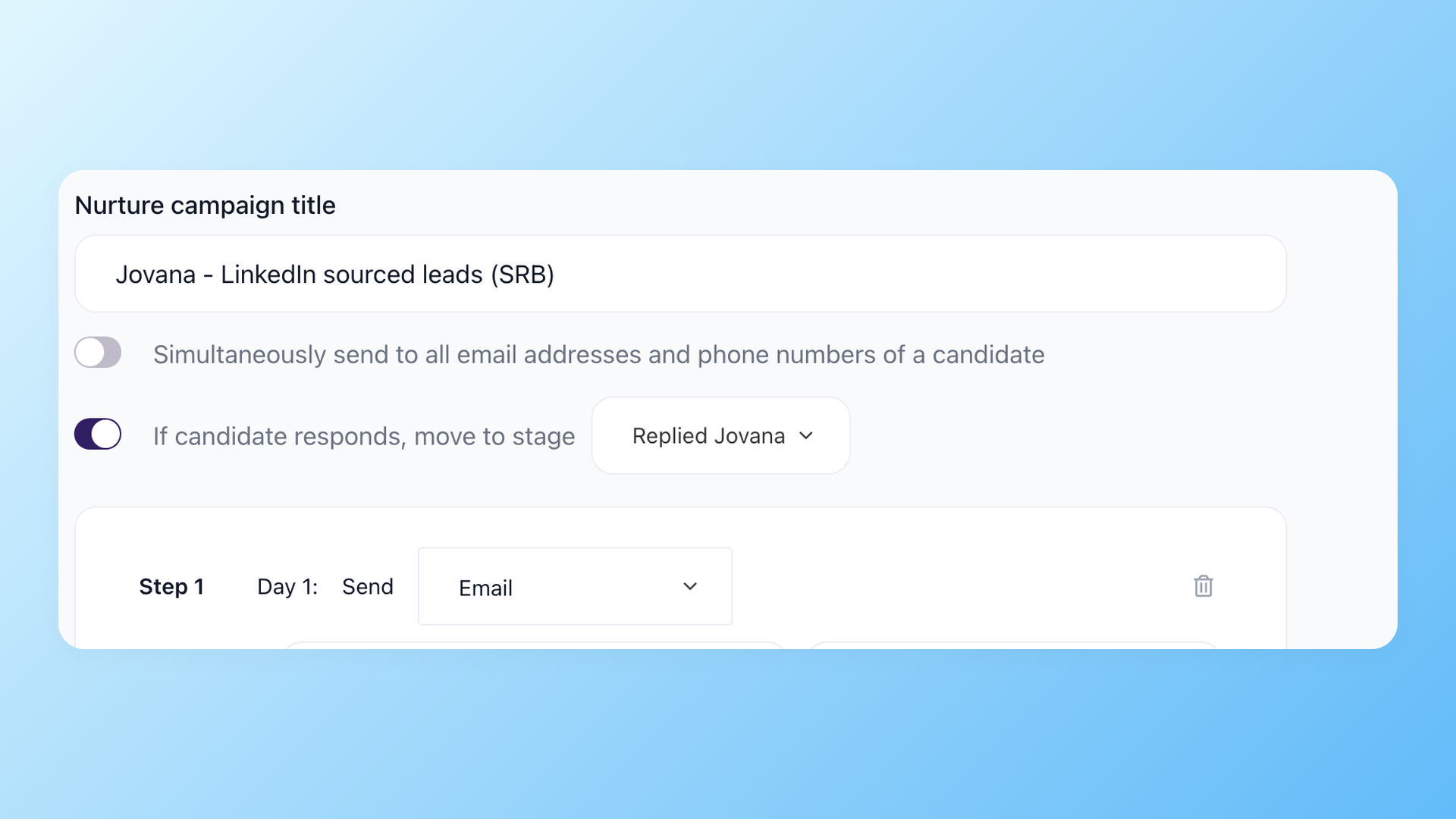
Two pipeline habits round this out. Keep this search's silver-medal candidates warm in 100Hires Talent Pools segmented by line, license, and location; the runner-up you liked in March is the obvious first call when a desk opens in September.
And automate the touchpoints that keep candidates and new hires showing up.
That last habit is exactly how The Tipton Agency, a fully virtual Georgia insurance agency running multiple recruiters, fixed its interview no-show problem.
"Because we do work virtually, it's a lot easier for candidates not to show up," says Misty Whitlock, who runs recruiting and operations there.
"Having the ability to send out automations, prepare them for interviews, exchange information that way - without that, it would really stop things from progressing."
Her day-to-day workhorse is simpler still: "Having all candidate communication within a single thread within the platform as the applicants are communicating with us - the integrated inbox feature is what we use day-to-day."
The full story is in our case study on how The Tipton Agency cut interview no-shows.
Which insurance recruiting tactics backfire?
The research surfaced a consistent list of tactics that generate applicants and destroy trust. Avoid all six.
- The downline funnel. Ex-agents in two unconnected communities describe the same pattern: lifestyle-flex social posts, a DM that turns into a Zoom pitch, an assigned "overseer" through licensing, then a 300-dials-a-day desk. Agents recognize it instantly and warn each other.
- Confusing volume with quality. One trainer showed a lifestyle-framed post pulling 50+ applicants in 24 hours; seasoned owners in the same research called the tactic a terrible way to find dependable people. Applicant count is not hire quality.
- Unsolicited recruiting texts and community cold-DMs. Moderators remove them, and recipients screenshot them as scam examples. The reach never covers the reputation cost.
- Recycled stats in the pitch deck. Candidates google your income claims. If you can't source a figure, drop it; unsourced numbers read as a downline pitch even when yours isn't one.
- Mass-appointment blitzes. Appointing agents faster than you can support them is the carrier-scale version of the downline funnel. The churn it creates feeds your competitors' pipelines, not yours.
- Hiding comp mechanics until the offer. Experienced producers carry a due-diligence checklist. Evasion on splits, vesting, or book ownership reads as a red flag and ends the conversation.
None of this is legal advice; run classification and screening questions through your counsel. It is pattern recognition from the people you're trying to hire.
Run the whole pipeline in one place
A quiet finding from this research: not one of the practitioners we studied, across four video channels and dozens of posts, named any pipeline software at all. Funnels lived in spreadsheets and inboxes. That's the efficiency gap hiding in plain sight.
| Pipeline stage | With 100Hires | Spreadsheet and inbox |
|---|---|---|
| Posting the opening | 13 named job boards in one click | Each board, one login at a time |
| License screening | Knockout questions on the application (Advanced plan and up) | Discover the lapsed license on the phone screen |
| Interview evaluation | Shared scorecards, same rubric for every panelist | Notes scattered across email threads |
| Silver-medal candidates | Talent Pools plus automated nurture campaigns | Forgotten by the next opening |
Honest limits, so you can plan around them: knockout questions need the Advanced plan or higher, SMS outreach runs through a Twilio account you connect, and there's no built-in DISC-style personality assessment, so keep your assessment vendor if that's part of your process.
For the agency-specific feature walkthrough, see our insurance recruiting software page. Or skip the reading and start a free 100Hires trial: post one real producer opening, switch on the license knockouts, and watch what your pipeline looks like when nothing lives in your inbox.
Frequently asked questions
How do you verify an insurance agent's license before hiring?
Run a free lookup through NIPR or your state insurance department's producer search: it confirms license status, line of authority, and state in minutes. Then build the check into the application itself. 100Hires knockout questions ask license, line, and state up front (Advanced plan and up), so applicants without the right authority never reach the phone-screen stage.
Why do insurance agents quit?
Practitioners point at three causes: lead scarcity paired with commission-only cash-flow strain, hiring profiles that never fit the work, and weak management in the first year. The dramatic attrition percentages that circulate are unsourced, so watch your own agency's cohort numbers instead. Prevention starts before the offer: 100Hires comp-structure knockout questions surface fit mismatches at the application stage, and a funded first-year support system handles the rest.
What does an insurance recruiter do?
Third-party insurance recruiters source, screen, and present candidates for a retained or contingency fee, and they earn it on hard senior searches. For steady producer and CSR hiring, most small agencies do better running their own pipeline: the channels in this guide plus an ATS like 100Hires cover the sourcing and screening work year-round.
Is it easy to get hired as an insurance agent?
Entry is easy by design: practitioners describe licensing prep as about a week of study, and carriers hire in volume. For employers, that's the trap. Easy entry means applicant volume tells you little, so screen for commitment and sales aptitude rather than credentials. Structured interviews scored on shared 100Hires scorecards keep that evaluation consistent across every panelist.
Try 100Hires for free
No credit card. 14-day trial. Forbes Advisor #1 ATS for SMBs.