
Job posting sites in the USA: 12 best options for employers in 2026
Most lists of job posting sites in the USA are written for job seekers. This one is for the person paying for the ads.
The short answer: Indeed for volume, LinkedIn for salaried roles, ZipRecruiter for speed, and two free layers most teams never switch on: Google for Jobs and your state job bank.
The long answer covers what the usual rankings skip. What each site really costs a US employer in 2026. Which channels are free in all 50 states. And the posting rules, from federal contractor listing duties to state salary-range laws, that decide where some jobs must appear.
This is the US edition of our global employer guide to job posting sites. Same format, US-specific detail.
Key takeaways
The hiring playbook, in your inbox
One email a week - benchmarks, AI screening tactics, and short interview templates from the 100Hires team. No product pitches.
- Widest US reach: Indeed. Direct employers get 3 free posts a month; sponsored listings run on a daily budget.
- Salaried and professional roles: LinkedIn is the US standard for tech and senior hires.
- Best free channel almost nobody lists: your state job bank, networked across all 50 states through the National Labor Exchange.
- Required for some employers: federal contractors must list openings with their state job bank, and green-card sponsors need a 30-day state job order.
- Fastest way to cover them all: 100Hires publishes one job to 13 named boards in one click and reports which board produced the hire.
Quick comparison: 12 job posting sites in the USA
The whole field in one table. Dollar figures come from July 2026 research; the methodology section explains how each one was sourced.
| Site | Best for | Free posting | Paid pricing (2026) | US note |
|---|---|---|---|---|
| 100Hires | AI screening plus posting to 13 named boards at once | 14-day trial posts to boards, capped at 10 external candidates | From $49/mo (billed annually; $99 month-to-month), distribution included | Board list is built around the US market |
| Indeed | Volume: hourly, local, entry-level | 3 posts per month for direct employers | Sponsored budget, per click or per started application | Staffing agencies cannot post free |
| Salaried and professional roles | 1 free post at a time | Promoted CPC, reported $1.50-4.50 per click | Free posts pause early at an application cap | |
| ZipRecruiter | Fast applicant flow for SMBs | Short trial only | Reported from $16-24 per job per day | Distributes to a claimed 100+ partner sites |
| Google for Jobs | Free organic reach on every role | Yes, via careers page or ATS | None | No direct posting; needs structured data |
| State job banks (NLx) | Free statewide posting plus compliance | Yes, in all 50 states | None | Mandatory listing channel for federal contractors |
| USAJOBS | Federal agency openings only | Not available to private employers | Not applicable | Private companies cannot post here |
| Local and hourly roles | Marketplace jobs tab plus groups | Regular Meta ads | Jobs tab is US-only | |
| Glassdoor | Employer brand and salary research | Rides along with Indeed posts | Employer branding products | No separate posting product anymore |
| Monster | Budget generalist reach | No free tier | Pay-as-you-go from $8/day per job | CareerBuilder postings now route here |
| Handshake | Campus and new-grad hiring | Yes, core posting is free | Pro $450/mo; Enterprise on request | Built on US university partnerships |
| Niche US boards (Dice, Built In, Wellfound, FlexJobs, Snagajob) | Specialist roles | Varies by board | Varies; Dice $399 per 30-day job slot | Each owns one slice of the US talent market |
Where a vendor sells by custom quote, the figure above carries the word reported. Distribution through 100Hires is part of every paid plan; current 100Hires pricing starts at $49/mo billed annually ($99 month-to-month).
How to choose where to post a job in the USA
Three questions sort it out faster than any ranking.
1. Are you under a posting obligation? Federal contractors must list openings with their state job bank (a VEVRAA requirement, covered below). Employers sponsoring a green card need a 30-day state job order under PERM.
Hiring in Colorado, California, New York, Washington, Illinois, Hawaii, or Maryland means state pay-transparency law puts a salary range in the posting itself. Details sit in the rules section below; if any of these applies, your first channel is chosen for you.
2. What does the role need? Volume roles lean on Indeed and ZipRecruiter. Salaried and technical roles lean on LinkedIn. Local hourly work does well on Facebook and your state bank. Specialist roles justify a niche board.
3. How many channels will you actually run? One or two are easy to manage by hand. At three or more, the logins, invoices, and separate applicant inboxes start eating the week.
One small-business owner in a hiring thread described running Indeed, Facebook, Instagram, and several local boards at once: applicants arrived, interviews went unattended, and no channel could say which source deserved the budget.
Running three or more? See how 100Hires posts to 13 named boards from one login.
The 12 best job posting sites in the USA for 2026
The order below starts with the distribution layer (our own product, flagged as such), moves through the national reach boards, then the US-only channels the other lists skip, and closes with the specialists.
1. 100Hires - AI hiring platform that posts to 13 named job boards in one click
100Hires is an AI applicant tracking system. AI Score reads every application and grades it 0 to 100 against criteria you set per job, and AI Copilot drafts or rewrites the job description before anything goes live.
Forbes Advisor rates it 4.8 and names it Best for Startups and Small Businesses in its applicant tracking ranking, and it holds Capterra's 2026 Best Value and Best Ease of Use badges.
Disclosure up front: we build 100Hires. It does not host listings the way Indeed does. It publishes your job to the boards, then collects every applicant into one pipeline.
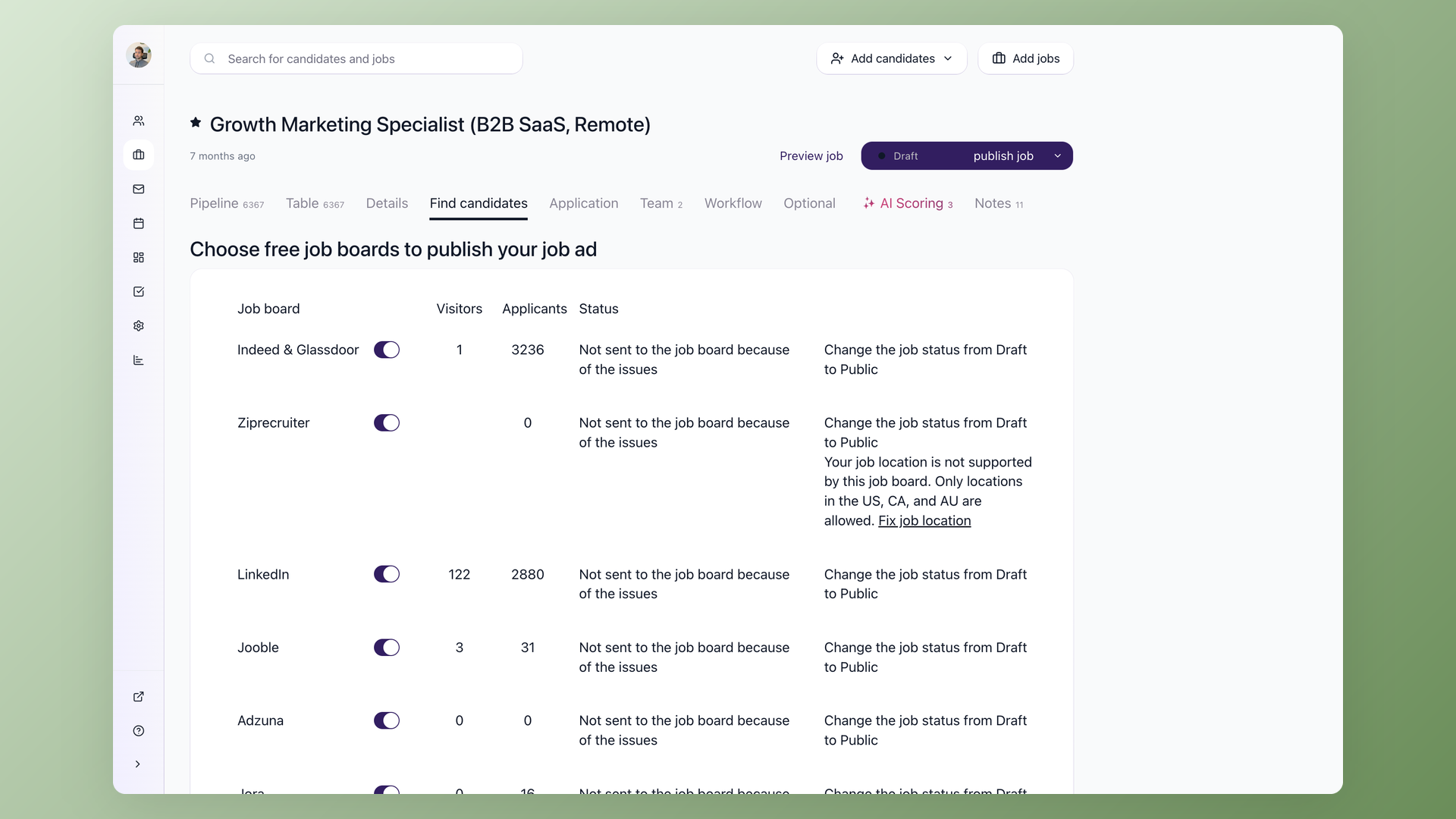
The posting process is the point of this article, so here it is. You write the job once, flip per-board toggles, and the listing goes out to 13 named boards: Indeed, LinkedIn, ZipRecruiter, Glassdoor, Monster, Google Jobs, Talent.com and more.
Every paid plan includes distribution; no per-board surcharge. For a USA-focused search that board list is the right one: it is built around the US market.
US boards are generous with volume. A single role can pull 150-200 applications in its first day, a number hiring teams have quoted to us on demo calls throughout the past year.
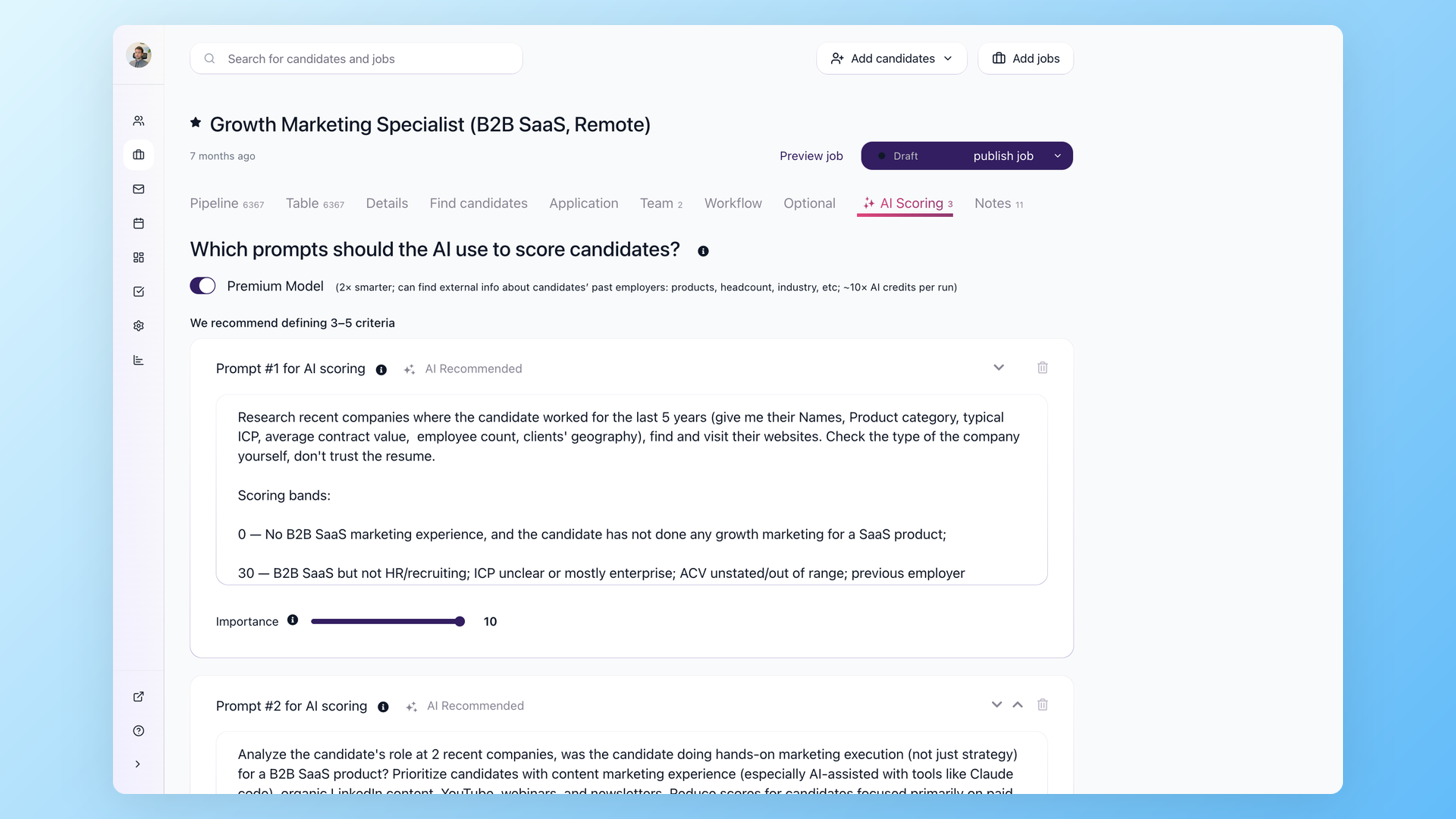
AI Score grades that stack 0 to 100, so you read the 30 highest-scored candidates instead of all 200, and workflow rules can move or disqualify below a threshold automatically.
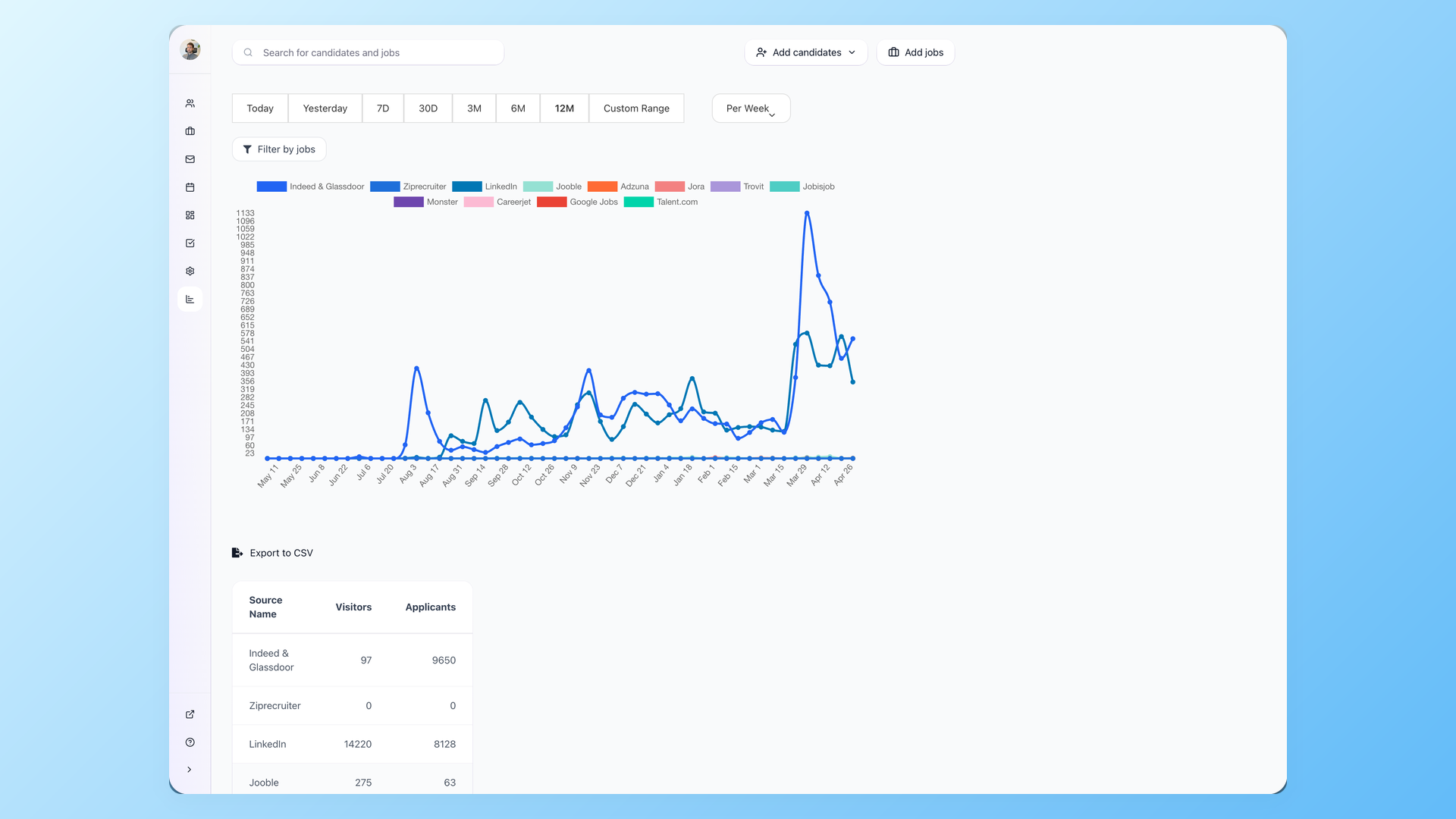
Measurement closes the loop. The source report separates traffic from outcomes: visitors, applicants, and hires for each board, per job and date range. A board that only ever sends traffic loses its slot at renewal, with numbers attached.
Channels off the 13-board list still get their own per-source numbers, so a Facebook group or a local board is measured the same way.
Hiring the same role across several US cities? Satellite Jobs clones one posting per metro, and you can rotate the copies after a month so they stay fresh.
One US-specific detail: the federal contractor listing rule treats a private job service as satisfying the duty when the listing reaches the state system.
If you hold federal contracts, check how your posting workflow gets openings to your state job bank; the rules section below has the specifics.
Where it does not fit: 13 named boards is not hundreds, and there is no free plan. The 14-day trial does publish to boards, capped at 10 candidates from external boards combined; a paid plan (from $49/mo billed annually, $99 month-to-month) removes the cap.
If you post one free Indeed job a quarter, you do not need a distribution layer.
Gainey Financial Group sat at the other end of that scale: posting by hand ate about two hours a day until one-click publishing cut it to minutes, roughly 10 hours a week back.
Best for: US SMBs running several boards per role.
US note: the 13-board list is US-centric by design.
2. Indeed
Every US hiring conversation runs through Indeed sooner or later. The platform claims 685 million job seeker profiles and held the number 1 spot worldwide by total visits in Comscore's March 2026 ranking, per its own press pages.
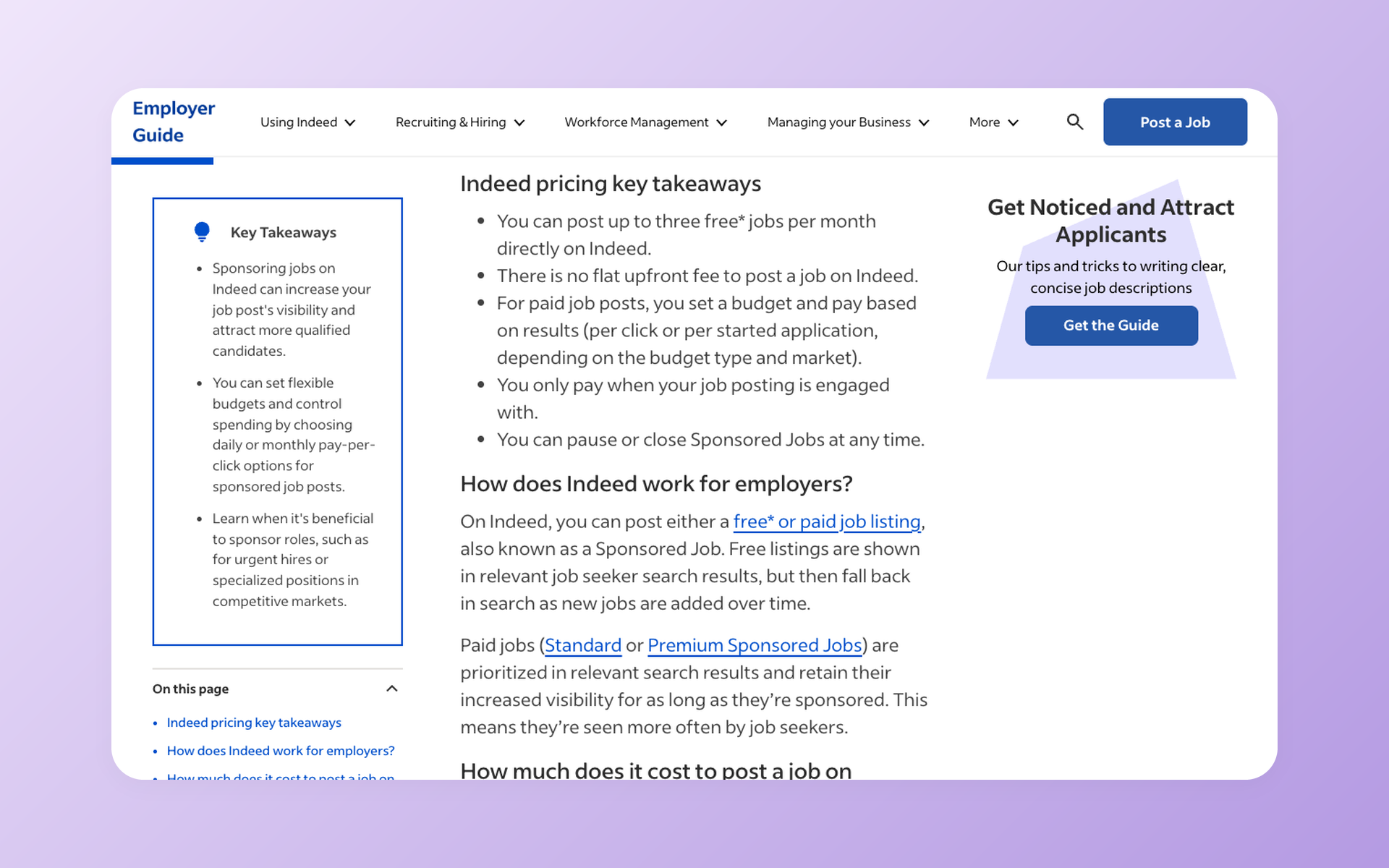
Direct employers get up to 3 free posts a month, live for up to 30 days with visibility that fades fast. Staffing agencies are excluded from free posting under Indeed policy.
Sponsored listings run on a budget you set and bill per click or per started application, depending on the budget type and market, with a reported $25-53 cost per application depending on role and metro.
The flat pay-per-application model was retired in December 2023, so treat older pricing guides with suspicion.
Employer complaints cluster in two piles: costs that climb without warning, and auto-apply junk burying well-paid roles. Neither cancels the reach. The practical stance is a capped budget, screening questions, and a per-board cost-per-hire number you check monthly.
One caveat from Indeed itself: jobs that reach it through an ATS or feed may need sponsorship if you also post directly on Indeed.
Our Indeed job posting cost guide breaks down real budgets, and the Indeed integration page shows how posting through an ATS works.
Here is how Indeed and ZipRecruiter compare head to head.
Consolidation tip that saves two signups: posting on Glassdoor and SimplyHired now routes through Indeed, its corporate sibling.
Best for: high-volume, hourly, and local US roles.
US note: free-post caps and repost restrictions bite hardest for high-turnover teams.
3. LinkedIn
For salaried US roles, LinkedIn is where the resumes come with profiles attached. Over 1 billion members by its own count, and the strongest filters for title, skills, and seniority of any channel here.
The free tier is tighter than most teams expect: one active free post at a time, paused automatically at day 14 or at an application cap (commonly 10-30), closed at day 30, and LinkedIn also caps how many free posts you can open in a 30-day period.
Promoted posts bill per click, reported at $1.50-4.50 in the US; see our LinkedIn job posting cost guide.
LinkedIn's help pages state that posts older than 6 months come down automatically, which keeps listings fresher than on boards where jobs linger for years.
Recruiters in public forums keep converging on the same verdict: LinkedIn earns its money as a sourcing database more than as a paid posting channel, and cost per applicant on promoted slots has been drifting up.
Fit is role-dependent: strong for tech and office roles, weak for hourly and clinical ones.
The free-tier squeeze is where distribution pays for itself: through LinkedIn posting via 100Hires, every paid plan publishes to LinkedIn and 12 other boards, with no per-post fee.
Best for: professional, tech, senior, and remote-salaried roles.
US note: dominant for US professional hiring; plan around the one-free-post limit.
4. ZipRecruiter
ZipRecruiter sells speed. One post pushes out to a network the company says spans 100+ partner sites, and its matching engine nudges likely candidates to apply. It markets itself as the #1 rated employment job site by G2.
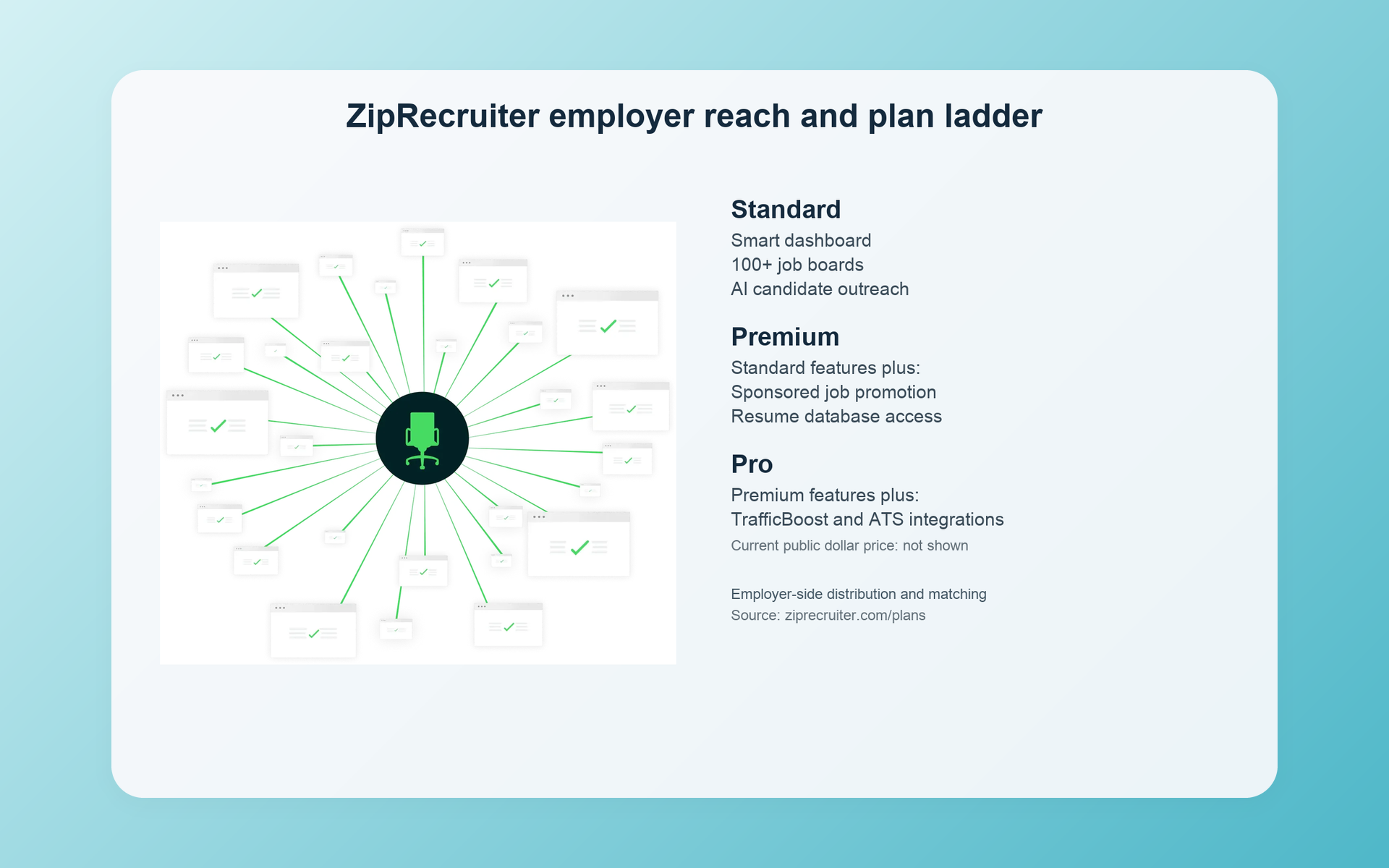
Pricing is quote-based, so every figure here is reported: day passes from about $16-24 per job per day, monthly slots from roughly $299, upper tiers past $719. The trial is short; calendar the end date before you start it.
Results vary by role and market. Employers rate the screening questions highly, grumble about paying extra to open resumes, and see swings from one hire to the next. SMBs hiring medical assistants tell us it delivered; independent side-by-side tests have been less kind.
Run it as an experiment with a number attached, through the ZipRecruiter connection in 100Hires if you want the per-source math done for you.
Best for: SMBs that want applicant flow this week without babysitting boards.
US note: a US-first product; international coverage is thinner.
5. Google for Jobs
One of the biggest US job channels charges nothing and appears on almost no ranking: the jobs module inside Google Search itself.
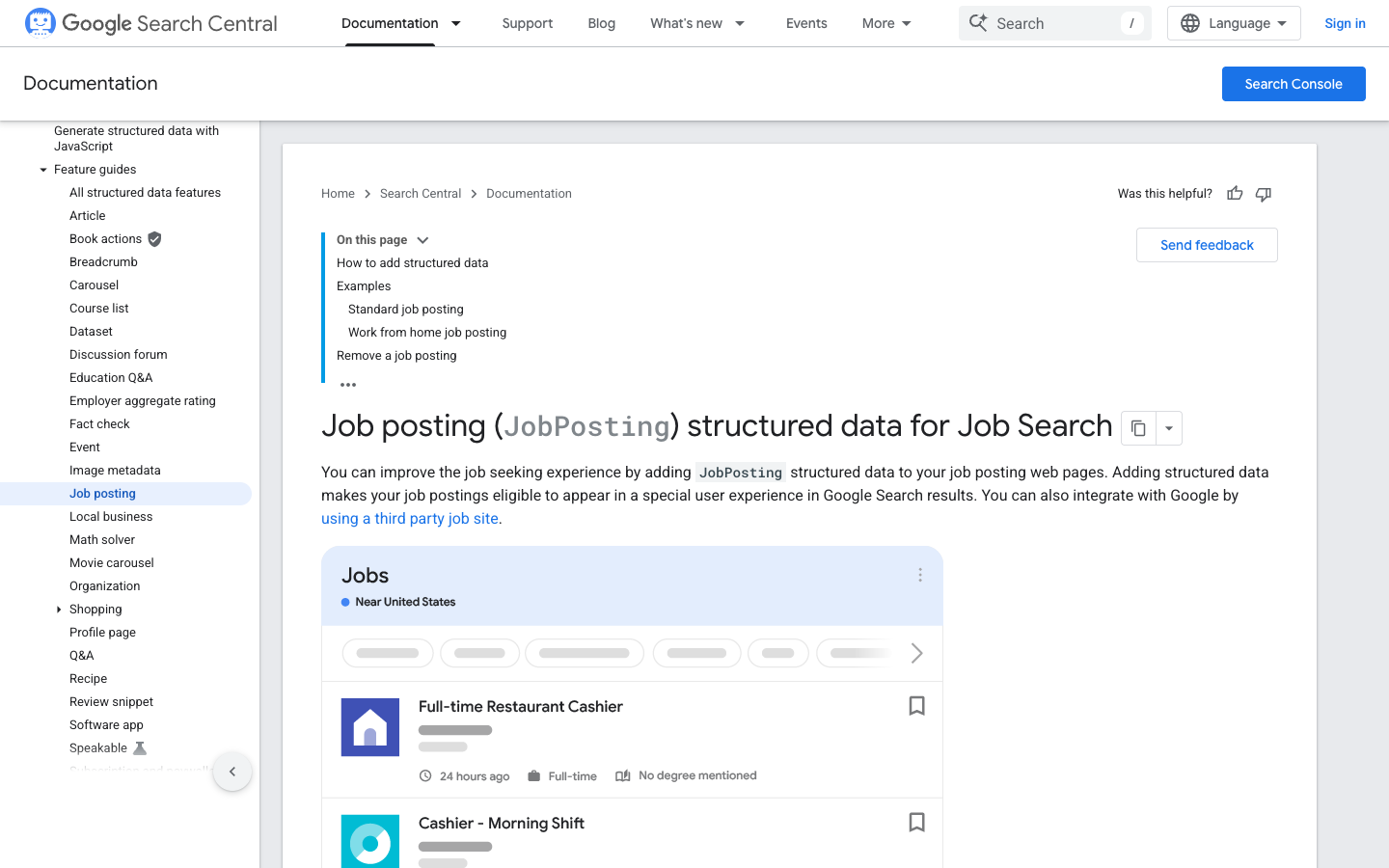
There is no dashboard to post into. Google indexes listings that carry JobPosting structured data: either your careers page emits it, or an ATS or job site posts on your behalf with the markup handled.
Requirements are mundane: a complete description, a posted date, a location, and a working apply flow; an expiry date is recommended. Our guide on how to post a job on Google walks through the steps.
In the one independent side-by-side test in our research set, this channel produced the best combined volume and quality on both an hourly role and a salaried one. The honest caveat: eligibility is not placement. Google decides what surfaces, and no budget changes that.
The setup cost is one-time: a careers page with clean markup, or putting your postings in front of Google through 100Hires, which emits the structured data automatically.
Best for: free organic reach on every US role you post.
US note: coverage and rollout are strongest in the US market.
6. State job banks and the National Labor Exchange (NLx)
Here is the genuinely US-only channel, and most rankings never mention it: every state runs a free public job bank. WorkInTexas, CalJOBS in California, the New York State Job Bank, and 47 more.
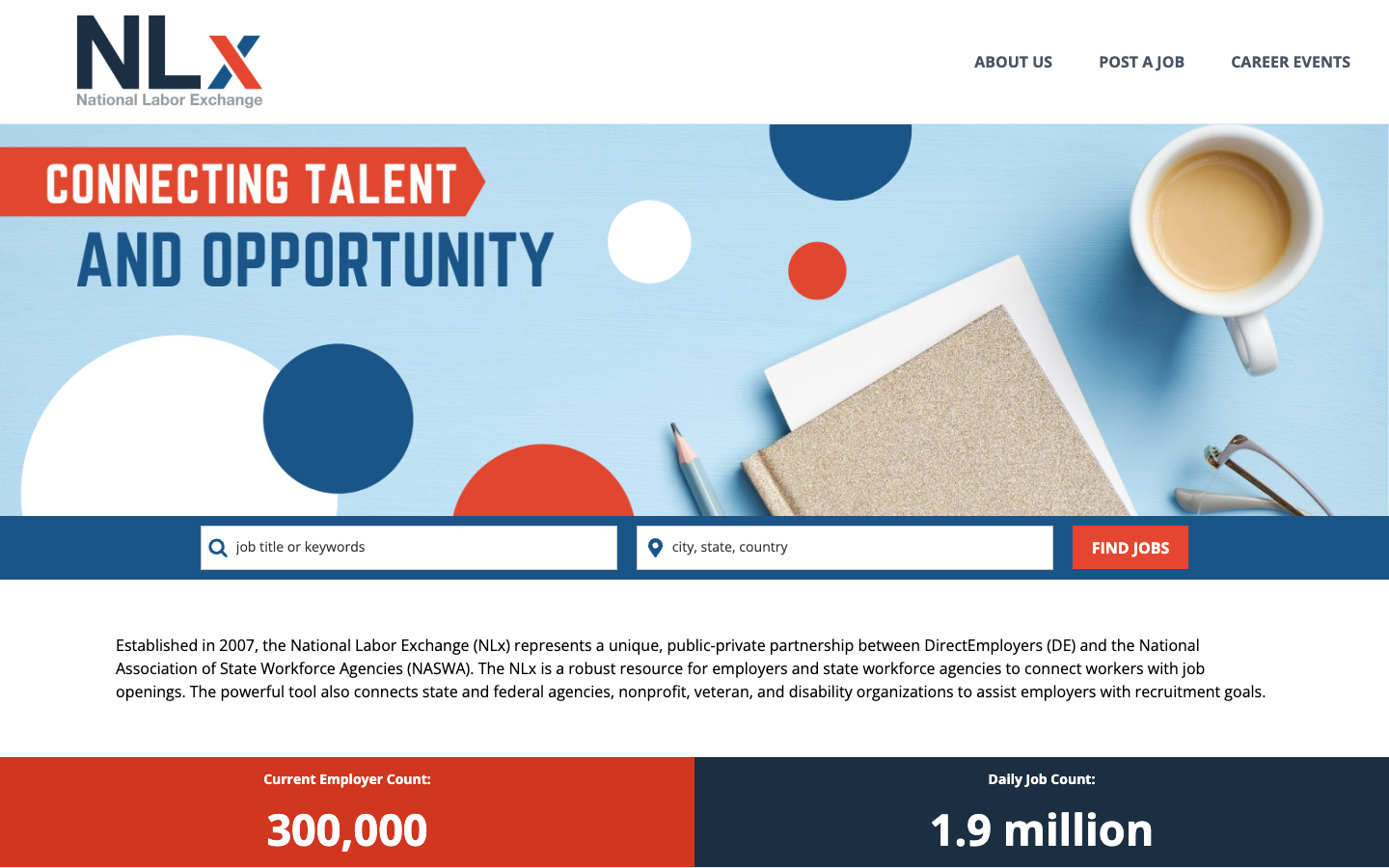
Behind them sits the National Labor Exchange (NLx), a nonprofit partnership between the National Association of State Workforce Agencies and DirectEmployers.
It replaced the federal America's Job Bank in 2007 and collects openings from employer career sites plus the state banks themselves; NLx describes its feed as over 3 million real jobs per day.
Posting is free everywhere, but each state adds its own friction. Registration and validation vary by state. CalJOBS wants a California EDD employer account number before you can post, so an out-of-state company cannot just drop in one listing.
The interfaces feel like government software; even state employees say so in public threads.
Set expectations honestly. In a public recruiting forum, one recruiter with 20 years of federal contractor postings behind him describes state-board response rates near zero, next to hundreds of day-one applicants on the commercial boards.
You post here for three other reasons: it costs nothing, it reaches veteran and workforce-program candidates by design, and for federal contractors it is not optional (see the rules section).
Two related resources round it out. CareerOneStop, the Department of Labor's career site, has no posting form of its own, so the practical starting point is your state bank or NLx.
And American Job Centers offer employers free one-on-one hiring assistance.
Best for: free posting coverage in all 50 states plus compliance.
US note: this channel exists only in the US, and for some employers it is mandatory.
7. USAJOBS - federal jobs only, and what to use instead
USAJOBS shows up on nearly every list of US job sites. For a private employer there is nothing to post there, and knowing why saves time.
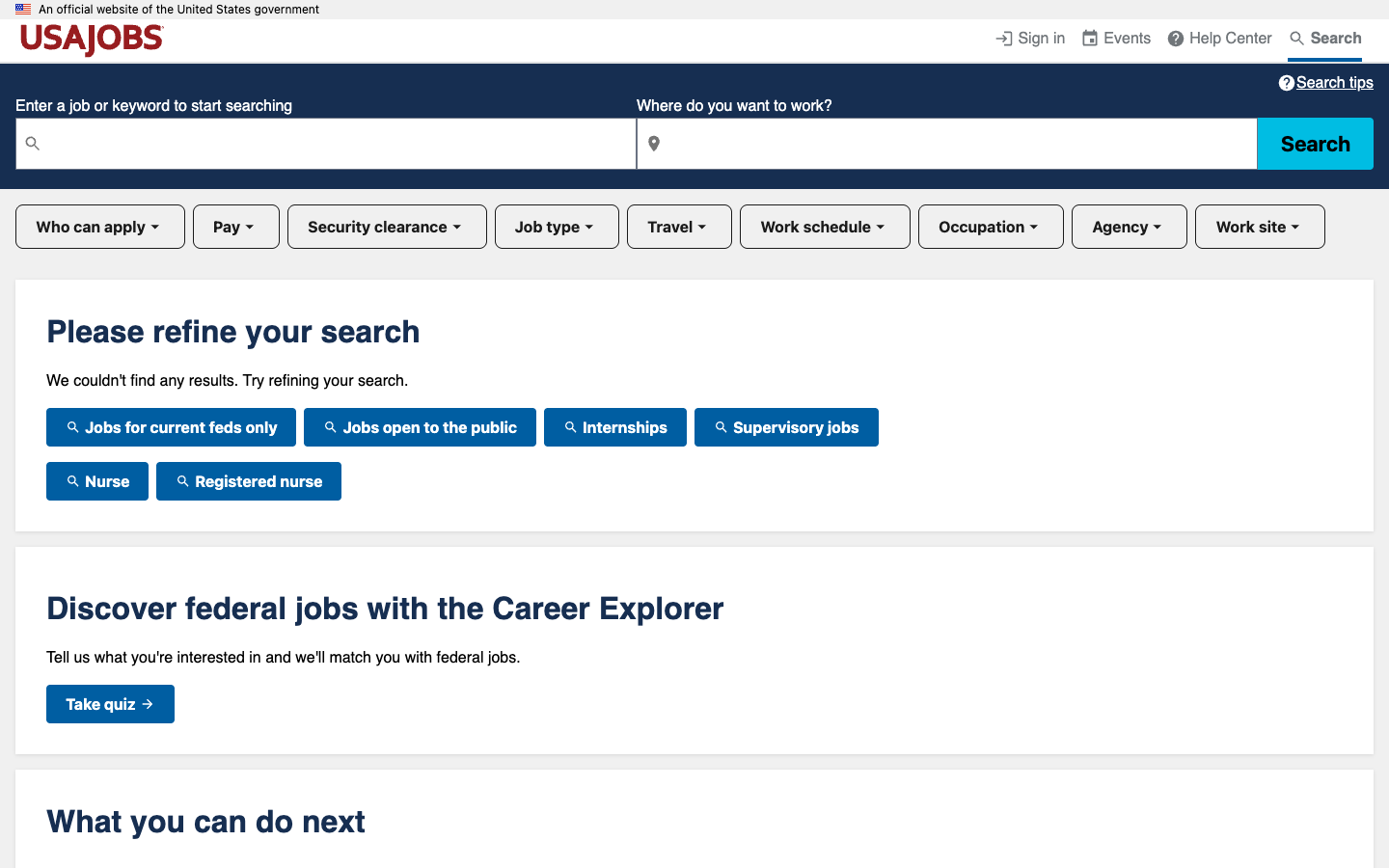
It is the federal government's own hiring site, run by the Office of Personnel Management. Federal agencies post their openings there; a private company has no way to buy a listing.
The scale explains its SERP presence: USAJOBS reports more than 6 million active profiles.
If what you wanted was the official free government channel for your postings, that is your state job bank, one entry up. And winning a federal contract does not move your jobs onto USAJOBS; it adds the state listing duty described below.
Best for: knowing why your job does not belong here.
US note: federal agency openings only.
8. Facebook - local and hourly, plus Craigslist for the trades
Facebook quietly matters again for US hourly hiring. Industry press reported a jobs tab returning to Marketplace in October 2025, US-only, with local listings searchable by distance and category.
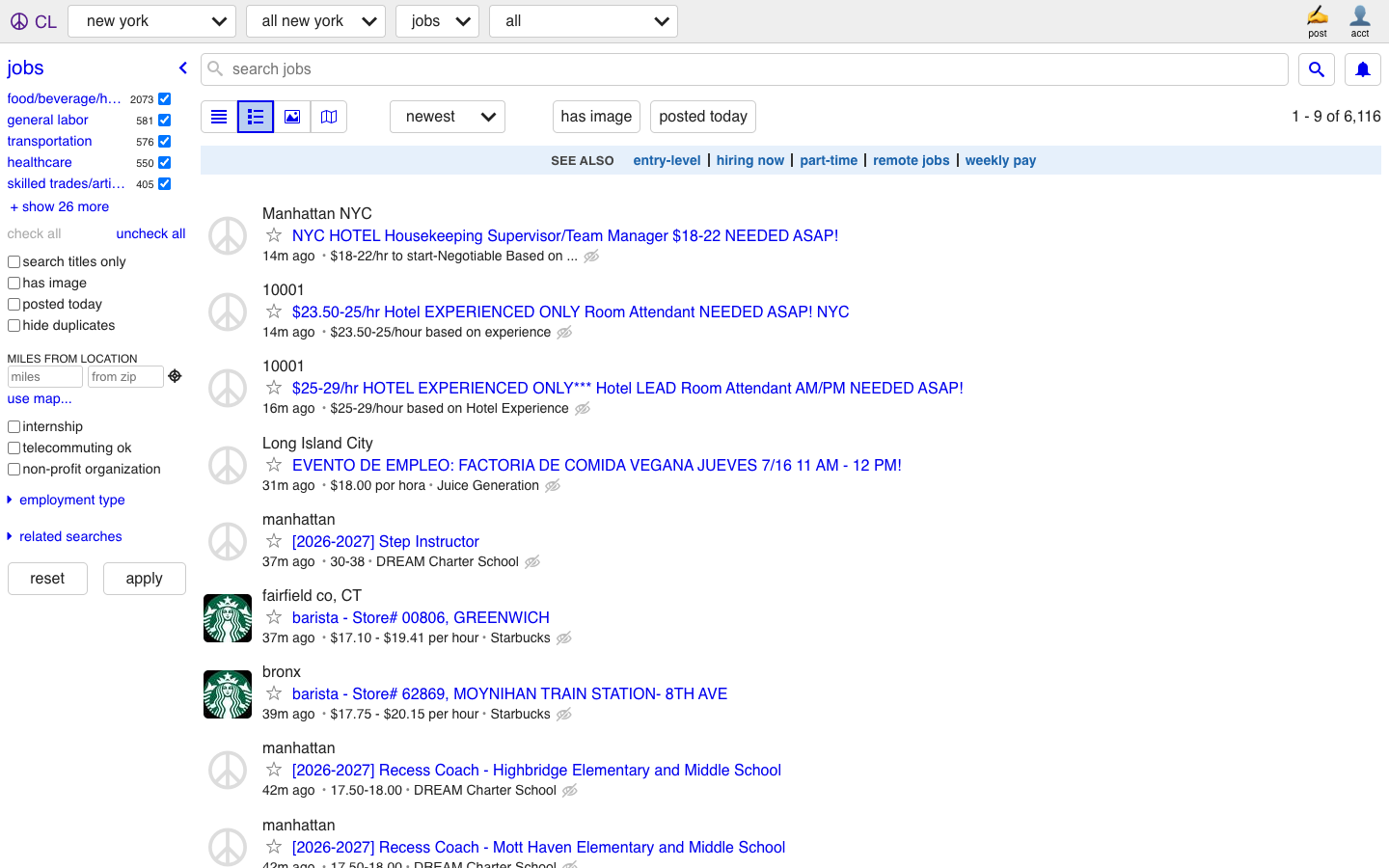
The channel that never left: neighborhood and trade groups, where small businesses report real hires for retail, service, and gig roles.
Paid amplification is just regular Meta advertising, not a jobs product. Craigslist plays the same local game at a flat $10-75 per post depending on metro, per its posted fee schedule; still useful for immediate-start trades, never as your only channel.
None of these channels reports results to a dashboard on its own. A unique link per group or metro restores the numbers: visitors, applicants, and conversion per source.
Best for: local hourly and service roles at small businesses.
US note: the Marketplace jobs tab is US-only.
9. Glassdoor
Glassdoor no longer sells job posts of its own. Its hiring inventory is tied to Indeed under their shared parent, Recruit Holdings: post on Indeed and the listing shows up on Glassdoor on its own.
What Glassdoor sells separately is employer branding: the enhanced profile candidates see when they research you.
US candidates check salaries and reviews there before applying, and as more states require pay ranges in postings by law, that scrutiny only grows. Keep the profile healthy; skip the separate budget line.
Best for: employer-brand upkeep that lifts every other board's conversion.
US note: posting is bundled with Indeed; budget zero for it.
10. Monster, with CareerBuilder folded in
Monster+ is the current shape of Monster's employer offer, launched after the CareerBuilder merger: pay-as-you-go from $8/day per job with no subscription, or Pro at $299/mo with monthly credits, per its published rates.

Paid posts cross-post to CareerBuilder and a partner network.
The backstory matters for this list: the merged company filed Chapter 11 in June 2025, and BOLD Holdings bought the job-board assets, as industry press covered at the time.
CareerBuilder's employer site now lands on Monster. Any 2026 ranking selling CareerBuilder as a separate pick is out of date.
Best for: cheap supplemental generalist reach, expectations managed.
US note: $8/day pay-as-you-go is one of the lowest-commitment paid tests on this list.
11. Handshake
Handshake is the US campus network: it says it reaches 25 million knowledge workers and 1 million employers across 1,600+ educational institutions. Core posting is genuinely free, no card required.
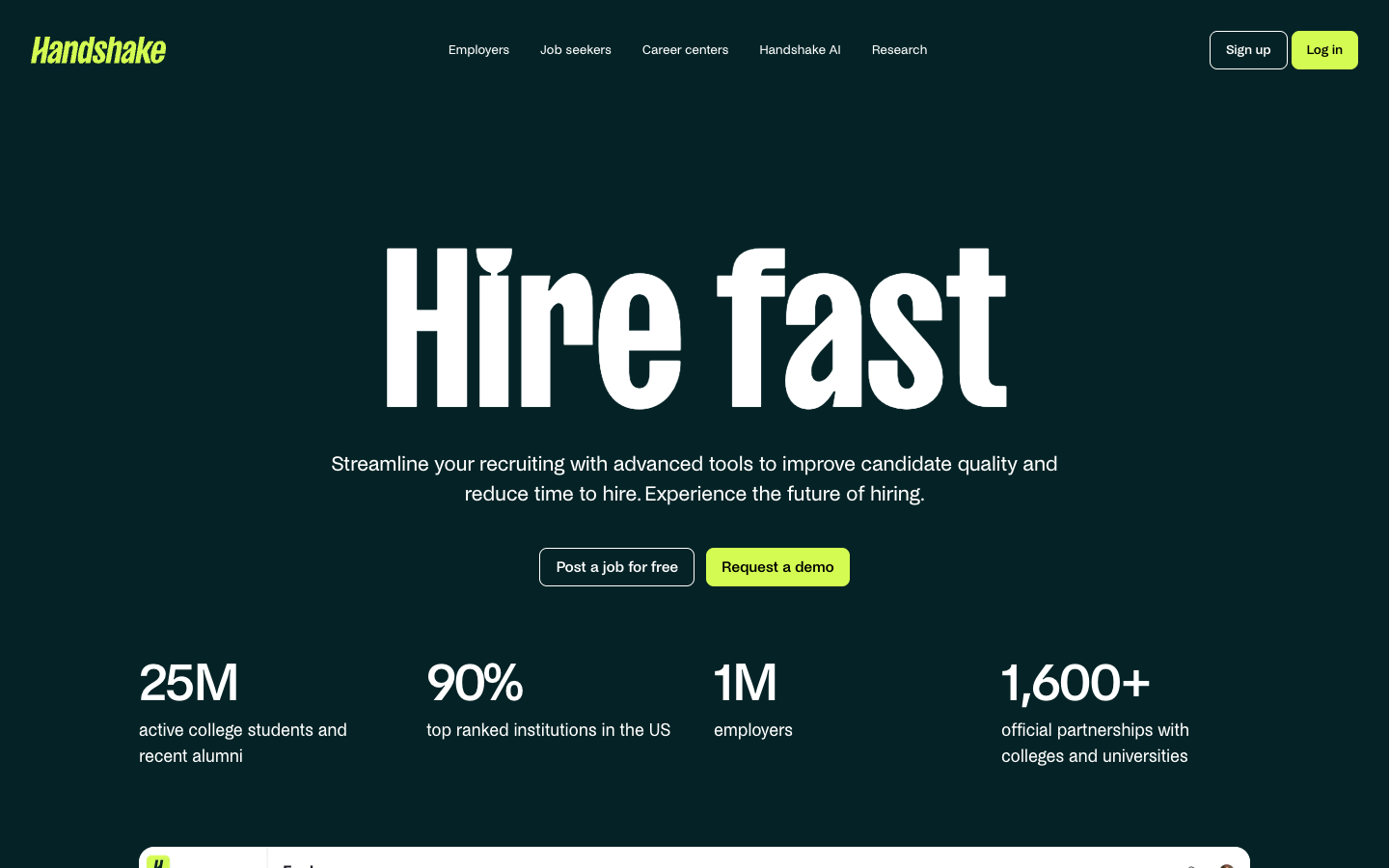
Handshake now publishes its paid tier: Pro costs $450 a month, and Enterprise is priced on request.
Community consensus is clear about the fit: excellent for internships, entry-level, and new-grad pipelines, a poor fit for experienced hires.
Best for: internship and new-grad hiring.
US note: built on US university partnerships; most small teams can run the free posting path and skip the branding suite.
12. US niche boards worth a slot: Dice, Built In, Wellfound, FlexJobs, Snagajob and co
Each remaining board earns its place by owning one slice of the US market. When your role lives in that slice, a specialist board is often the cheapest path to candidates who fit.
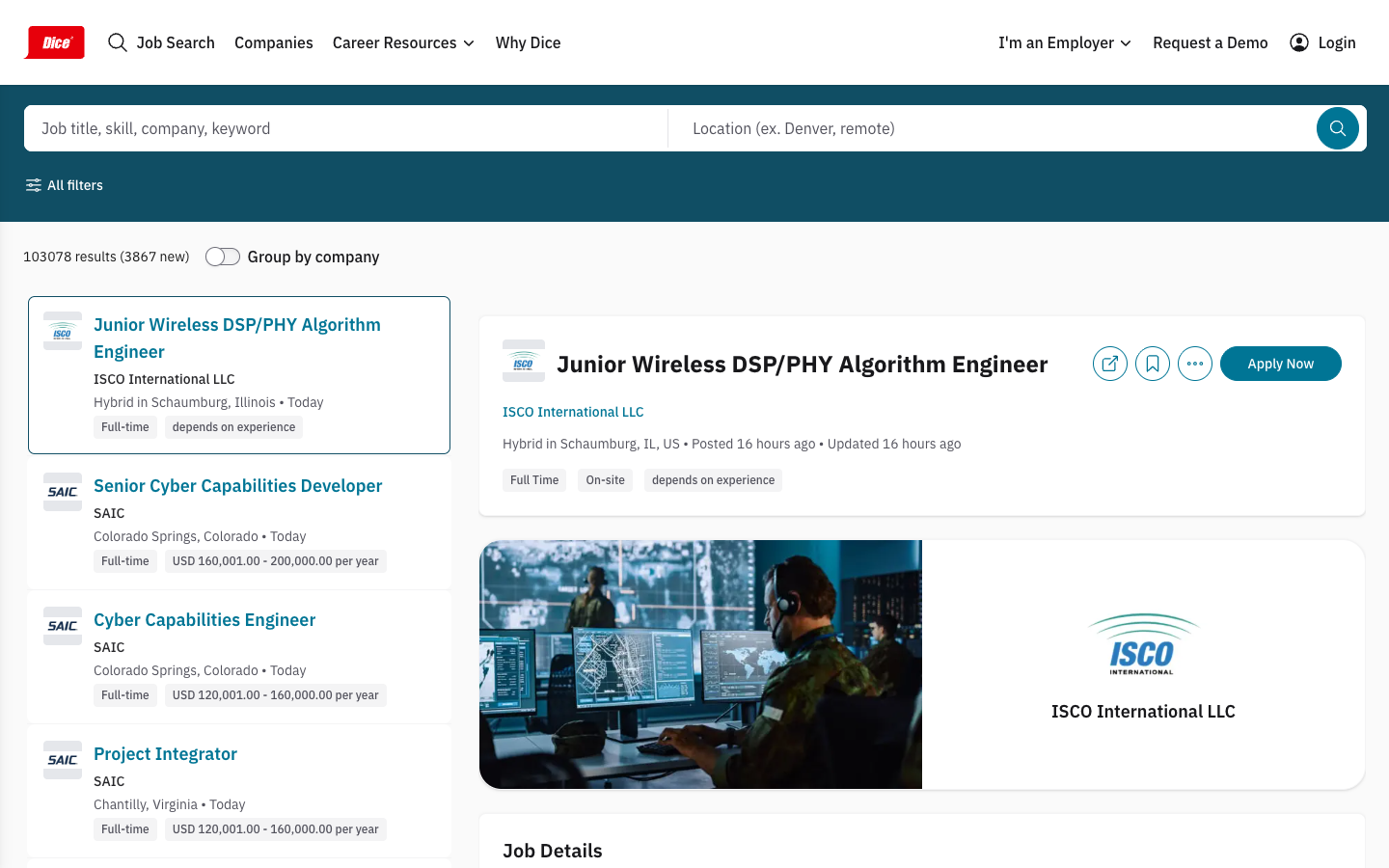
- Dice - tech and IT. No free posting; $399 per 30-day job slot.
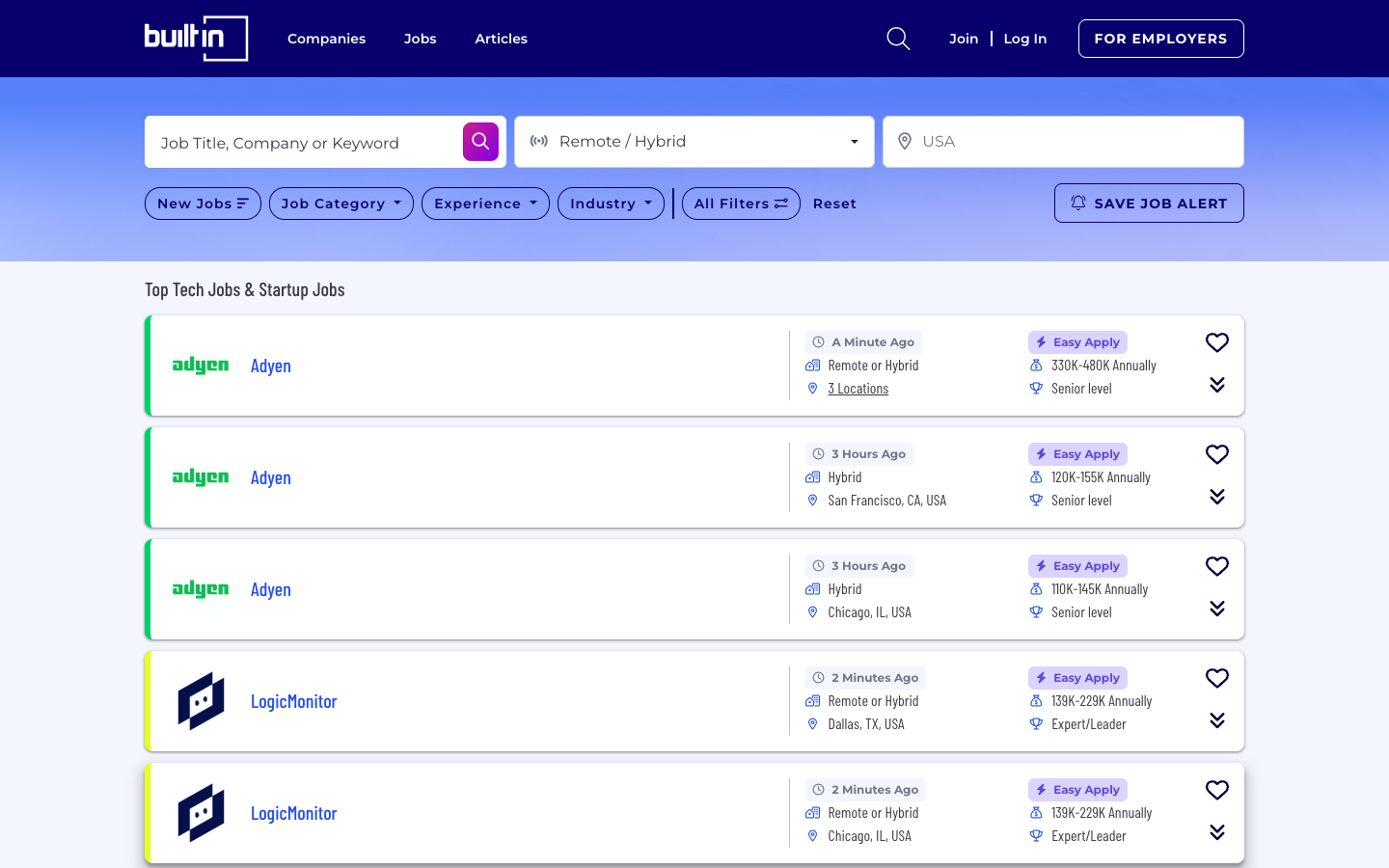
- Built In - tech hiring by city hub, with salary and culture pages candidates actually read.
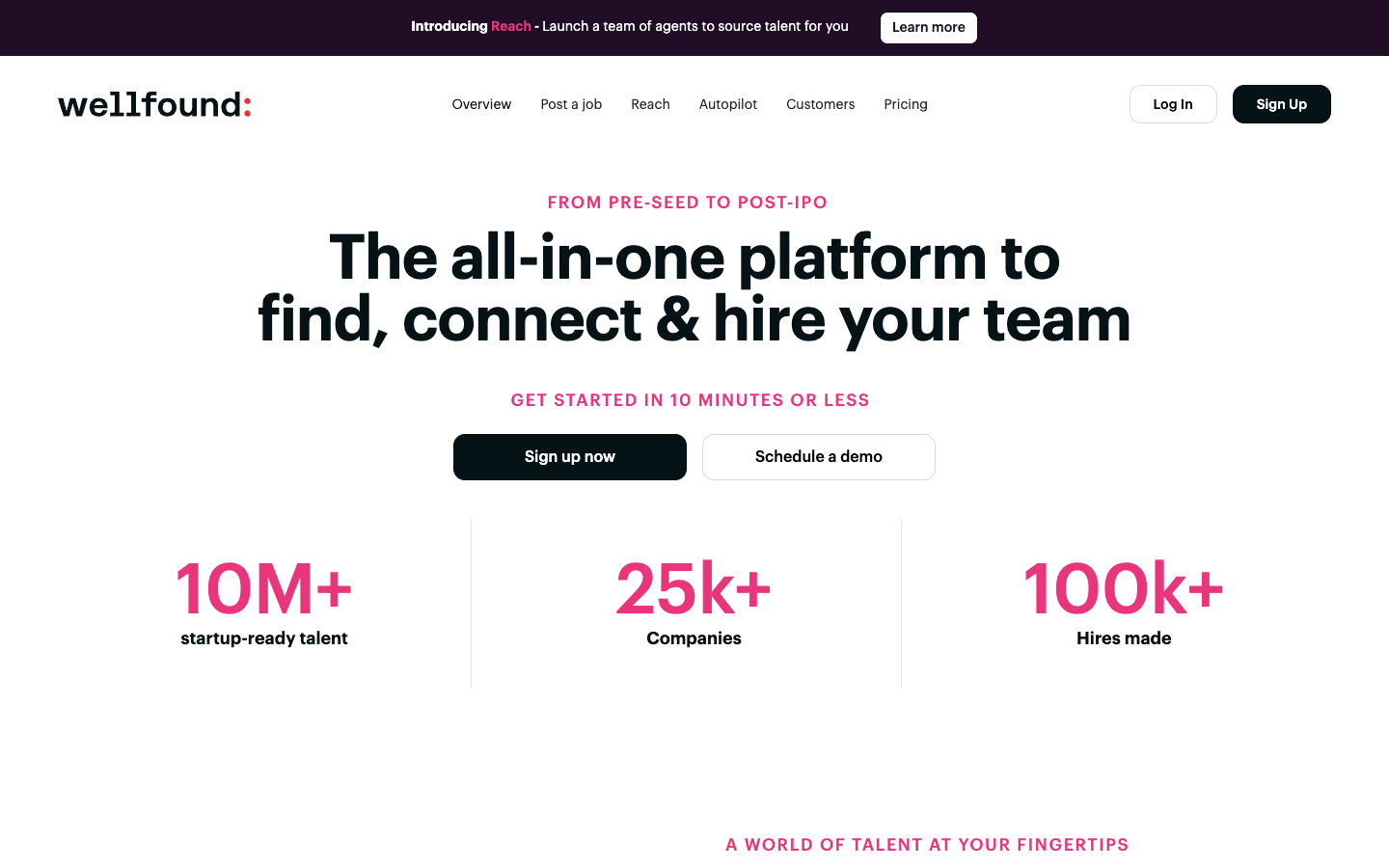
- Wellfound - startup roles; core posting is free, candidates expect salary and equity ranges.
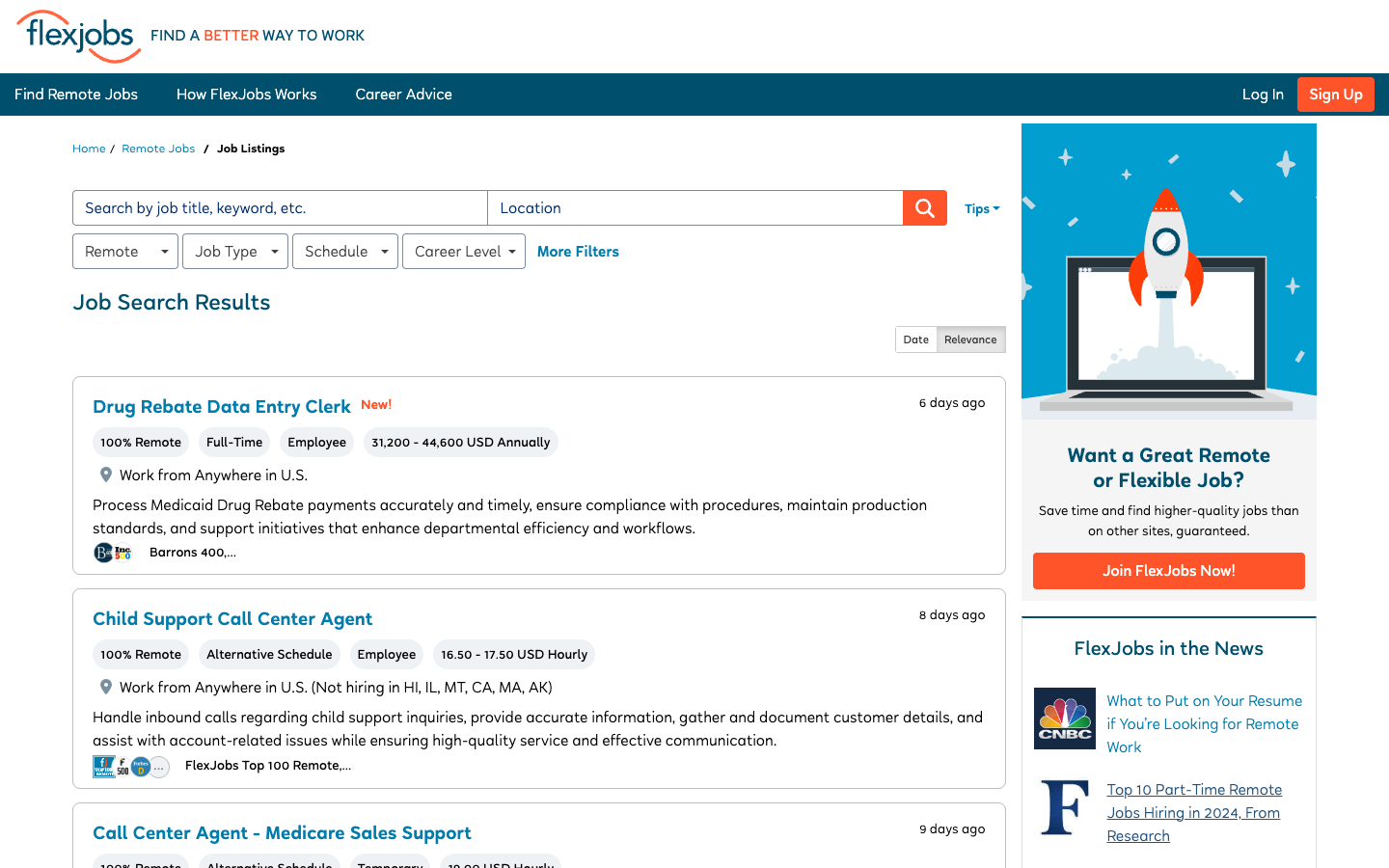
- FlexJobs - remote and flexible work; hand-screened listings, employer plans reported from $399/mo.
- Snagajob - hourly and shift work; postings reported from $89 per month.
- Idealist - nonprofit roles.
Veteran hiring has a free specialist channel too: the veteran referral service at your local American Job Center. For IT and remote-only roles, Techfetch and We Work Remotely round out the specialist set.
Two conventional picks we checked and left out of the recommendations: chambers of commerce and community college career centers.
Employer communities show almost no evidence of either filling jobs; treat them as networking venues that occasionally point you to a posting channel, not as posting destinations.
Best for: roles where one right applicant beats fifty average ones.
US note: every board in this cluster is US-centric or US-only.
Free job posting sites in the USA: what free actually gets you
The honest set of free and near-free channels for a US employer, in order of setup effort:
- Your state job bank. Free in all 50 states, veteran-friendly by design, and the one channel that doubles as a compliance record. Expect modest response volume.
- Indeed organic. Up to 3 posts a month for direct employers, visibility decaying over the 30-day life. Staffing agencies excluded.
- Google for Jobs. Free forever once your careers page (or your ATS) emits the structured data.
- Facebook groups. Local reach for hourly and service roles, posted from your own page or profile.
- Wellfound and Handshake free tiers. Free where their niches (startups, campus) match your role.
The catch is operational, not financial. Five channels mean five dashboards, five logins, and applicant flow that arrives unevenly.
To be clear about our own product: 100Hires is not part of the free stack. The 14-day trial can publish to boards, capped at 10 candidates from external sources; a paid plan removes the cap. The stack above works without us.
What a paid distribution layer adds is one login, one pipeline, and per-source numbers that tell you which free channel earns its keep. Compare against what 100Hires costs once the dashboard count starts to hurt.
US job posting rules that decide where you must post
None of this is legal advice, and most of it never appears on ranking lists. Four rule sets are worth every US employer's five minutes.
Federal contractors: the state listing duty
Under VEVRAA (41 CFR 60-300.5(a)), covered federal contractors must list employment openings with the state employment service delivery system where the opening occurs. Listing with the state job bank satisfies the duty.
So does a privately run job service, provided it forwards the listing to the state system in a format that allows priority referral of protected veterans.
Recruiters mix this rule up with habits. In one recruiting forum thread, a recruiter asked where the rule about posting every job for at least three days is written down, and nobody could point to a source: that one is internal policy dressed up as law.
The state listing duty is real and contract-specific; the 3-day minimum is folklore.
Green-card sponsors: the 30-day state job order
PERM labor certification (20 CFR 656.17) makes a 30-day job order with the state workforce agency a mandatory recruitment step. The start and end dates of that order document the step in the application.
A cottage industry of agencies exists just to place these orders correctly, which tells you how seriously immigration counsel treats it.
Ad language: what a US job posting cannot say
EEOC guidance makes employers responsible for job ads that show preference by race, color, religion, sex, national origin, age (40 and older), disability, or genetic information.
The classic trap is casual wording: the guidance's own example is an ad seeking recent college graduates, wording that can discourage applicants over 40.
Salary transparency: states where the posting must show a range
State pay-transparency laws now put the range inside the posting itself in a growing set of states. Fourteen states plus DC, checked against legal trackers (Paychex, Jackson Lewis, Cooley, Loio) in October 2026:
| State | In force since | Applies to |
|---|---|---|
| Colorado | January 2021 | Any employer with 1+ Colorado employee |
| California | January 2023 | 15+ employees |
| Washington | January 2023 | 15+ employees |
| New York | September 2023 | 4+ employees |
| Hawaii | January 2024 | 50+ employees |
| Maryland | October 2024 | All job solicitations |
| Illinois | January 2025 | 15+ employees |
| District of Columbia | June 2024 | All employers |
| Minnesota | January 2025 | 30+ employees |
| New Jersey | June 2025 | 10+ employees |
| Vermont | July 2025 | 5+ employees |
| Massachusetts | October 2025 | 25+ employees |
| Virginia | July 2026 | All employers |
| Maine | July 2026 | 10+ employees |
| Connecticut | October 2026 | All employers |
The first seven rows were checked against state labor department sites in July 2026; the eight added rows come from those legal trackers in October 2026.
Delaware follows in September 2027 for employers with more than 25 employees, and a few more states require a range only when a candidate asks.
The practical implication for remote hiring: a nationwide remote posting effectively inherits the strictest rule it touches, so many employers just include a range everywhere.
Two closing notes on this section. Compliance-focused distribution vendors exist for OFCCP-heavy employers (Circa, formerly LocalJobNetwork; pricing on request).
And whatever tool posts your jobs, keep your own dated copy of each state job bank listing.
How we evaluated these job posting sites
Research month: July 2026; vendor-published prices and state laws re-checked October 2026. Pricing was read off vendor and government pages where published; where a vendor sells by custom quote, figures carry the word reported and come from third-party coverage.
Practitioner sentiment comes from public recruiter and small-business communities plus our own sales and demo calls. US-only channels were checked against primary government sources: eCFR, the Department of Labor, the EEOC, and state labor departments.
We included 100Hires for a plain reason: it is our product, every ranking of posting sites implies running several of them, and that multi-board workflow is what we build. Its limits are marked the same way as everyone else's.
FAQ
Where can I post jobs for free in the USA?
These channels are free for US employers: your state job bank (all 50 states), Indeed organic posts (up to 3 a month for direct employers), Google for Jobs via careers-page markup, and the free tiers of Wellfound and Handshake. Local Facebook groups add reach for hourly roles. The 100Hires careers page includes that Google markup.
Can private companies post jobs on USAJOBS?
No. USAJOBS hosts openings from federal agencies and is run by the Office of Personnel Management. The closest official free channel for a private employer is the state job bank. If you run several channels, 100Hires source reporting shows which one produced applicants.
Do employers have to post jobs on a state job bank?
Only some. Federal contractors covered by VEVRAA must list openings with the state system, and PERM green-card sponsors need a 30-day state job order. For everyone else it is optional. Covered contractors should keep their own record of each listing in case of a compliance review. 100Hires does not post to state job banks, so list the role there directly and use a 100Hires trackable link to see which applicants it sends.
Which US states require salary ranges in job postings?
As of October 2026: Colorado, California, Washington, New York, Hawaii, Maryland, Illinois, Minnesota, New Jersey, Vermont, Massachusetts, Virginia, Maine, and Connecticut, plus the District of Columbia. Delaware follows in September 2027. In 100Hires you add the salary range once and it carries into supported board postings.
What is the best job posting site in the USA?
Depends on the role: Indeed for volume, LinkedIn for salaried roles, the state job bank for free coverage and compliance, niche boards for specialists. Most US teams run several, so 100Hires posts one job to 13 named boards in one click and reports which board produced the hire.
Think of US posting as three layers. Paid reach you choose: Indeed, LinkedIn, ZipRecruiter. Free layers you switch on once: your state job bank, Google for Jobs. Rules you document: contractor listings, state job orders, salary ranges where they apply.
Then read the per-source numbers monthly so every layer earns its slot. Start a 14-day 100Hires trial to see the posting workflow and AI screening on your own roles, or book a walkthrough.
Board publishing works on the trial too, capped at 10 external candidates; any paid plan removes the cap, from $49/mo billed annually ($99 month-to-month).
Try 100Hires for free
No credit card. 14-day trial. Forbes Advisor #1 ATS for SMBs.