
Indeed vs Monster: which job board is worth your budget in 2026
Indeed and Monster used to be an even fight. In 2026, most US employers should start with Indeed and treat Monster as a controlled side bet.
Indeed wins on reach and free entry. Monster, which went through a bankruptcy and sale in 2025 and now runs as Monster+ under new owners, stays usable in a few verticals but is safest as a month-to-month experiment.
This comparison covers five employer questions: reach, pricing model, candidate quality, resume databases, and whether the platform you pay for will still work the same way in six months.
To settle it, we checked both vendors' live pricing pages this month, read the freshest G2 and Capterra reviews, and went through dozens of practitioner threads. Most articles ranking for this comparison still print Monster plans that were retired with the relaunch.
Indeed vs Monster at a glance
The hiring playbook, in your inbox
One email a week - benchmarks, AI screening tactics, and short interview templates from the 100Hires team. No product pitches.
| Criteria | 100Hires | Indeed | Monster |
|---|---|---|---|
| What it is | ATS that posts to 13 job boards, including Indeed and Monster | Job site and aggregator | Job board with resume database |
| Best for | Running both boards from one pipeline | Volume hiring, hourly and SMB roles | Cheap secondary test in traditional industries |
| Free posting | Free organic distribution to its 13 boards | Up to 3 free posts per month (not for staffing agencies) | None on Monster+ direct |
| Paid model | Flat subscription | Pay-per-click sponsored budgets | Pay-per-click or monthly credits |
| Entry price | From $49/mo billed annually | Sponsored from $5/day or $150/mo | From $8/day pay-as-you-go |
| Resume database | Own candidate database + Contact Finder (no Monster resume search) | Smart Sourcing, $520/mo, 100 contacts | 10M+ resumes, in Pro plan credits |
| Candidate volume | Whatever the 13 boards deliver | 645M+ job seeker profiles claimed | Far smaller pool, vertical pockets |
| Stability | Independent SMB-focused vendor | Recruit Holdings subsidiary; pricing model has changed repeatedly | Sold to Bold Holdings in 2025; platform in transition |
| G2 / Capterra | 4.8 (1,341) / 4.9 (1,157) | 4.3 (688) / 4.5 (7,593) | 4.1 (219) / 4.1 (153) |
Quick verdict: post on Indeed first, keep budget control tight, and treat Monster as an $8/day experiment where your roles match its remaining audience. Or skip the either-or question and post to 13 job boards from one place, then compare what each one sends back.
Every number in this table comes from the vendors' own pricing pages, G2, and Capterra, checked in July 2026; the source ledger lives in our fact-check file. Both companies change plans often, so verify before you commit a quarter's budget.
What happened to Monster (and is it still running)
Short answer: Monster is alive, under new ownership, and mid-rebuild. Here is the timeline every employer should know before spending there.

CareerBuilder and Monster merged in September 2024. The combined company filed for Chapter 11 in June 2025. According to Reuters, the job board assets sold to Bold Holdings for roughly $28 million after an auction that nearly quadrupled the opening bid.
Bold kept roughly 350 of 935 employees, per coverage of the sale. CareerBuilder's employer site now redirects to Monster, which we verified ourselves. Treat the two brands as one channel: a paid Monster posting cross-posts to CareerBuilder automatically.
The rough part for employers: European Monster sites were shut down during the restructuring, and industry podcast coverage reported that employers holding prepaid job credits there simply lost them. That is the sharpest vendor-risk lesson in this whole story.
The reassuring part: US Monster keeps operating and releasing updates. The Monster+ pricing page is live, the company published its 2026 Job Market Outlook, and it launched a free resume builder this year.
One correction worth making: Monster did not "merge into Foundit," a claim floating around YouTube. Foundit is the separate India and APAC rebrand from 2022. The US brand went to Bold Holdings.
Buyer takeaway: usable, but structurally in transition. Spend month-to-month and skip long prepaid commitments until the new ownership proves stable.
Reach and candidate volume: Indeed wins big
The scale gap is not close. Indeed reports 645+ million job seeker profiles and 3.3 million employers across 60+ countries, and Comscore ranked it the number one job site worldwide by total visits in March 2026, according to Indeed's May 2026 press release.
Monster's own resume search page leads with a 10M+ resume claim. Its international footprint contracted after the restructuring, so treat any country-count figure you read as outdated.
One recruiter on YouTube ran a useful field test: same city, same week, same two roles on each major board. His comparison surfaced 191 warehouse listings on Indeed against 12 on Monster. In the capped scoring pass, Indeed counted about four times Monster's warehouse volume.
Adoption tells the same story from the employer side. Indeed's Capterra listing carries 7,593 reviews; Monster+ has 153. That review-count gap is another signal of the adoption difference, though reviews are only a rough proxy.
What this means in practice: Monster alone cannot carry volume hiring anymore. It can still add incremental reach in verticals where its audience stuck around, which we cover in the fit section below.
Winner: Indeed, decisively.
Pricing: pay-per-click vs subscription credits
This is where the two platforms genuinely differ, and where most comparison articles print numbers that are years stale.
What Indeed costs
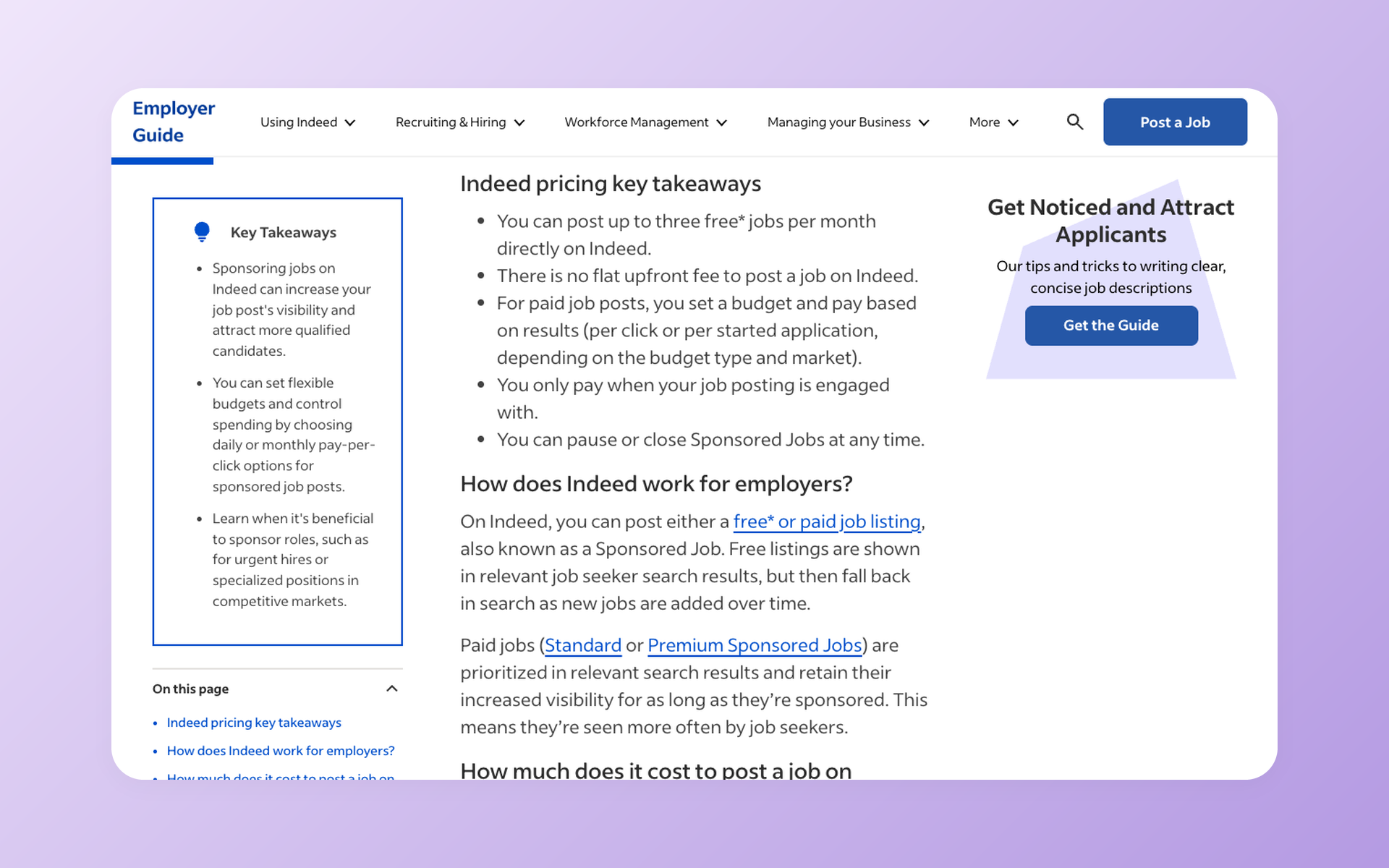
You can post up to three free jobs per month directly on Indeed, with a catch: staffing and recruiting agencies lost free posting under a 2025 policy change. Free posts fade in visibility fast.
Sponsored budgets start at $5 per day or $150 per month on Indeed's current pricing page, though it warns prices run higher by role, title, and location. Practitioners report effective minimums closer to $25 per day on competitive roles.
Indeed bills accounts at the start of the month or when spend reaches $500, whichever comes first, and new US accounts get a $75 sponsorship credit.
Two budget traps come up in employer communities again and again. Overruns: one agency owner described setting a $500 budget and getting an $800 bill with no clear explanation.
And sponsored posts stop showing entirely when the daily budget runs out instead of dropping back to organic.
Know that Indeed's pricing model has flipped before. Pay-per-application arrived in 2022, retired in December 2023, and per-started-application billing still appears for some accounts and markets. Assume the current model can change again.
The full Indeed job posting cost breakdown goes deeper on click prices by role.
What Monster costs
Monster+ Standard is pay-as-you-go from $8 per day: you pay when candidates click, and paid posts publish to Monster, CareerBuilder, and its partner network.
There is no free tier for direct posting, and the first promoted ad triggers a one-time $10 card verification returned as credits.
Monster+ Pro is $299 per month (or $2,990 a year) and works on credits: 299 per month, one credit equals one dollar, and a resume view costs two credits. Seats are unlimited, which suits small teams sharing one account.
The trap here is credit overages, which are billed in the next period. One Canadian employer described on Reddit how uncapped resume views on Monster.ca piled up thousands of dollars across a month of invoices with no warning pop-up.
Cap your team's viewing habits before the platform does it for you.
A nuance on "free Monster posting": direct Monster+ posting is paid only. Free Monster reach exists when your listing arrives through an ATS or aggregator feed, which is a different route than buying from Monster.
Which pricing model fits you
Pay-per-click suits burst hiring: you fund a role, watch the clicks, and stop anytime. Credits suit a steady monthly rhythm of posting plus resume sourcing in one bill.
Winner: depends on your hiring cadence. Indeed for bursts with tight budget control, Monster for predictable low-volume months where you want resume search bundled in.
Candidate quality: both need heavy screening
Neither board pre-screens for you. The quality problem is structural to big boards, and it shows up differently on each.
Indeed's problem is triage. In a July 2026 LinkedIn post, an operations manager described a role drawing a wave of applicants within 24 hours, many with zero relevant experience and knockout questions answered dishonestly.
Hiring communities repeat the same pattern: well-paid roles drawing hundreds of unqualified applications.
Candidate trust in listings is its own drag. A February 2026 Clarify Capital study, widely cited in recruiting circles, scraped 176,268 Indeed listings and estimated about 1 in 7 were ghost jobs. Serious candidates got warier, which means your real opening competes with noise.
Monster's problem is freshness. A recruiter using the rebuilt platform reported in mid-2026 that 60-70% of pulled profiles were outdated by two-plus years or had bouncing contact info.
Candidates have complained for years about a signature spam pattern: insurance-sales and commission-only pitches long after they left the board.
Role fit matters more than the brand. Employers in Midwest manufacturing and other traditional industries still pull real candidates from Monster.
Clinical healthcare and specialized tech recruiters describe it as not cutting it, and niche boards beat both generalists for narrow skill sets.
Winner: a tie on quality. Indeed simply gives you far more volume to screen, which is only a win if you have a way to screen it.
Resume databases: Smart Sourcing vs Monster+ credits
Here is the one axis where Monster genuinely competes, and it comes down to price.
Indeed Smart Sourcing (the replacement for Indeed Resume) runs $520 per month on the Professional plan, per Indeed's own page in July 2026: 100 contacts a month with a six-month rollover, $5.20 per extra contact, and an AI Sourcing Assistant on up to three jobs.
Plenty of roundups still print $120-300 figures that no longer appear anywhere on the vendor page.
The price jump landed badly. Recruiters in public threads describe dropping the product after the increase, so factor in whether 100 contacts a month justifies the extra spend.
Monster+ Pro bundles resume search into its $299 plan. Searches are unlimited; credits only burn when you view, download, or forward a resume, at two credits each.
That is roughly 149 resume views a month, with a recency filter, bulk messaging in batches of 25 to 100, and automated 5- and 10-day follow-ups.
The math favors Monster for budget sourcing: more views for less money. The catch is what you find. Monster's pool is a fraction of Indeed's, and the staleness reports above apply doubly to resume search.
On either platform, filter by recent activity before spending contacts or credits.
Winner: Indeed for scale and freshness, Monster for budget resume access. For the wider field beyond these two, see our resume database comparison for recruiters.
Stability and lock-in: the 2026 wildcard
Most comparisons skip this axis. After 2025, no employer should.
Monster's risk is the transition itself.
Its new owner is still folding two merged job boards into its own product family, and recruiters on the rebuilt platform reported in June 2026 that ATS integrations broke, identical searches returned wildly different result counts, and support tickets sat for days.
The European shutdown showed prepaid balances can vanish with the region.
Indeed carries a different flavor of the same risk: dependence on a platform that rewrites its own rules. It has cycled through pricing models, tightened free posting, banned agency free posts, and flagged reposted jobs.
Industry veterans who lived through Indeed's rise tell the same story: partners who built on its free traffic saw the terms change abruptly.
Three practical rules follow. Pay month-to-month on both boards. Keep candidate data and pipeline history in a system you control, not inside a board account. And measure per-board results so you can reallocate the day the economics shift.
Winner: neither. Manage both as replaceable channels, not as your system of record.
Which board fits your hiring situation
| Hiring situation | Better first bet | Why |
|---|---|---|
| High-volume hourly, retail, warehouse | Indeed | Largest applicant flow, free entry, pay-per-click control |
| Professional and salaried roles | Indeed | Broadest reach; many teams pair it with LinkedIn, which has its own costs |
| Traditional industries, Midwest manufacturing | Monster test at $8/day | Employers there still report real candidate flow |
| Steady low-volume hiring plus sourcing | Monster+ Pro | $299/mo bundles postings and ~149 resume views |
| Specialized or niche technical roles | Neither | Niche boards outperform both generalists |
| Burst hiring with a hard budget cap | Indeed | Fund, watch, stop anytime; mind the budget traps above |
Who should skip Monster: anyone recruiting in fast-moving skill markets, where a stale profile costs you a week, and clinical roles, where recruiters consistently report thin results.
The cheap-test playbook: run an $8/day Monster experiment against your sponsored Indeed baseline for two weeks. Measure cost per qualified applicant, not cost per click. Keep whichever earns its line on the invoice.
Two adjacent notes. Glassdoor posting routes through Indeed now, so do not budget it separately. And if you are weighing the other big aggregator, our Indeed vs ZipRecruiter comparison covers that matchup.
The bottom line: Indeed first, Monster as a measured test
Indeed is the default. The reach is real, the entry tier is free, and pay-per-result promotion rewards discipline. Its costs climb without ceremony, so watch the budget mechanics.
Monster earns a measured test: $8 a day in traditional and regional verticals, or $299 a month when budget resume sourcing matters more than pool size. Go in month-to-month given the ownership transition.
Per axis: reach goes to Indeed. Pricing depends on cadence. Candidate quality is a tie, with the screening burden on you either way. Resume databases split: Indeed for scale, Monster for budget. Stability favors neither.
Post to both and let your ATS do the triage
Full disclosure: 100Hires is our product, and it did not appear in the external channels we analyzed for this keyword. Verify us independently: G2 4.8 (1,341 reviews) and Capterra 4.9 (1,157) as of July 2026.
Forbes Advisor lists 100Hires as best for startups and small businesses in its ATS roundup.
Here is the workflow argument. Recruiters in ATS-using companies point out that an applicant lands in the same pipeline whether they came from Indeed, Monster, or your careers page, and self-reported source data is famously unreliable.
The board matters less than what happens after the application.
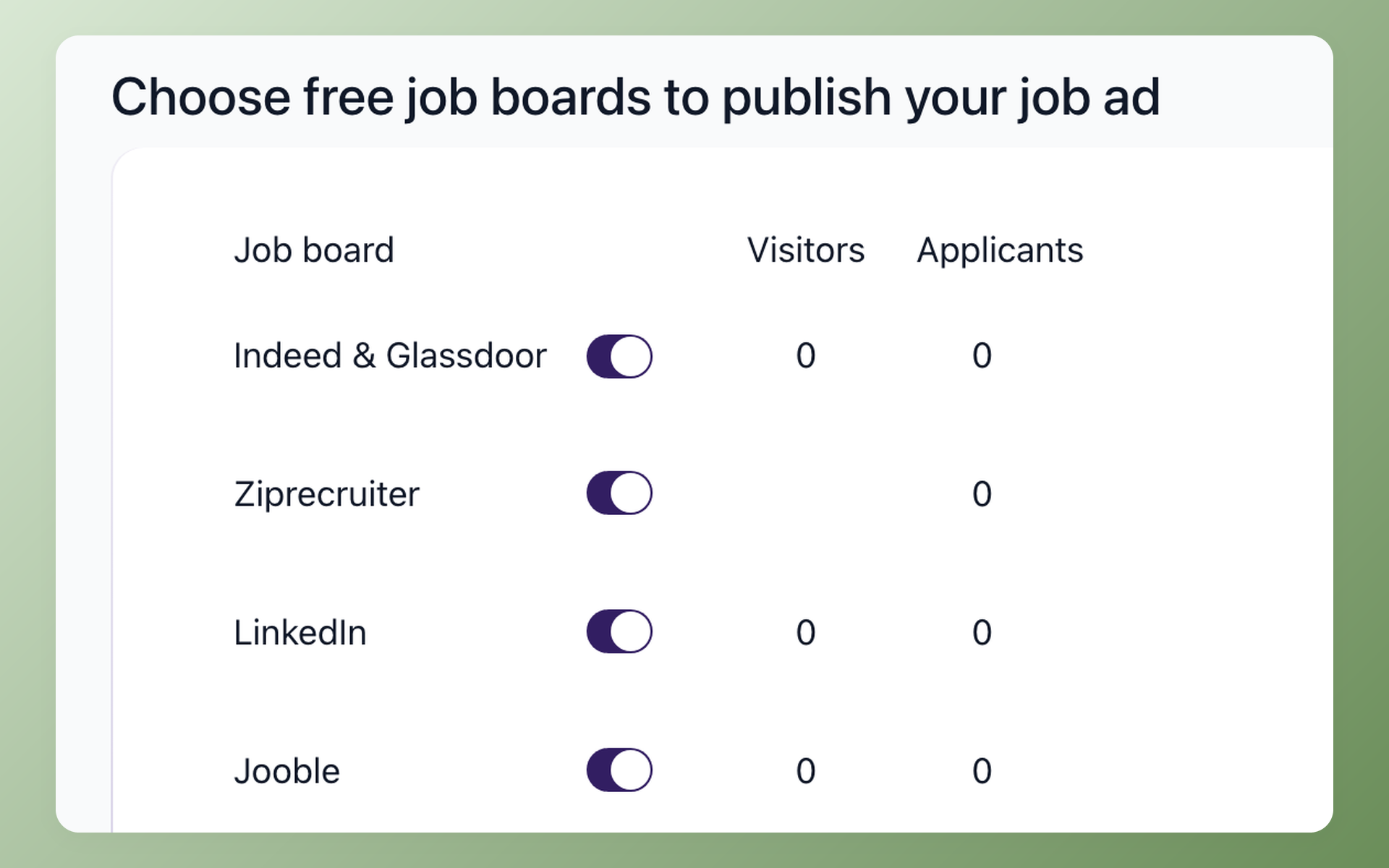
So you do not have to pick a winner. 100Hires posts one job form to 13 boards, including Indeed and Monster, with free organic distribution by default. Sponsored placement stays a direct purchase from the board itself.
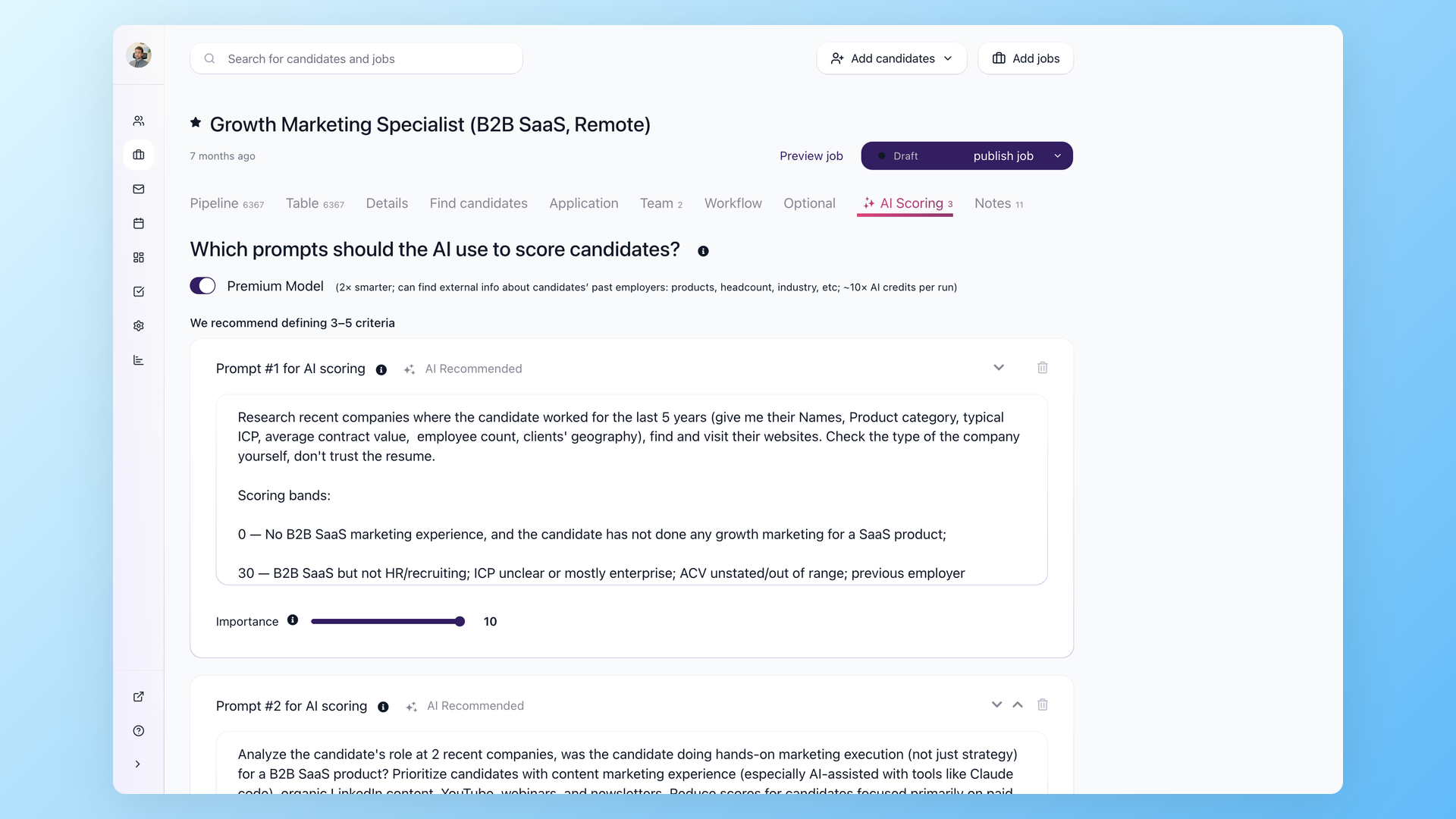
Then the triage problem gets handled where it belongs. AI Score ranks every applicant against your requirements, so a 200-application Indeed day becomes a read of the 30 highest-scored profiles.
AI Copilot answers your screening questions about any candidate, and AI Email Composer drafts the outreach.
Trackable links give per-board attribution, so the Indeed vs Monster question gets answered by your own cost-per-qualified-applicant data instead of a blog post, including this one.
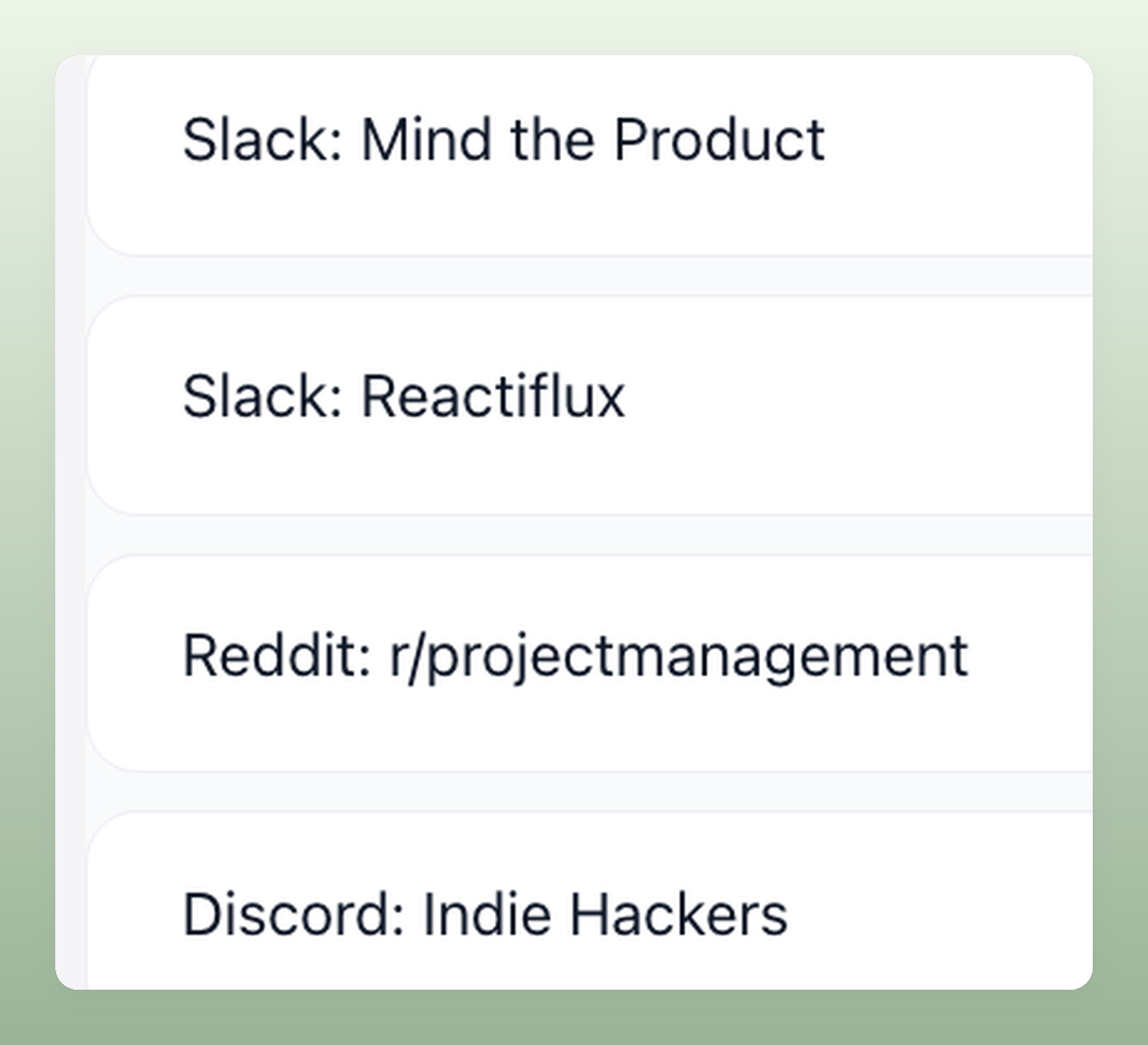
One honest limitation: the Monster integration covers job posting and applicant intake, not live Monster resume-database search. Staffing teams whose sourcing runs on Monster or Dice resume search still need Monster+ Pro alongside.
The 14-day trial needs no card and starts at $49/mo billed annually after. Book a demo or start with multi-board posting and let the boards compete for you.
FAQ
Is Monster as good as Indeed for employers?
Not on reach: Indeed reports 645+ million job seeker profiles against Monster's 10M+ resume claim, and it wins on applicant volume in nearly every vertical. Monster competes on lower-cost resume-database access at $299/month. If you run both through an ATS like 100Hires, your own applicant data settles the question for your roles.
Does anyone still use Monster for jobs in 2026?
Yes. Monster operates under Bold Holdings, which bought the job board assets out of the 2025 bankruptcy, and it still shows real usage in traditional industries, some regional hourly markets, and staffing toolkits. It is a secondary channel now, not a primary one. Since Monster sits on 100Hires's 13-board list, testing it adds no extra posting work.
Is it free to post jobs on Monster?
Not directly: Monster+ has no free tier, and pay-as-you-go promotion starts at $8/day (checked July 2026). Free Monster reach happens when your listing arrives through an ATS feed, the way 100Hires distributes organic listings there, separate from any paid Monster+ plan.
How much does it cost to post a job on Indeed?
Up to three posts per month are free directly on Indeed (staffing agencies excluded). Sponsored budgets start at $5/day or $150/month per Indeed's July 2026 pricing page, and practitioners report higher effective minimums on competitive roles. Posting through 100Hires uses Indeed's free tier automatically.
What happened to CareerBuilder?
CareerBuilder merged with Monster in September 2024, the combined company filed Chapter 11 in June 2025, and Bold Holdings bought the job board assets. CareerBuilder's employer site now redirects to Monster, and paid Monster postings cross-post there automatically, which is why 100Hires covers it through the Monster channel rather than as a separate board.
Can I post to Indeed and Monster at the same time?
Yes. An ATS with multi-board distribution does it from one job form. 100Hires posts to 13 boards including both, ranks incoming applicants with AI Score, and uses Trackable links so you can see which board actually produced your hires. The 14-day trial requires no card.
Try 100Hires for free
No credit card. 14-day trial. Forbes Advisor #1 ATS for SMBs.