
Best resume database for recruiters in 2026: 12 free and paid options compared
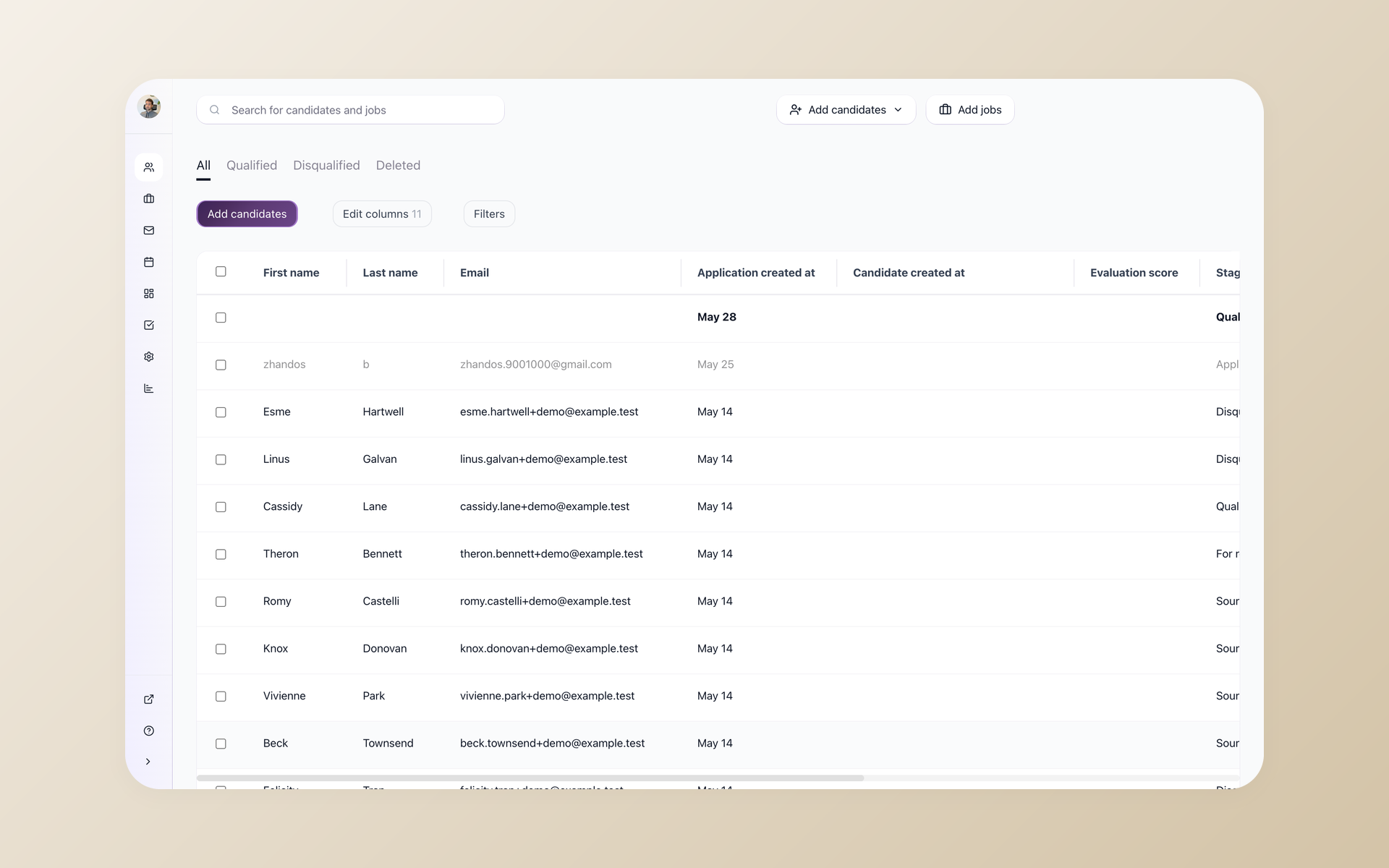
The best resume database for recruiters depends on one question: do you need to buy access to strangers' resumes this week, or do you need to make the candidates you already met searchable?
This guide covers both answers. You get 12 options: one database you build and own, four big vendor pools with pricing re-checked against live vendor pages in October 2026, four free options, and three niche databases for vertical hiring.
One note before the list. Standalone resume databases are being absorbed into job boards, sourcing suites, and ATS workflows. That shift changes what "best" means, and it is why this list looks different from the roundups written five years ago.
Quick comparison: all 12 resume databases at a glance
The hiring playbook, in your inbox
One email a week - benchmarks, AI screening tactics, and short interview templates from the 100Hires team. No product pitches.
We re-checked live vendor pages where accessible in October 2026 and marked pricing as reported where a vendor hides numbers behind a sales form. Several current prices differ sharply from what older roundups still print.
| Database | Type | Best for | Pool size or source* | Free access | Pricing model | Main limitation |
|---|---|---|---|---|---|---|
| 100Hires | Your own database, inside an ATS | Reusing candidates you already have | Every applicant and sourced candidate you add | 14-day trial | From $49/mo (billed annually; $99 month-to-month), no per-unlock fees | No pre-loaded pool; grows as you hire |
| Indeed Smart Sourcing | Vendor pool | Paid sourcing at volume | 685M job seeker profiles company-wide | 14-day trial | $520/mo for 100 contacts | Price; profile quality varies |
| ZipRecruiter Resume Database | Vendor pool | Teams already posting on Zip | 56M resumes | No | Plan add-on or pay per unlock | Unlock costs add up fast |
| LinkedIn Recruiter | Member network search | Passive outreach, bigger budgets | 1B+ members claimed | No | Quote-only; Lite reported ~$170/mo | Access ends with the subscription |
| Monster+ Resume Search | Vendor pool | Budget top-up channel | 10M+ resumes | No | $299/mo Pro; resume view = 2 credits | Aging pool, shrinking mindshare |
| Google X-ray search | Free web search | $0 budget, patient sourcers | Public web profiles and resumes | Yes | Free | Manual; no contact info included |
| PostJobFree | Free vendor pool | Occasional free lookups | 1M+ claimed; thin fresh supply | Yes, search only | Premium reported from $29/mo | Few new resumes per week |
| Jobvertise | Free vendor pool | Cheap bulk browsing | 2M resumes claimed | ~3 views/day | Paid tiers reported $29-99/mo | Conflicting published pricing |
| JobSpider | Free vendor pool | Zero-cost testing | Not published | Yes | Free | No quality guarantees |
| Dice TalentSearch | Niche vendor pool | Tech and IT desks | Millions of tech pros, no exact figure | No | From $649/mo with 250 views | Fake-resume reports for hot skills |
| Wellfound | Niche network | Startup roles | 8M+ profiles reported | Yes, basic | Paid tiers reported ~$250-500/mo | Tech and startup roles only |
| iHire | Niche vendor pool | Single-vertical hiring | 2.8M+ resumes across 57 communities | No | Quote-only | No public pricing, little practitioner feedback |
*Pool sizes measure different things: submitted resumes, member accounts, or scraped profiles. Treat them as marketing claims, not a like-for-like ranking axis.
A quick way to pick your starting point. If you need 20 resumes on your desk this week, jump to Indeed, ZipRecruiter, or Monster below. If your problem is hundreds of good candidates buried in inboxes and spreadsheets, start with option one.
The resume database you already own
1. 100Hires: best ATS resume database for candidates you already have
100Hires does not include a pre-loaded pool of strangers' resumes.
It is the searchable database of every candidate who applied to your jobs, got sourced by your team, or interviewed for a role that almost worked out. 100Hires is our product, so judge this entry against the specifics below.
It leads the list because many recruiters are not missing another vendor pool; they are missing a searchable record of candidates they already met.
In sales calls with agencies, we keep hearing the same situation: resumes scattered across email inboxes, spreadsheets, and file folders, with no central searchable database.
Recruiter forums echo it. The most upvoted answer in a popular thread about augmenting LinkedIn Recruiter described the real need as a searchable record of everyone the team had already talked to.
Candidates enter the 100Hires resume database through job applications, bulk resume upload with AI parsing, CSV import, and a Chrome extension that saves LinkedIn profiles in one click. Duplicates auto-merge by email or LinkedIn URL.
Every resume is indexed, so you can search by any keyword that appears in it. Talent Pools hold candidates for future roles, AI Score scores candidates against a job's criteria on a 0-100 scale, and AI Copilot answers questions about a candidate from their full record.
See how that works in practice in our AI resume screening walkthrough.
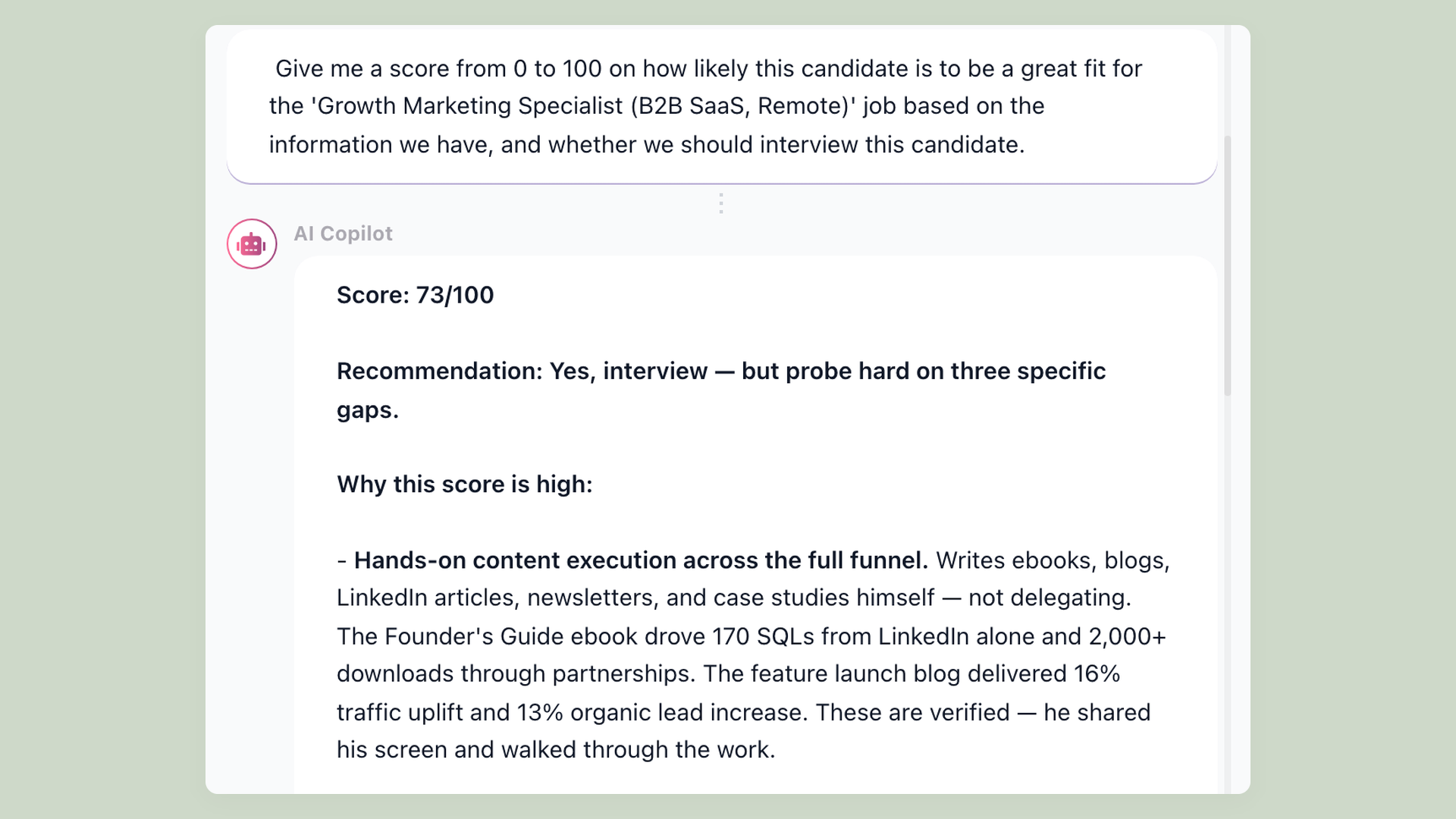
On the Pro plan, Contact Enrichment fills in personal and work emails and phone numbers through seven data providers. Unlike a job-board resume database, 100Hires does not charge a fee each time you view a resume in your own database.
Pricing: from $49/month billed annually ($99/month billed monthly), with a 14-day free trial and no credit card. Forbes Advisor lists 100Hires as Best for Startups and Small Businesses in its applicant tracking system ranking, and it holds a 4.8 rating on G2 from 1,391 reviews.
Best for: teams whose next great hire already applied once. Skip if: your pipeline is empty today and you need resumes this week; pair it with one of the vendor pools below instead.
Paid resume databases: the big vendor pools
2. Indeed Smart Sourcing: the biggest paid pool
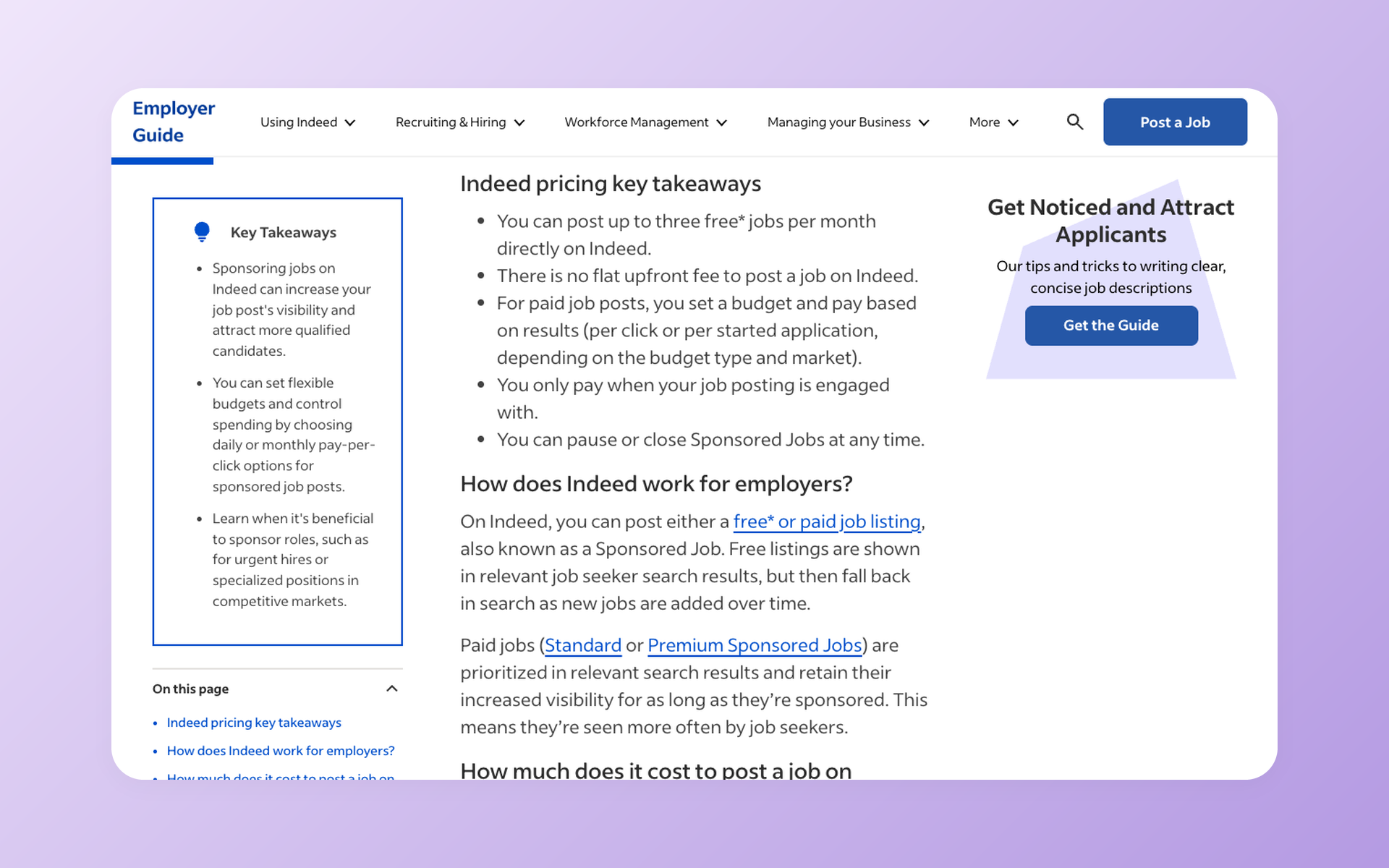
Indeed Smart Sourcing, formerly Indeed Resume, is the workhorse of paid resume search. Indeed reports 685 million job seeker profiles company-wide, but that is not a Smart Sourcing resume count.
Treat it as a reach signal, not proof that every profile is active, searchable, or contactable.
Indeed's US Smart Sourcing page lists the Professional plan at $520 per month for 100 contacts, with a discounted rate of $416 per month shown on the same page, when we re-checked in October 2026.
The six-month rollover and per-contact overage prices that many roundups quote now appear only on Indeed's Canada page, so ask for the US terms in writing.
Many roundups still print $120 to $300 figures that no longer appear on the vendor page.
The price jump landed badly with practitioners. Recruiters in public threads described pulling spend after the increase, and a June 2026 LinkedIn complaint about that exact monthly figure drew unusually high engagement for such a narrow topic.
Quality is the other recurring gripe: profiles built from quick mobile templates, resumes that have not been updated in years, and the occasional account suspension that takes resume search access with it. Filter by recent activity before you spend contacts.
Best for: paid sourcing at volume, especially hourly and mid-skill roles. Skip if: you contact fewer than 100 candidates a month; the per-contact math gets rough. For a deeper look at the two biggest boards, see our Indeed vs ZipRecruiter comparison.
3. ZipRecruiter Resume Database: quick unlocks if you already post there
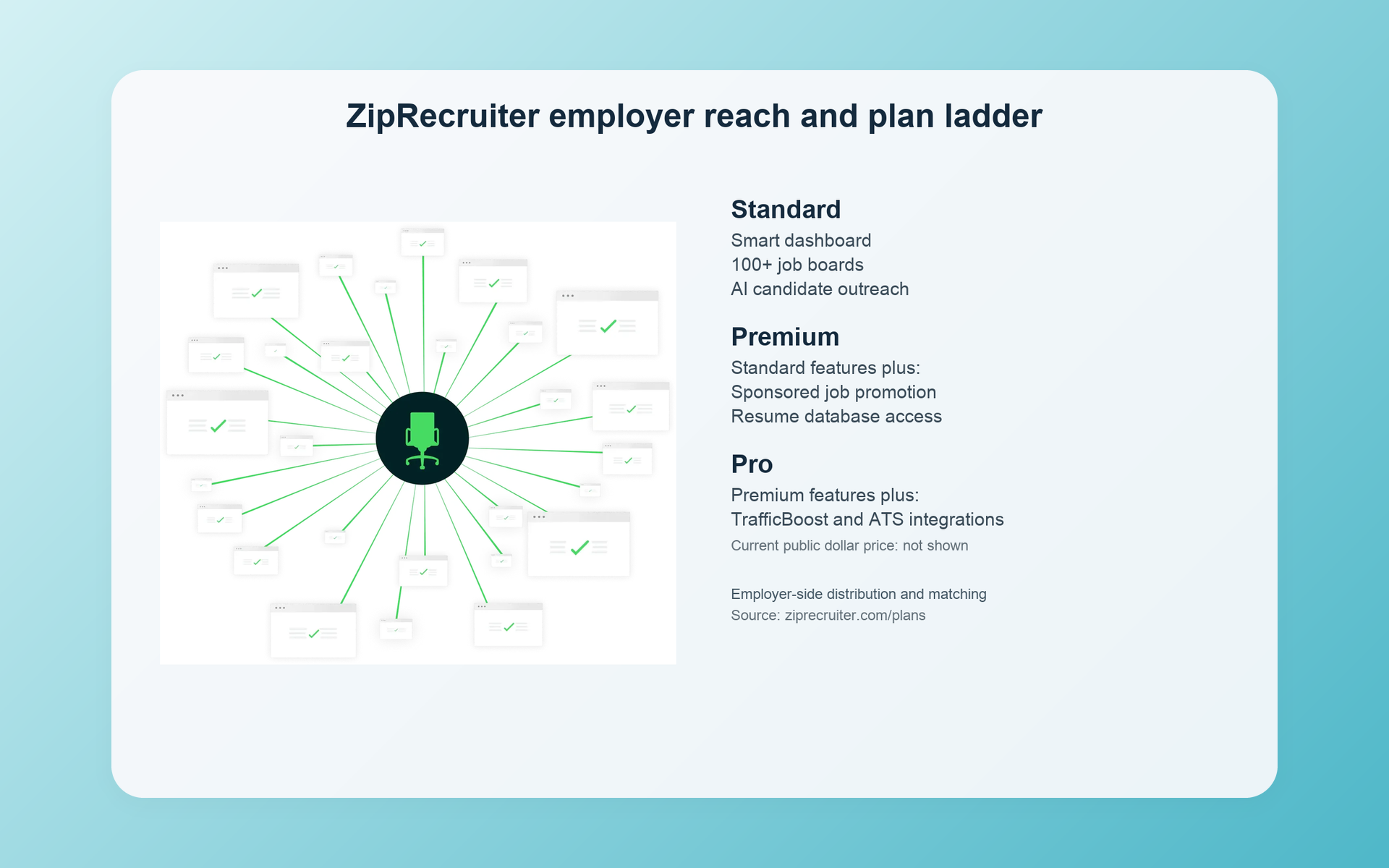
ZipRecruiter claims 56 million resumes and about 230,000 added monthly on its resume database page, checked in October 2026. Search is built into the employer dashboard; revealing contact info costs an unlock.
The cost problem is unlock volume. Recruiters describe per-resume costs in the $3 to $4 range and renewal terms that reprice sharply from year to year. One widely shared account involved a five-figure renewal charge the team says it never knowingly approved.
Read the contract terms before an automatic renewal charges you. Our ZipRecruiter pricing breakdown covers the plan structure.
Some recruiters report seeing the same candidates on ZipRecruiter and Indeed. Treat it as a convenience buy unless your own searches prove incremental reach.
Best for: teams already posting on ZipRecruiter who source occasionally and value instant contact unlocks. Skip if: you source hundreds of profiles a month; per-unlock economics punish volume.
4. LinkedIn Recruiter: the biggest network, rented by the seat
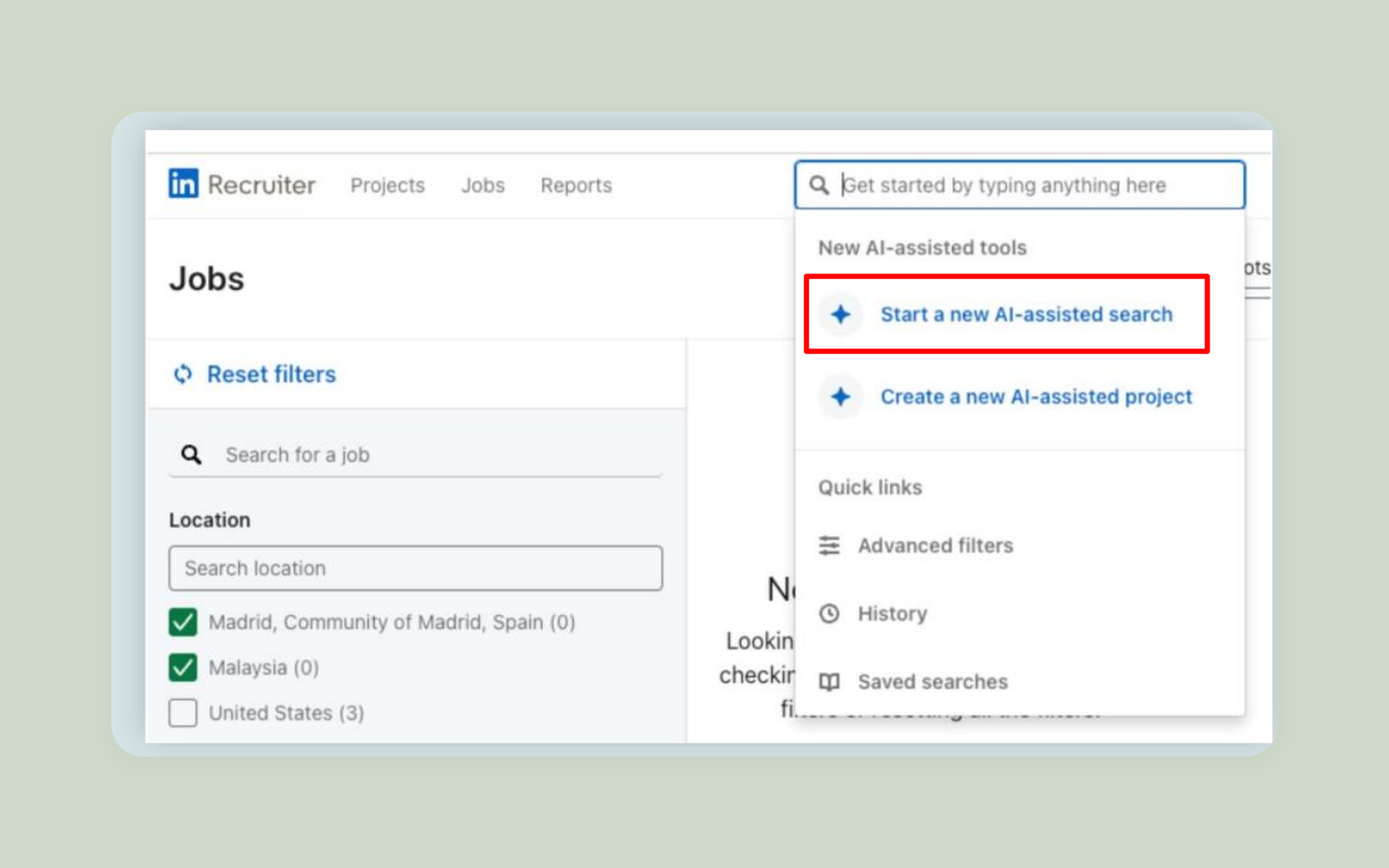
LinkedIn Recruiter is not a resume-file database; it searches LinkedIn's member graph of a billion-plus profiles with 40+ filters and InMail outreach.
For passive candidates it remains the default network recruiters reach for, but it is rented access rather than a resume database you own.
The full Recruiter seat has no public price; you talk to sales. Recruiter Lite is reported around $170 per month for a single seat. The lack of a published number is itself worth noting when you compare total costs; our LinkedIn Recruiter cost guide collects what buyers report.
The structural catch: everything you build lives inside the subscription. Saved projects, pipelines, and candidate access stop the day the seat lapses. Teams increasingly pair one Recruiter seat with their own ATS database so sourced candidates outlive the contract.
A warning that no vendor page will give you: scraping and automation tools that piggyback on LinkedIn have cost recruiters their accounts.
The loudest recruiting thread in our research was a recruiter who lost years of LinkedIn connections overnight after using one, with others naming several popular sourcing tools as the trigger.
Export candidates with a compliant, one-profile-at-a-time workflow into a database you own, and read each tool's terms before connecting it.
Best for: passive-candidate outreach where budget allows. Skip if: you mostly re-engage applicants; you would be renting reach you already have. More options in our guide to sourcing tools for recruiters.
5. Monster+ Resume Search: the legacy pool, consolidated

Monster still runs one of the original resume databases, and its own product page leads with a 10M+ resume claim. The Monster+ Pro plan costs $299 per month and includes 299 monthly credits; viewing a resume costs two credits.
Know the corporate context: Monster and CareerBuilder merged, went through a Chapter 11 sale in 2025, and CareerBuilder's employer site now redirects to Monster. We checked that redirect ourselves. There is no separate CareerBuilder resume database to buy anymore.
Practitioner sentiment is nostalgic rather than enthusiastic. Some recruiters still pull placements from Monster in specific local and hourly verticals; most describe profiles that have not been touched in years. Filter hard by last-updated date.
Best for: a cheap top-up channel where credits go further than unlocks. Skip if: you recruit in fast-moving skill markets where a stale profile costs you a week.
Free resume search options
Free resume databases are wide but thin: the stock is large, the weekly inflow of fresh resumes is small, and working recruiters barely discuss them. Treat these as free options to test, not proven picks.
The two free approaches that practitioners genuinely use are X-ray search and re-engaging their own past applicants.
6. Google X-ray search: free and unlimited, if you put in the work
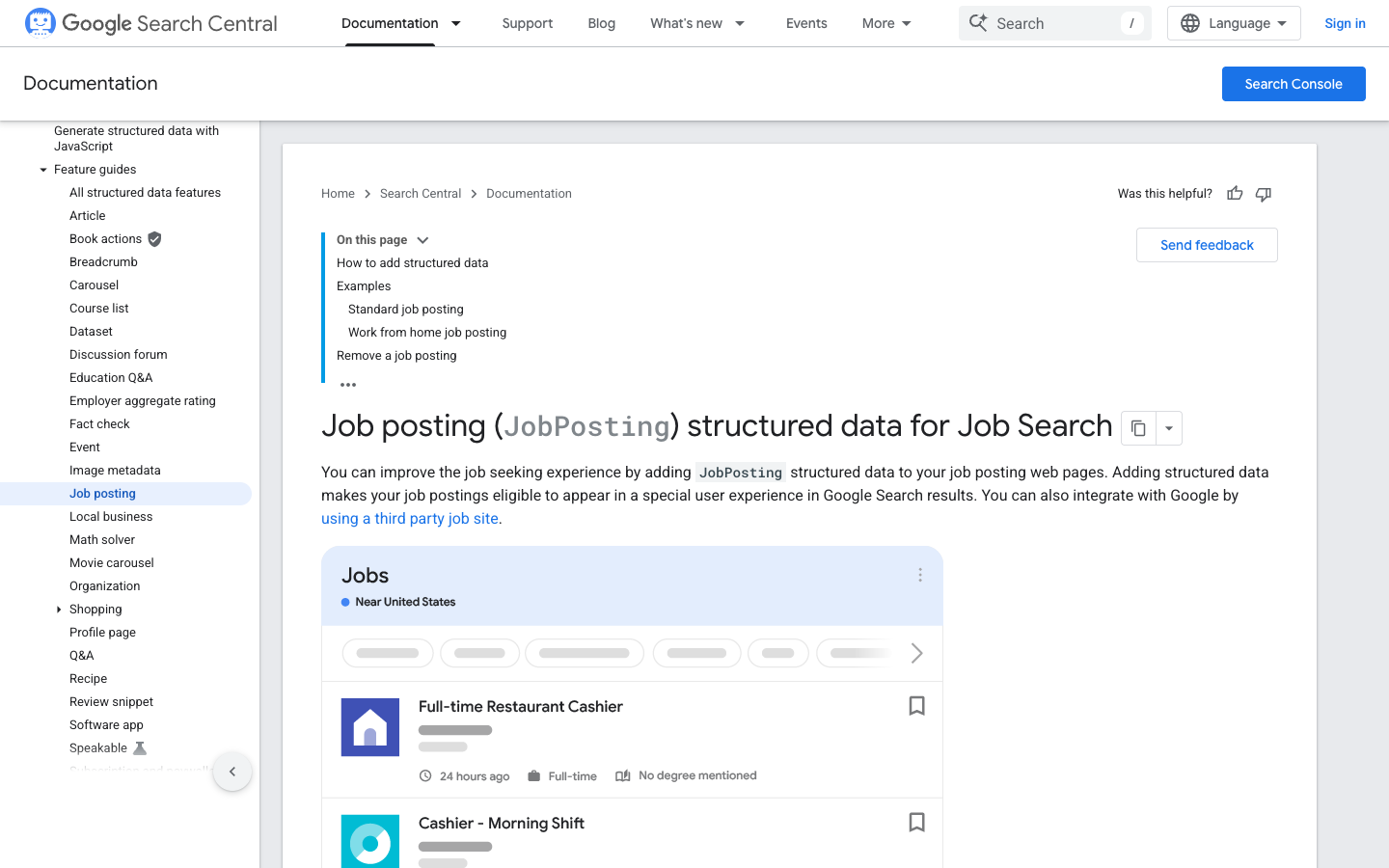
X-ray search uses Google operators to surface public profiles and resumes without paying any database vendor. A basic pattern looks like this:
site:linkedin.com/in ("registered nurse" OR RN) "Dallas" -jobsSwap in filetype:pdf resume to catch resumes posted on the open web. Google documents its search operators, and our guide to LinkedIn X-ray search covers recruiter-specific patterns.
The trade-offs are real: it is manual, results carry no contact info, and you should respect privacy rules like GDPR when you contact people from scraped public pages.
Sourcers who master it can replicate part of a paid database's discovery layer for free, but they still need contact data and a place to save candidates.
Best for: $0 budgets and niche searches paid filters handle badly. Skip if: you need contact details at volume; pair X-ray finds with an enrichment step in your ATS instead.
7. PostJobFree: honest freemium, thin inflow
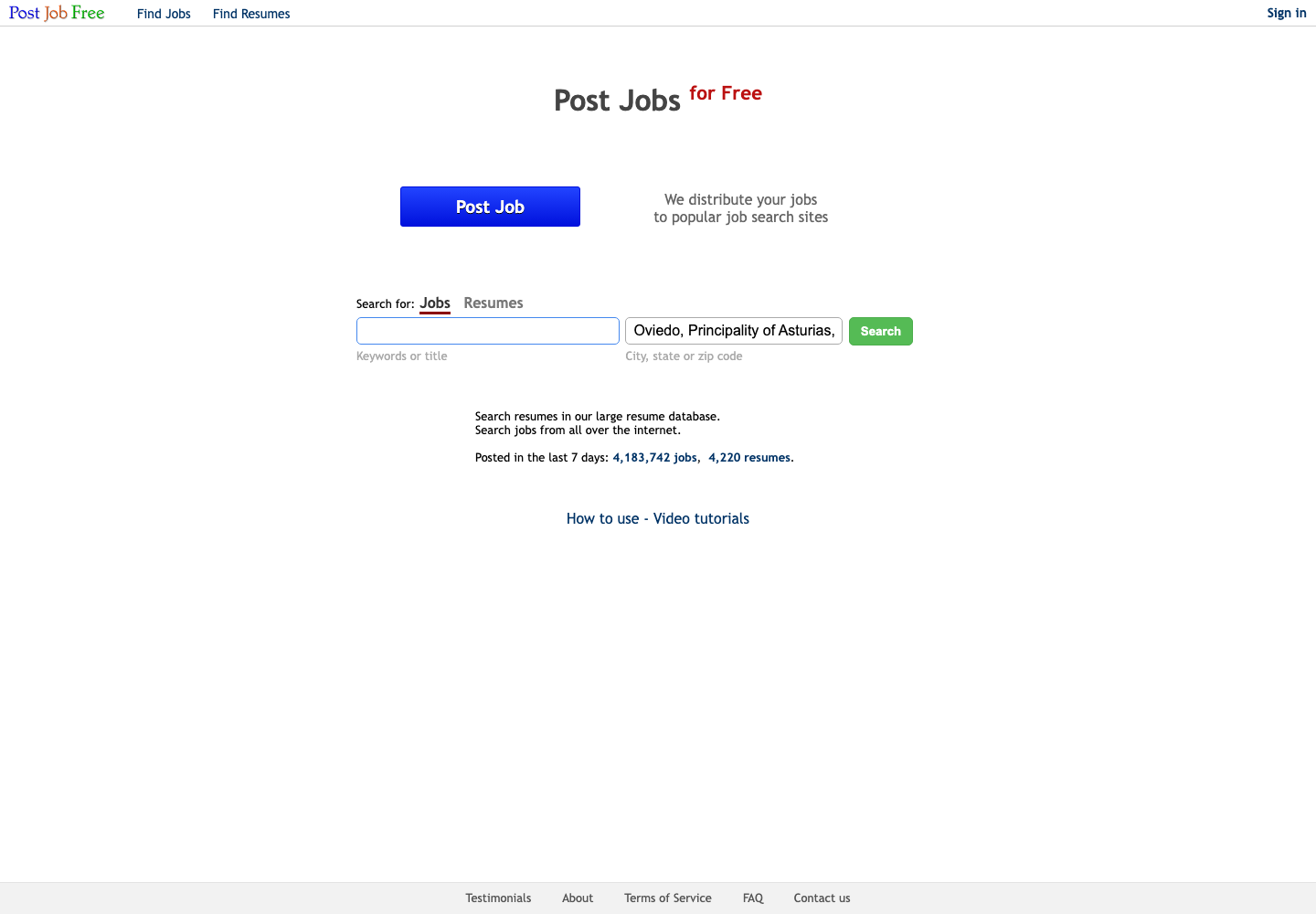
PostJobFree offers genuinely free resume search; a premium tier, reported from $29 per month, unlocks contact info and lifts messaging caps. Secondary sources credit it with a million-plus resumes.
Here is the number other roundups skip: when we checked in October 2026, its own live counter showed about 3,800 new resumes posted in the trailing week, against 4.7 million jobs in the same window. Wide stock, thin fresh supply.
Best for: occasional free lookups in general and hourly roles. Skip if: you need this week's active candidates.
8. Jobvertise: bulk browsing on a budget
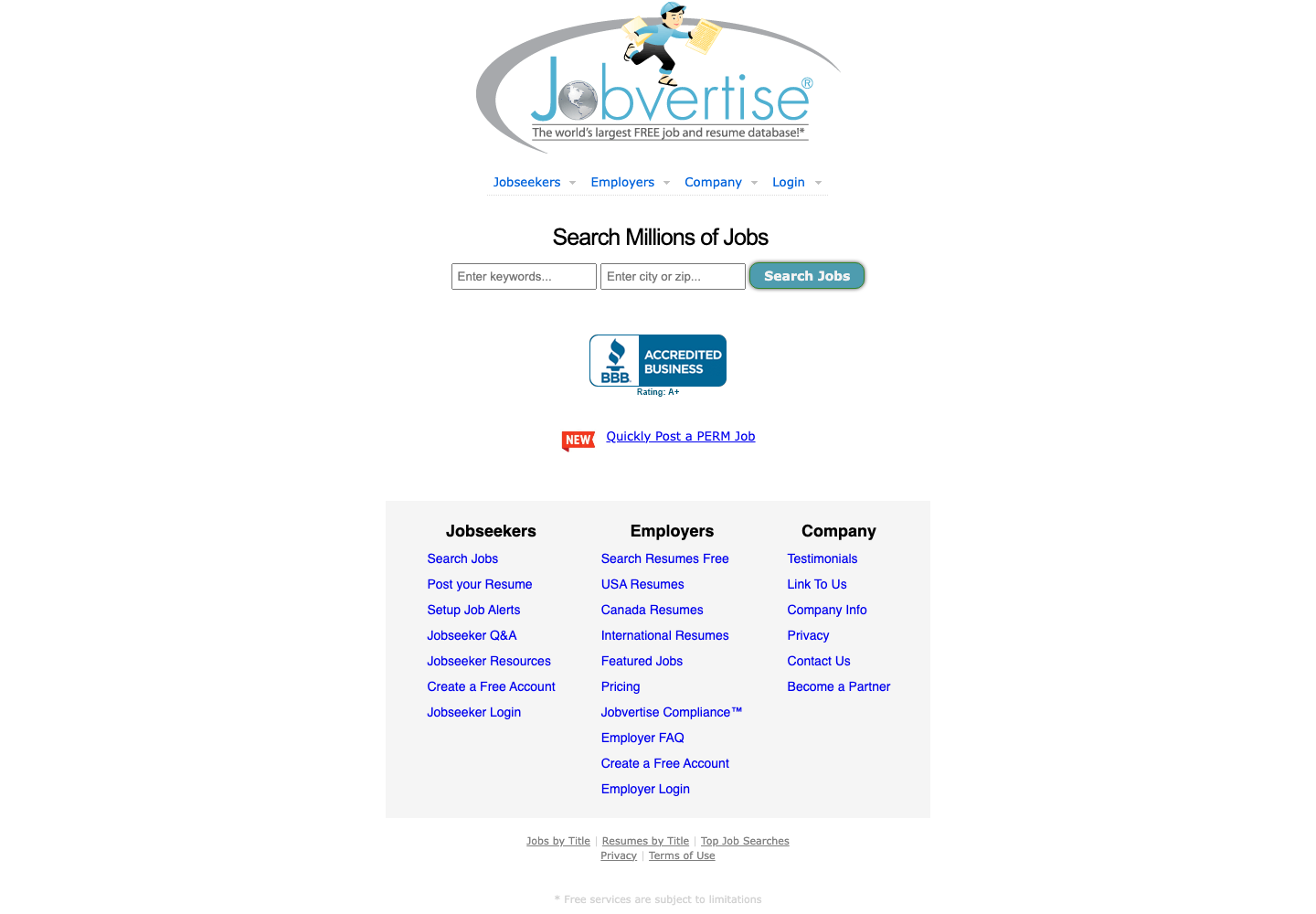
Jobvertise claims two million resumes and caps free accounts at about three resume views per day. Paid tiers are reported between $29 and $99 per month, though published figures conflict between sources, so confirm current pricing before you subscribe.
Best for: cheap bulk browsing in general and admin roles. Skip if: you need verified, current pricing and fresher profiles.
9. JobSpider: free since 2003
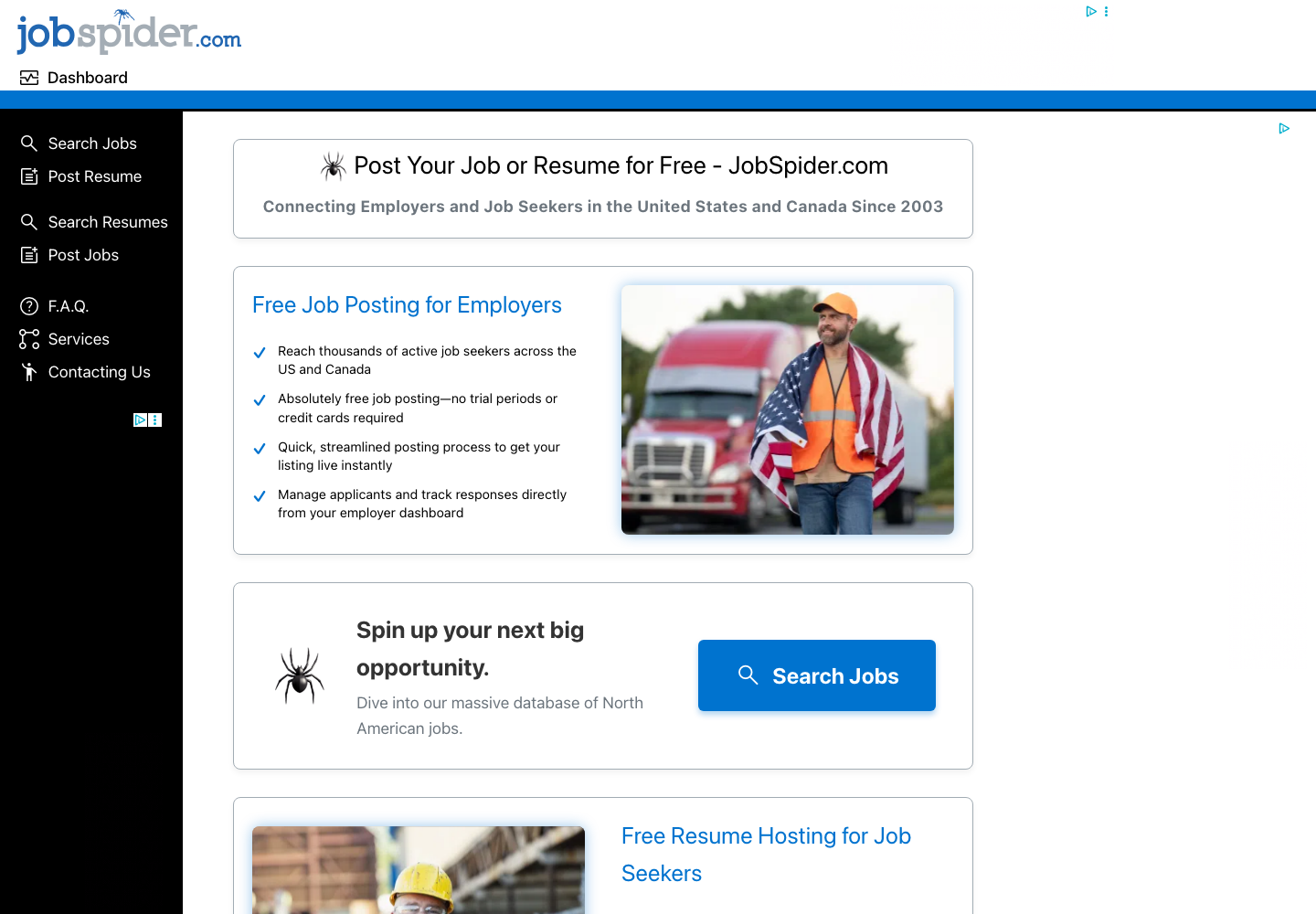
JobSpider has offered free job posting and free resume search since 2003, with no credit card and no trial clock. It publishes no database size, and we found no practitioner discussion of it anywhere.
Zero cost, zero guarantees: worth ten minutes of testing in your market, nothing more until it proves itself.
Niche resume databases for vertical hiring
When your roles cluster in one vertical, a smaller focused pool can beat a giant generic one. Rank these by use case, not overall strength.
10. Dice TalentSearch: tech and IT roles
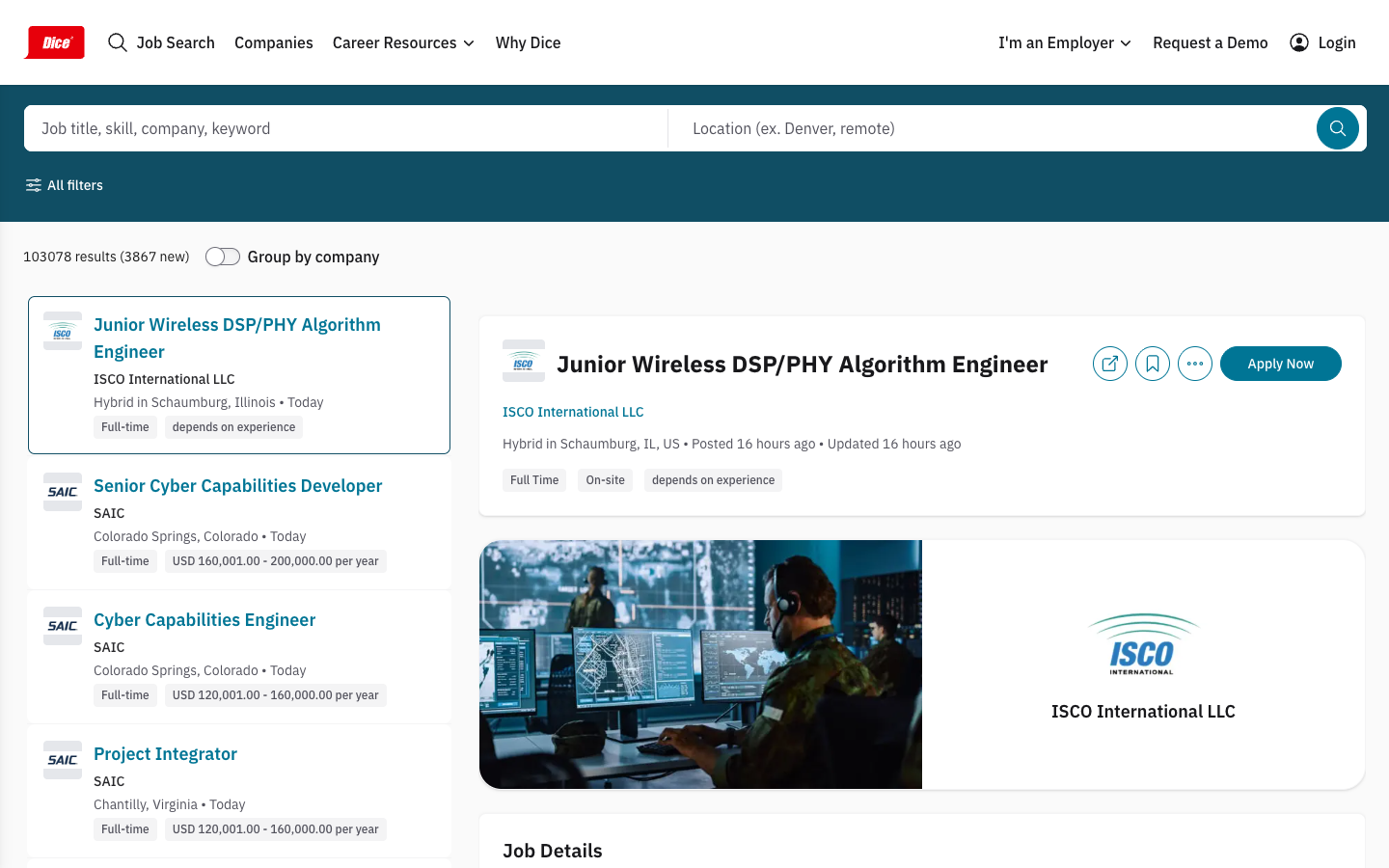
TalentSearch is Dice's candidate database of tech professionals. The Starter plan runs $649 per month, or $549 billed annually, and includes three job slots plus 250 candidate views; Standard at $899 doubles users and views.
One caveat from practitioners: for in-demand skills, recruiters have reported waves of fake or duplicate resumes and slow cleanup. Verify identity early in your process.
Best for: dedicated tech desks that also post jobs on Dice. Skip if: tech is a side dish in your req load; the entry price assumes daily use.
11. Wellfound: startup talent
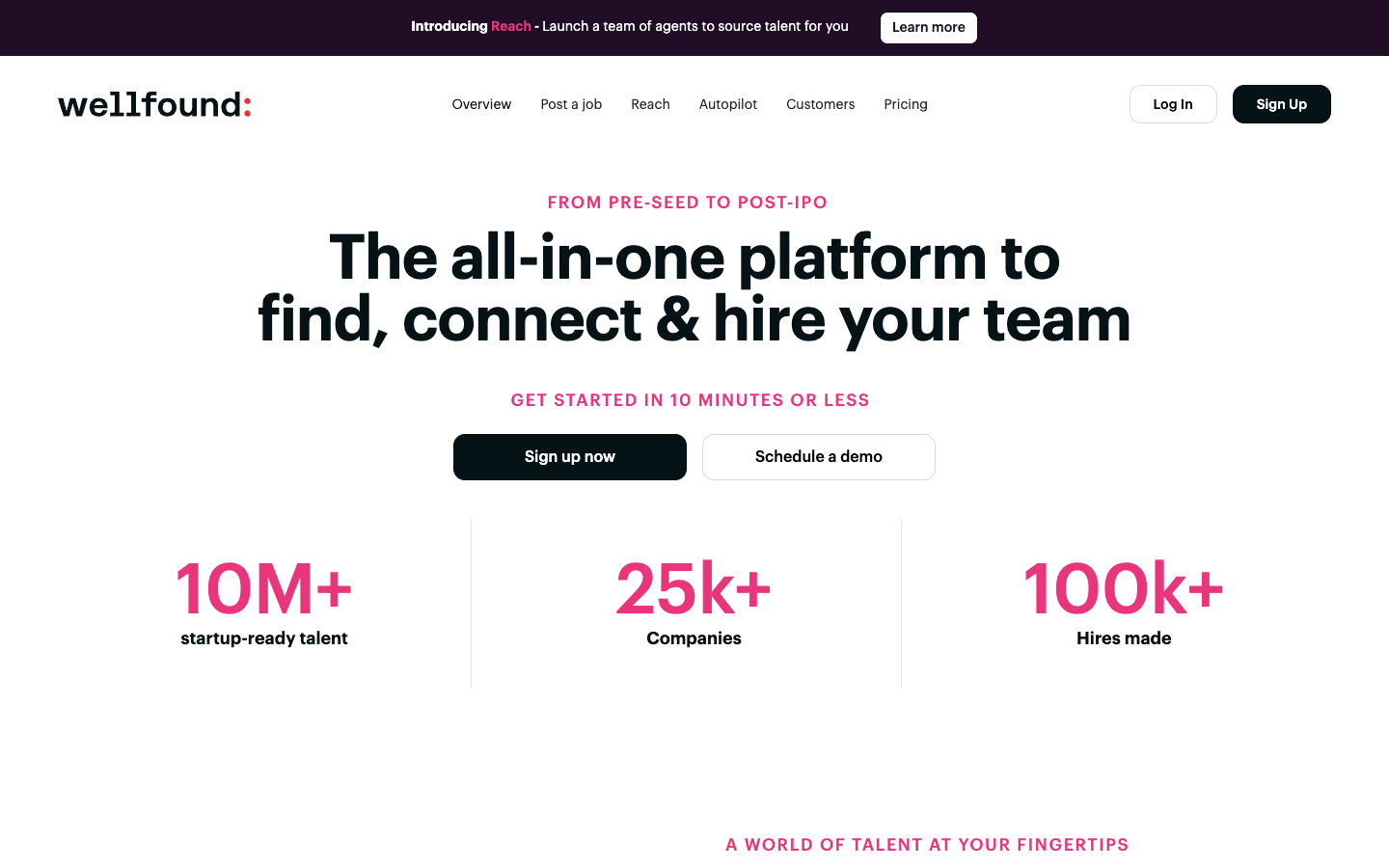
Wellfound, formerly AngelList Talent, is a startup-focused recruiting network where candidates signal openness to startup roles up front.
Basic access is free for employers; paid sourcing tiers are reported around $250 to $500 per month per seat, figures we could not verify on the vendor site this month.
Best for: startup roles where candidates expect equity conversations. Skip if: you hire outside tech and startups; the pool gets shallow quickly.
12. iHire: 57 industry communities
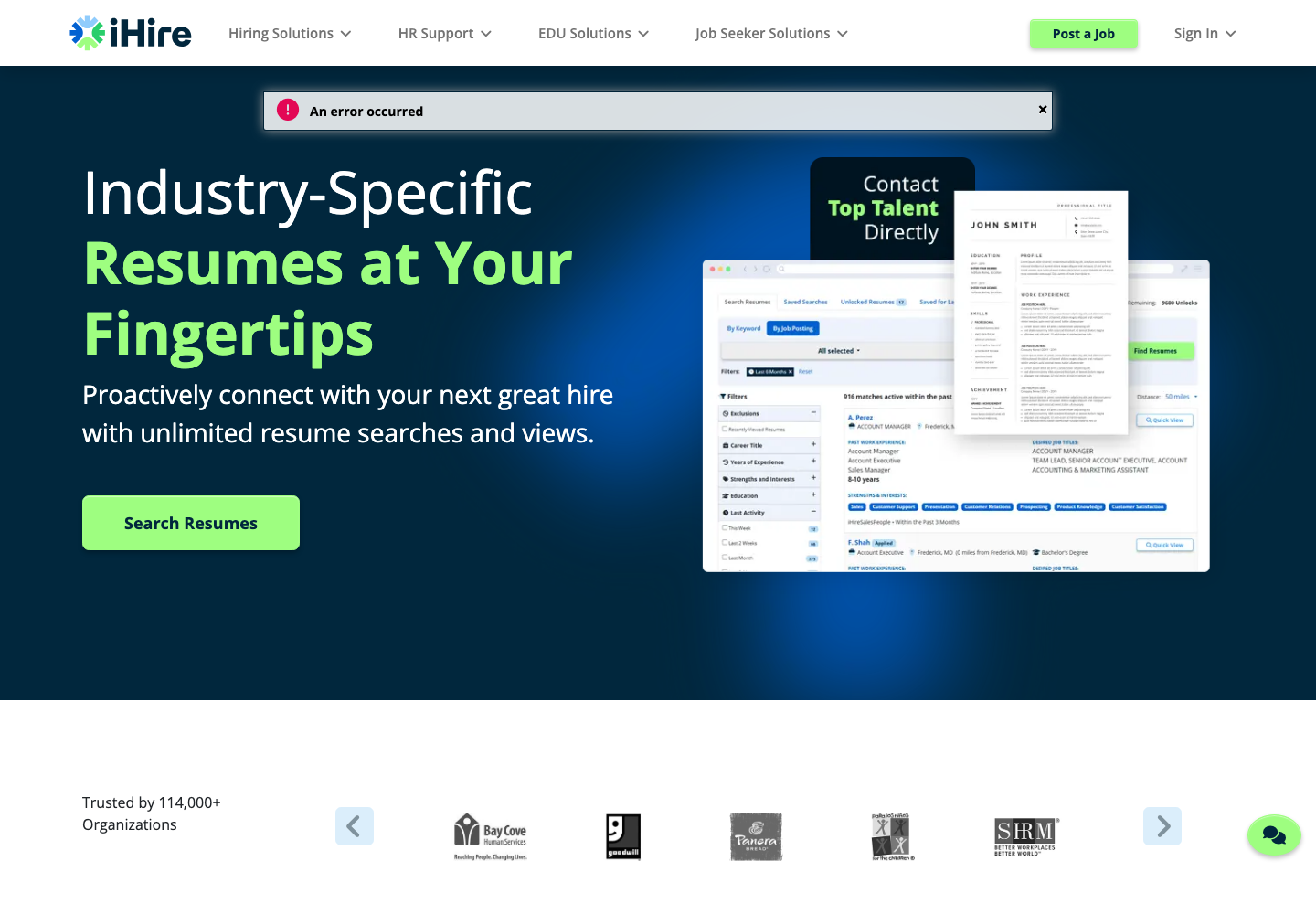
iHire runs 57 industry-specific talent communities with over 2.8 million resumes and unlimited searches and views, per its employer page. Pricing is quote-only, and practitioner reviews are scarce, so run a trial search in your vertical before committing.
Best for: single-vertical hiring like healthcare, trades, or accounting. Skip if: you want transparent pricing before a sales call.
Resume databases we cut, and why
A best-of list is only useful if it says what got cut. Four categories did not make it.
CareerBuilder. No longer a standalone product; its employer site redirects to Monster, and the database is covered under entry five.
Resume-Library. We could not reach the vendor site to verify anything this month. Secondhand sources report resume search around $199 per month, and the one detailed practitioner account we found described pushy follow-up calls after a trial click.
If you evaluate it, get current terms in writing.
"Free resume database" directories. Sites like OptNation rank well for this search, but their own posts claim wildly different database sizes for the same product, and the call to action is a lead-capture form rather than database access.
Community threads about free databases also skew toward scam warnings. Stick to named, verifiable sources.
Contact-enrichment and sourcing platforms. SignalHire, hireEZ, and similar tools sell contact data on scraped passive profiles, a different product from a database of submitted resumes.
Even hireEZ's own CEO has said publicly that database size is no longer what sets a product apart. 100Hires uses several of these providers, including SignalHire, inside Contact Enrichment, so you get the data layer without managing another subscription.
Broadbean, similarly, is search aggregation software across boards you already pay for, not a candidate pool.
How to choose a resume database for your situation
Price every option per reply, not per profile. A pool is only worth the candidates who answer, so track replies per 100 contacts for a month before you renew anything.
Rented access can also vanish: recruiters on r/recruiting describe Indeed resume search suspended for months during verification disputes. Keep every candidate you reach in a database you own.
You need 20 resumes this week for general roles. Indeed Smart Sourcing if the budget clears $520, ZipRecruiter unlocks if you already post there.
That is the most direct path to a rented pool when you need candidates immediately, though freshness still depends on the filters you use.
You want anything other than LinkedIn and Indeed. Recruiters ask this constantly, and true alternatives are scarce: Monster and the vertical boards above, or building a pool you own.
Even threads asking for alternatives tend to get answered with the same two names.
You run a tech desk. Dice plus X-ray search covers paid and free ends of the same pool.
You hire for startups. Wellfound first; candidates there already expect your comp structure.
Your budget is $0. X-ray search, PostJobFree, and the applicants already sitting in your inbox. That last group is the highest-intent free database that exists.
You source 200 to 300 resumes a month on a small budget. Do the per-contact math before subscribing anywhere. At $520 for 100 contacts, that volume is two to three times the plan's allowance, so get the overage price in writing before you commit.
A $49 ATS can be cheaper than repeated contact fees if your team consistently reuses sourced profiles across roles.
Resumes keep landing in your inbox and spreadsheets. Your problem is not access to more resumes; it is keeping track of the candidates you already have. The database worth buying is the one that organizes them.
FAQ
Where can recruiters search resumes for free?
Recruiters can search resumes for free with Google X-ray search using site: and filetype: operators. Other free or freemium options include PostJobFree (free search, paid contact info), Jobvertise, and JobSpider. If you already have past applicants, 100Hires can turn that existing pool into a searchable database with no per-resume unlock fee.
What is a resume database?
A resume database is a searchable collection of candidate resumes. There are two kinds: vendor pools you rent access to, like Indeed Smart Sourcing, ZipRecruiter, or Monster, and the database you build from your own applicants and sourced candidates. An ATS like 100Hires builds the second kind: it parses every incoming resume into a searchable profile you keep permanently.
What are the alternatives to LinkedIn and Indeed for finding resumes?
Genuine alternatives are scarcer than listicles suggest. Monster+ ($299/mo with credits) and vertical boards like Dice (tech), Wellfound (startups), and iHire (57 industries) are the main paid options; X-ray search and PostJobFree cover the free end. The other path is building your own pool: 100Hires turns applicants, uploads, and Chrome-extension finds into a database that does not depend on either giant.
Is a CV database the same as a resume database?
Yes. "CV database" is the UK and international wording for the same recruiter need: searching stored candidate CVs or resumes by skills, title, location, and keywords. 100Hires treats CVs and resumes the same after parsing, and the options above serve both searches.
Does 100Hires come with a database of candidates?
No. 100Hires does not sell access to strangers' resumes; it parses, deduplicates, and stores the candidates you add through applications, bulk resume upload, CSV import, or the Chrome extension. You own the result: no per-unlock fees, and the pool keeps growing with every job you run.
How do I keep a resume database fresh?
Staleness is the most common quality complaint recruiters raise about resume databases, paid or free. Three habits help: filter searches by last-activity date, dedupe on import so updates land on one profile, and re-engage past candidates on a schedule instead of only when a role opens. In 100Hires, Talent Pools hold those candidates and AI Score ranks them against each new job, so relevant past candidates are easier to review without rereading every resume.
Rent access while you need it, own the database as it grows
The pattern that works for most teams: rent a vendor pool when the pipeline is empty, and make sure every resume you touch lands in a database you own. Within a few hiring cycles, your own pool can answer more of your searches than the rented one.
Start a free 14-day 100Hires trial: no credit card, and every resume you add during the trial is parsed and searchable. Nothing is deleted the day the trial ends, but you need a paid plan to keep working with those candidates.
Inactive trial accounts are deleted three months after the trial ends.
Try 100Hires for free
No credit card. 14-day trial. Forbes Advisor #1 ATS for SMBs.