
Best executive search software: 11 tools compared for 2026
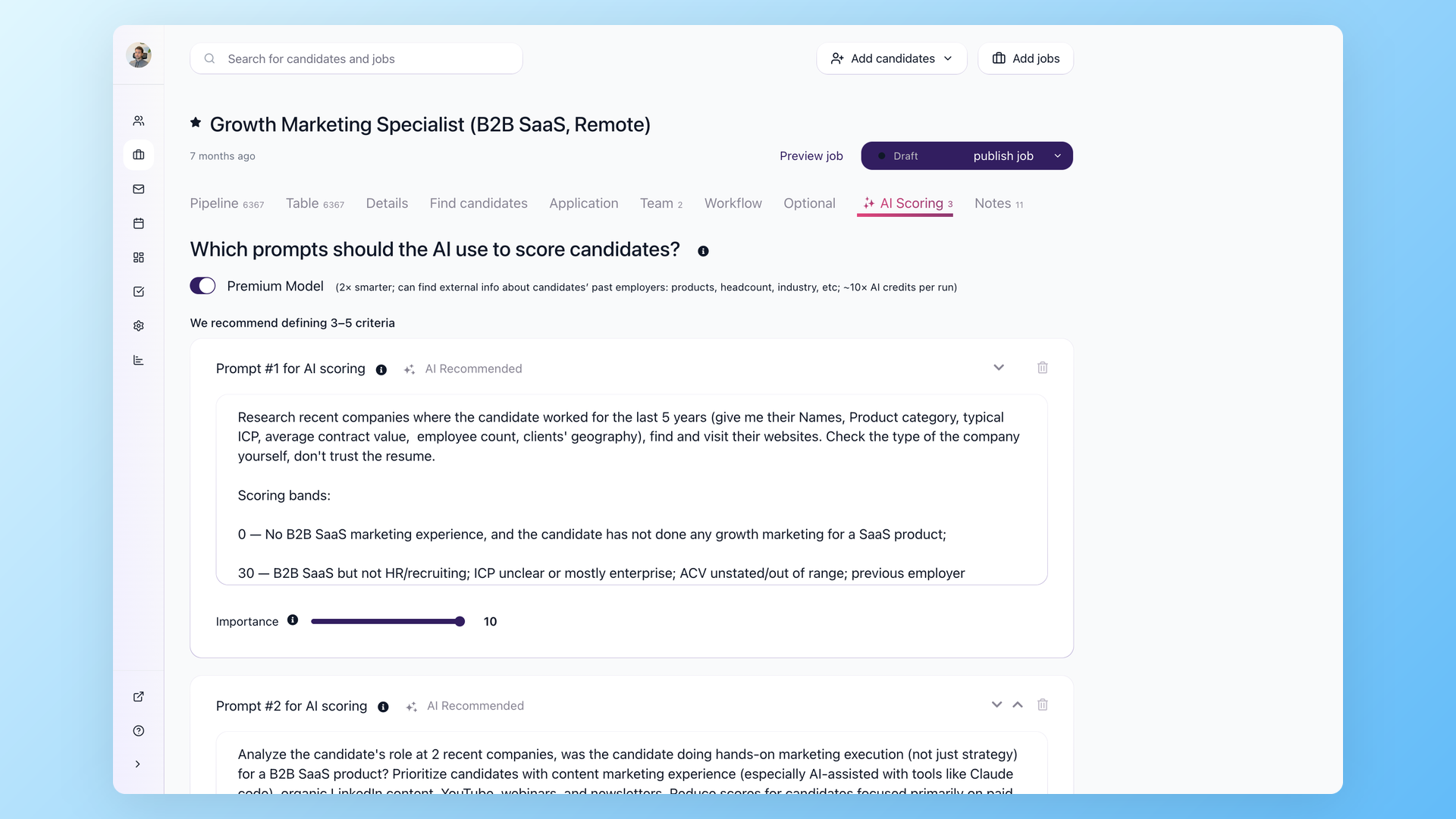
We checked the pricing page of every purpose-built executive search platform in this comparison. All six hide their prices.
This guide compares 11 executive search software options across three buyer types: in-house teams hiring executives directly, agencies that mix retained work with contingency, and dedicated retained search firms.
You get real numbers where they exist and a plain "not published" where they don't.
One more thing worth saying upfront: in-house executive recruiting is growing fast. Corporate teams increasingly use external talent intelligence in succession planning.
We publish our own tool's limitations here too. An honest comparison beats a brochure.
All 11 tools at a glance
The hiring playbook, in your inbox
One email a week - benchmarks, AI screening tactics, and short interview templates from the 100Hires team. No product pitches.
Here is the short version. Pricing checked on every vendor's live site in July 2026.
| Tool | Built for | Client portal | Sourcing + outreach | Pricing | Review base |
|---|---|---|---|---|---|
| 100Hires | In-house exec hiring, SMBs | No (candidate-side only) | Contact Finder, AI email | public $49-$499/mo flat tiers | G2 4.8 (1,341), Capterra 4.9 (1,157) |
| Pin | In-house teams, boutiques | No | AI sourcing + outreach | public $99-$249 (annual) | G2 4.8 (27, thin) |
| Recruiterflow | Agencies incl. search firms | Yes | Sequences, BD pipeline | public $119-$149/user | G2 4.6 (181), SA 4.7 (332) |
| Loxo | Agencies, search firms | Yes | Built-in sourcing database | public $0-$169/user | G2 4.6 (168), Capterra 4.5 (133) |
| Crelate | Staffing + search agencies | Yes | Email/text, sequences | public $85-$119/user | G2 4.4 (210) |
| Clockwork | Retained search firms | Yes, standout | Basic | custom quote | G2 3.6 (6, thin) |
| Ezekia | Retained firms, PE/VC | Yes | LinkedIn/email integration | custom quote | no public aggregate |
| Talentis | Research-led retained firms | Yes | Talent graph, auto-updating | custom quote | thin, partly vendor-seeded |
| Invenias by Bullhorn | Legacy retained firms | Yes | Outlook-centric | custom quote | GetApp 4.2 (15) |
| Thrive TRM | Enterprise firms, PE/VC | Yes | Benchmarking focus | custom quote | near zero (1 review) |
| Cluen Encore | Established boutiques | Yes | Database-centric | custom quote | positive but no aggregate |
Two patterns jump out. Every purpose-built retained-search platform sells through a demo, with no published pricing. And the more specialized the tool, the thinner its public review base gets.
Quick routing guide: hiring executives in-house, start with the first group. Running an agency that mixes retained and contingency work, jump to the second. Living on client mandates and weekly status reports, the purpose-built group is yours.
Want to see the in-house option first-hand? Start a free 14-day 100Hires trial, no credit card needed.
How we picked these tools (and how to read our #1 spot)
100Hires is our own product. We ranked it first, this article lives on the 100Hires blog, and you should weigh our assessment with that in mind.
For 100Hires, our positioning draws on product knowledge and paraphrased prospect conversations. For every other tool we lean on vendor pages, review platforms, and practitioner communities.
100Hires is newer to the executive search conversation than the incumbents here, so third-party quotes about us in this niche don't exist yet.
What we did: checked every vendor's live pricing page in July 2026, pulled ratings from G2, Capterra, and SoftwareAdvice, read practitioner threads across Reddit, YouTube, podcasts, LinkedIn, and X, and mined the competing roundups in the search results.
One honesty rule shaped the list. Where a tool's review base is thin, we say so instead of quoting a shiny score. One platform in this space advertises perfect satisfaction based on a single review.
We include Thrive TRM and Cluen Encore as the enterprise and legacy representatives of the purpose-built tier, not on review-volume strength.
Best executive search software for in-house teams
More companies now run executive searches themselves instead of paying retained fees for every leadership hire. The steady stream of job ads for in-house "Executive Search Partner" roles reflects that shift.
Harvard Business Review has put a price on getting this wrong: poor succession planning costs large companies real enterprise value.
An in-house team needs a candidate pipeline, structured evaluation across many stakeholders, and sourcing help. It does not need client billing or mandate tracking. Two tools fit that shape honestly.
1. 100Hires
Best for: SMBs and in-house teams running executive hiring themselves, plus boutique firms that want a lean candidate system without per-seat math.
Standout features: AI Score ranks every applicant against criteria you define per job, AI Copilot summarizes candidates from your notes, and AI Email Composer drafts personalized outreach and rejections.
For executive hiring the practical wins are Talent Pools for keeping warm relationships with senior candidates and Evaluation Forms for structured board and founder interview rounds.
Contact Finder handles personal-email enrichment, and Trackable links show which sourcing channel each finalist came from.
Limitations, honestly: 100Hires manages candidates, not client accounts. There is no client or company CRM, so a retained firm juggling mandates for ten clients needs a purpose-built platform from the third group below. And AI scoring shines with high applicant volume.
On a 12-person shortlist built from referrals, use the AI Copilot as a summarizer rather than a ranking engine; a numerical score means less with 12 candidates than with 600.
Pricing: flat tiers, not per seat. The Start plan is $99/month billed monthly or $49/month billed annually. Advanced is $249/$199, and Pro is $499/$399. The 14-day trial needs no credit card.
Search-firm owners keep asking for exactly this: one predictable fee instead of per-recruiter billing.
Review base: Forbes Advisor has featured 100Hires among its best recruiting software picks for startups and small businesses. Reviewers back it up: G2 4.8 across 1,341 reviews and Capterra 4.9 across 1,157 as of July 2026.
Verdict: the strongest pick on this list for hiring executives in-house, and honest about where it stops.
2. Pin
Best for: in-house teams that want AI sourcing plus a light ATS in one place and accept early-product risk.
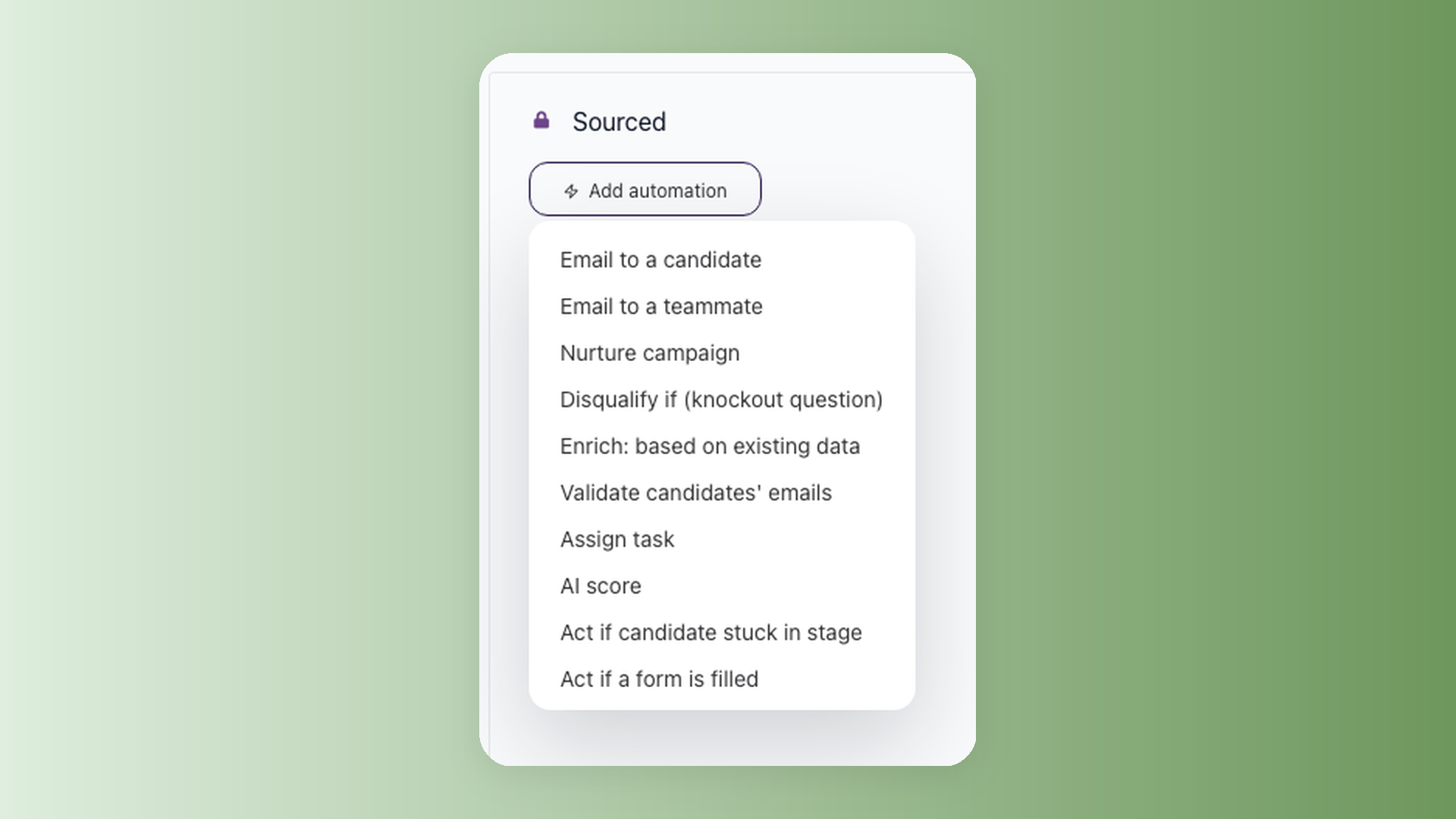
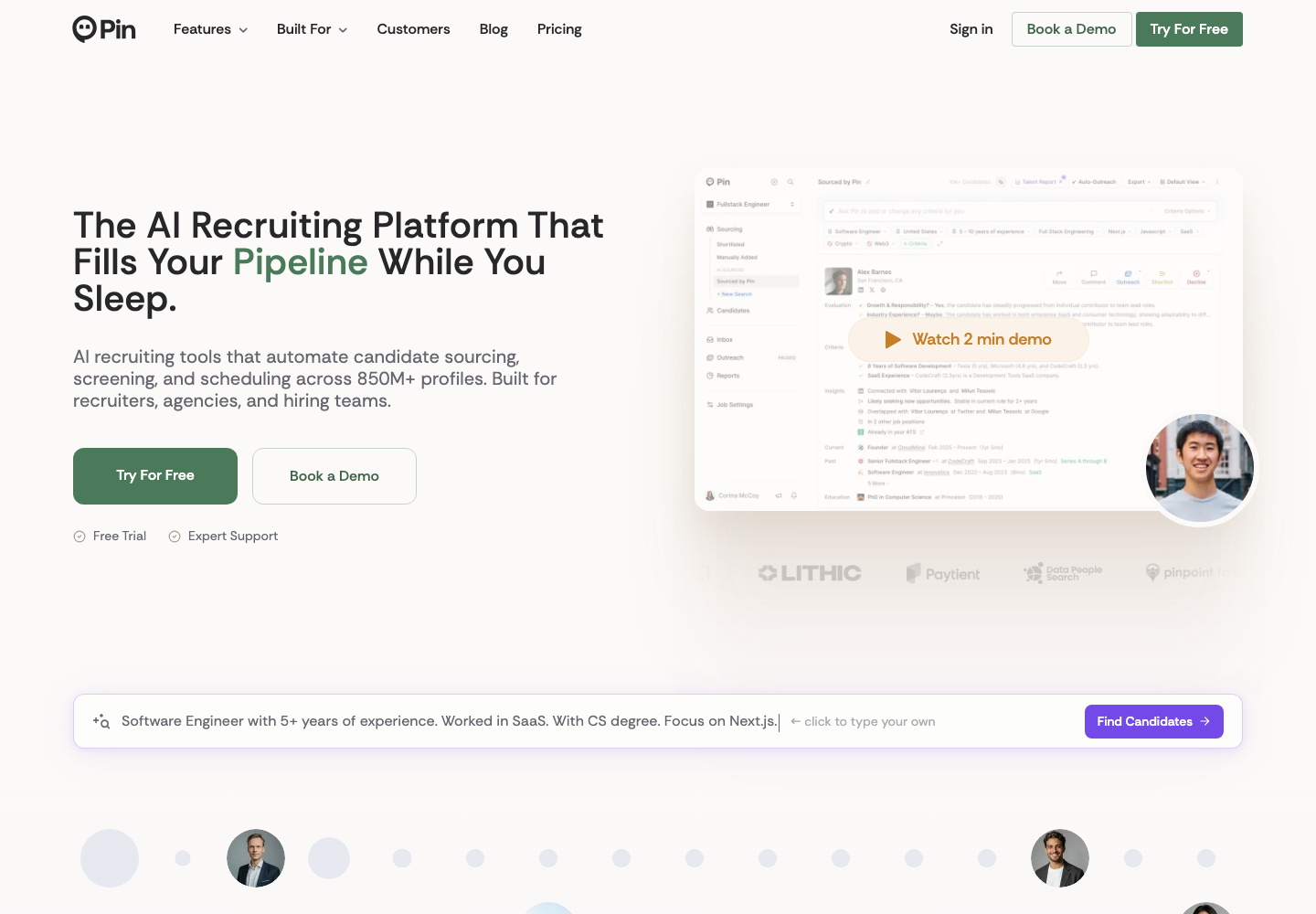
Standout features: AI-native candidate sourcing from a large aggregated profile database, multichannel outreach, and contact-lookup credits bundled into each seat. Practitioners who tried it single out outbound outreach as the strength.
Limitations: it is the newest entrant here, and much of its visibility is self-published. The company even ranks itself first in its own roundup of this category. Promising, not yet proven.
Pricing: published. Solo runs $99/month billed annually, Professional $149/user/month annually, Business $249/user/month annually, with monthly billing costing more.
Review base: G2 4.8 from 27 reviews, a thin sample, checked July 2026.
Verdict: worth a trial for sourcing-hungry in-house teams; keep expectations calibrated to a young product.
Best ATS and CRM cross-overs for agencies that run retained work
These three serve staffing agencies and search firms at the same time. They publish real per-seat prices, carry the deepest independent review bases in this comparison, and cover business development alongside candidate work.
The trade-off: they are broader tools, not retained-search specialists.
3. Recruiterflow
Best for: agencies mixing contingency and retained work that want heavy workflow automation.
Recruiterflow markets itself directly as an ATS and CRM for executive search, and claims more than 2,100 search firms as customers. In community threads it is the most common destination for agencies leaving heavier platforms.
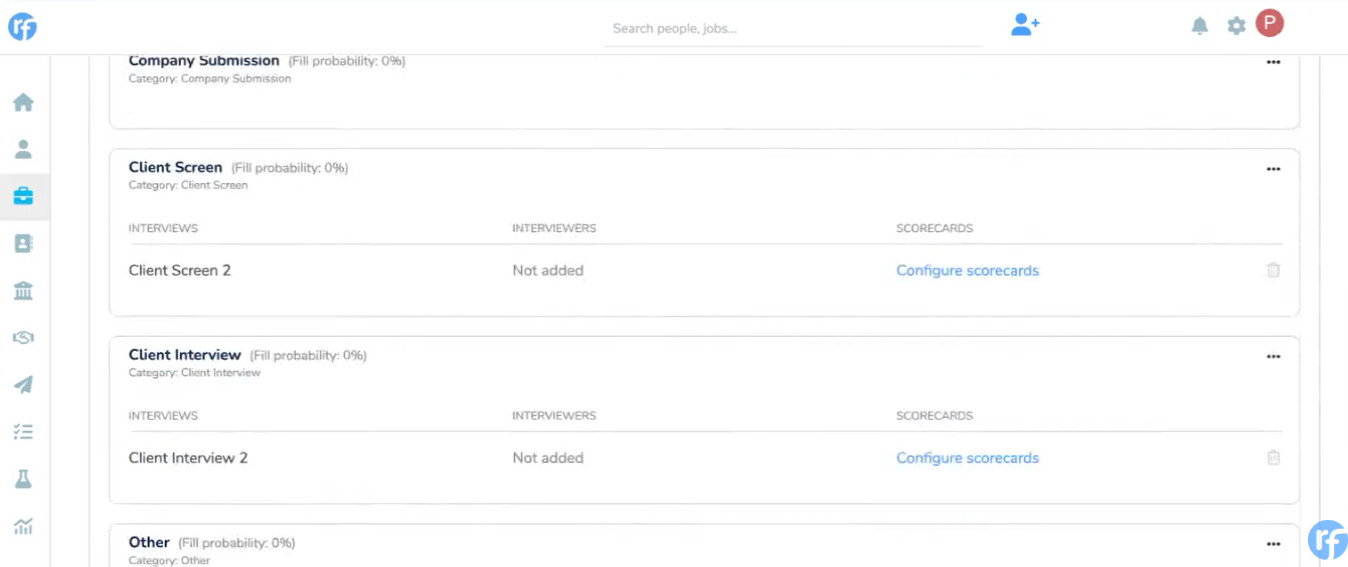
Standout features: automation recipes for follow-ups, email sequences, BD pipeline, and an AI assistant (AIRA) on the custom tier. Reviewers consistently mention responsive support.
Limitations: the contact-enrichment add-on bills per lookup and reviewers call it pricey, bulk uploads lock candidates to one stage at import, and a fair share of its loudest fans in forums turn out to work there. We discounted those posts.
Pricing: $149/user/month billed monthly, $119 annually. Review base: G2 4.6 across 181 reviews, SoftwareAdvice 4.7 across 332, the deepest in this list.
Verdict: the most credible all-rounder for a mixed-model agency.
4. Loxo
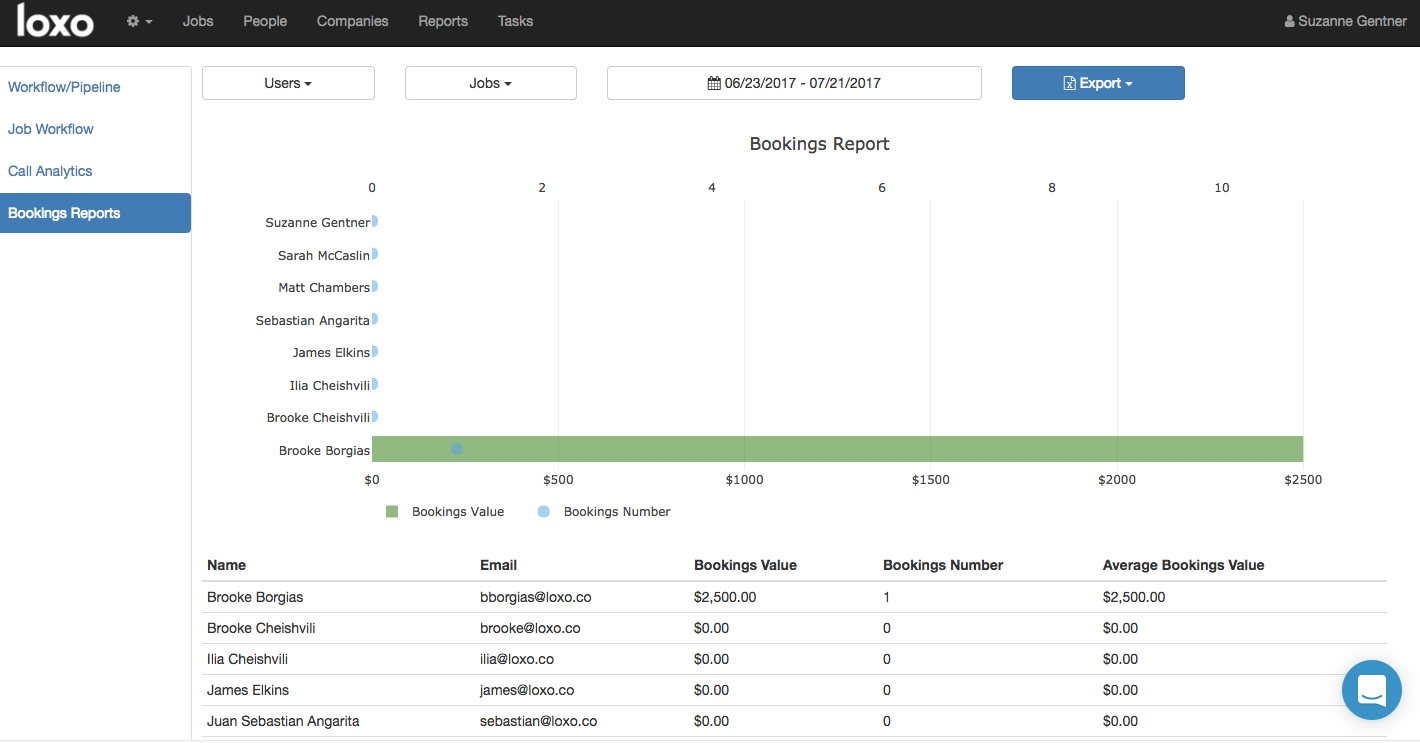
Best for: sourcing-heavy search firms that want ATS, CRM, and a candidate database in one platform.
Loxo is the polarizing reference point of this category.
Some of the most-followed voices in recruiting have called it the best ATS and CRM of their careers, and one chief people officer had an outside student team evaluate alternatives before deciding to stay put.
Standout features: built-in sourcing across a claimed 800M+ profile database, AI candidate matching, outreach campaigns, and a client-facing portal with configurable pipeline visibility.
Limitations: forum threads carry a recurring pattern of annual contracts that are hard to exit and pricing that creeps with add-ons. Sentiment splits sharply between devoted fans and burned ex-customers.
Pricing: a free single-user tier exists; Basic runs $169/user/month billed annually. Its own executive search page publishes no numbers and answers the cost question with a demo invitation. Review base: G2 4.6 across 168, Capterra 4.5 across 133.
Verdict: a real contender if you read the contract terms closely before signing.
5. Crelate
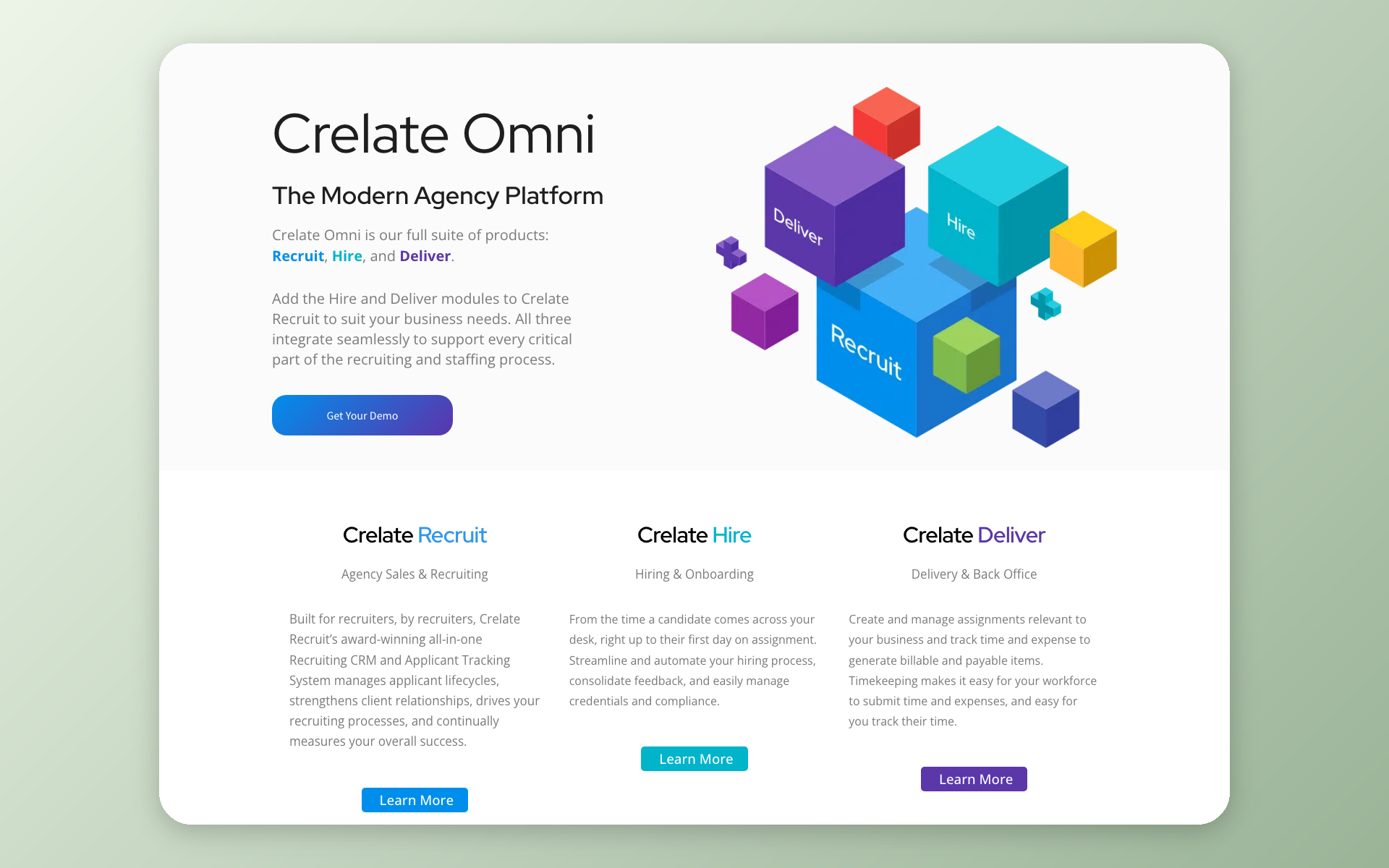
Best for: agencies that want a mature, configurable CRM at a mid-range price.
Standout features: drag-and-drop pipelines, strong email and text integration, deeply customizable fields and workflows.
Crelate is one of the few vendors in this space investing in practitioner content; its podcast is where much of the public executive search shop talk actually happens.
Limitations: the recurring reviewer gripe is the add-on model. Training and extras bill separately, so budget past the sticker price.
Pricing: Essentials $85/user/month billed annually, Business $119. Review base: G2 4.4 across 210 reviews.
Verdict: a solid middle path between a generic ATS and a retained-search specialist.
Purpose-built retained search platforms
Retained search runs on a different data model. The unit of work is the engagement, not the job requisition: moving from longlist to shortlist, tracking off-limits and conflicts, and sending a weekly client report that reads like "contacted 17, 15 declined, 2 progressing."
Every platform in this group includes those workflows. None of the six publishes pricing, so expect a demo-led sales process. And practitioners who lived through the pre-AI era describe these tools as hard to tell apart back then, with modernization arriving slowly since.
6. Clockwork Recruiting
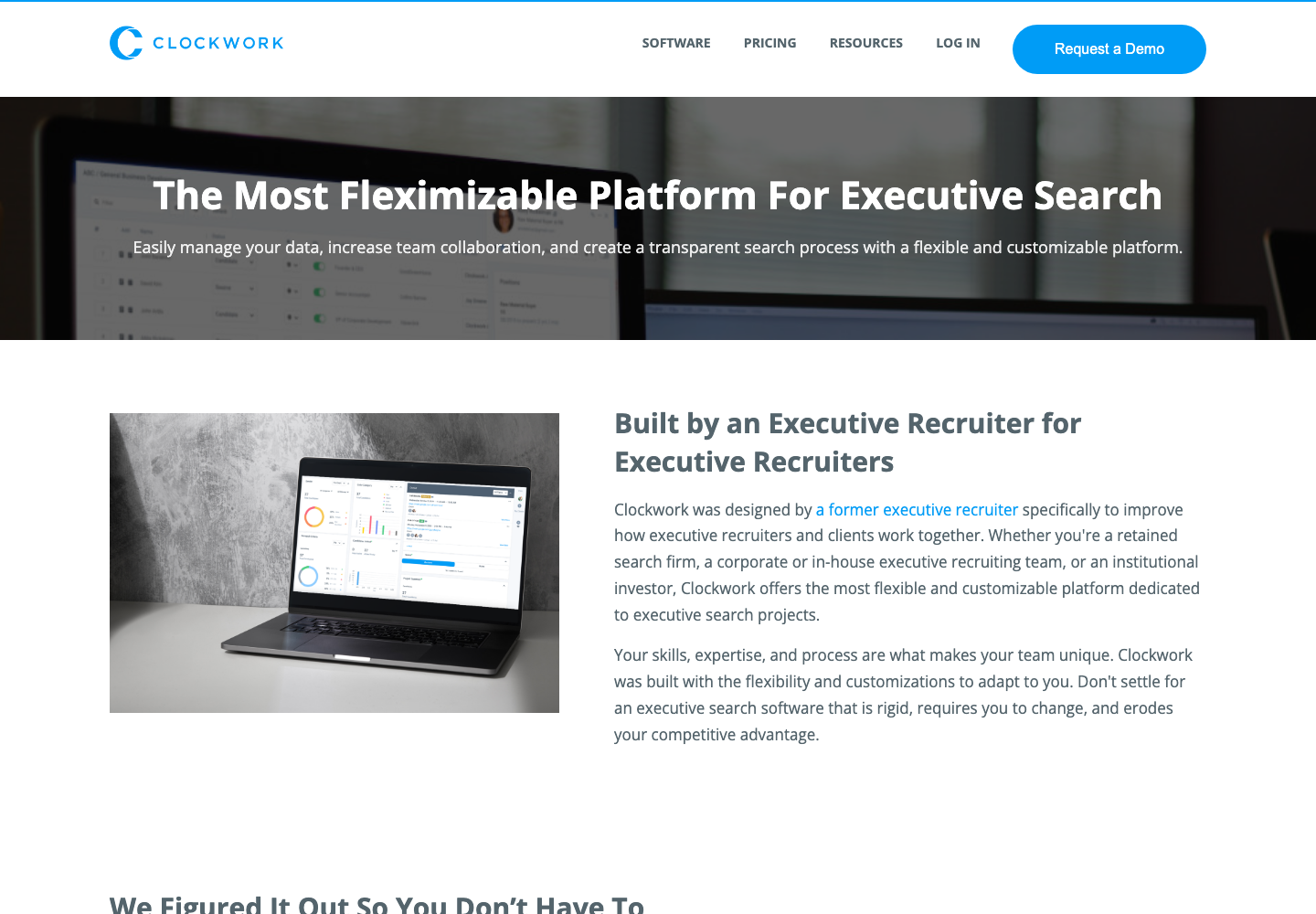
Best for: boutique retained firms where the client collaboration experience matters most.
Standout features: the client portal is its calling card. Even practitioners who picked competitors describe Clockwork's portal as the best they demoed. Search project management, team research workflows, and deal tracking round it out across Basic and Pro tiers.
Limitations: community threads describe aging technical foundations, lagging native AI, and reporting that feels dated. Analytics and the finance module sit on the higher tier.
Pricing: not published, demo-led. Review base: thin, G2 3.6 from 6 reviews as of July 2026.
Verdict: demo it for the portal; press hard on the roadmap and reporting questions.
7. Ezekia
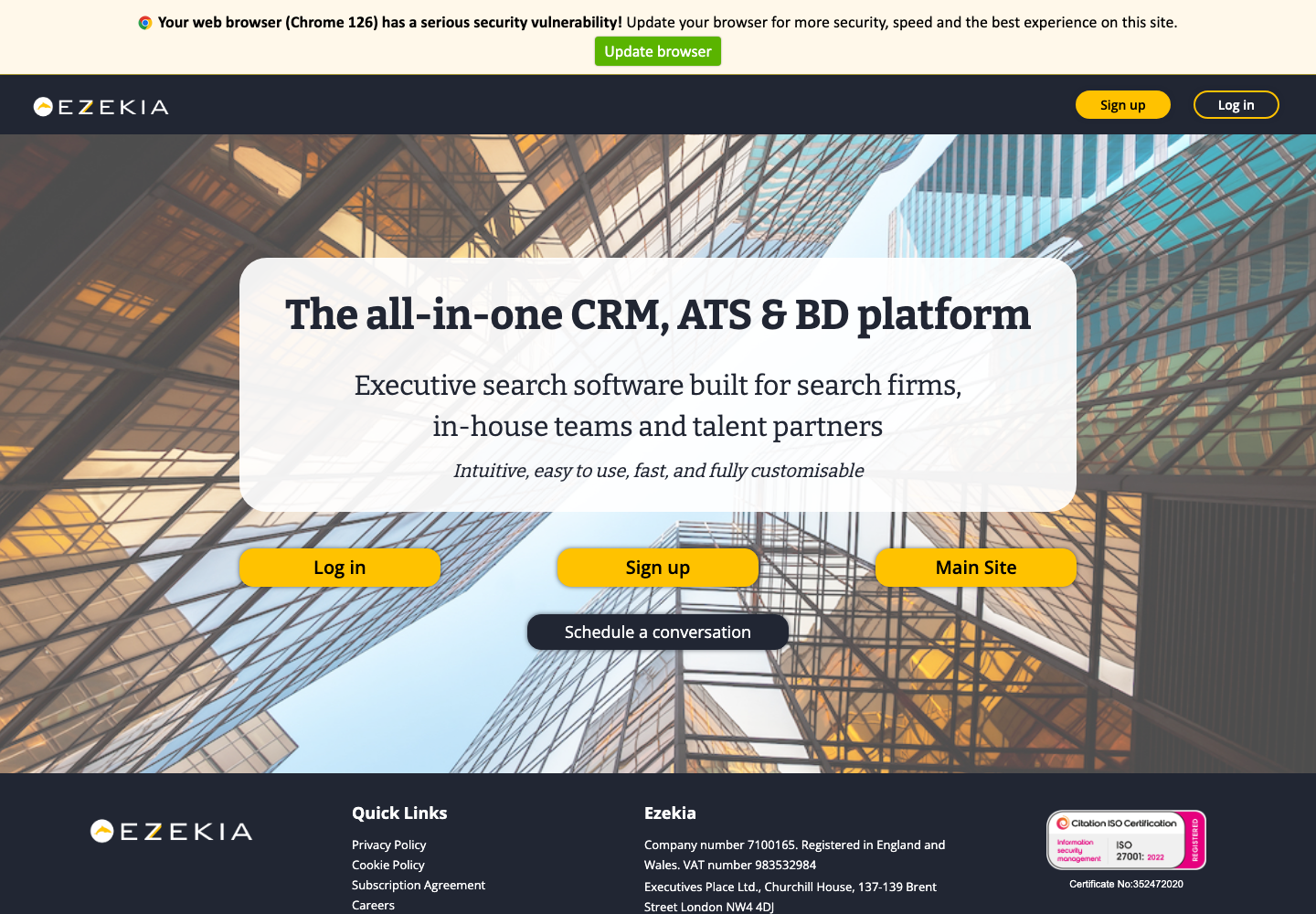
Best for: mid-size retained firms and PE/VC talent teams that want a serious mandate workflow.
Standout features: engagement-centric CRM built around mandates rather than job reqs, client portals, LinkedIn and email integration, and configurable fields, layouts, and reports. Reviewers describe it as easy to use with as much or as little detail per search as you want.
Limitations: a small retained firm inside a global search network evaluated it and found it more system than a small shop needs. It skews toward larger, more complex search operations. No built-in call transcription either, so notes stay manual or move to a third-party tool.
Pricing: not published, demo-led. Review base: near zero on G2; scattered positive listings elsewhere, checked July 2026.
Verdict: strong for structured mid-size search operations, oversized for tiny ones.
8. Talentis
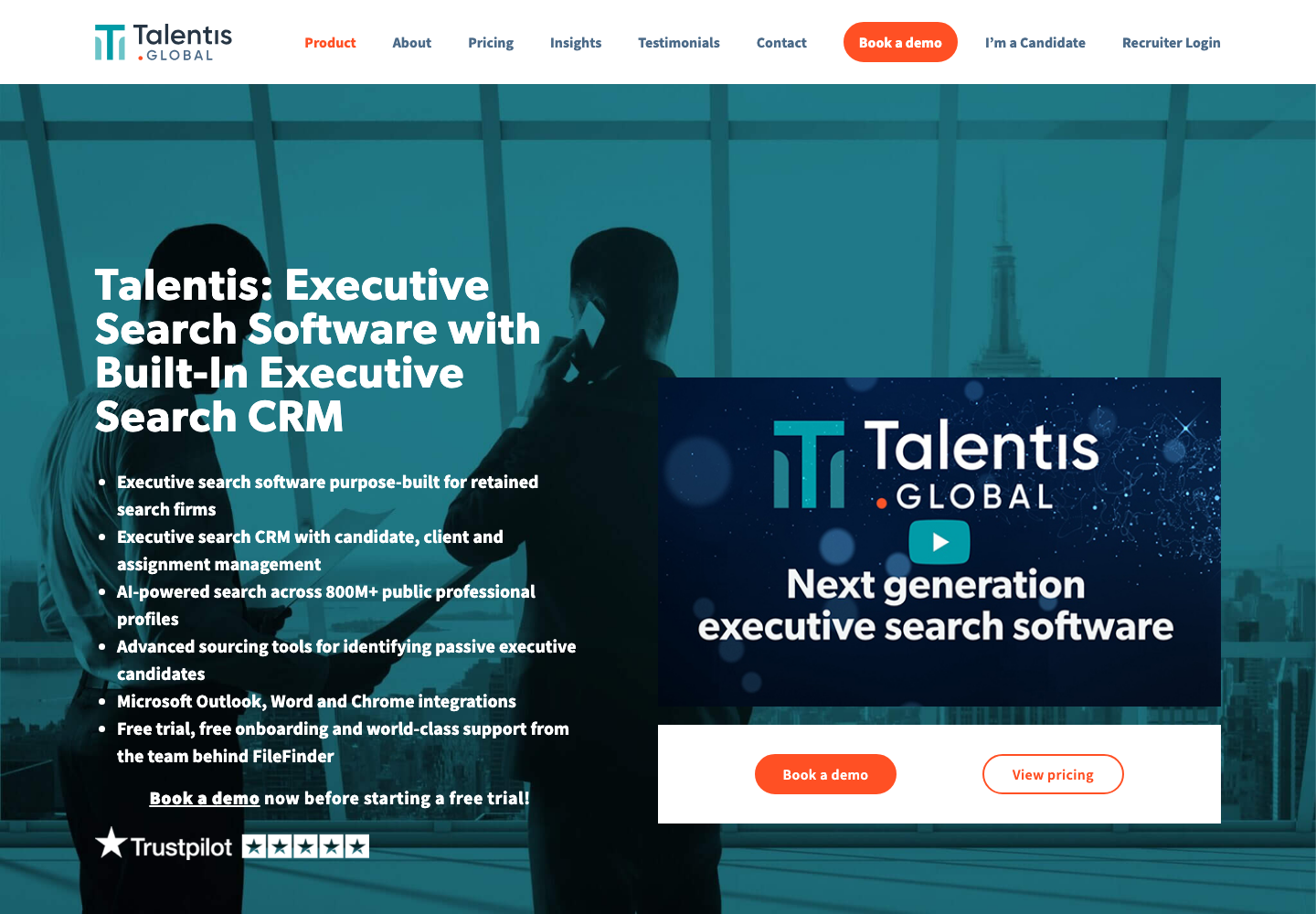
Best for: research-led retained firms that hate data entry.
Talentis and FileFinder are two products from the same supplier: Ikiru People, part of Dillistone Group. FileFinder is the desktop-era incumbent many firms still run; Talentis is the modern successor.
Standout features: talent-graph sourcing that builds and updates candidate records automatically. The vendor's own webinars name the category's biggest adoption trap: the demo shows a rich database, users get an empty one on day one, and adoption stalls during data entry.
Talentis is engineered around that exact problem. Retained users value the self-updating records.
Limitations: less useful outside pure executive search; outreach tooling trails the cross-over platforms above.
Pricing: not published, demo-led. Review base: thin and partly vendor-seeded; the same testimonial text appears on the vendor site and its review listings, so treat scores as directional.
Verdict: the most interesting modern option in the purpose-built tier.
9. Invenias by Bullhorn
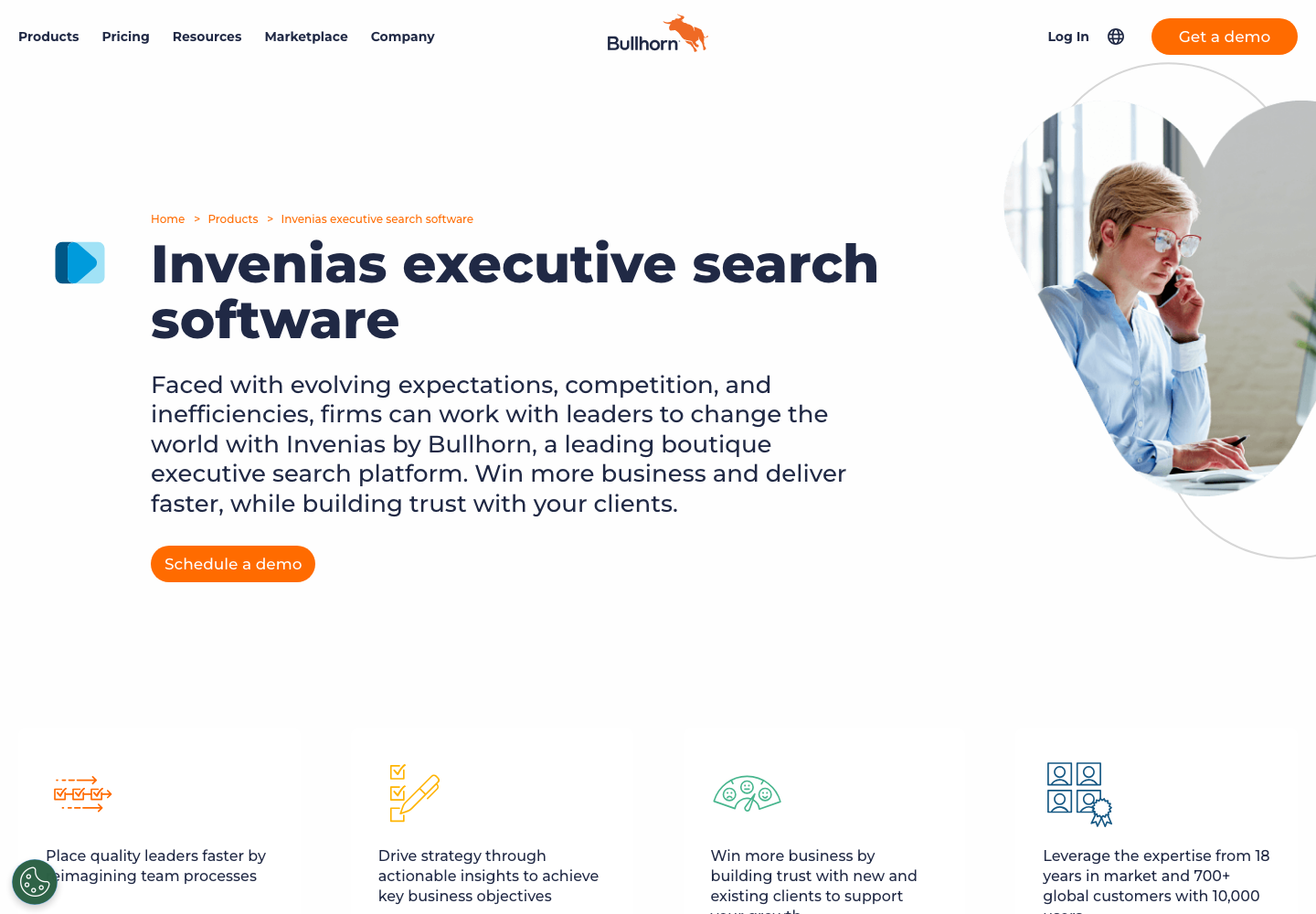
Best for: firms already deep in the Bullhorn ecosystem with an Outlook-centric workflow.
Standout features: the deepest Outlook integration in the category and long-tenured users who value exactly that. Bullhorn acquired Invenias in 2018, and it remains the enterprise legacy name in retained search.
Limitations: this is the reputational outlier of the list. Independent reviews converge on slow support, a dated interface, and paying extra to fix gaps. Practitioners say the product lost momentum after the acquisition.
Search firms in our own sales conversations say mapping a full search process in Bullhorn-family tools takes far too many clicks.
Pricing: not published, demo-led. Review base: GetApp 4.2 from 15 reviews, with unusually sharp negative language given the small review volume.
Verdict: evaluate the roadmap honestly before committing; its main advantage is that firms already have it in place.
10. Thrive TRM
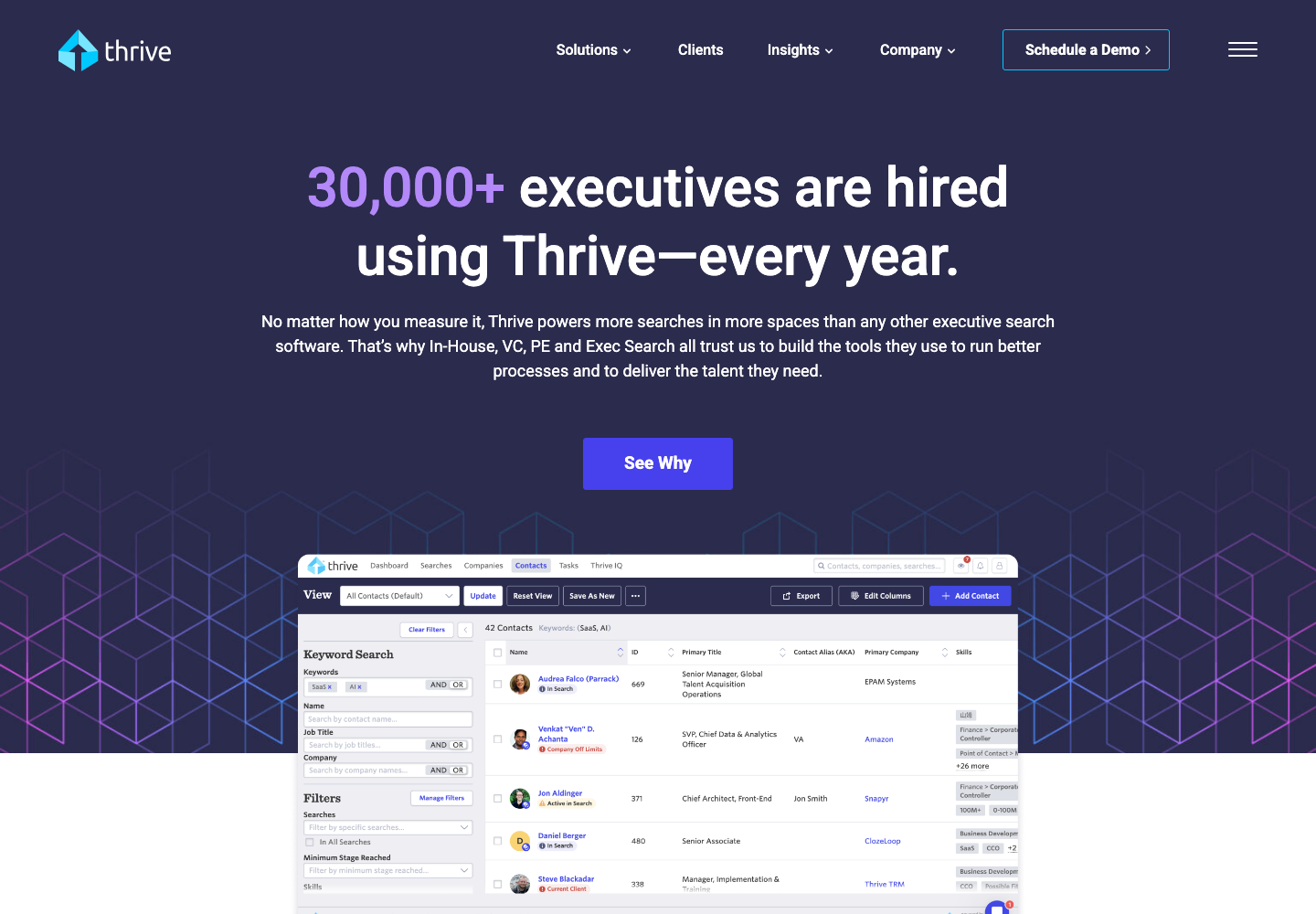
Best for: large search firms and PE/VC talent functions where benchmarking data justifies enterprise procurement.
Standout features: talent relationship management with built-in industry benchmarks: submission rates, time to shortlist, offer-to-acceptance. That data layer is the differentiator no boutique tool matches.
Limitations: enterprise-only procurement and multi-week implementations, and public review data is nearly absent, so validation runs on references rather than review sites.
Pricing: enterprise-only, order-form contracts, nothing published.
Review base: effectively none. One comparison site shows a perfect satisfaction score built on a single review. We include Thrive as the enterprise representative of this tier, stated openly.
Verdict: shortlist it if benchmarking is why you are buying and your procurement team is used to enterprise contracts.
11. Cluen Encore
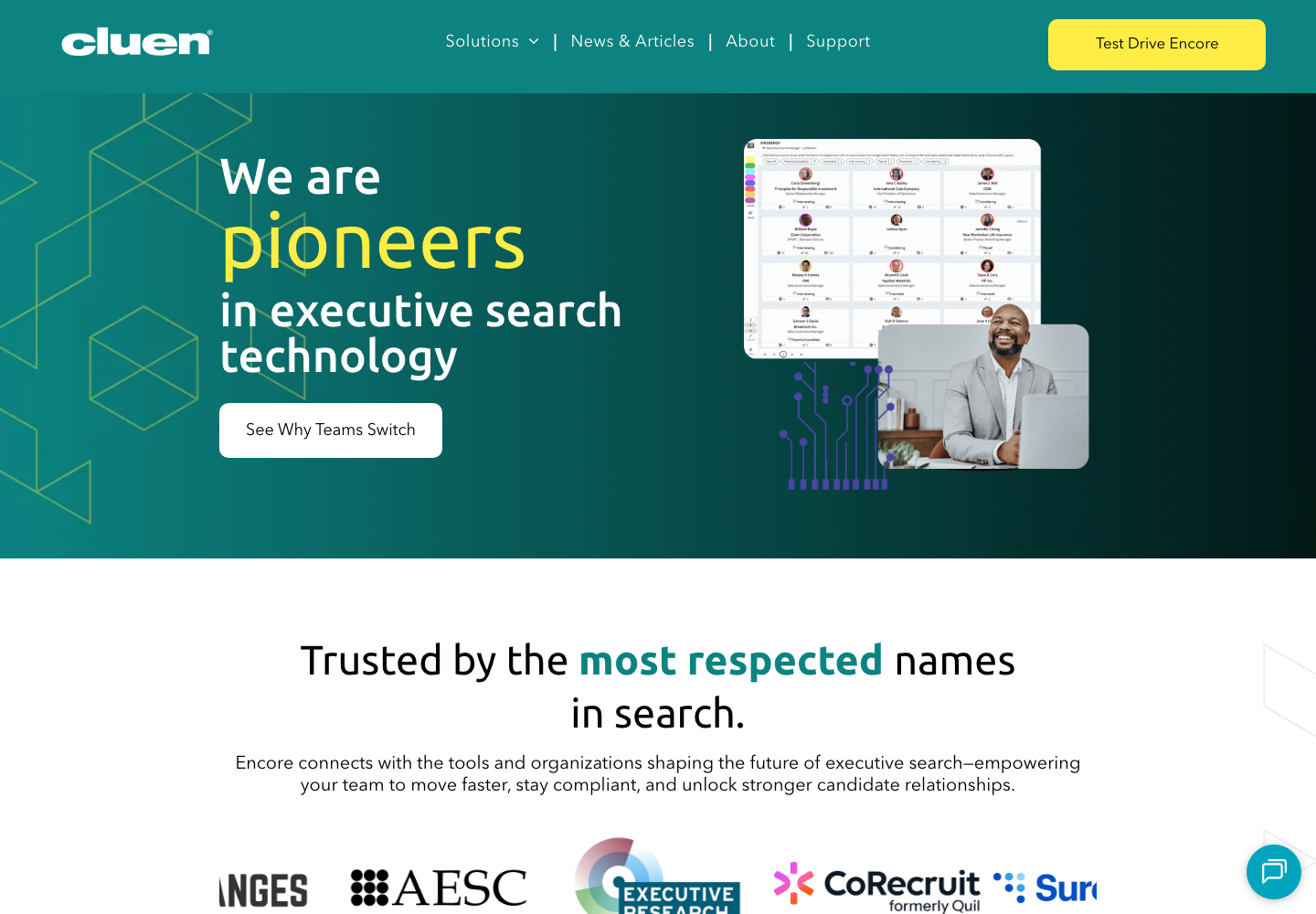
Best for: established boutiques that value stability over AI features.
Standout features: a purpose-built database for search firms and talent teams. Loyal users call the search-management experience intuitive and say the Cluen-hosted cloud gets issues fixed quickly.
Limitations: others in the community describe the platform family as dated, advanced features sit behind higher tiers, and monthly billing costs meaningfully more than an annual commitment.
Pricing: not published, demo-led. Review base: qualitatively positive on Capterra, no clean aggregate, checked July 2026. Included as the legacy representative of this tier.
Verdict: a stable choice, not a modernization pick.
Executive search CRM vs ATS: which one do you actually need
The two categories model different work. An ATS tracks candidates through jobs: requisition-driven, built for inbound applicants. An executive search CRM tracks engagements, client relationships, and long passive-candidate courtships where almost nobody applies.
Here is the honest decision rule. An in-house team hiring a handful of executives a year is well served by a lean ATS with talent pools; That is where 100Hires fits: candidate management, not client-account management.
A firm billing clients for searches needs a CRM-native platform from the purpose-built group.
Boutique firms mixing contingency and retained land in the middle: the cross-over tools cover both sides at a published price.
One gap practitioners keep flagging across the whole category: business development and marketing automation inside executive search CRMs stay weak, a decade after people started asking.
Choosing an ATS for a recruiting team more broadly? Our sister guide to the best ATS for recruiters covers that decision in depth. Or book a 100Hires demo to pressure-test the in-house route.
Tools we considered and left out
- True: a retained search firm marketing its internal platform, not software you can license
- Avature: enterprise talent suite, no public pricing, reviewer base skews toward large-enterprise buyers
- FileFinder: covered inside the Talentis section, same supplier, sibling product
- Metaview: excellent interview-intelligence layer that practitioners genuinely recommend, but it pairs with a CRM rather than replacing one
- Recruit CRM: solid agency tool with little executive-search-specific presence
- PCRecruiter: long-standing agency ATS with near-zero visibility in executive search evaluations
- Gem: enterprise in-house sourcing, different buyer
- Greenhouse and Workable: corporate ATSs built for requisitions, not mandates
How to choose executive search software: a five-point checklist
- Demand a data-migration plan. The demo database is full; yours starts empty. Adoption dies in week-one data entry, so get the import path in writing.
- Test the client-reporting workflow. Recreate the exact weekly status report you send clients. If it takes exports and spreadsheets, keep looking.
- Match the pricing model to your size. Per-seat fees of $85-$300/user/month add up fast for small teams. Flat-tier and free-entry options exist; use them as leverage.
- Separate real AI from bolted-on AI. Ask to see scoring and summarization on your own data. Seasoned recruiters wait for several independent recommendations before adopting any new tool.
- Read the exit terms before signing an annual contract. The loudest complaints in this category are contract complaints, not feature complaints.
FAQ
What is executive search software?
Executive search software manages leadership hiring: sourcing passive senior candidates, moving a longlist to a shortlist, and reporting progress to clients or stakeholders. Purpose-built platforms add a client CRM and mandate tracking; an ATS like 100Hires covers the candidate-tracking side for in-house executive hiring.
What is the difference between an executive search CRM and an ATS?
An ATS is requisition-driven: candidates apply and move through job stages. An executive search CRM is engagement-driven: it tracks client mandates and long passive-candidate relationships. 100Hires is an ATS with Talent Pools for relationship building; Clockwork, Ezekia, and Talentis are mandate CRMs.
How much does executive search software cost?
Transparent vendors in this list run $49 to $499 per month, with annual billing at the low end of each range. 100Hires starts at $49/month billed annually as a flat tier, not per seat. Per-seat tools like Crelate ($85/user) and Recruiterflow ($119/user) scale with headcount. Purpose-built retained platforms publish no pricing at all and sell through demos. We checked this in July 2026.
Can a small firm or in-house team run executive search without dedicated software?
At low volume, yes. An ATS with talent pools and structured evaluation covers a few leadership hires a year; the 100Hires 14-day trial at https://100hires.com is a low-risk way to test that. Dedicated platforms earn their cost once client mandates, conflict tracking, and weekly client reporting enter the picture.
Do executive search firms use AI?
Adoption is real but uneven. AI already helps with sourcing, note-taking, and candidate summaries, and larger firms move more slowly, held back by privacy and call-recording compliance. Judgment, references, and trust stay human. In 100Hires, AI Copilot summarizes candidate records and interview notes into a brief you can hand to a board.
What CRM do executive recruiters use?
Retained firms use mandate CRMs like Clockwork, Ezekia, Talentis, or Cluen Encore. Agencies mixing models pick cross-overs like Recruiterflow, Loxo, or Crelate. In-house executive recruiters usually skip client CRM entirely and run an ATS with talent pools such as 100Hires.
Is executive search software the same as hiring an executive search firm?
No. Korn Ferry, Spencer Stuart, Heidrick and Struggles, Egon Zehnder, and Russell Reynolds are service firms, not software vendors. Software is a monthly subscription your own team runs. Teams bringing searches in-house with an ATS like 100Hires pay tool costs instead of placement fees.
The bottom line
Hiring executives in-house or at an SMB: start with 100Hires, the published pricing and AI screening carry most of the value. Running a mixed agency: demo Recruiterflow or Loxo. Living on retained mandates: Clockwork and Ezekia deserve your demo slots.
And whatever you pick, make the vendor show you pricing before they show you slides. We are the candidate-side tool in this list, not a mandate CRM, and we would rather tell you that here than in month three. Try 100Hires free for 14 days or book a demo.
Try 100Hires for free
No credit card. 14-day trial. Forbes Advisor #1 ATS for SMBs.