14 Best ATS for Recruiters in 2026 (Pricing, G2, Quotes)
The best ATS for recruiters depends on who you are. In-house teams, staffing agencies, and solo recruiters need structurally different tools, and most listicles ignore that. We split the 14 picks by use case so you stop comparing apples to staffing CRMs.
This list covers 14 applicant tracking systems with pricing we could verify on the vendor's own page, real G2 ratings, and quotes pulled from Reddit, LinkedIn, podcasts, and YouTube creators recruiters actually watch.
Our pick for fast setup and AI-first hiring is 100Hires. For a broader category snapshot see G2's ATS category.
Quick comparison: 14 ATS for recruiters at a glance
The hiring playbook, in your inbox
One email a week - benchmarks, AI screening tactics, and short interview templates from the 100Hires team. No product pitches.
Here is the short version. Full reviews and decision guidance follow below the table.
| Tool | Best for | Type | Pricing transparency | G2 rating | Free trial |
|---|---|---|---|---|---|
| 100Hires | Fast setup + AI-first hiring | In-house | Public from $49/mo | 4.8 (1,139) | 14-day, no card |
| Breezy HR | Small in-house teams under 20 employees | In-house | Public $0-$439/mo | 4.4 (683) | 14-day, no card |
| Pinpoint | Candidate experience and employer brand | In-house | Custom quote | 4.7 (116) | Not advertised |
| Teamtailor | Branded careers and content-driven hiring | In-house | Custom quote | 4.6 (375) | Not advertised |
| Manatal | Staffing and recruitment agencies | Agency | Public $15-$55/user/mo | 4.8 (147) | 14-day, no card |
| Dover | A free ATS for startups and solo recruiters | Solo / in-house | Public $0 / $199/mo | Not surfaced | Free tier |
| Recruiterflow | Staffing and executive search agencies | Agency | Public $149/user/mo | 4.6 (155) | Not advertised |
| Tellent Recruitee | Collaborative cross-functional hiring | In-house | Custom quote | 4.5 (306) | Free trial |
| Gem | AI-first sourcing on LinkedIn | In-house | Public $135/mo Startups | 4.7 (269) | Not advertised |
| Workable | All-in-one ATS plus light HR | In-house | Public $299-$719/mo | 4.5 (680) | 15-day, no card |
| Lever | Mid-market in-house teams | In-house | Custom quote | 4.3 (1,366) | Not advertised |
| BambooHR | HR-suite that includes ATS | In-house | Custom quote | 4.4 (3,758) | 7-day |
| Greenhouse | Mid-market and enterprise (500+ employees) | In-house | Custom quote | 4.4 (3,663) | Not advertised |
| Ashby | Analytics-driven recruiting ops | In-house | Public $400/mo Foundations | 4.7 (~100) | Not advertised |
For pricing details on the tool we know best, see 100Hires pricing. For everything else, the methodology and individual reviews follow.
How we picked these 14 ATS
We worked from real numbers, not vibes. Here is what went into this list.
- 9 of the top 10 SERP results deep-fetched, with H2 patterns, FAQ questions, and tool counts cross-referenced
- 13 Reddit threads across r/recruiting, r/Recruitment, r/AskHR, r/smallbusiness, and r/humanresources covering 4 recruiter personas (in-house, agency, solo, SMB founder)
- 8 YouTube transcripts pulled from creator channels recruiters actually watch
- 5 podcast episodes including Loxo's "Becoming a Hiring Machine" #249 and "You Own the Experience" with Bill Corwin (CIO)
- 12 Twitter quotes plus 2 threads, 12 LinkedIn posts curated from 600 keyword-search results, customer-call insights from our own sales-call transcripts (paraphrased to protect prospect privacy)
- Vendor pricing pages cross-checked for every tool in the list, with G2 ratings for 14 of 15 candidate tools and Capterra ratings where they were publicly surfaced (13 of 15)
100Hires is our own product. We have ranked it first since this article is published on the 100Hires blog, and we want you to know that upfront so you can weigh our assessment accordingly.
100Hires is newer to the public review-roundup circuit than the SERP-dominant tools, so the YouTube and podcast quotes you'll see throughout this article do not yet include us. For 100Hires, our positioning draws on our own product knowledge, internal battlecards, and paraphrased prospect calls; for every other tool we lean on vendor pages, third-party reviews, and the practitioner sources cited above.
Tools considered but excluded:
- JazzHR - covered by similar SMB-tier tools, low LinkedIn practitioner signal
- Zoho Recruit - most-mentioned in YouTube creator content, but the marketing footprint skews agency-creator coverage rather than in-house buyer evidence
- Workday - consistent negative Reddit signal (25 negative mentions in our harvest), enterprise-only fit
- iCIMS - enterprise-implementation profile, off-SMB (the LinkedIn implementation stories we surfaced run multi-month)
- Bullhorn - staffing-agency ecosystem with its own dedicated comparison territory; deserves a separate agency-ATS roundup
- Crelate - boutique agency single-segment, low SERP signal for this generic keyword
- Loxo - agency / talent-intelligence single-segment; vendor-heavy podcast and YouTube footprint inflates organic signal
- SmartRecruiters - $14,995 per year minimum (verified on vendor page), off-ICP for SMB readers
The criteria we leaned on most: implementation speed, hiring manager UX, automation depth, reporting, and pricing predictability.
The 14 best ATS for recruiters in 2026
Order is by use-case progression. We lead with our pick for fast SMB rollout, then small-team and solo-friendly tools, then the agency anchor, and end with the larger enterprise platforms. Each section gives the buyer-trigger, key feature, real pricing or pricing-page reference, and the strongest honest limitation.
1. 100Hires: best overall for fast setup and AI-first hiring
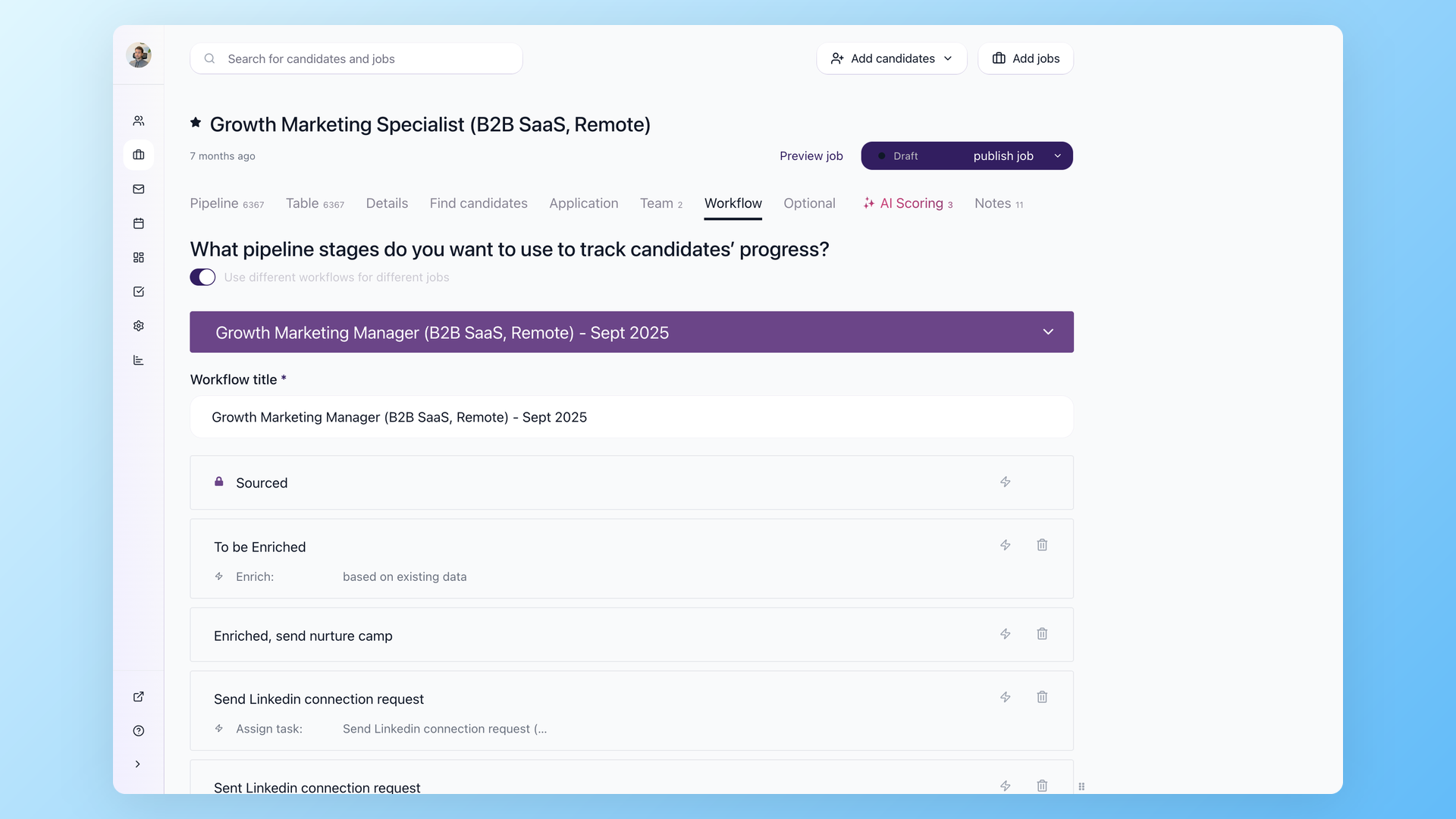
100Hires fits in-house SMB and growing recruiting teams that want to set up an ATS in minutes, not weeks. The platform leans hard on AI: resume scoring with custom prompts per job, AI screening interviews, AI-powered email composer, and AI candidate copilot for evaluations. ATS workflows, nurture campaigns, and one-click posting across major job boards come bundled, so recruiters skip the usual stack of point tools.
Pros: fast self-serve setup, AI-first feature set (scoring, screening, email composer, copilot) unified inside one ATS, transparent published pricing from $49/month.
Cons: not enterprise HRIS-grade (21 native integrations versus Lever's 200+), and reporting is lighter than Ashby's custom dashboards.
Pricing: Start tier from $49/month annually for companies under 20 employees, Advanced from $199/month, Pro from $399/month, flat plans banded by company size, not charged per seat. Full pricing on 100hires.com/pricing. 14-day free trial, no credit card required. Book a demo to see the platform in a working configuration.
Running a staffing or recruiting agency instead of an in-house team? See our staffing agency software page for the agency-specific fit.
2. Breezy HR: best for small in-house teams under 20 employees
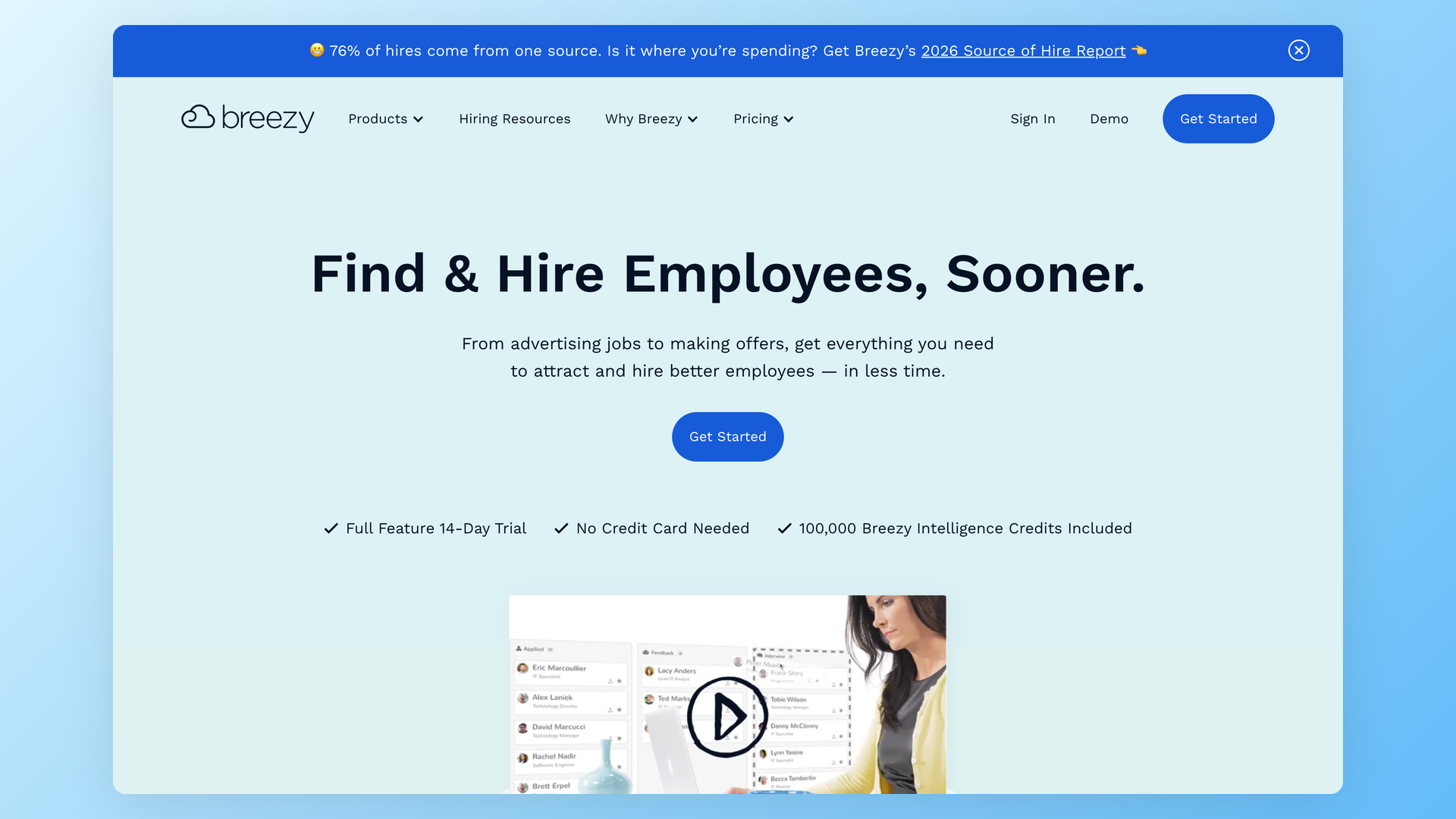
Breezy HR lands well when you have 1-15 employees, hire 1-3 roles per quarter, and have no dedicated HR person. The drag-and-drop pipeline, video interviews, and one-click posting to 50+ boards keep admin low. Bootstrap is genuinely free for one active job; paid plans run from $157 to $439 per month with annual billing.
The strongest limitation is that reporting stays basic and the interface feels dated next to Pinpoint or Teamtailor. G2 rating: 4.4 across 683 reviews. Pricing source: vendor page (verified).
3. Pinpoint: best for candidate experience and employer brand
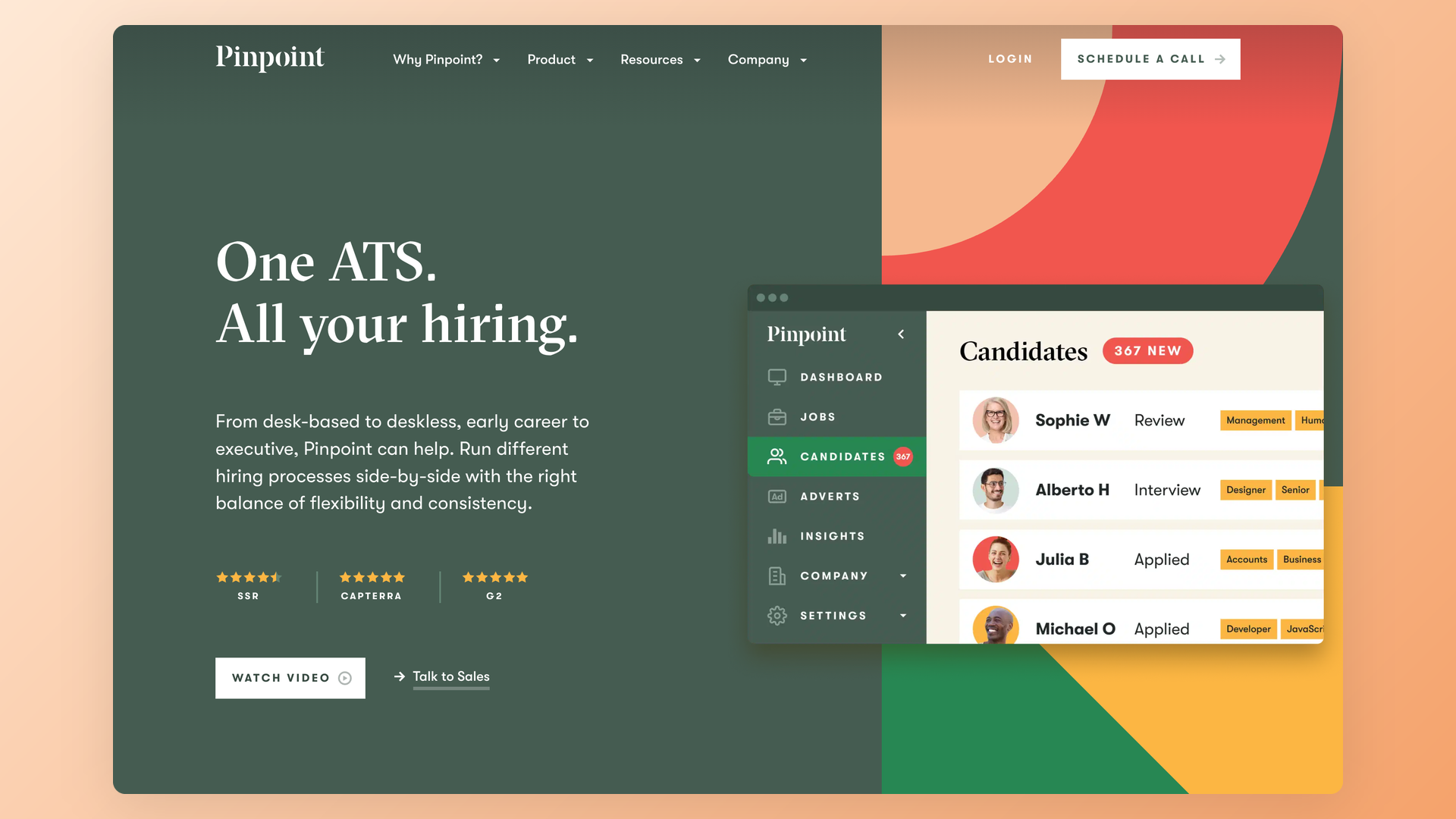
Pinpoint suits in-house teams that care about employer brand and polished hiring-manager workflows. The careers-site editor, multilingual flows, and offer-management feel native rather than bolted on, which helps companies running several recruiting streams at once.
"For the first three years of building the SKIMS team, I tracked every candidate in Excel and TalentHub... we chose Pinpoint Applicant Tracking System as our new ATS."
Laura Buckle, VP Global Talent at SKIMS, on LinkedIn
The migration story is the strongest signal: practitioners pick Pinpoint after hitting the wall of spreadsheet-plus-Greenhouse-Lite-style tools. Pricing is custom only (no public dollar). G2: 4.7 across 116 reviews.
4. Teamtailor: best for branded careers and content-driven hiring
Teamtailor fits 50-200 employee companies that want a careers blog, team pages, and content marketing alongside the ATS, not just a job listing page. Workflow triggers, talent-pool segmentation, and mobile apps for hiring managers come standard.
Reporting is thinner than Ashby. Pricing is custom and scales with employee count. G2: 4.6 across 375 reviews.
5. Manatal: best for staffing and recruitment agencies
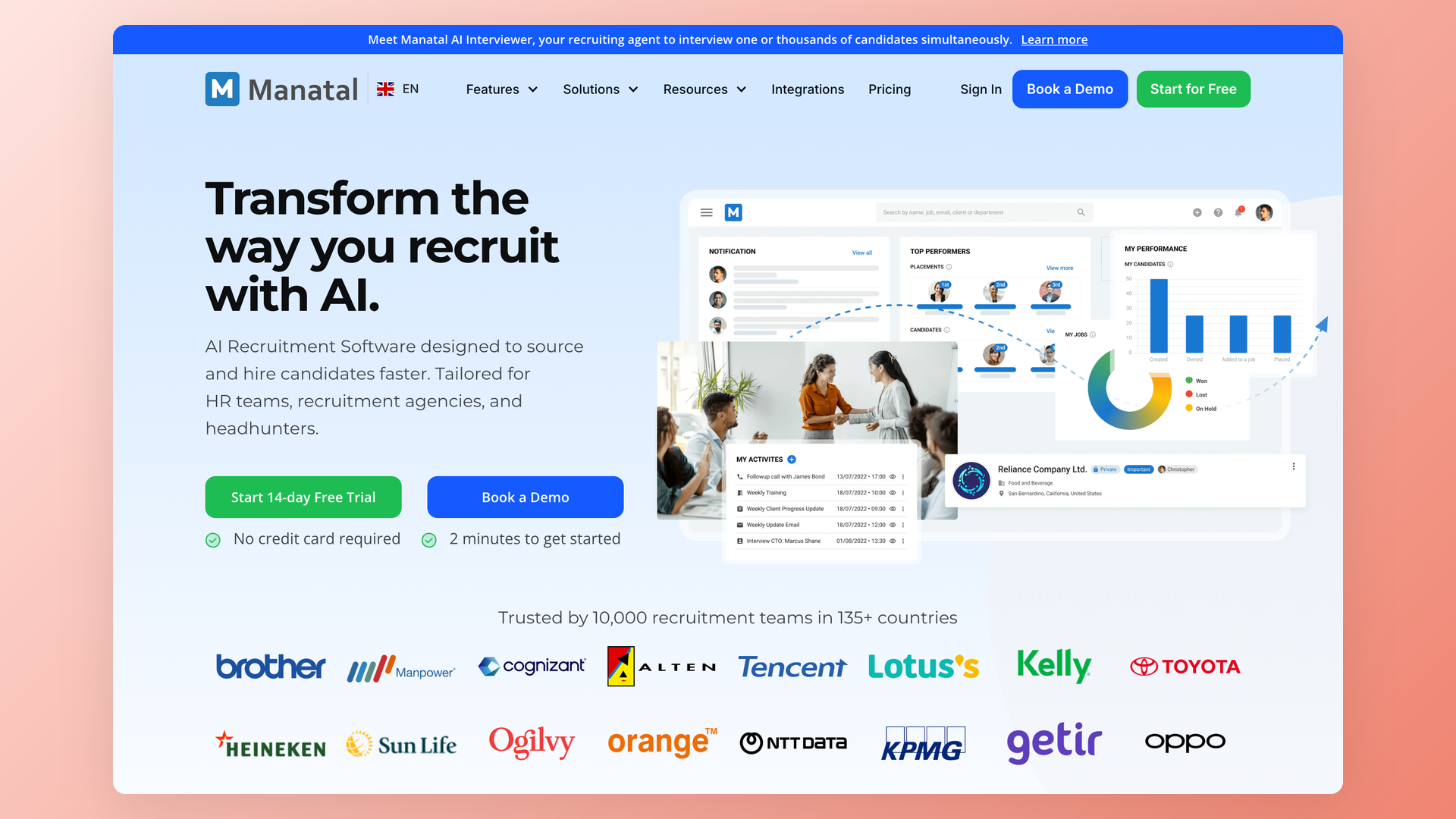
Manatal targets staffing and recruitment agencies that need broad job-board reach without enterprise pricing. The product, marketing, and creator coverage all point to the agency segment, not in-house teams. Verified on the vendor page: $15 to $55 per user per month annually.
The product was the YouTube creator favorite in our research, mentioned positively in 4 of 8 transcripts. Luke Pitkin from Giig Hire highlighted Manatal's broad job-board integration count as a competitive edge.
Honest limitation: organic Twitter signal is near zero outside vendor self-promotion, so peer validation comes mostly from G2 (4.8 across 147 reviews) and Capterra (4.6 across 141 reviews). 14-day free trial, no card.
6. Dover: a free ATS for startups and solo recruiters
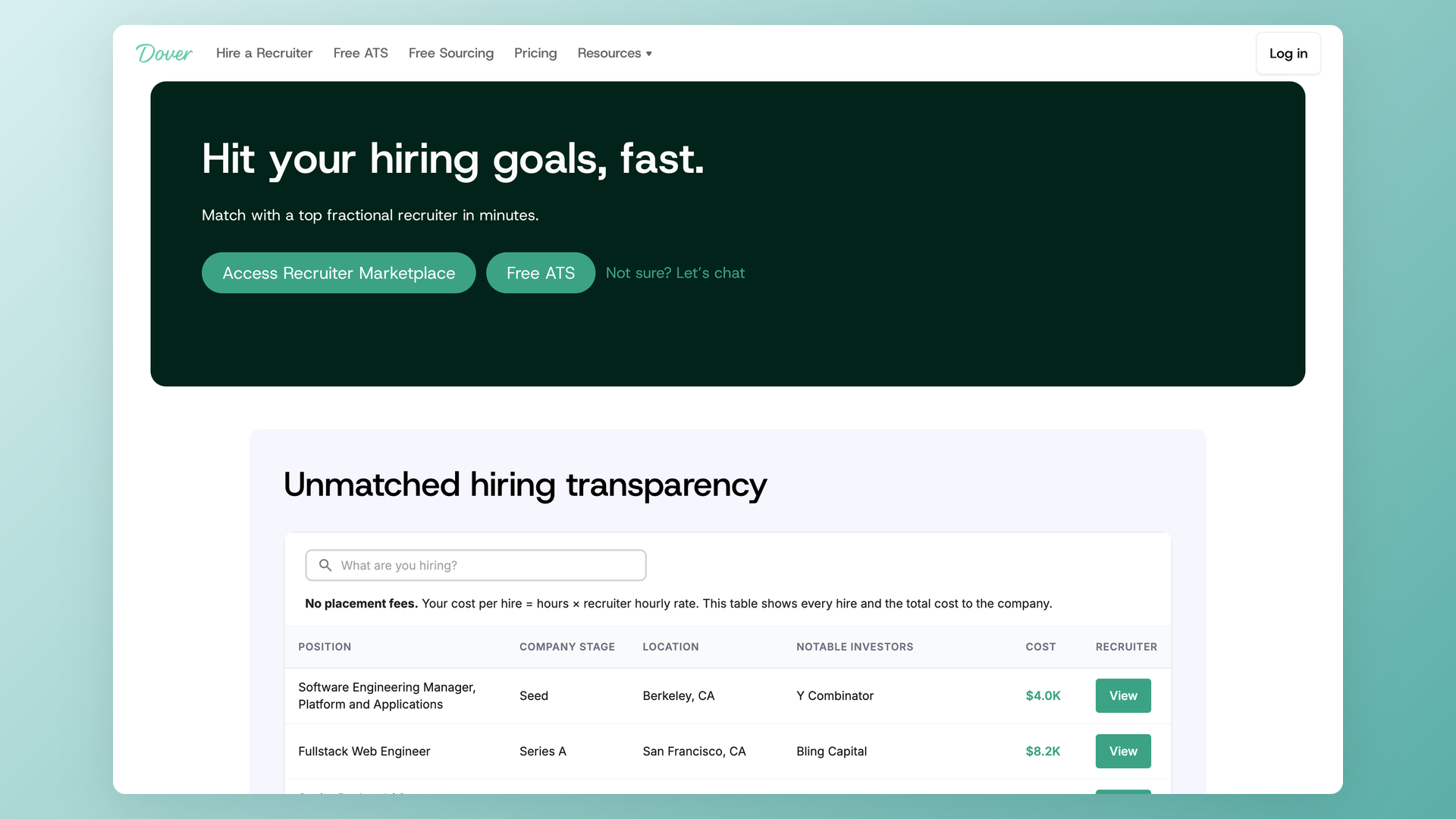
Dover removes the budget conversation entirely for pre-Series-A startups, solo recruiters, and hiring-manager-as-recruiter setups. The free ATS includes unlimited users and unlimited jobs forever; Premium at $199 per month adds AI scoring and LinkedIn or X posting.
Customization is limited and reporting is basic, so growing teams typically outgrow Dover as hiring volume scales. G2 does not yet surface an aggregate star rating for Dover, only feature scores in the 9.0 to 9.7 of 10 range from comparison pages.
7. Recruiterflow: best ATS plus CRM for staffing agencies
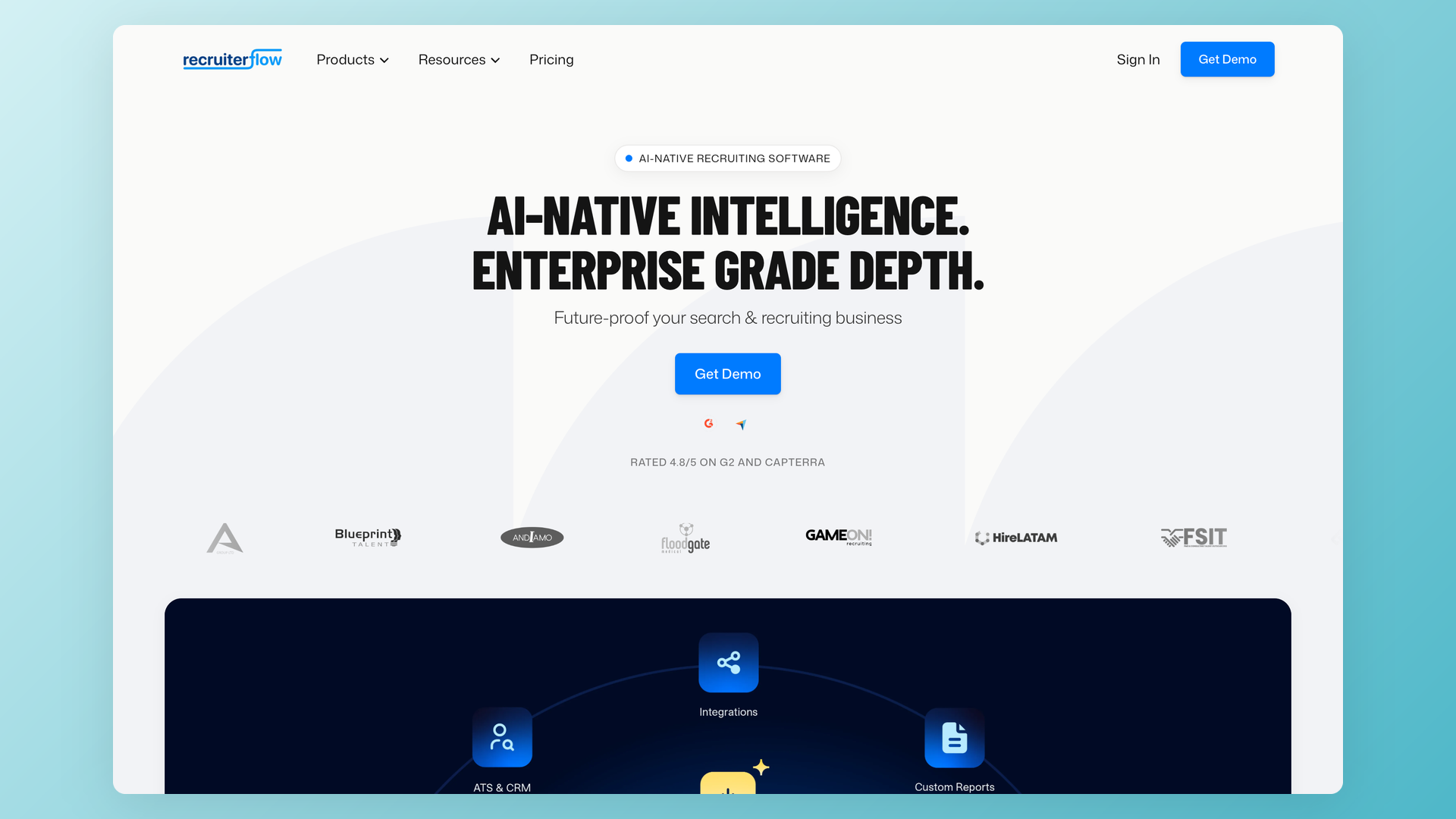
Recruiterflow is the strongest agency-specific anchor in our list: built for staffing and executive search firms with candidate CRM depth, BD outreach, and fee tracking baked in. Pricing is the cleanest in the agency segment: $149 per user per month, published on the vendor page.
"I've used more CRM systems than I can count over the past 10 years in recruitment. None come close to @recruiterflow. The automation, the UI, the LinkedIn integrations, the campaigns - it just works. And the best part? All the features are included. No sneaky add-on costs."
@Blockchain_Azza, Web3 recruiter, on Twitter
The "no sneaky add-ons" framing came directly from that Twitter post. Cons: overkill for in-house teams that don't run BD pipelines. G2: 4.6 across 155 reviews; Capterra: 4.7 across 332 reviews.
8. Tellent Recruitee: best for collaborative cross-functional hiring
Tellent Recruitee fits 25-100 employee companies where hiring decisions involve 3+ stakeholders per role. The collaboration features, @mentions, automated actions, and built-in referral program reduce coordination overhead between recruiters and hiring managers.
Advanced automation is locked behind the Optimize tier, and pricing is not on the public vendor page (third-party trackers cite a range, not vendor-confirmed figures). G2: 4.5 across 306 reviews.
9. Gem: best for AI-first sourcing on LinkedIn
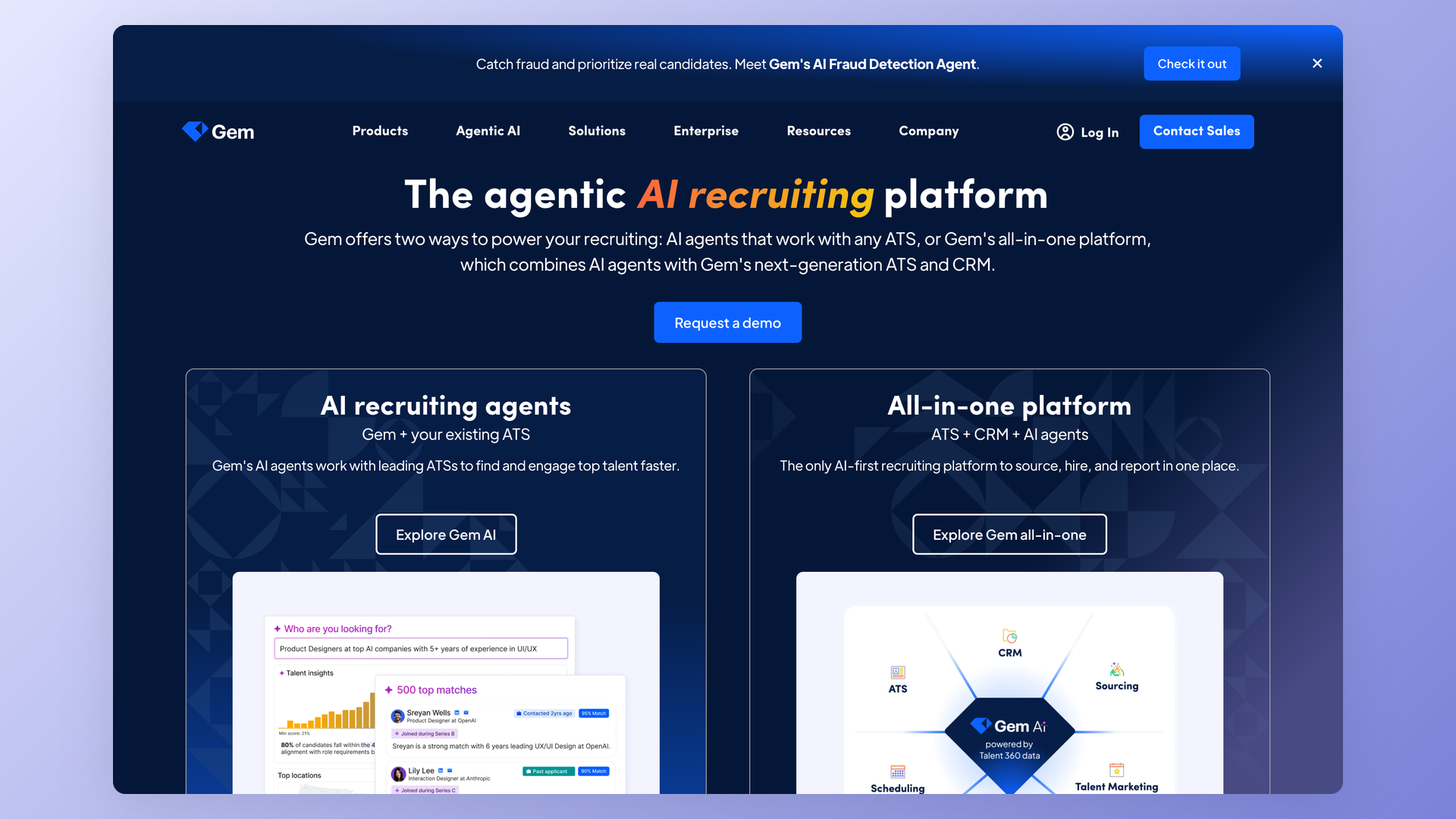
Gem suits in-house teams that source heavily on LinkedIn and want sequencing, talent CRM, and ATS workflows in one product. Pricing: a Startups plan starts at $135 per month (annual, post-promo) for eligible early-stage companies. The standard SMB benchmark is closer to $19,832/year per Vendr; Growth and Enterprise tiers are custom quote only.
"Greenhouse - Please don't send me back! Their lack of modern sourcing tools, almost non-existent AI, and enterprise-focused pricing were a non-starter... Ashby - Originally my top choice going into the search, but they haven't released their AI notetaking tool for interviews, and all of the other standard AI stuff is only available at their Premium tier. If you've got $8k to spend and more than 1 person in TA, they enter the conversation."
TJ Kinion, Head of People at a climate startup, in his public LinkedIn evaluation (chose Gem after the head-to-head)
Public head-to-head evaluations like this one are rare; most ATS comparisons live in private Slack DMs. Cons: Reddit users have reported LinkedIn account-suspension risk for heavy automated sourcing, which is a real consideration for small teams that depend on a single LinkedIn seat. G2: 4.7 across 269 reviews.
10. Workable: best all-in-one for ATS plus light HR
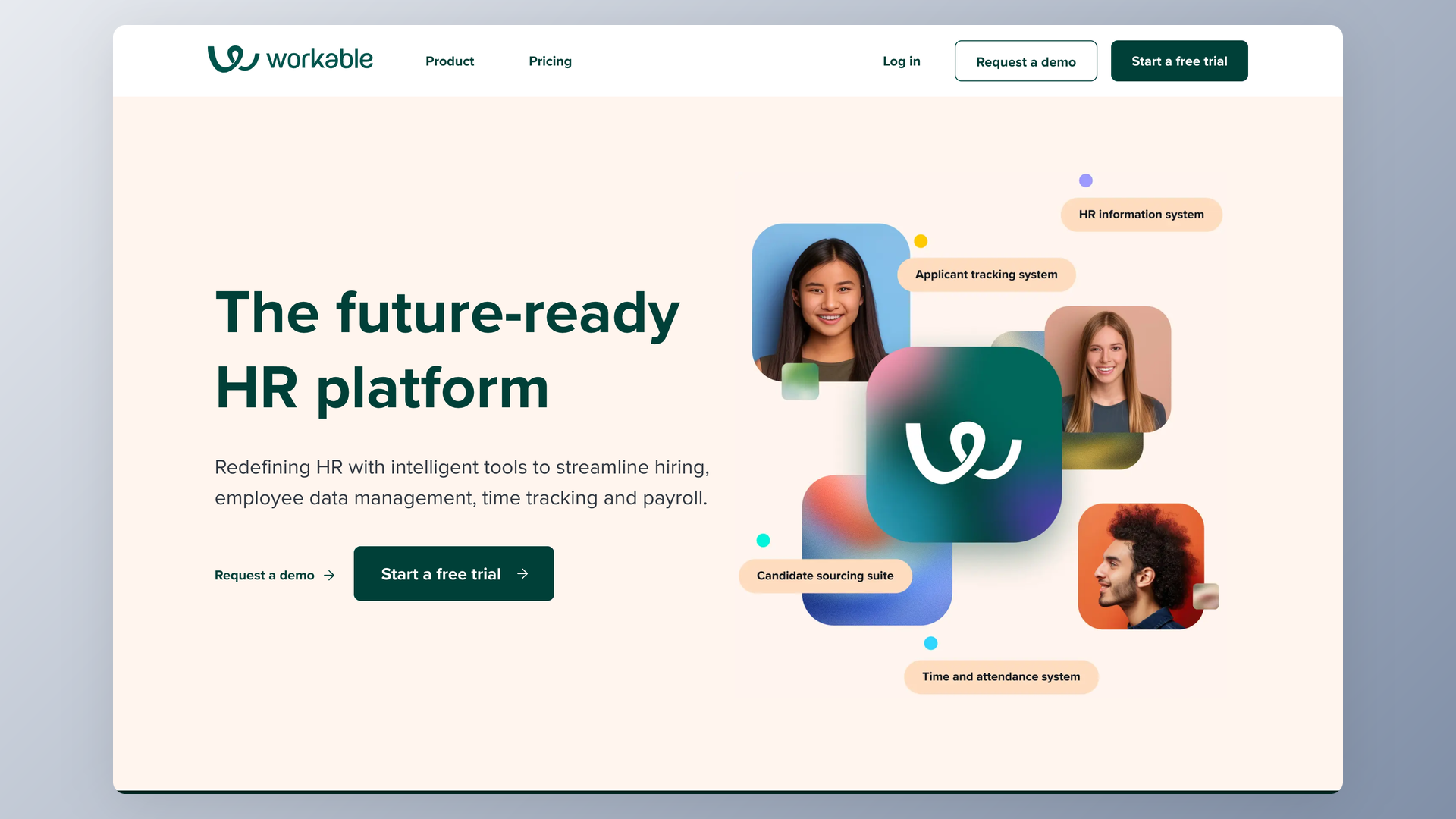
Workable fits SMBs that need recruiting plus HRIS-lite in one contract. Verified: $299 to $719 per month with annual billing. Strengths include a 400M-profile sourcing database, posting to 200+ boards, AI-generated job descriptions, and HR modules for onboarding and time-off.
The recurring honest gripe from Reddit and LinkedIn practitioners is that Workable's AI features lag newer entrants like Gem and Kula. Total cost rises with add-ons (video interviews, assessments, branded careers pages). G2: 4.5 across 680 reviews.
11. Lever: best for mid-market in-house teams
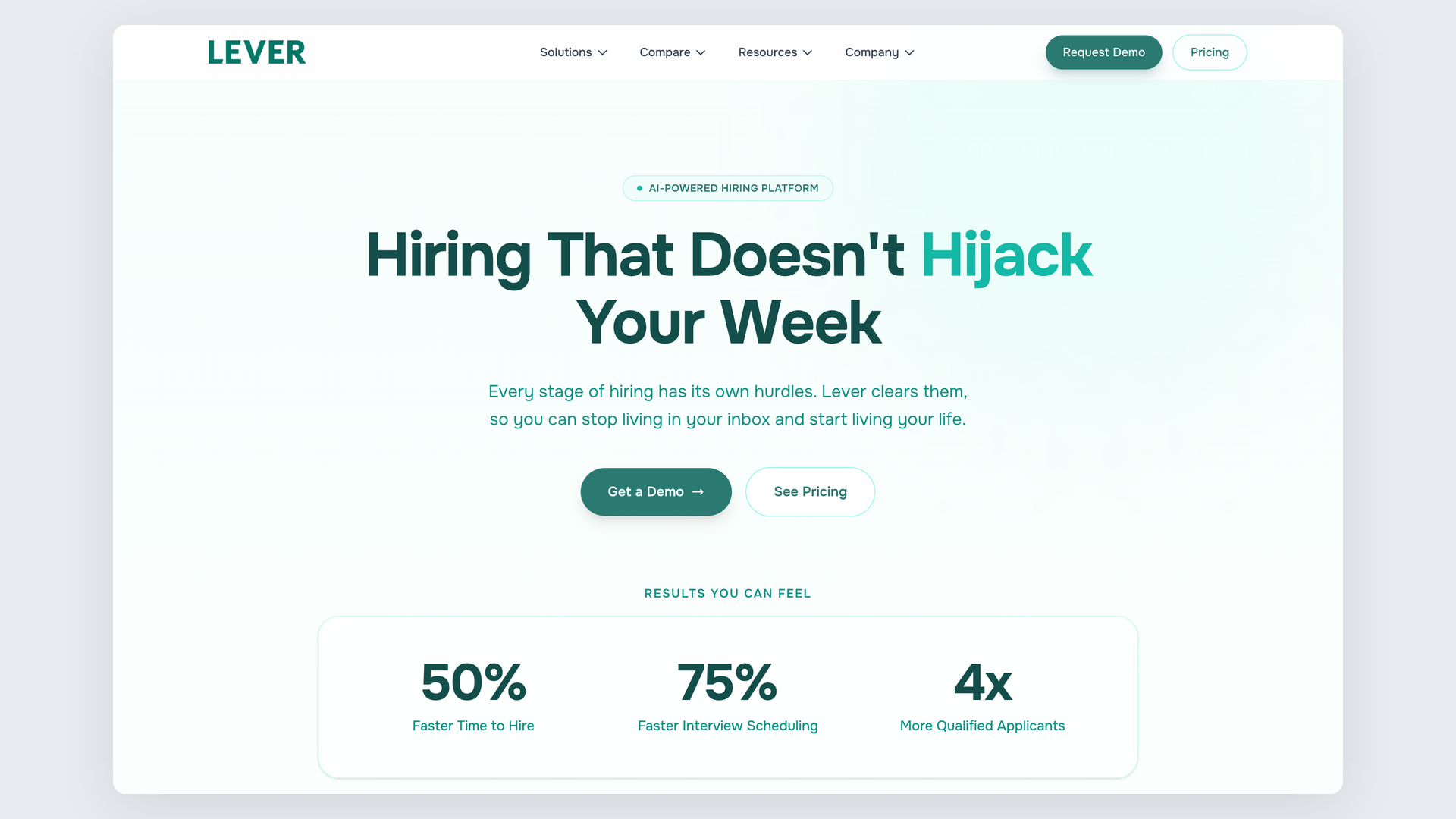
Lever serves 100-500 employee in-house TA teams that have outgrown Workable but cannot afford or do not need Greenhouse. Strengths: ATS plus CRM unified, structured interview kits, and an integration ecosystem of 200+.
Pricing is custom only, the per-seat model gets expensive as teams grow, and add-ons (Onboarding, AI Interview Companion, Advanced Automation) are sold separately. G2: 4.3 across 1,366 reviews.
12. BambooHR: best HR-suite that includes ATS
BambooHR fits 50-200 employee companies that need HRIS as the primary system with ATS as an add-on, not recruiter-led teams. The review base is the largest in this list: 3,758 G2 reviews and 3,097 on Capterra, which speaks to the broader HR-suite footprint rather than dedicated ATS depth.
Real prospects we have spoken with describe the ATS module as thin. One customer paraphrased the gap this way: knockout questions are limited, candidate-funnel reporting is basic, and connections to job boards are restricted compared with dedicated ATS tools. Pricing is custom (vendor page hides dollar amounts behind a quote form).
13. Greenhouse: best for mid-market and enterprise hiring teams (500+ employees)
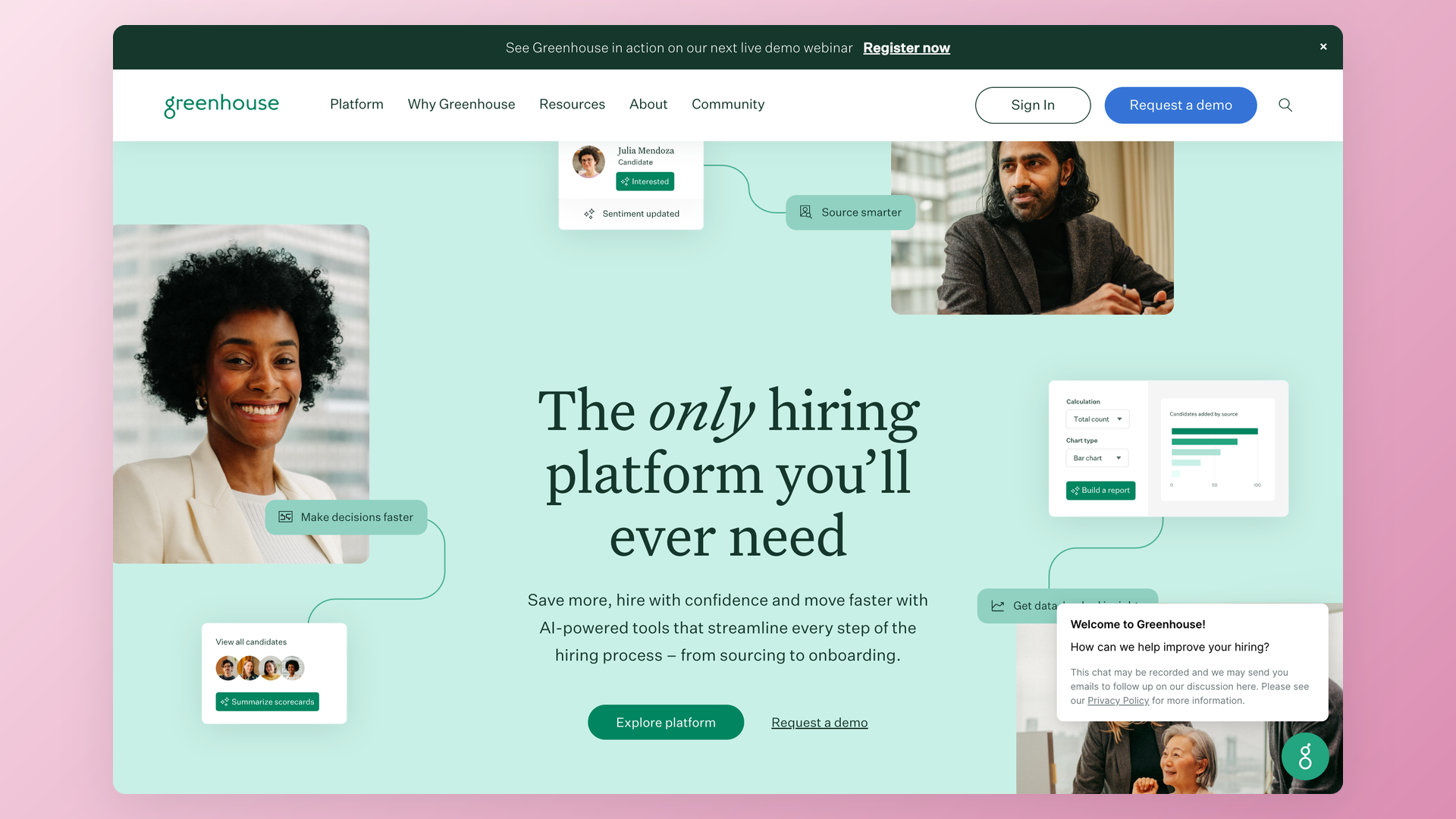
Greenhouse is built for mid-market and enterprise hiring teams that want structured interview kits, scorecards, and deep integrations. If you are sizing tools by company headcount rather than recruiter role, our best ATS for mid-market companies guide compares that band vendor by vendor. The actual buyer profile skews larger than vendor marketing suggests: most published case studies and Greenhouse's own pricing structure point to companies with 500+ employees and dedicated TA functions. With 9 mentions across our LinkedIn harvest, it was the most-cited ATS overall in practitioner discussions.
Pricing is custom (vendor page does not publish a dollar amount; user-reported figures circulating on Reddit are anecdotal and not vendor-confirmed).
"This is a hot take sometimes on this sub, but I really like Greenhouse. It's solid out of the box... built with scaling start-ups in mind. They work great for a small team, but are going to be able to scale with you." vs. "Don't use greenhouse, it's stuck in 2015 and tbh a pretty bad product imo."
u/SANtoDEN (13 upvotes) and u/SilentAd7635 (4 upvotes), in r/recruiting threads
Greenhouse polarizes practitioners more than any other tool in the list, which usually maps to fit-for-stage rather than product quality. Cons: implementation is multi-week rather than self-serve. Recruiter Preston, in a YouTube breakdown, says Greenhouse declines licensing for recruiting agencies who use it as their core business system. G2: 4.4 across 3,663 reviews.
14. Ashby: best for analytics-driven recruiting ops
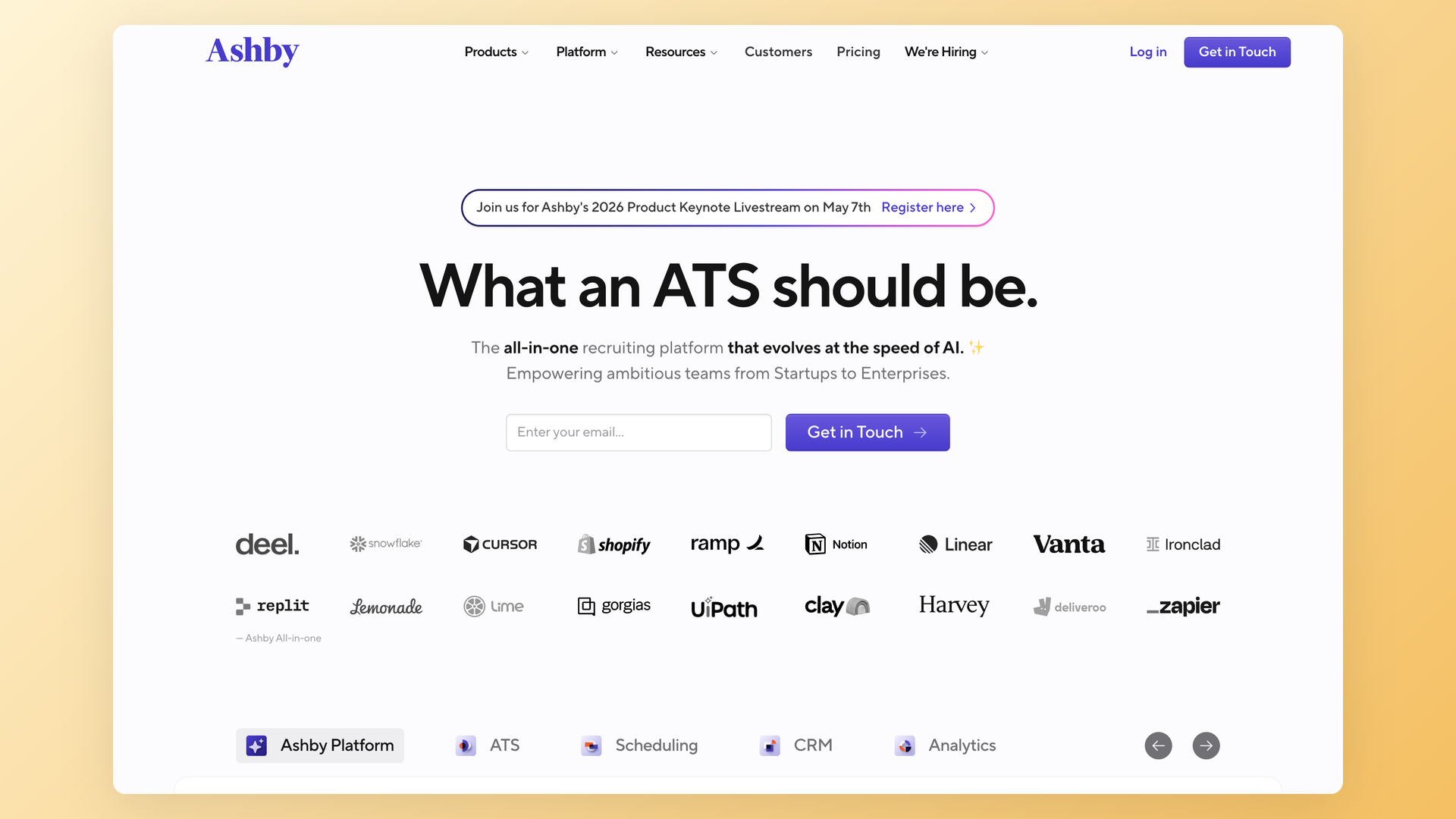
Ashby is the strongest pick for data-mature talent ops teams that lean on analytics and structured process design. Verified pricing: Foundations at $400 per month for companies up to 100 employees ($360 per month with annual billing). Strengths: custom dashboards, headcount management, ATS plus CRM unified, and approval workflows.
"Ashby is just so over engineered and there is settings inside of settings. The most over complicated recruiting software I have used."
u/ClearlyNew, on r/recruiting
The over-engineering critique recurs across Reddit and Twitter. AI features are gated behind the Premium tier; per TJ Kinion's LinkedIn evaluation, "if you've got $8k to spend and more than 1 person in TA, they enter the conversation." That price point adds up for smaller teams. G2: 4.7 across roughly 100 reviews.
Decision guide: which type of ATS do you actually need?
Recruiting roles split structurally, not by preference. As one r/recruiting commenter put it: in-house teams need an ATS with HRIS capabilities, agencies need a CRM with ATS capabilities. A wrong category fit is a common reason teams reconsider tools. Three short rules of thumb based on the 14 reviews above.
If you are an in-house recruiter (cost center, optimizing time-to-hire and HRIS data flow): 100Hires fits SMB to mid-market hiring, Greenhouse fits scaling startups in the 100-1,000 employee range, and Pinpoint fits teams where employer brand is the priority.
"Structured contracts without flexibility are where a lot of firms have anchored with one technology and then they end up bolting a lot of point solutions on that aren't well integrated."
Bill Corwin, fractional CIO, on the You Own the Experience podcast
Loxo's "Becoming a Hiring Machine" episode #249 calls this same pattern a "Frankenstack" of fragmented tools, the structural problem in-house teams face when one ATS is forced to cover too many adjacent jobs.
If you are an agency or staffing recruiter (revenue center, optimizing candidate database depth and BD outreach): Recruiterflow at $149 per user per month is the strongest agency-specific anchor in our list. Manatal works as a more affordable alternative when broad job-board reach matters more than CRM depth.
If you are a solo or freelance recruiter: Dover free or Breezy HR Bootstrap. For more SMB-specific picks, see our best applicant tracking system for small business roundup.
A pattern worth flagging: some experienced solo recruiters skip dedicated ATS entirely and use HubSpot, Attio, or even spreadsheets, on the logic that relationship memory matters more than pipeline polish at low volume.
When to switch ATS and what to check before buying
The tool you have today rarely fails for one reason; it usually accumulates 3-4 friction points before a switch becomes worth the disruption.
If most of your pain is around manual scheduling, follow-ups, and pipeline movement rather than the ATS itself, see our guide to recruitment automation software first. Five switch triggers we see most often.
- Implementation timelines stretch from weeks into months for enterprise systems (per Aubrie Wilson on LinkedIn, an iCIMS implementation spanned roughly six months from her initial involvement in June to a one-month-post-go-live update later that year).
- Hiring managers stop logging in. As one Reddit comment put it: HR teams in mid-sized companies often choose the ATS the hiring managers actually log into, not the one with the best feature list.
- Per-seat fees scale faster than headcount. Mike LaPorte, who notes on LinkedIn that he has run 5 ATS implementations and 2 reimplementations, is one of several practitioners who flag total-cost-of-ownership as a recurring blind spot.
- Add-on costs (video interviews, assessments, branded careers pages) start adding up; Lever, for example, sells Onboarding, AI Interview Companion, and Advanced Automation as separate line items.
- AI features sit behind a higher pricing tier you don't use enough to justify (Ashby's case, where TJ Kinion notes "$8k to spend" as the threshold).
What to actually check before signing a 12-month contract:
- Run the demo with a hiring manager you actually employ, not the recruiter. If the manager cannot move through the candidate review screen on their own, the tool will fail at adoption.
- Get the implementation timeline in writing in days or weeks, not "fast" or "quick."
- Pull G2 and Capterra ratings for the specific tier you'll buy, not the company-wide rating.
- Calculate 3-year TCO with likely upgrades, not just the year-1 sticker price.
- Test the candidate-side flow yourself: complete a full application, time it, count clicks. One LinkedIn complaint we saw described a competitor's flow as "8,274 boxes" of data entry.
Final verdict: which ATS should you pick?
For most in-house SMB and mid-market recruiting teams, 100Hires is the strongest pick: it pairs fast self-serve setup with AI-first features (resume scoring, AI screening interviews, AI email composer, candidate copilot) at transparent pricing from $49 per month. Start a 14-day trial without a credit card to test it on a live role.
For staffing agencies, Recruiterflow at $149 per user per month is the strongest agency-specific anchor in our list, with public pricing and verified agency feature depth.
For analytics-heavy in-house ops teams, Ashby earns the recommendation, with the honest caveat that the depth comes with real configuration overhead.
For solo or budget-constrained recruiters, Dover's free tier or Breezy HR's Bootstrap plan removes the budget conversation entirely and lets you re-evaluate when volume grows.
To compare implementation and pricing in more detail, review 100Hires pricing or schedule a demo.
FAQ about ATS for recruiters
For SMB and mid-market in-house teams, 100Hires is a strong default with AI-first features, fast setup, and pricing from $49/month. For larger 500+ employee organizations, Greenhouse, Workable, Ashby, and Lever appear most often across our SERP and LinkedIn research; for staffing agencies, Recruiterflow and Manatal lead.
There is no single top ATS, the answer depends on your size and recruiter type. 100Hires is our top pick for in-house SMB and growing mid-market teams that want AI-driven hiring without enterprise overhead. Greenhouse and Ashby lead at the 500+ employee enterprise tier; Recruiterflow leads for staffing agencies.
Most-cited tools in 2026 recruiter discussions are Greenhouse and Workable for in-house, Bullhorn and Recruiterflow for agencies. For SMB teams that want a modern AI-first alternative without the enterprise price tag, 100Hires covers the same recruiter workflows starting at $49 per month with a 14-day free trial.
Dover and Breezy HR both offer genuinely free tiers (Dover unlimited users, Breezy free for one active job). For teams that quickly outgrow free, 100Hires offers a 14-day full-feature trial with no credit card and paid plans from $49 per month. The free tier limits on dedicated ATS tools tend to bite around the third or fourth open role.
Usually no. In-house teams need ATS plus HRIS sync; agencies need CRM-with-ATS depth. For in-house SMB and mid-market, 100Hires covers the in-house workflow with bundled AI features. For staffing agencies, Recruiterflow and Manatal are the purpose-built picks. The structural use cases differ enough that one tool rarely wins both segments.
Self-serve tools start faster: 100Hires goes live the same day with a 14-day trial and no credit card, Breezy HR has a free Bootstrap tier, and Dover offers a free ATS with unlimited users. Enterprise systems run longer; one Head of TA on LinkedIn (Aubrie Wilson) described a multi-month iCIMS rollout. Speed matters most when hiring is active.
Try 100Hires for free
No credit card. 14-day trial. Forbes Advisor #1 ATS for SMBs.