
Job distribution software built into your ATS
Publish a job once, reach 13 named job boards including Indeed and LinkedIn, and review every applicant in one scored pipeline instead of a separate dashboard for each board.






screening candidates
response rates
time to fill
per hire
What job distribution software does, and why board counts mislead
Job distribution software publishes one job ad to many job boards in a single action and, done right, brings every applicant back to a single pipeline. You write the role once and choose where it goes, instead of re-typing it into Indeed, LinkedIn, and ZipRecruiter.
Three classes of tools sell under this label, and they suit very different buyers. Here is the two-minute version.
| Class | What it does | Where applicants land | Who it fits |
|---|---|---|---|
| ATS with built-in distribution (100Hires) | Per-board toggles on the publish screen of the ATS you already work in | One pipeline, tagged by source, screened on arrival | SMB in-house hiring teams |
| Standalone job distributor | Posts to large board catalogs, often with per-post fees | Typically a separate dashboard or your inbox | Agencies and ad-ops teams posting at high volume |
| Programmatic ad platform | Moves paid budget between boards automatically by performance rules | Your ATS, via integration | Enterprise teams buying job ads at scale |
Vendor pages in this category advertise 200, 2,000, even 7,000 boards. Much of that count comes from aggregator networks that re-syndicate listings. That is how hiring teams end up finding month-old copies of their ad on sites they never chose, still carrying their logo.
Recruiters on forums describe the fallout bluntly: stale listings, third-party redirects, and pricing you only learn on a sales call. A short list of boards you actually picked, with attribution that survives the click, beats a big number you cannot audit.
How job distribution software works in 100Hires
- Write the job once. The built-in AI job description generator can draft it from a title and a few requirement bullets.
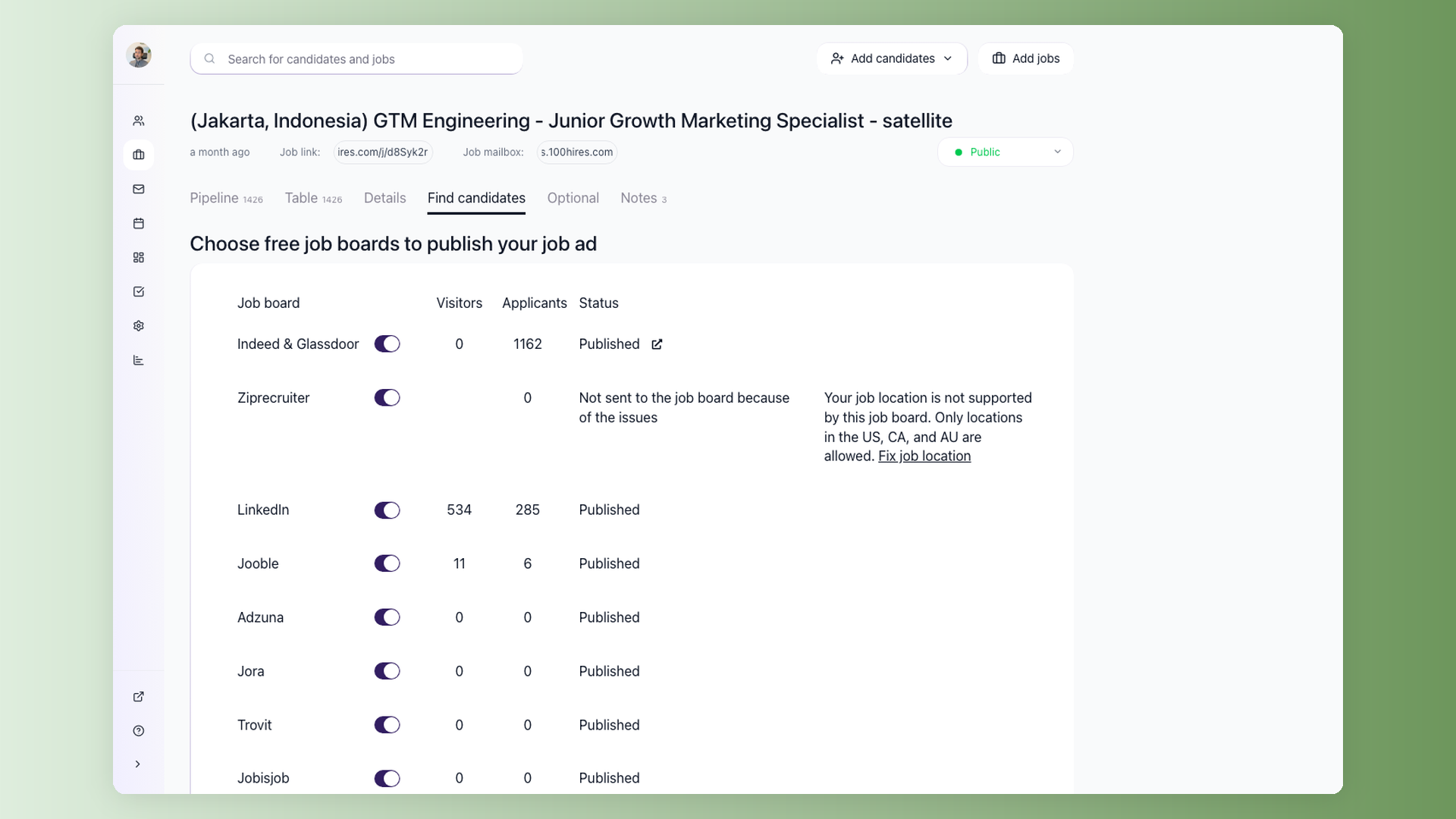
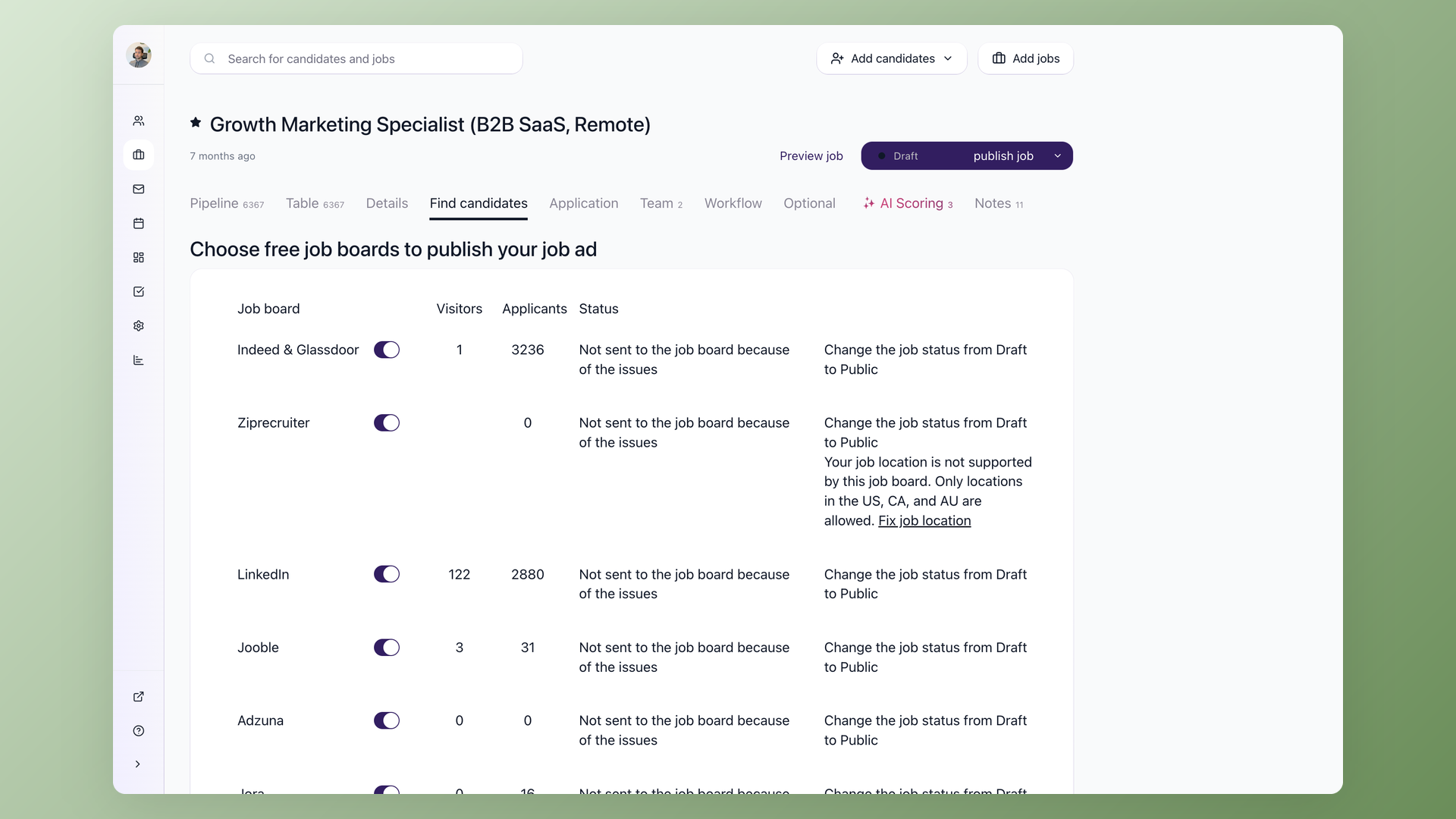
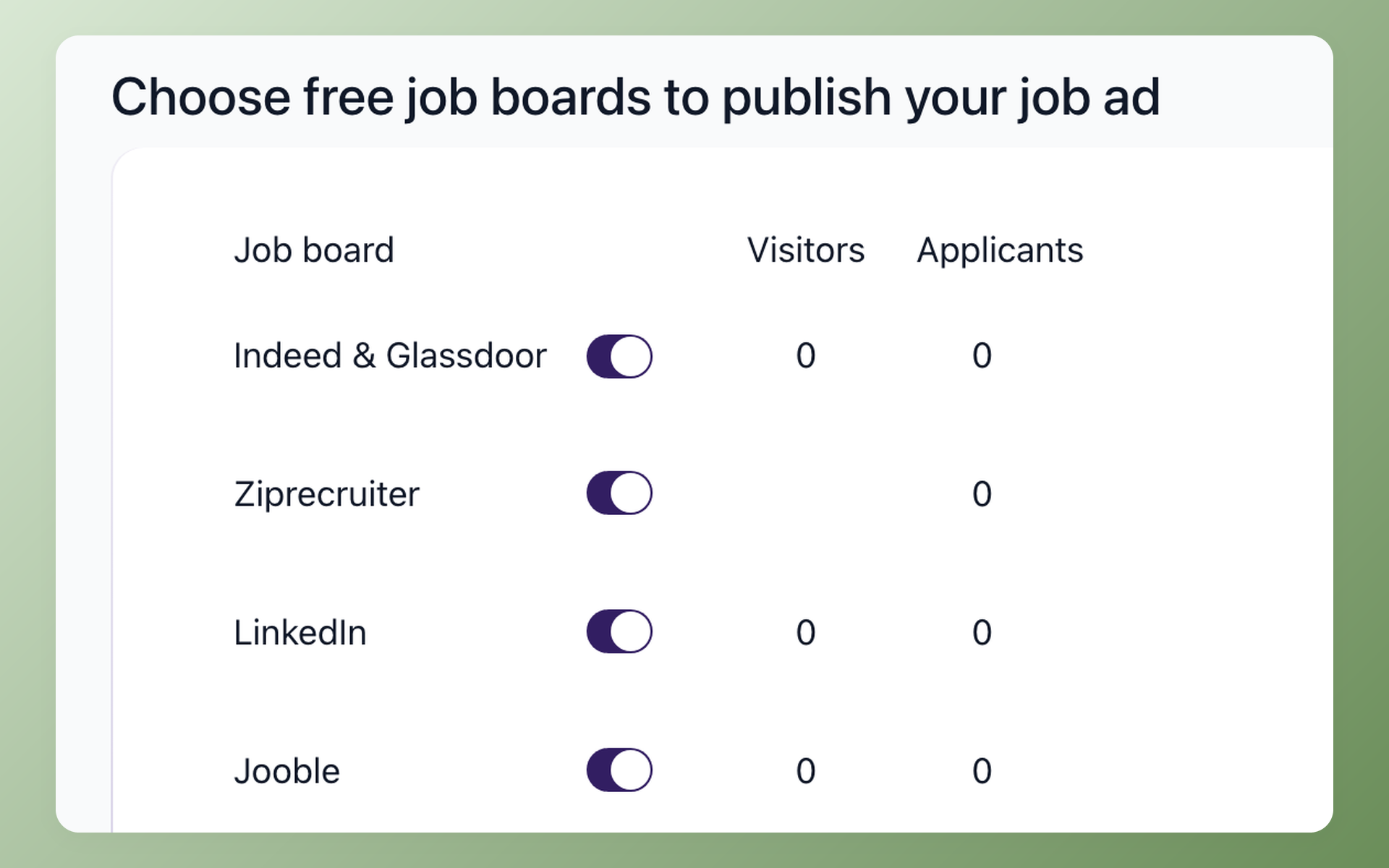
- Toggle boards on the publish screen: Indeed, LinkedIn, ZipRecruiter, Glassdoor, and the rest of the list, set per job.
- Applicants from every board arrive in the same place, tagged with the board that sent them.
- Knockout questions disqualify hard misses at the application step, and AI Score ranks everyone else 0-100 before you open a resume.
Reach 13 named job boards without re-typing the job anywhere
Every job gets its own distribution settings. Turn Indeed on for an engineering role, skip it for an hourly retail role, or push everything everywhere in one publish action. No per-board fees from 100Hires, no separate multiposting subscription, no reformatting per board.
- Indeed, LinkedIn, ZipRecruiter, Glassdoor, Jooble, Adzuna, Jora, Trovit, Monster, CareerJet, Google Jobs, Talent.com, Jobisjob
- One publish action, per-job overrides
- Included on every paid plan
The click-by-click mechanics live on our companion page about posting a job online to 13 named job boards. If you are still deciding which boards deserve paid budget at all, our review of the best job posting sites for employers ranks them by role type.
Need boards by country? See job posting sites in Canada, the best job sites in the UAE, and free job posting sites in India.
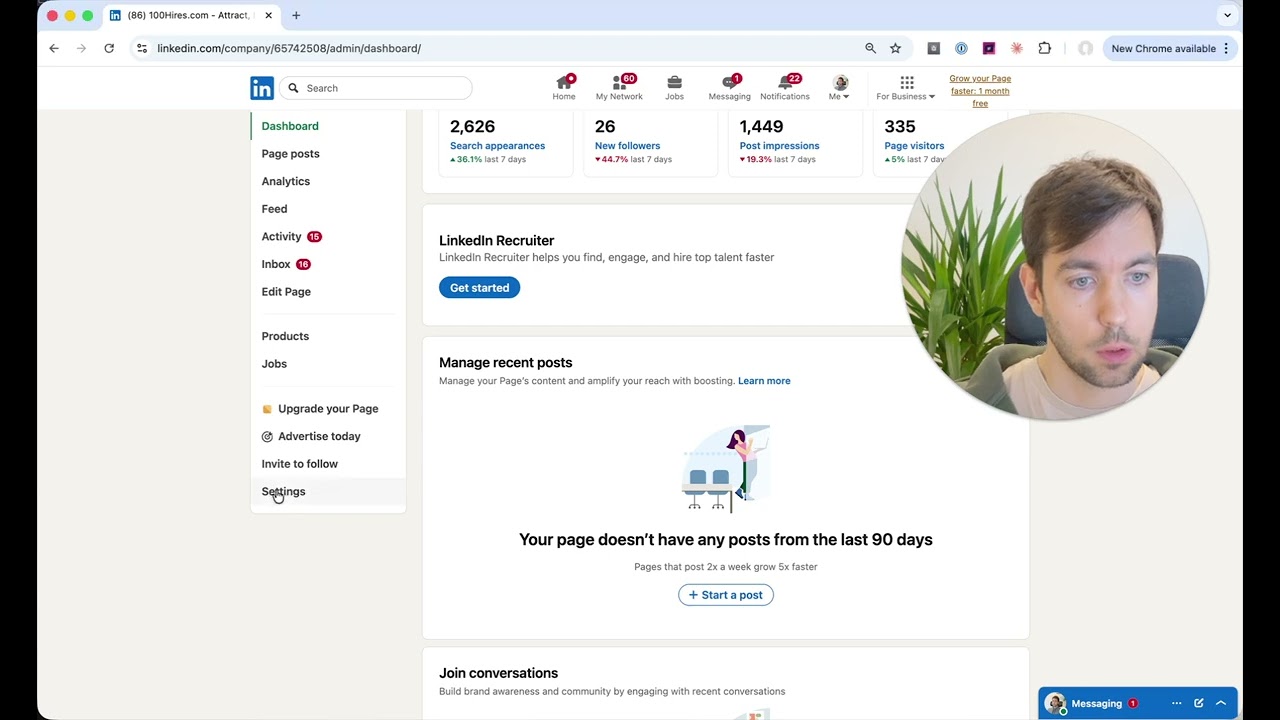
Connect LinkedIn once, then jobs sync on their own
A 44-second setup walkthrough from the 100Hires channel
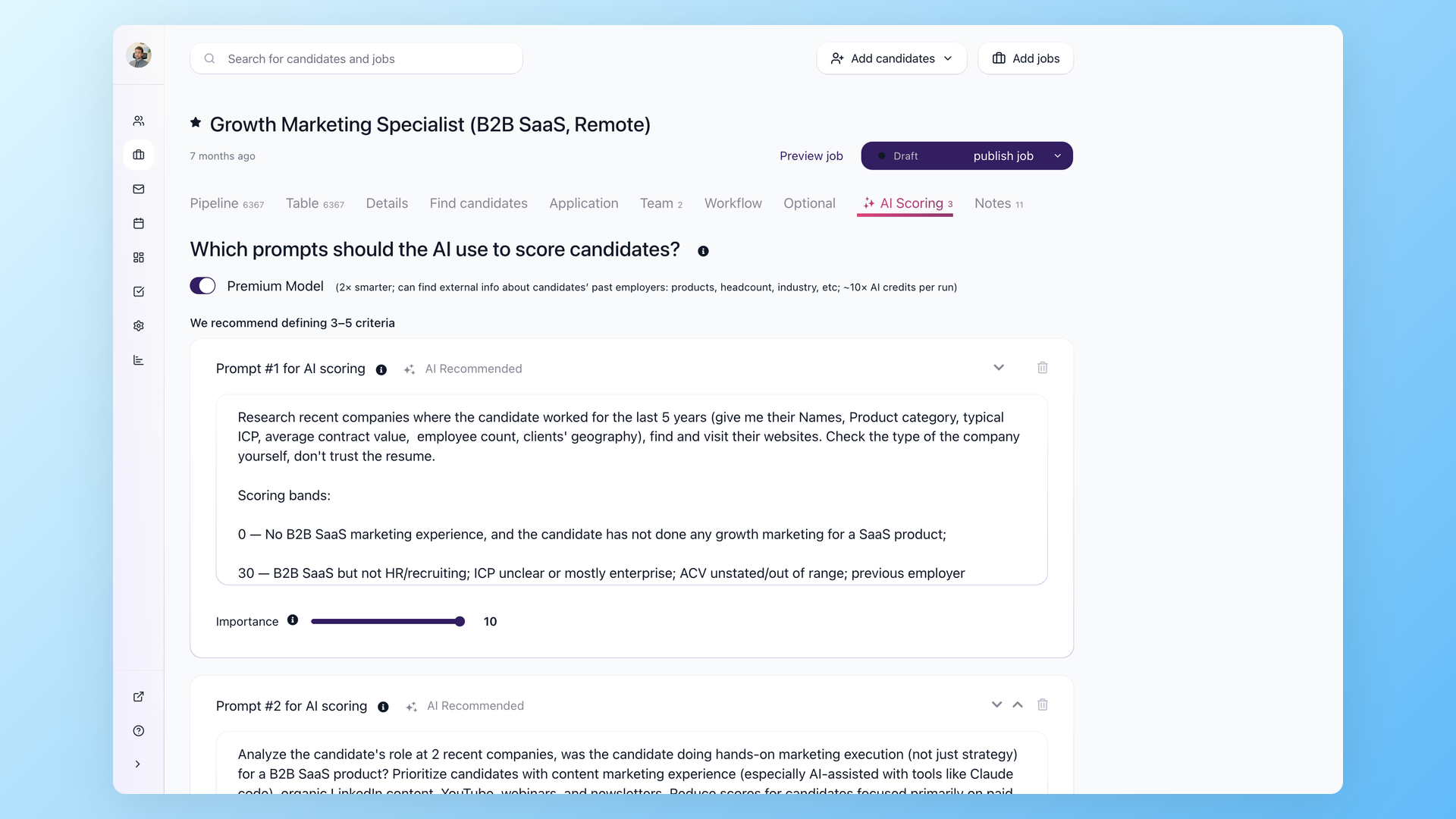
Distribution brings volume. Screening decides what deserves your time
AI-written applications broke the old math where more applicants meant more choice. 100Hires screens the flood on arrival: Knockout questions auto-disqualify hard misses, and AI Score reads the resume, the answers, and the job description to rank everyone else 0-100 with reasoning.
- Knockout questions on the application
- AI Score 0-100 with reasoning
- Shortlist ready before you read resumes
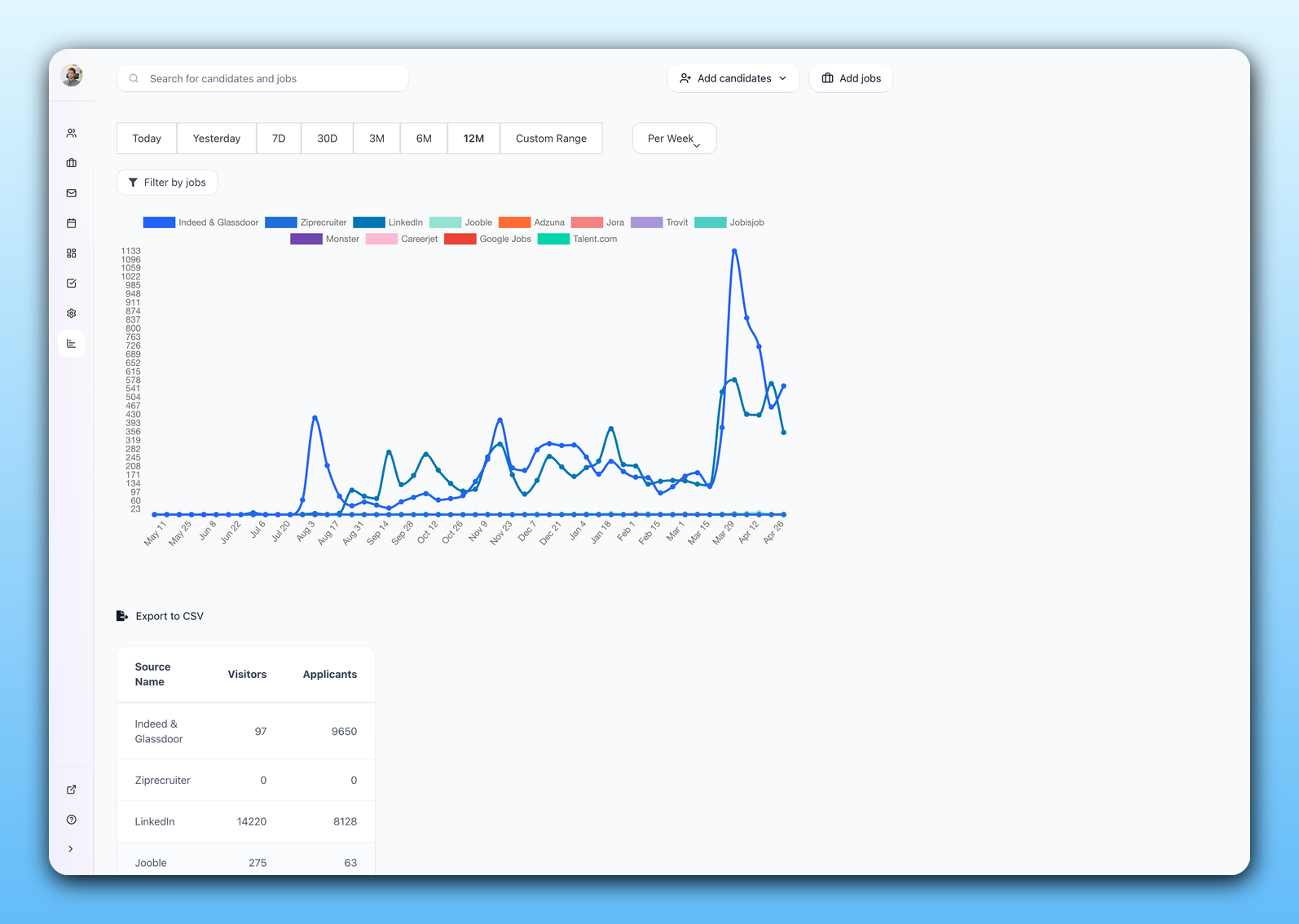
Know which board earned its keep before you renew anything
Buyers of typical distribution tools repeat one complaint in reviews: no way to tell which board a hire came from. The 100Hires Sources report shows applicants, conversion, and hires per board for any date range, with CSV export. Trackable links extend the same attribution to channels beyond the boards.
- Sources report with hired-only filter
- CSV export for budget reviews
- Trackable links for outside channels
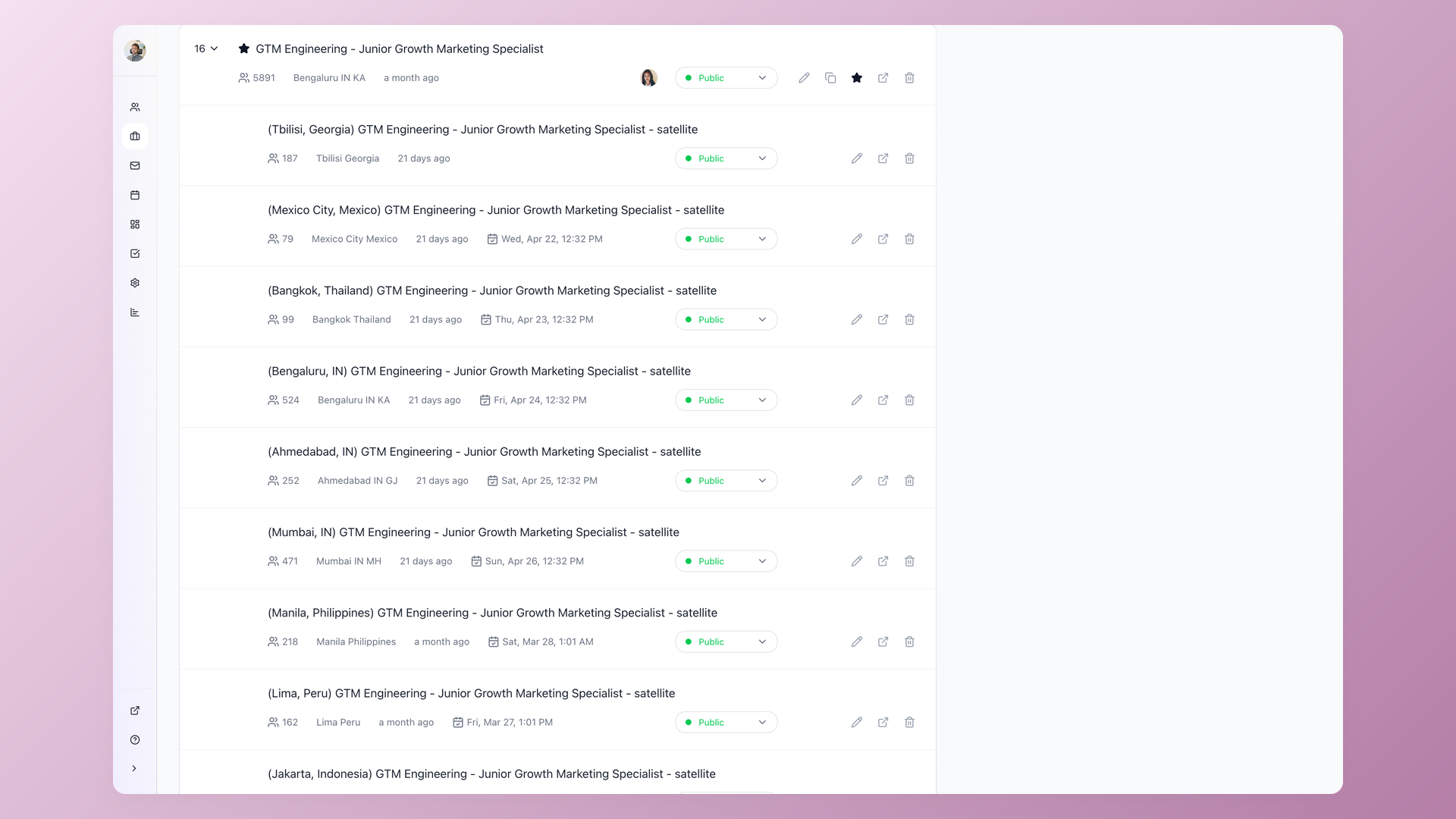
Hiring the same role in several cities? Clone it once
Satellite Jobs clone one canonical job into every city you hire from, and each clone posts to job boards as its own local listing. Applicants from every clone funnel back to one canonical pipeline with automations and AI scoring intact.
- One canonical job, many cities
- Local listings per market
- Automations and scoring inherited
Multi-location and remote hiring get the full treatment on our multiposting page, which covers Satellite Jobs end to end.
Job distribution software vs a standalone distributor
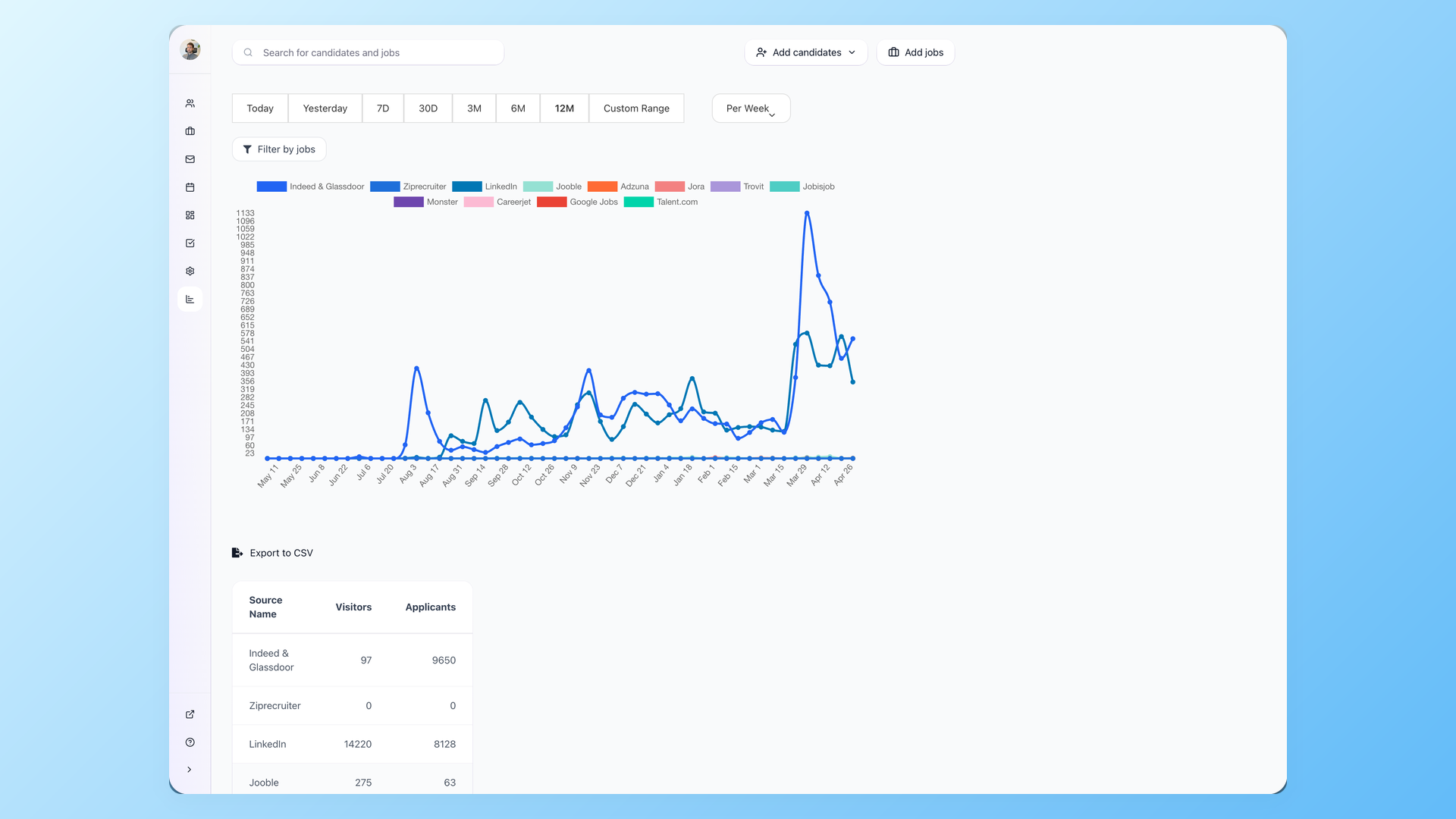
If you already run an ATS, the real comparison is not tool A vs tool B. It is one system with distribution built in vs a stack you assemble: a typical ATS plus a separate distributor subscription. Here is where the stack usually leaks.
 100Hires
A standalone distributor is still the right call for multi-client ad operations at agency scale, heavy niche-board programs, and OFCCP audit trails. For an SMB team hiring into its own pipeline, built-in distribution removes a subscription and a hand-off.
Who job distribution software in 100Hires fits, and who it does not
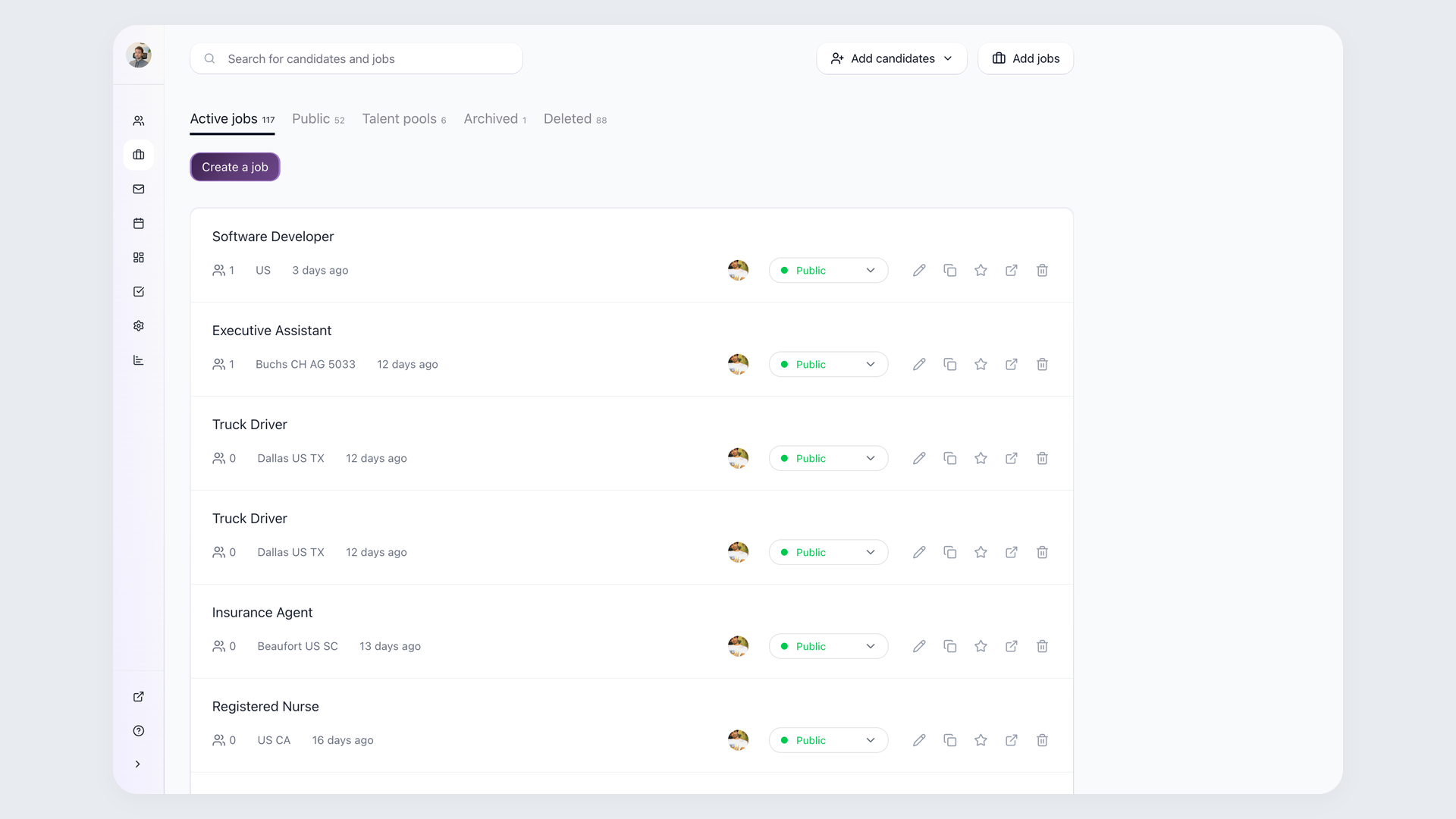
An honest fit check saves both of us a sales call. This page, and the product behind it, is built for one buyer in particular.
| Your situation | Fit | Why |
|---|---|---|
| SMB in-house hiring team | Strong fit | Distribution, screening, and attribution included in one plan |
| Staffing agency or RPO posting many client roles | Limited fit | Works when roles run inside one ATS (see 100Hires for staffing agencies); agency-grade distributors fit high-volume client ad ops better |
| Enterprise programmatic ad buyer | Not a fit | You need budget rules and bid optimization; 100Hires does not do programmatic bidding |
| Federal contractor with OFCCP requirements | Not a fit | You need a compliance-specialist distributor; 100Hires does not provide OFCCP audit reporting |
One more boundary worth stating: if most of your hiring runs through niche vertical boards outside our list, a distributor with a bigger catalog may serve you better. Trackable links cover the occasional extra channel; they are not a replacement for a specialist catalog.

It solved all of my recruitment problems and offered all of the features I was looking for. It can automate most of my recruitment processes.

I’d happily recommend it to my industry peers. I’m able to use the platform with ease and don’t have to think twice about which function to use.

The system is very user-friendly. Even people with no experience will find it easy to understand its functionality.







 4.7
4.7
 4.8
4.8
The hiring playbook, in your inbox
One email a week - benchmarks, AI screening tactics, and short interview templates from the 100Hires team. No product pitches.