
Glassdoor vs Indeed: which is better for hiring teams in 2026
Glassdoor vs Indeed used to be a real either-or question for employers. It is not anymore.
Both platforms belong to the same parent company, Recruit Holdings, and since their 2025 consolidation a job posted on Indeed appears on Glassdoor automatically. There is no separate Glassdoor job post left to buy.
What remains is a split of roles: Indeed is the job-ad engine with the reach and the applicant volume, and Glassdoor is the reputation layer where candidates read your reviews and salary data before they apply.
This comparison is written for the person paying for the ads, not the job seeker. It covers what actually merged, what each platform costs an employer in 2026, how to handle reviews, and which system manages applicants after they click Apply.
Glassdoor vs Indeed at a glance
The hiring playbook, in your inbox
One email a week - benchmarks, AI screening tactics, and short interview templates from the 100Hires team. No product pitches.
| Criteria | Indeed | Glassdoor | 100Hires (ATS - manages what the boards send) |
|---|---|---|---|
| What it is | Job search engine and hiring platform | Company reviews and salary transparency site | Applicant tracking system for SMBs |
| Primary employer use | Posting jobs, sourcing, applicant volume | Employer brand, review management, salary research | Distributing posts and managing every applicant that arrives |
| How job posting works | Post directly; the system of record for both platforms | No direct posting; listings sync from Indeed | One posting goes to 13 named boards, Indeed and Glassdoor included |
| Free tier | Up to 3 organic posts per month for direct employers | Free employer account: claim profile, respond to reviews | 14-day trial, no card |
| Paid model | Sponsored ads on a daily or monthly budget | Employer branding subscription, custom quote | public $49/mo billed annually ($99/mo month-to-month) |
| Applicant tooling | Screener questions, auto-reject, messaging, scheduling | None; it is a research layer, not a pipeline | AI Score ranking, AI Copilot, knockout questions, source reports |
| Reviews and salary data | Company pages with reviews, synced with Glassdoor | The default place candidates research pay and culture | Not applicable; it manages candidates, not reviews |
| Best for | Reach and volume, hourly and local roles | Reputation and salary-sensitive, competitive roles | Teams running several roles at once |
The short version: post through Indeed, and start free. Sponsor only what you can measure by cost per hire. Keep both company profiles claimed, and respond to reviews.
Give Glassdoor your attention, not your budget, at SMB scale. And if you run more than one role at a time, put an ATS behind both platforms: 100Hires can post to 13 named job boards on paid plans, distribution included.
One company, two platforms: what actually merged
Recruit Holdings bought Indeed in 2012 and Glassdoor in 2018, in a deal reported around $1.2 billion. For years the two ran side by side. In July 2025 that ended.
The company announced it was folding Glassdoor's operations into Indeed, cutting about 1,300 roles, roughly 6% of its HR technology segment. Glassdoor's CEO left that October.
For employers, the practical mechanics now look like this:
- Job distribution is one-directional. Post on Indeed and the listing shows up on Glassdoor on its own. Try to post on Glassdoor and you get routed to Indeed to finish. Edits and removals sync automatically.
- Employer accounts stay separate. Indeed's own partnership FAQ is explicit: employer accounts and permissions are not combined. You still manage the Glassdoor side from its Employer Center.
- Job-seeker accounts merged. New Glassdoor users have signed in through Indeed since late 2025, and existing users had until April 20, 2026 to link accounts or lose access.
How complete is the absorption? Check the fine print: Glassdoor's own site footer now reads Indeed, Inc.
The product side is converging too. In July 2026 Indeed announced an Employer Branding Suite with a 1-100 Brand Score that folds Glassdoor and Indeed brand signals into one number, sold through Indeed.
One honest caveat for the review side: the forced account linking raised anonymity concerns among reviewers, and gated review access adds friction, which can make review credibility feel less clear to some candidates.
So stop evaluating Glassdoor and Indeed as rivals. They are two surfaces of one system, and each still has a distinct job in your hiring.
Indeed for employers: reach, applicant volume, and cost control
Indeed's pitch to employers is simple: it is where the candidates are. Per Indeed's own materials, more than 3.3 million companies use it to hire, and its database holds over 645 million job seeker profiles.
What posting on Indeed looks like in 2026
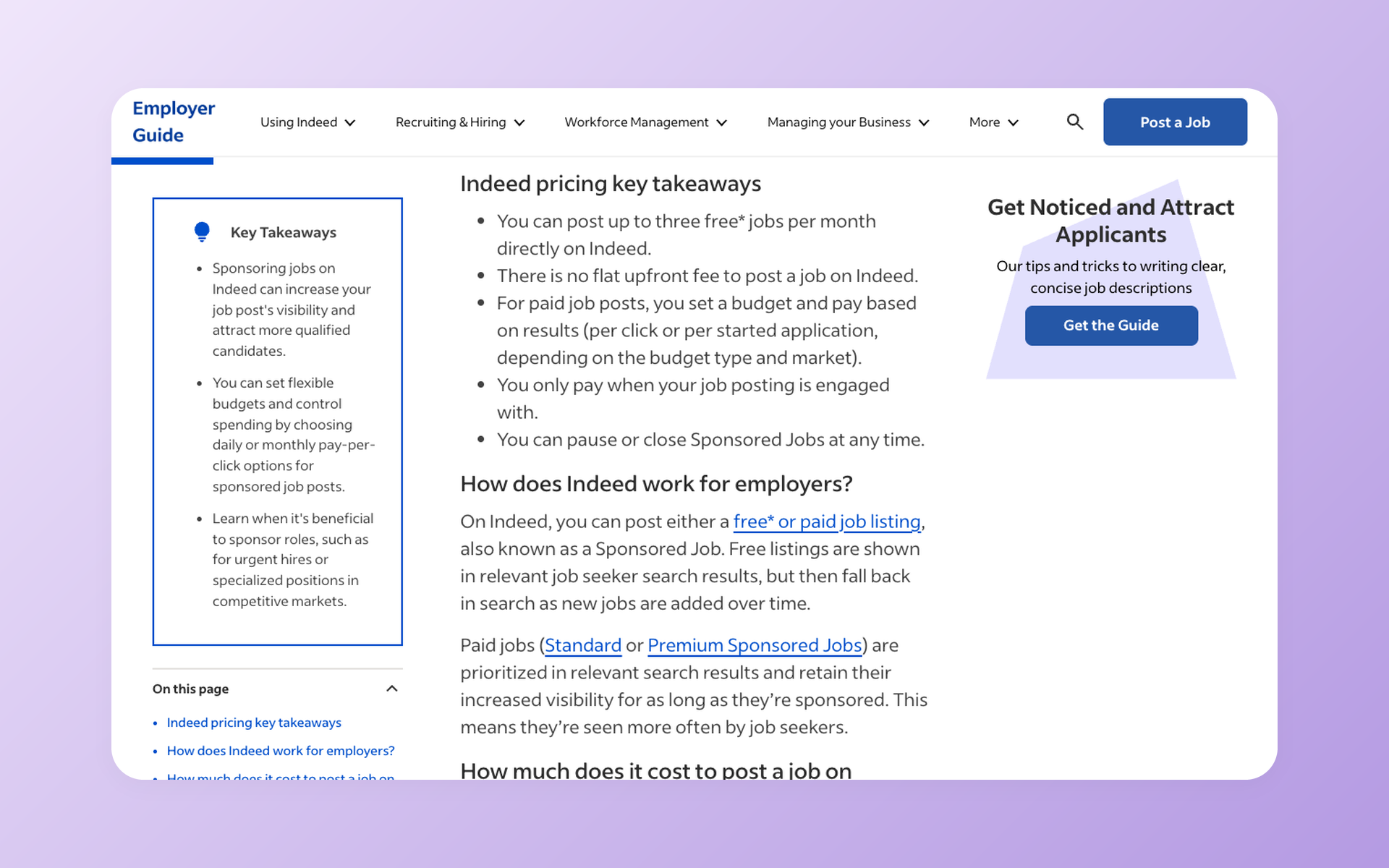
Direct employers get up to 3 free organic posts per month. A free post stays live for around 30 days, and its visibility decays fast as newer listings pile on top.
Sponsoring moves you back up the feed. You set a daily or monthly budget and pay when candidates engage. Indeed's published minimum is $5 per day, and employers have reported a new $25 minimum per job added to a campaign since mid-2025.
Two policy details catch teams off guard. Staffing and recruiting agencies cannot use free posts at all: US agencies since 2017, UK agencies since May 2024. And new employer accounts sit in verification for 24-48 hours before jobs go live.
One more: the first time you post, Indeed auto-creates a company page for you. Claim it. An unclaimed page with no logo and no responses is the first thing candidates see.
The cost squeeze and how employers handle it
Indeed has been getting more expensive, and not quietly. One SMB employer reported cost per legitimate application jumping from about $18 to $45 after a 2024 pricing change.
Recruit Holdings' own earnings commentary credits monetization for its HR technology revenue growth. Industry analysts on the Chad and Cheese podcast estimate Indeed and LinkedIn together take around 80% of a typical recruiting ad budget, which gives them room to raise prices.
The employers who cope well do four things:
- Cap spend with daily budgets and measure each channel by cost per hire, not cost per click. Our guide to Indeed job posting costs breaks the math down.
- Use screener questions and auto-reject rules so unqualified volume never reaches a human.
- Refresh listings instead of reposting: identical reposts violate Indeed's terms and get flagged. Vary the title and description when you relist.
- Build an owned candidate database so the second hire for a role costs less than the first. Enterprise talent leaders interviewed on the Chad and Cheese podcast describe cutting job-board spend by 30-50% in favor of owned channels; the SMB version of that play is an ATS.
Applicant volume vs applicant quality
Indeed's strength is volume, but that volume creates extra screening work. Recruiters describe getting 100 applicants from an Indeed ad and finding about 20 actually relevant.
G2 and Capterra reviews of Indeed repeat the same pattern: unqualified applications are hard to filter, and matches can miss.
To be fair, Indeed includes real screening basics: screener questions, knockout auto-rejection, in-platform messaging, interview scheduling, and simple analytics. For a single role, that toolkit can be enough.
What it does not give you is structured evaluation across every source: one pipeline where Indeed applicants, referrals, and career-site candidates get scored and compared the same way. That gap is where hiring teams lose the most time, and we come back to it below.
Glassdoor for employers: reviews, salary data, and employer brand
Glassdoor no longer sells job posts of its own. Its hiring inventory is tied to Indeed, so your posting budget goes to Indeed, not Glassdoor. Do not pay twice for the same listing.
What Glassdoor still owns is the research moment: the point between a candidate seeing your job and deciding to apply.
The free layer: profile, reviews, and salary research
According to Glassdoor's own research, 86% of candidates check company reviews before applying, and 71% say their perception of a company improves when the employer responds to reviews.
Those are the platform's self-reported numbers, but the behavior they describe matches what every recruiter sees.
Candidates cross-check more than culture. Glassdoor is the default place to research salary ranges and interview processes, so the pay you post gets compared against what employees report. If those numbers clash, candidates notice before you ever hear about it.
The free employer account covers the essentials: claim your profile in the Employer Center, respond to reviews, post company updates, and read basic analytics on who is viewing you.
Most employers leave this lever untouched. A UK hiring agency audited 60,000 job ads and found fewer than 0.5% mentioned the company's Glassdoor rating. Teams with strong ratings sit on brand proof they already earned and never show it.
The verdict on the free layer: it is the highest-leverage no-cost channel in hiring. It costs attention, not money.
Paid employer branding: what it is and who actually needs it
Glassdoor's paid product is employer branding, not job ads: an Enhanced Profile with richer content, competitor insights, and deeper analytics. Pricing is custom quote only; there is no public price list.
Since the consolidation, the paid package spans both platforms. One branding subscription now covers the Glassdoor Enhanced Profile and Indeed company page content together, through a shared employer branding hub. A Glassdoor-only paid tier no longer exists.
Who needs it? Mostly enterprises hiring at volume in competitive markets, where a one-point lift in apply rate is worth real money. Quote-only pricing makes the ROI hard to compare, and that is a legitimate knock on it.
For most SMBs the playbook is simpler: keep the free profile healthy and skip the separate budget line.
Managing Glassdoor reviews without making things worse
Reviews are the part of Glassdoor employers actually lose sleep over. The practitioner advice on handling them is messier, and more useful, than the official guidance.
Responding is a genuine split. Plenty of HR professionals argue a public reply to a negative review reads as defensive, and they skip it.
The pro-response camp has one rule: be consistent. Respond to all of them or none, since answering only the flattering ones looks worse than silence.
A perfect rating is its own red flag. Candidates and HR peers alike read an all-positive profile as curated. A solid rating with thoughtful responses to criticism beats a suspicious perfect score.
Review farming backfires. Mass 5-star pushes after a bad review, reviews tied to promotions, reviews requested during the application process: candidates spot the same-week cluster of glowing posts, and Glassdoor's detection flags it too.
Legal pressure usually fails. Employment lawyers warn against sending cease-and-desist letters over negative reviews. Truthful statements and opinions are protected, and discussions of working conditions can fall under the National Labor Relations Act.
The NLRB's McLaren Macomb ruling went further and made broad non-disparagement clauses in severance agreements vulnerable.
The moderation question deserves a straight answer. Some users on Reddit, X, and industry podcasts question whether review moderation is applied evenly to paying and non-paying accounts.
Glassdoor publishes review-moderation rules, and the perception persists anyway. Treat it as reputation context, not established fact.
The durable fix is unglamorous: improve what employees actually say, respond consistently, and never farm reviews. Everything else is cosmetics.
Where should your hiring budget actually go
Here is the full decision framework, based on your situation.
| Your situation | On Indeed | On Glassdoor | Where an ATS changes the math |
|---|---|---|---|
| Need applicant volume fast | Sponsor with a daily cap | Make sure the profile keeps candidates from dropping off | Knockout questions and AI ranking keep the volume reviewable |
| Hourly and local roles | Free post first; sponsor if it stalls | Low priority; these candidates research less | Fast screening matters more than brand here |
| Competitive salaried roles | Sponsored post with accurate salary | High priority; they read everything | Structured evaluation keeps the strong ones from stalling in your inbox |
| Repairing a weak reputation | Expect a lower apply rate meanwhile | Respond consistently for several quarters | Candidate experience is part of the repair; slow replies feed bad reviews |
| High-volume, multi-role hiring | Budget per role, measured by cost per hire | Keep the profile current as ad spend scales | This is the scenario where an ATS pays for itself fastest |
| 1-2 hires a year | Free posts and Indeed's own tools may be enough | Claim the profile, respond when reviews appear | Probably not yet; revisit when roles overlap |
A typical SMB hiring budget can start at zero: free Indeed posts, claimed profiles on both platforms, and accurate salary data. Sponsorship gets added per role, judged on cost per hire.
Branding subscriptions are an enterprise-scale decision. Most smaller teams get the bulk of the value from a maintained free profile.
What happens after the click: the layer neither platform manages
Every comparison of these two platforms stops at the same line: the apply button. Reach gets candidates to click. Reputation convinces them to follow through. Then the applications pile up in an inbox and need routing, screening, and follow-up.
That post-click layer is what an ATS is for, and it is the part 100Hires was built around.
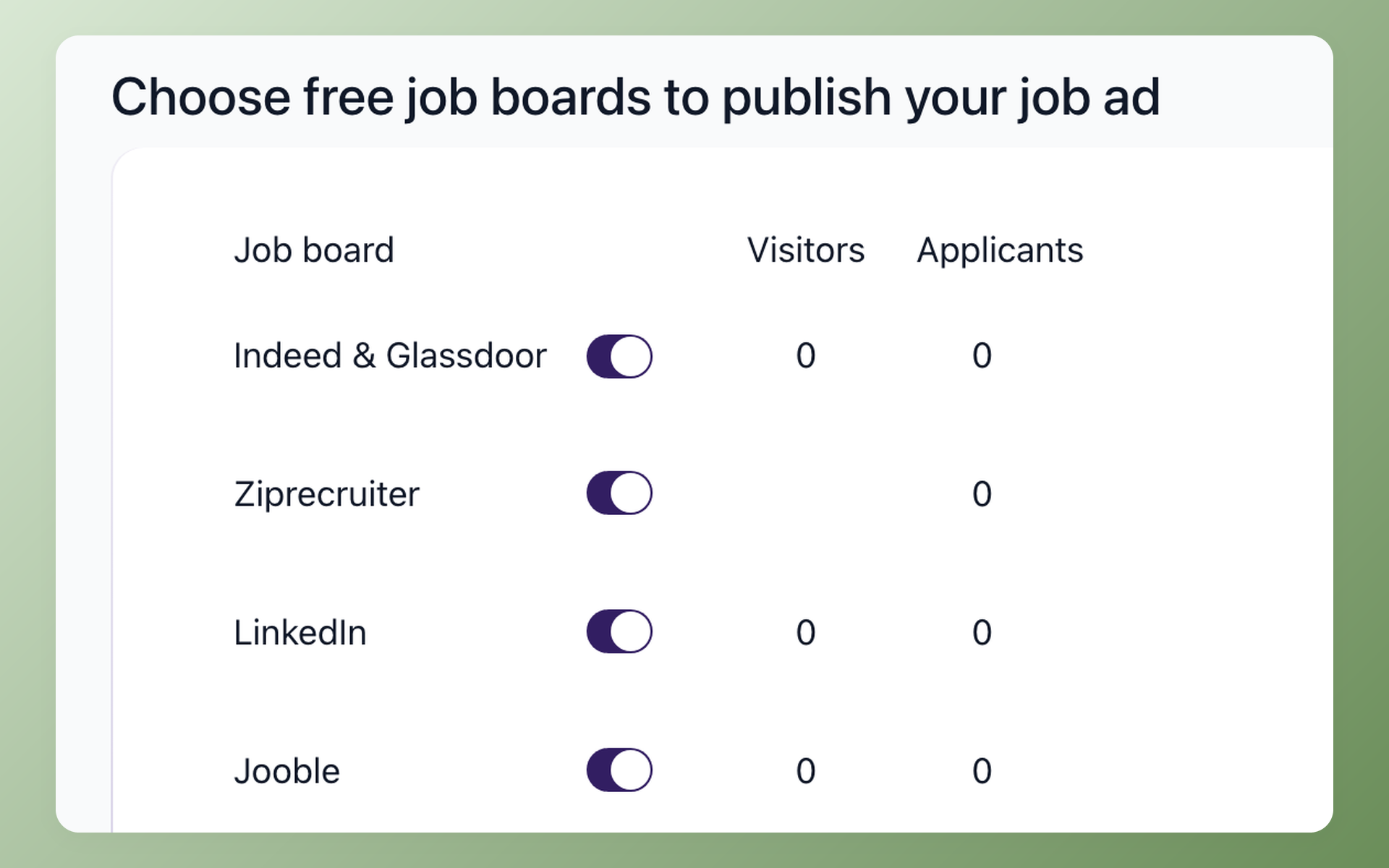
The merger even shows up in our product. 100Hires has a single Indeed and Glassdoor toggle: flip it on and the posting goes to both, since they are one distribution channel now. The same job goes out to 13 named boards from one screen, with no per-board fee.
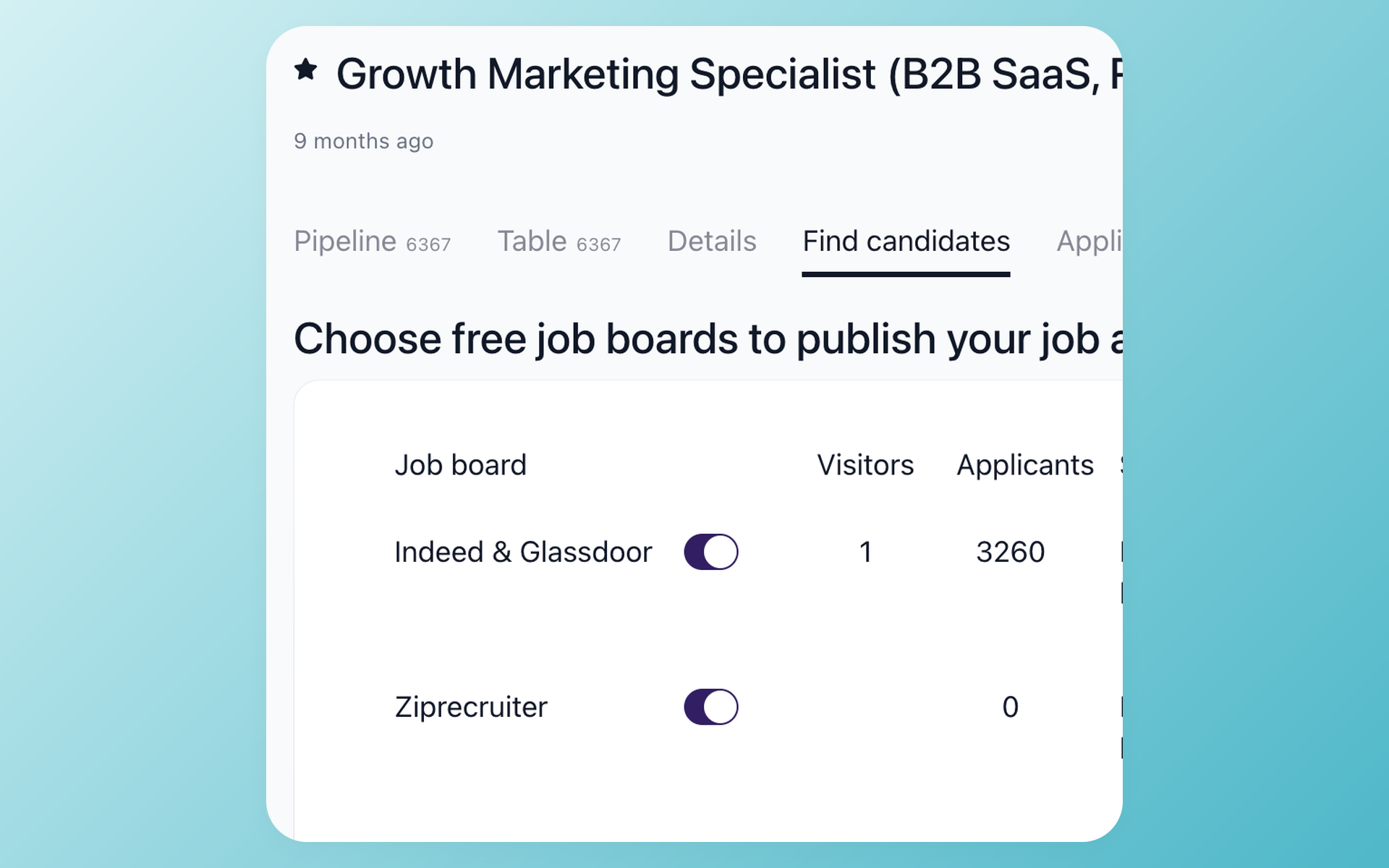
Once applicants arrive, the volume problem gets handled in order:
- Knockout questions filter out the clearly unqualified before anyone reads a resume.
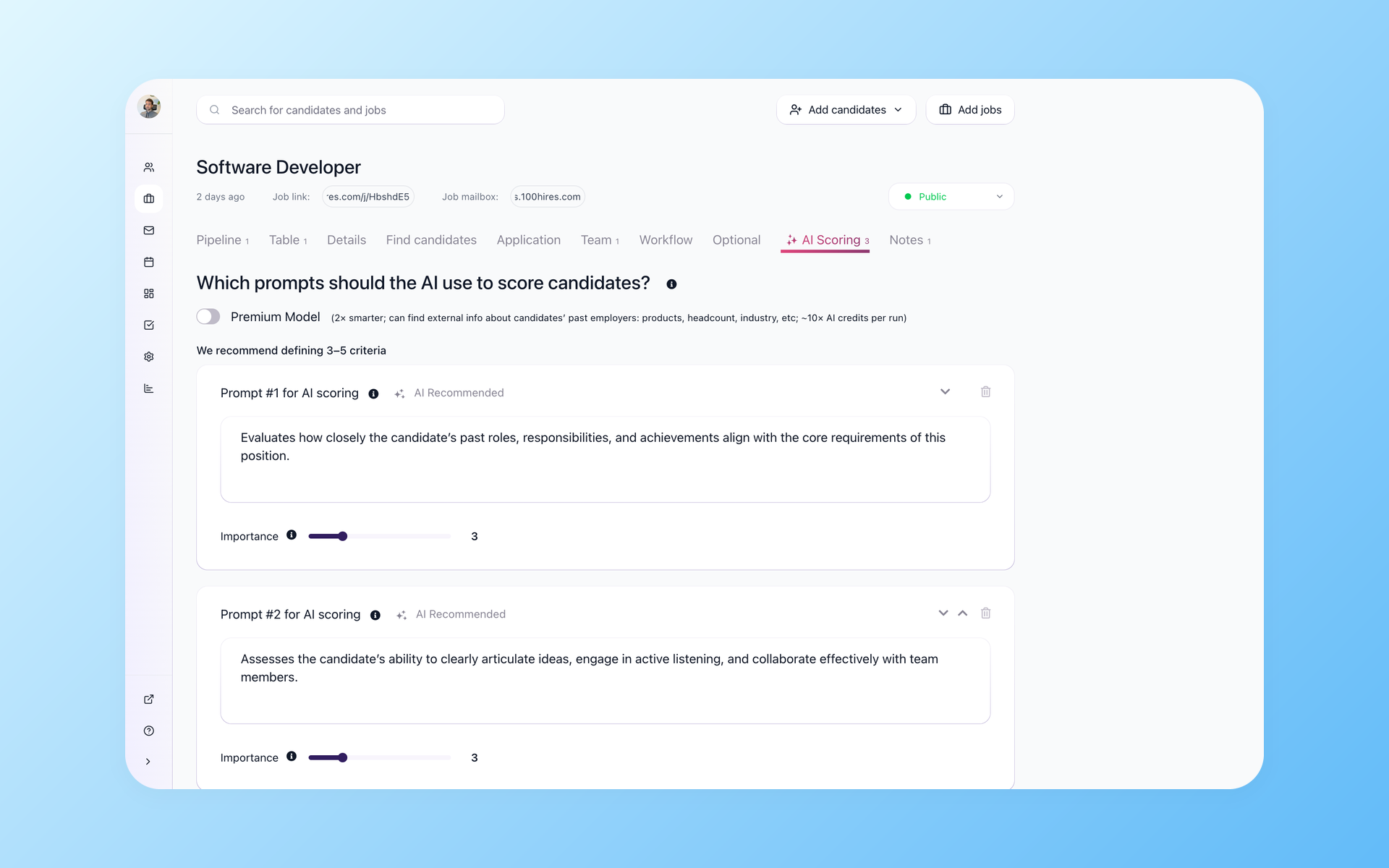
- AI Score ranks every incoming applicant against the job requirements, so the shortlist surfaces instead of getting buried.
- AI Copilot drafts outreach and screening messages, and pipeline stages help the team evaluate candidates the same way from every source.
- The Sources report shows which board produced applicants and hires. Indeed and LinkedIn are consistently the two largest applicant sources across 100Hires customer accounts, and the report shows whether your spend produced applicants and hires.
Indeed finds the people; 100Hires is where you decide.
Two honest limits. 100Hires is not a job board: it does not replace Indeed's reach or Glassdoor's reviews, and you still pay the boards directly for sponsored placement at the rates they set.
And one caution from recruiters who switched tooling: application friction costs candidates, so keep the apply flow short and mobile-friendly wherever it lives.
Third-party reviewers support the small-business fit: Forbes Advisor rates 100Hires 4.8 and names it best for startups and small businesses.
If you make a single hire a year, Indeed's own free tools may genuinely be enough. Once you have two overlapping roles, the math changes: 100Hires starts at $49/mo billed annually ($99/mo month-to-month), with distribution to 13 named boards included.
The bottom line: Indeed vs Glassdoor for hiring teams
The bottom line: Indeed wins your job-ad budget, since it is the posting system of record for both platforms. Glassdoor wins your recurring attention: respond to reviews, keep salary data accurate, and skip the paid tier until you hire at enterprise scale.
Speed is the third variable nobody budgets for. Enterprise talent leaders interviewed on industry podcasts describe reviewing qualified applications within 24 hours, and at SMB size that pace comes from automation, not headcount.
One system sends the candidates, one system convinces them, and your ATS decides how fast you hire. Book a 100Hires demo to see the post-click side working on your own roles.
FAQ
Is Glassdoor owned by Indeed?
Recruit Holdings owns both companies and announced in July 2025 that Glassdoor's operations would be integrated into Indeed. Glassdoor still runs as a site and brand, but its footer now reads Indeed, Inc. For employers using an ATS like 100Hires, the two are already treated as one distribution channel with a single posting toggle.
Can employers still post jobs directly on Glassdoor?
No. Glassdoor retired direct job posting; attempting to post there routes you to Indeed, and Indeed listings appear on Glassdoor automatically. 100Hires handles this with one combined Indeed and Glassdoor toggle, so a single posting covers both platforms plus the rest of its 13+ board network.
Do Glassdoor and Indeed show the same jobs?
Largely yes. Since the platform integration, jobs posted on Indeed sync to Glassdoor automatically, and edits or removals carry over. The sync is one-directional, from Indeed to Glassdoor. Teams using 100Hires see both listings created from the same posting, with applicants from each tracked separately in the Sources report.
Should I use Indeed or Glassdoor to apply for jobs?
For job seekers the listings are largely the same, so apply wherever the flow is shortest. Employers should read that as a warning: every extra click in your application costs candidates. 100Hires customers shorten the apply flow with career-site forms and an Apply with Indeed autofill option.
Does anyone still use Glassdoor?
Yes, but its role has narrowed. Glassdoor remains the default place candidates research salaries, reviews, and interview processes before applying, even when they found the job elsewhere. That research moment is why employers on platforms like 100Hires keep their Glassdoor profile claimed and respond to reviews, even when job ads run through Indeed.
What does it cost to hire on each platform?
Both offer a free baseline: Indeed gives direct employers up to 3 organic posts per month, and Glassdoor's employer account is free. Indeed sponsorship runs on a budget you set, from a published $5 per day minimum, with a reported $25 minimum per job added to a campaign. Glassdoor's paid branding is quote-only. 100Hires starts at $49 per month billed annually and includes distribution to 13 named boards.
Try 100Hires for free
No credit card. 14-day trial. Forbes Advisor #1 ATS for SMBs.