
Manufacturing Recruitment: How to Hire Manufacturing Employees in 8 Steps (2026)
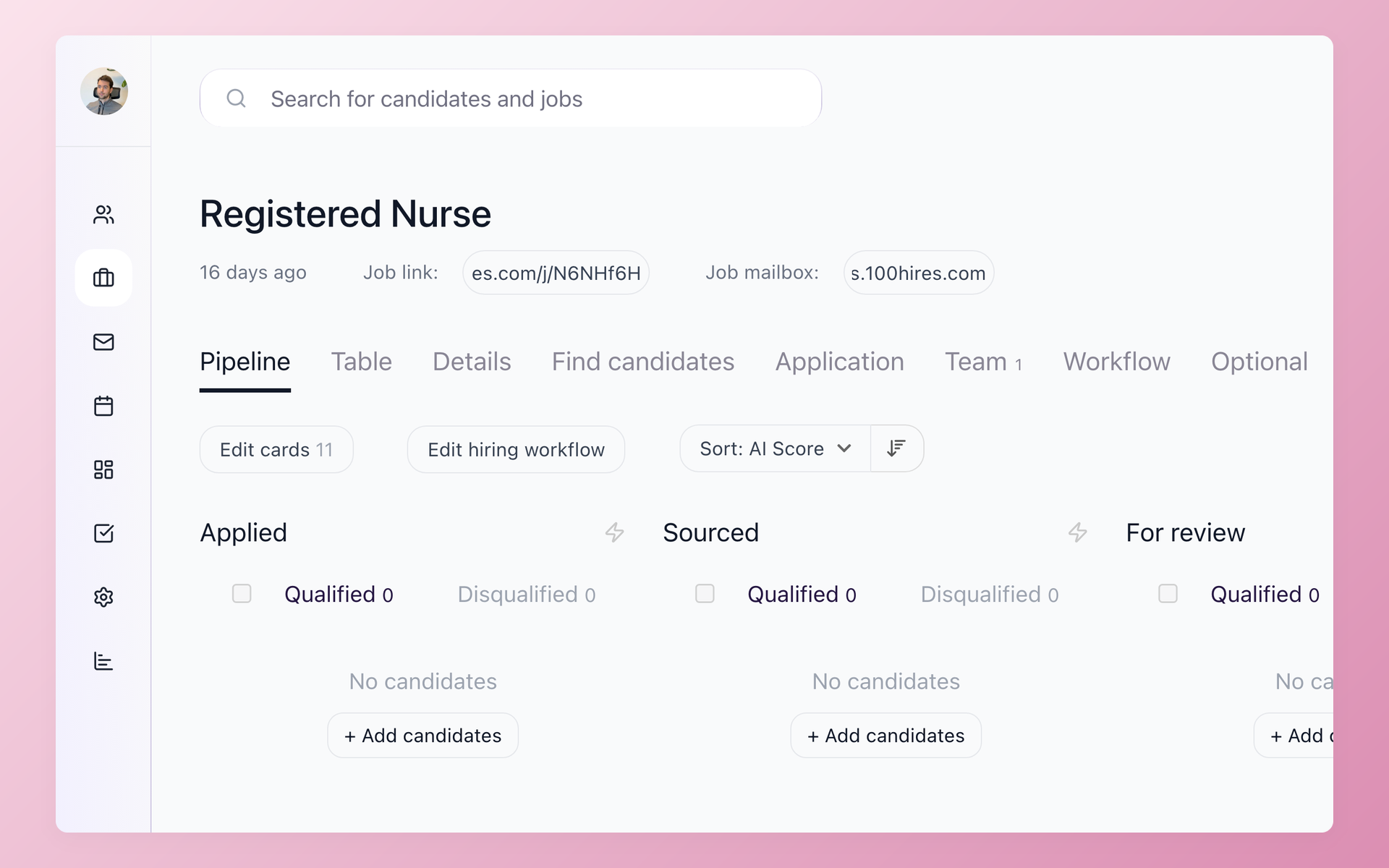
How do you hire manufacturing employees when every shop in town is short-handed? This guide is an 8-step playbook: the offer, the job post, sourcing channels that reach the floor, screening, speed, and the first 90 days.
The scarcity is real. Deloitte and the Manufacturing Institute project that manufacturers will need about 3.8 million new workers by 2033, and around 1.9 million of those roles could sit unfilled.
Yet most plants lose candidates they already had: the machine operator who applied Monday and heard nothing until Thursday, the welder who no-showed an interview booked nine days out. Those losses come from process, and process is fixable.
Everything below is written for the HR manager or plant manager who owns hiring at a small or mid-size manufacturer, often alone.
Key takeaways
The hiring playbook, in your inbox
One email a week - benchmarks, AI screening tactics, and short interview templates from the 100Hires team. No product pitches.
- Fix the offer before you post. Your real competitor is the warehouse across town, and your applicants know the local wage floor better than you do.
- Plant workers are not on LinkedIn. Indeed, Facebook, referrals, trade schools, and signage do the actual sourcing work.
- Screen with knockout questions and a 10-minute hands-on test, not an hour of online assessments.
- Speed wins hires. Same-day first response, interviews within 48 hours, and offers in days beat any employer brand campaign.
- Retention is part of hiring. A week-one mentor and a visible wage ladder keep you from reopening the same role every quarter.
Why manufacturing recruitment feels harder than it used to
Three forces stack on top of each other. The workforce is aging: McKinsey estimates roughly a quarter of manufacturing workers are now 55 or older, up from about 10% in the mid-1990s. Every retirement takes decades of tribal knowledge out the door.
Perception lags reality. Many candidates still picture dark, dirty, dangerous factories, and fewer young people enter the trades than leave them.
And the competition changed. Air-conditioned warehouses and retail chains now set the local wage floor for the same labor pool.
Applicant volume is not the bottleneck, though. iCIMS platform data shows applications for hourly roles grew about 26% in a year and hires still fell 7%. Plenty of applications, not enough hires. That points at screening and speed, the parts you control.
One more honest note. Practitioners who hire for the floor keep repeating the same line: part of every local "shortage" is a wage, shift, or title mismatch. The good news is that all three are fixable, and that is exactly where the playbook starts.
Step 1. Fix the offer: pay, shift, and benefits that clear the local floor
Before a single job post goes live, benchmark the wage. Pull BLS wage data for production occupations in your metro, then check what warehouses, distribution centers, and big-box retail pay within commuting distance. That number, not last year's payroll, is your floor.
Use accurate titles. Half the frustration skilled applicants report comes from "machinist" ads that turn out to be entry-level operator jobs. An operator posting priced honestly outperforms an inflated machinist posting that insults both audiences.
Name the shift in the offer, with the differential. Fixed shifts are a genuine hiring advantage: workers routinely leave for a slightly lower rate on a schedule they can plan a life around. If you can hold a shift steady, say so loudly.
Benefits matter on the floor, but a specific set of them: predictable PTO, a health plan people can afford to use, retirement match, paid certifications, and attendance policies that do not punish a sick kid. Perks like game rooms convince nobody at $19 an hour.
Show the ladder. A wage range with visible progression, for example operators in the high teens to low twenties, setup machinists in the mid-to-high twenties, and programmers at thirty and up depending on the market, tells a candidate what year three looks like.
Job hoppers stay where the next raise is already mapped.
Step 2. Show the real workplace, then write a post that sells it
Candidates trust what they can see. Real photos of the actual line, a short phone video of a day in the life, and management answering Google and Indeed reviews do more than any careers-page slogan.
A short facility video answers the questions every candidate has before they apply, and it lets bad fits self-select out before they cost you an interview slot.
Then write the post like marketing, not a duty list. Lead with pay, shift, and what the person will actually make or run. "Join a 12-person shop machining parts for surgical robots, $24 to $29 to start, fixed day shift" beats "Machine operator needed, must be detail-oriented."
Be blunt about the hard parts. If the shop hits 95 degrees in July and overtime is mandatory during quarter close, put it in the post.
Recruiters who lay out the hard parts up front, almost selling candidates away from the role, report fewer no-shows and far fewer week-one quits, since the people who show up knew exactly what they said yes to.
Keep the application under 15 minutes on a phone. Long forms, document uploads, and account creation all leak hourly candidates who are applying from a break room.
Step 3. Turn your crew into recruiters
Referrals are the highest-trust channel in manufacturing recruitment, and the cheapest per quality hire. Your welders know other welders. Your best operator's cousin already knows what the plant smells like and applied anyway.
A structure that practitioners report working: $500 per referral, paid once the new hire passes 60 days. The delayed payout builds a retention filter into the bonus itself. Some shops swap cash for an hourly bump while the referred employee stays active.
Referred hires arrive pre-sold with realistic expectations, which is why they stick. The referrer already told them about the heat, the overtime, and the supervisor's quirks.
Seed the program on day one. Make "who do you know from your last shop?" part of onboarding, and remind the floor every time a bonus gets paid out. A referral program nobody hears about pays nothing.
Step 4. Source where plant workers actually look
Start with the workhorses. Indeed and ZipRecruiter are the workhorse boards for hourly manufacturing roles, and Indeed's resume database is where experienced tradespeople quietly signal they are open. Recruiters who work blue-collar roles call it their bread and butter.
Do not stop at posting. Post-and-pray produces the exact pile of unqualified applications the iCIMS numbers describe. Search the resume database, call people, and treat your sponsored ad budget as a dial you tune per role, not a set-and-forget expense.
Facebook is the most underrated channel for the floor. Local jobs groups cost nothing, and Meta ads can be geo-targeted down to the radius around a competitor's plant and timed around shift changes. Simple ads work best: the pay, the shift, one reason your shop is better.
Physical still works: a banner on the building with a short application URL, billboards on the commute route, county job fairs, and a standing weekly open-interview hour advertised in every post.
Two channels almost nobody uses. Veterans: build a simple crosswalk from military occupation codes to your job titles and show up at base transition fairs.
And your county workforce development board sends pre-screened candidates for free; those hires have qualified for Work Opportunity Tax Credits in past years. The federal program lapsed at the end of 2025 and is awaiting congressional renewal, so keep documenting eligible hires.
One recruiting leader reports capturing over $200,000 in credits from a single location's hiring.
Now the anti-channel: LinkedIn. Recruiters who moved from office roles to plant roles agree that machine operators, welders, and material handlers are simply not there. Save the InMail budget for engineers and plant management.
For repeat hourly roles, a high-volume hiring workflow keeps boards, screening, and reminders in one process.
Staffing agencies remain a legitimate fallback for surge hiring or temp-to-hire tryouts. You pay a markup on every hour for the privilege, so treat them as a deliberate choice for speed, not the default because your own funnel is quiet.
Step 5. Build school and apprenticeship pipelines
The channels in step 4 fill this quarter's open roles. Schools fill next year's.
Pick a handful of nearby trade schools, community colleges, and high-school CTE programs, and go deep instead of wide. Recruiting leaders who run these programs say about five is the most one HR team can genuinely nurture.
Nurturing looks like this: send an alum from your own floor to every career fair, fund a small named scholarship for books or tools, host a reverse career fair where students tour your facility, and show up in person before each class graduates.
Build relationships with the instructors and ask privately who is reliable. Instructors always know.
Pair the school pipeline with train-for-aptitude hiring. Hire the reliable fast-food shift lead with zero machining hours, put them on a bandsaw, and promote through the wage ladder from step 1.
Shops that grow their own machinists stop bidding against everyone else for the same shrinking pool of finished ones.
Registered apprenticeships formalize the same idea, and many states subsidize them. They work when the path is explicit: helper to journeyman, with dates and dollar figures attached.
Step 6. Screen fast with knockout questions and hands-on tests
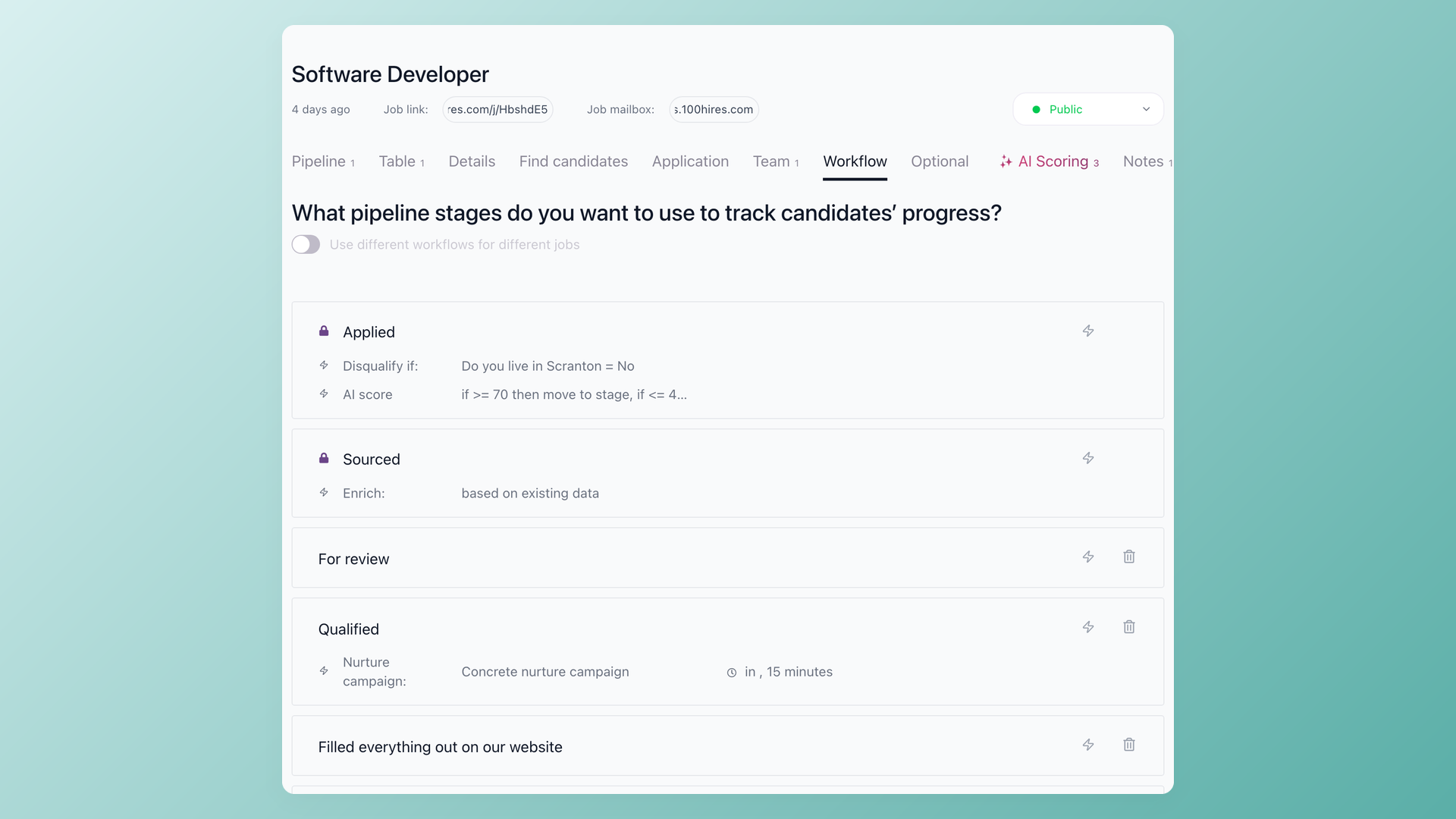
Remember the 26%-more-applications problem. Screening is where those applications go to die slowly, unless you automate the first cut.
Put knockout questions at the top of the funnel: Are you available for the posted shift? Do you have reliable transportation to the plant? Do you hold the required certification, for example a current forklift license? Are you 18 or older?
Can you lift 50 pounds as described in the job requirements? Are you legally authorized to work in the US?
Keep the wording tied to real job requirements, and route disqualified applicants to a polite automatic reply the same day. Word the work-authorization question exactly as above; asking about visas or citizenship invites discrimination claims.
Skip the assessment stack. Personality inventories and hour-long cognitive batteries crater completion for hourly applicants, and practitioners find attendance history and coachability predict success better anyway. If you test online, keep it under 15 minutes on a phone.
The real filter is hands-on and takes ten minutes. Machinist communities have refined this playbook for years: hand the candidate a micrometer and a part and ask for a measurement. Walk through a print together.
Ask them to talk through the order of operations on a simple part, plus a couple of shop-math questions.
Ten minutes of that exposes an inflated resume faster than any background questionnaire, and candidates with real skills enjoy showing them.
In the interview, one question earns its slot: tell me about your biggest mistake on the floor. Real experience always has a story. Then actually call the references, and treat the probation period as the final screening stage rather than a formality.
Hiring at volume? Work backwards from seats needed on day one, expect fall-off at every stage, and overhire the start class by a small margin based on your own no-show history. One staffing team describes it as what airlines do with seats.
Step 7. Move at hourly speed: this is where open roles are won
Recruiters who work these roles report that hourly and skilled-trades candidates apply to several employers at once and take the first real answer. Every day of silence hands the hire to whoever answers first.
The numbers back this up. The average corporate hire takes about 44 days, according to the Josh Bersin Company.
Ashby platform data shows candidates who accept clear the offer stage in roughly 2.8 days after the final interview round, against about 6 days for candidates who decline.
One veteran industrial recruiting leader reports filling skilled-trade roles in 33 to 38 days in major metros, and treats that as the bar.
So set response-time rules. First response the same day the application lands. Phone screen inside 24 hours. Onsite interview within 48 hours of the screen, since show rates fall with every extra day of gap. Hiring managers get 24 hours to give a yes or no on a resume.
Slow handoffs lose hires.
Plan for no-shows instead of resenting them. Recruiters in hourly manufacturing commonly report onsite show rates around 50%.
A practical cadence practitioners use to lift show rates: phone screen everyone first, send a confirmation with directions, text the day before, and text an hour before with something useful, like who they will meet and what to bring.
Reminders that carry new information get read; "are you still coming?" gets ignored.
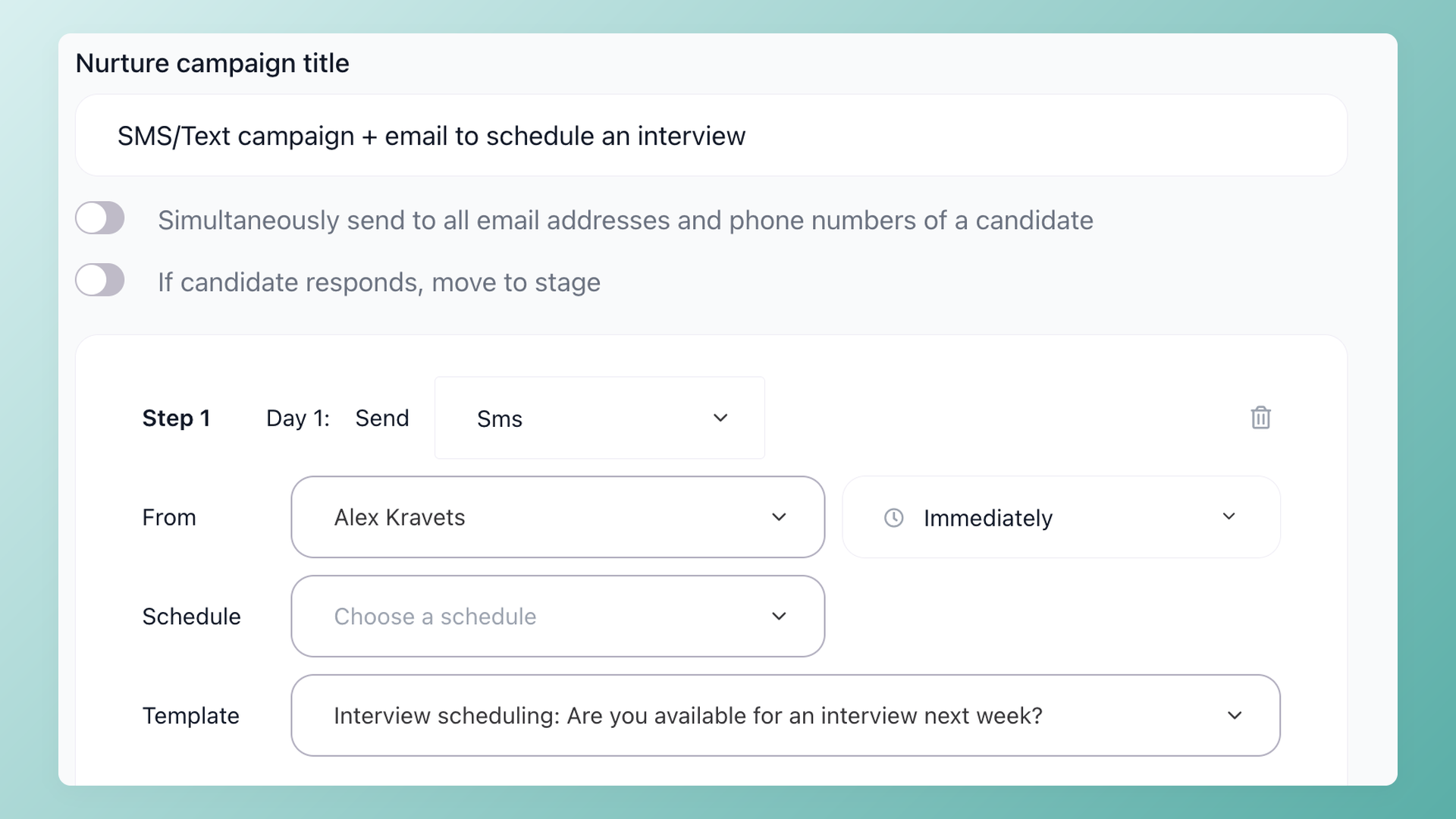
Text is the channel here. Floor candidates do not sit at a desk checking email, and they do not answer unknown numbers. SMS recruiting gets seen during breaks, which is exactly the window you are competing in.
Two process moves compress the back end. Run background and drug checks as post-offer contingencies instead of pre-offer gates, so paperwork never sits between a good candidate and a yes.
And let candidates book their own interview slot around a shift instead of playing phone tag.
Step 8. Keep the people you hire: retention is recruitment
Early turnover quietly reopens every role you just filled. Some plant managers report only one in five new hires lasting six months, and the same managers say people who cross the two-year mark stay for years. The battle is the first weeks.
The cheapest fix is a week-one mentor. A 2026 study of 1,250 manufacturing and logistics workers by Crossover Solutions and the Center for Generational Kinetics reported that 46% of frontline workers want a named peer they can ask small questions during week one.
Only 34% of managers thought it mattered. That gap is early turnover nobody sees coming.
Make the mentor a peer, not the supervisor. Supervisors get pulled into production fires, and the new hire goes quiet, then leaves.
Pair every new hire with a dedicated trainer for the first weeks and write down what they teach. One operations lead says a dedicated trainer shortened ramp-up by roughly half, and the notes become the onboarding manual for the next hire.
Then deliver the ladder you promised in step 1: milestone raises on schedule, and match a reasonable outside offer for someone you trained. Losing a two-year machinist over $1.50 an hour costs more than the raise every single time.
Some employers go further with financial-stability benefits like housing assistance. One benefits provider reports participating employees turning over at half the usual rate or less, an employer-reported figure worth testing rather than taking on faith.
People stay where next year is predictable.
Where an ATS fits into manufacturing recruitment
100Hires is our product, so read this section knowing that. An applicant tracking system automates the workflow above; it does not replace it.
The workflow looks like this. A candidate applies from a phone in under 15 minutes. Knockout questions screen out the mismatches automatically, the same day.
AI scoring can then sort the remaining applications against your criteria before a human looks at them.
Qualified candidates get a self-scheduling link and book their own interview around a shift. Automated email and text reminders go out ahead of the interview on the schedule you set; in 100Hires, texting runs through your connected Twilio number.
Offers go out in days, and every past applicant lands in a searchable talent pool for the next opening, which matters in high-turnover roles.
Multi-plant employers get one extra option: duplicate one role into local listings for each plant city, with all applicants routed back to one pipeline.
What an ATS will not do: it cannot fix a below-market wage, it is software rather than a staffing agency, and 100Hires specifically does not handle payroll, HRIS, or shift scheduling. Texting requires a Twilio account with US A2P verification, which takes some setup.
Decide on steps 1 through 8 first. The software only speeds up a process that already works on paper.
If you want the details, see our manufacturing recruitment software page, or start a 14-day free trial, no credit card required.
Frequently asked questions
What is manufacturing recruitment?
Manufacturing recruitment is the process of attracting, screening, and hiring workers for production roles such as machine operators, CNC machinists, welders, assemblers, maintenance techs, and production supervisors. It differs from office hiring in channels and pace: candidates are rarely on LinkedIn, they apply from phones, and they accept the first employer who responds. Applicant tracking systems like 100Hires are one common way teams keep up with that pace.
How do you recruit manufacturing employees?
Fix the offer against the local wage floor, write an honest post that names pay and shift, then source through Indeed, Facebook, employee referrals, trade schools, and workforce programs rather than LinkedIn. Screen with knockout questions and a short hands-on test, respond the same day, and interview within 48 hours. Many small HR teams automate the screening, scheduling, and reminder steps with an ATS such as 100Hires.
What is the 70/30 rule in hiring?
The 70/30 rule says a candidate should do about 70% of the talking in an interview and the interviewer about 30%. For plant roles it pairs well with a hands-on component: let the candidate talk through a print or a part while they work. In 100Hires you can attach structured interview questions and scorecards to each stage so every interviewer follows the same split.
What are the 7 stages of recruitment?
The classic seven stages are: define the role, source candidates, screen applications, interview, check references, make the offer, and onboard. In manufacturing the screening and speed stages carry the most weight, since application volume is high and candidates drop off fast. In an ATS like 100Hires, these stages appear as pipeline steps with automations between them.
How do you reduce interview no-shows for hourly manufacturing roles?
Shorten the gap and add touchpoints. Phone screen first, book the onsite within 48 hours, send directions with the confirmation, then text the day before and an hour before with useful details like parking and who they will meet. Being upfront about pay and working conditions filters out low-intent bookings. 100Hires sends the email and SMS reminders automatically and lets candidates self-schedule around their current shift.
Should you use a staffing agency or hire directly?
Agencies make sense for sudden surges, temp-to-hire tryouts, or markets where you have no employer presence yet, and you pay a markup on every hour for that speed. Direct hiring costs less per hire and builds your own talent pool, but it only works if you can respond to applicants fast. A common setup is direct hiring managed in an ATS like 100Hires, with one agency relationship kept for overflow.
Try 100Hires for free
No credit card. 14-day trial. Forbes Advisor #1 ATS for SMBs.