
Evergreen job posting: how to run one without the ghost-job backlash
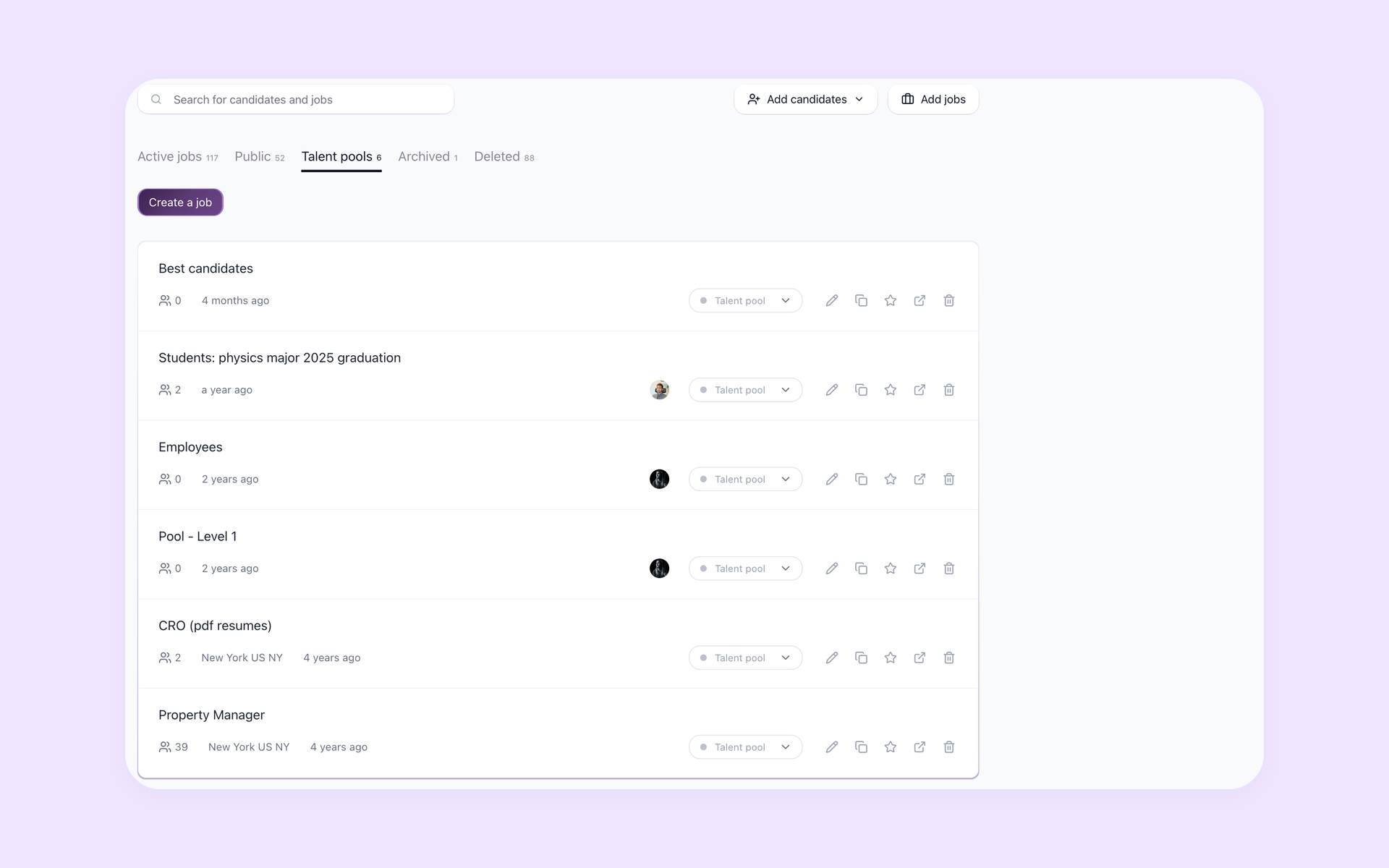
An evergreen job posting is a job you keep open on purpose to build a pipeline for a role you hire again and again, instead of closing it once a seat is filled.
That mechanic is legitimate. It is also one missing sentence away from looking exactly like a ghost job, which is why a Reddit thread titled "Evergreen Postings" sits at the top of Google for this term.
This guide covers what an evergreen posting is, when to run one, and how to run it so candidates trust you instead of adding you to a spreadsheet of fake listings.
A quick note on wording: people say evergreen job posting for the public listing and evergreen requisition for the record inside your applicant tracking system. They point at the same idea, so the guide uses both.
Key takeaways
The hiring playbook, in your inbox
One email a week - benchmarks, AI screening tactics, and short interview templates from the 100Hires team. No product pitches.
- Evergreen is not ghost. An evergreen posting is a deliberately open pipeline for a repeat role. A ghost job has no intent or budget to hire anyone. Disclosure is the line between them.
- Use it where turnover is structural, not for one-off headcount and not for government-contractor positions that must be posted individually.
- The real cost is reporting, not posting. One perpetual job ID hides how many roles are truly open and breaks your time-to-hire math.
- Job boards punish naive reposting. LinkedIn auto-closes a post at six months, so a genuine evergreen presence has to live inside your ATS as a pool.
- Disclose it, set a response promise, and nurture the pool. That combination is what keeps an evergreen role off the ghost-job list.
Is an evergreen job posting a ghost job?
No, but the two get confused for good reason. A ghost job is a listing a company has no intent or budget to fill. An evergreen posting is a standing pipeline for a role the company genuinely hires for on repeat. The mechanic is honest.
What turns it sour is silence about which one a candidate is looking at.
Recruiters and candidates draw this line in very different places.
A recruiting-firm CEO put it bluntly in a widely shared post. She has been in the field long enough to remember when ghost jobs were simply called evergreen requisitions.
The only thing separating the good version from the bad one, she says, is intent and transparency (Kim Dube on LinkedIn).
A recruiter on Reddit was even more direct, noting that evergreen jobs are what most candidates picture when they say "ghost posting" (r/recruiting).
There is a real credibility gap here, and it runs both ways. A vocal group of tenured corporate recruiters flatly deny that ghost jobs exist at all, treating the whole idea as candidate folklore. Their position deserves airtime.
It also runs into the numbers: in a ResumeBuilder survey of hiring managers, 40 percent said their company posted a fake job in the past year, and 7 in 10 called the practice morally acceptable (ResumeBuilder, 2024). Whatever you call it, candidates are not imagining the pattern.
For a platform-level baseline, Greenhouse analyzed its own posting data and found that in any given quarter, 18 to 22 percent of jobs on the platform are classified as ghost jobs (Greenhouse State of Job Hunting).
That is roughly one in five listings, from a single first-party source. It is also the number to use if you cite anything here, since the louder figures floating around social feeds trace back to press echoes without a primary survey behind them.
Here is the part almost nobody writes down. The pipeline requisition that a recruiter runs by hand and the evergreen feature a vendor ships are the same thing under the hood: a job you cannot hire into directly, feeding candidates to the roles you can.
Recruiters describe it, vendor systems automate it, and both work fine. The problem was never the mechanic. It was that candidates were never told which kind of posting they had found.
Ghost job vs evergreen posting vs standard requisition
| Posting type | Intent to hire | Budget or headcount | Told to candidates | When it closes |
|---|---|---|---|---|
| Evergreen posting | Yes, on a recurring basis | Opens as seats free up | Should be disclosed as a pipeline | Stays open by design |
| Ghost job | None | None | Hidden, looks like a live role | Never, or on a whim |
| Standard requisition | Yes, for a specific seat | One approved opening | A normal live opening | When the seat is filled |
Two things an evergreen posting is not
Two other kinds of "fake-feeling" postings get lumped in with evergreen roles, and they are worth separating so the conversation stays honest.
The first is a compliance posting: a role kept live for a legally required window even though an internal hire is already decided (r/humanresources). The second is a visa or PERM posting a company must run before sponsoring foreign labor. Neither is evergreen.
Both are one-time obligations, not standing pipelines.
And to keep this fair to the skeptics: even a legitimate pipeline can cross the line. As one candidate put it in a recruiter thread, a job kept perennially open to hunt for a unicorn comes across awfully like a fake job to everyone but the person who posted it (r/recruiting).
That is the test the rest of this guide is built around.
When should you use an evergreen posting, and when should you not?
The test is structural recurrence. Use an evergreen posting for a role you can prove you refill on a regular cadence, where a warm pipeline saves real time. Skip it everywhere else.
High-turnover roles are the clear fit. Typical annual turnover ranges, which vary by market and source, give you a quick gut check on whether a role qualifies:
- Insurance agents: 30 to 50 percent
- Real estate and mortgage: 40 to 60 percent
- Transportation and logistics drivers: 90 percent and up
- Hospitality and food service: 75 to 100 percent
- Fitness and wellness: 60 to 80 percent
- Automotive sales: 50 to 70 percent
When a role churns like that, you are hiring for it whether or not a seat is technically open today. A bank teller position that gets posted and filled inside a week, month after month, is the textbook case.
This is also the pattern behind a lot of high-volume and multi-store hiring, where the next opening is a question of when, not if.
We see it in our own customer base too: an insurance agency, an emergency-communications employer, and a healthcare staffing agency have all described their hiring as "evergreen" without any prompting from us. The word is already in the market.
When should you not use one? A few cases are clear:
- One-off headcount. A single approved seat is a standard requisition. Keeping it open after the hire just collects resumes you will not read.
- Niche unicorn hunts. A specialized role that sits open for months is the exact posting candidates read as a ghost job. If you are not actively hiring, do not pretend you are.
- Government-contractor positions that must be posted as individual openings for compliance reasons should not run as evergreen reqs.
- Any role where you cannot staff the follow-up. An evergreen posting that collects 500 applications nobody touches is worse than no posting at all.
How do you run an evergreen requisition in your ATS?
Every applicant tracking system forces one structural choice. You either run a parent-child model, where a generic parent requisition pools candidates and cannot itself make a hire, or you run a single persistent job that tracks each opening separately.
Which one you get depends on your vendor. Here is how the main systems handle it, with 100Hires shown first.
| ATS | Evergreen model | Native support |
|---|---|---|
| 100Hires | Persistent job (Talent Pool status, no expiry) | Assembled from documented features, no single "evergreen" toggle |
| Greenhouse | Persistent job, one Opening ID per hire | Documented best practice |
| Workday | Parent-child requisitions | Native |
| SAP SuccessFactors | Parent-child requisitions | Native, partner-enabled |
| Lever | Duplicate and relink | Workflow, not a dedicated object |
| Dayforce | Evergreen requisition and posting flags | Native |
| iCIMS | Not documented publicly | Public documentation not available |
Evergreen requisitions in Workday
Workday is the platform people ask about most, and almost nobody explains it, so here is the short version. Workday uses a parent-child model.
You create a generic evergreen parent requisition that pools candidates for a repeating role, then link the individual child requisitions that do the real hiring. You cannot hire on the parent itself.
When a genuine seat opens, you move a pooled candidate onto a child req and hire there. The parent never auto-expires, and background-check integrations skip it, which is why it suits same-title, multi-location, and seasonal roles.
One sourcing note for honesty: these mechanics come from public university and state implementation guides, such as the University of Wisconsin-Madison HR guide, rather than from Workday's own marketing pages.
SAP SuccessFactors parent-child reqs
SAP SuccessFactors runs the same parent-child idea, off by default and switched on by a partner. A "Forward as Applicant" action moves a selected candidate out of the evergreen pool and into a child requisition where the hire happens (SAP knowledge base).
It is aimed squarely at call centers, retail, healthcare, and other mass-hiring settings. One caution worth flagging: an SAP partner demo recommends leaving the location field blank on evergreen postings so they read as generic.
That is vendor-endorsed vagueness, and it matches every red flag candidates use to spot a fake job. Do the opposite.
Greenhouse and 100Hires: one persistent job, tracked per opening
Greenhouse takes the other path. You keep the same requisition open and add a new Opening ID for each unique seat, then hire against that specific opening so your time-to-hire computes per opening.
Greenhouse is explicit that you should not open a fresh job for every hire (Greenhouse best practice). 100Hires works the same way, using a Talent Pool status plus automations to keep one canonical job running. More on the exact setup further down.
The hybrids and the gap: Lever, Dayforce, iCIMS
The rest fall between the two models. Lever uses a duplicate-and-relink workflow, and its guidance warns against linking evergreen postings to reqs with fixed headcount.
Dayforce carries separate evergreen-requisition and evergreen-posting flags with an auto-refresh and a reapply cooldown.
iCIMS is the odd one out: there is no public documentation on how it handles evergreen roles, so treat that as a gap in the record rather than proof it cannot be done.
On cadence, two independent signals point the same way. Vendor guides tend to land on refreshing an evergreen posting every 60 to 90 days, and compliance guidance separately settles near a three-month review.
Neither is a hard study, so treat the window as a working convention: revisit the posting quarterly, and prune the pool while you are there.
How do you keep your hiring metrics honest?
This is the part that actually bites, and four separate sources land on the same failure: an always-on posting hides how many roles are truly open and makes time-to-hire impossible to compute. The problem with evergreen roles is rarely the posting. It is the reporting.
The recruiting analytics firm Textio frames the fix as a golden rule: one requisition ID should map to one hire and one job description (Textio). When a single evergreen job absorbs a dozen hires, your time-to-fill stops meaning anything.
The HR platform Eddy gives the same advice from the other side: open a real requisition for each actual opening so your metrics reflect reality.
The sharpest version came from the field.
On a high-volume hiring podcast, 7-Eleven's Head of Talent Acquisition described always-on evergreens as a band-aid the team had leaned on historically (Rachel Allen, High Volume Hiring Podcast).
She named the exact cost: it is hard to tell a story with your data when a role is just always on.
We heard the same thing from a healthcare staffing agency that left JazzHR over it. One evergreen job ID hid their true number of openings, so they could not see how many roles were actually live or track time-to-hire against them.
The fix is the same regardless of vendor: track each opening separately. That means Greenhouse Opening IDs, child requisitions in Workday or SAP, or a canonical job plus an automation funnel in 100Hires. Whatever the tool, one hire should still equal one countable opening.
What do LinkedIn and Indeed allow for evergreen reposting?
Here is the reason a real evergreen strategy cannot just live on the job boards: the boards actively penalize perpetual reposting. A genuinely standing pipeline has to run inside your ATS, with the boards fed from it on their terms.
LinkedIn auto-closes a job post after six months, and a repost counts as a brand-new post, so the applicant history on the old one is gone (LinkedIn Help).
Repost the same title and company within seven days and LinkedIn requires paid promotion to run it again (LinkedIn free job reposting limits).
Indeed pulls in the same direction: it wants one active post per position, tells employers to update rather than recreate a listing, and pushes duplicates down in ranking or toward paid sponsorship (Indeed employer policies).
Against those clocks, an ATS-side pool is what keeps a role continuous. A 100Hires Public job status has no built-in expiry, so the pipeline you build does not vanish on LinkedIn's six-month timer. It also changes the economics.
Flat-fee job posts usually run about a 30-day window for $200 to $500, and free listings are often plenty for a well-run evergreen role, since your pipeline is doing the heavy lifting.
When you do post, 100Hires multiposting pushes the role to several boards from one place, so you feed the boards from the pool instead of babysitting each listing.
How do you run evergreen postings without the backlash?
This is the payoff, and it is a system, not a slogan. The candidate-experience practices below are what separate a disclosed evergreen role from a ghost job in the eyes of the person applying.
Frame it as retention economics rather than charity. Candidates apply to roughly 15 similar roles at once, so the slowest employer to respond is the one that gets ghosted back (Rachel Allen, High Volume Hiring Podcast). Transparency and follow-up are not niceties here.
They are what lowers your re-sourcing cost.
Disclose it in plain language
Say the role is a pipeline. A single honest sentence in the posting does most of the work. A few options you can adapt:
- "We hire for this role regularly. This posting builds our candidate pipeline, so timing on any given opening can vary."
- "This is an ongoing posting for a role we fill often. We will reach out when a matching seat opens."
- "Pipeline role: we collect applications year-round and contact candidates as positions become available."
If you worry that disclosure scares people off, plenty of employers already label pipeline roles openly, whether in the job title or the requisition name, and candidates still apply. Recruiters share the same disclosure habit as simple good practice (Jaime Roldan on LinkedIn).
A clear line beats a vague one every time.
Set a response promise and keep the pool alive
One recruiter makes a simple commitment to every applicant: they will always get an answer either way, yes or no (Lillian Collazo on LinkedIn).
Turn that into process: an honest auto-acknowledgment on apply, a set review cadence for the pool, and a real rejection note when you prune it. And when a recruiter leaves, reassign their reqs and pools.
Orphaned pipelines with nobody watching them are a named cause of candidate ghosting (Elza dos Santos on LinkedIn).
Nurture instead of going silent
The dead-end to kill is the "we put your resume on file" line that everyone knows means the file is never opened again. Replace it with scheduled re-engagement and real matching, so a candidate in the pool hears from you before a role opens, not never.
That is the difference between a pool that works and a graveyard with a nicer name.
Be honest about volume, then cap it
Evergreen postings can pull enormous volume. A single widely shared listing can draw thousands of applications, and one operator described 500 weekend applications for 20 forklift slots. The rule follows from that: if you cannot review it, do not collect it.
Scope the pool, use knockout criteria to filter early, and close intake when the pool is full. Collecting resumes you will never read is how a good pipeline turns into the thing candidates hate.
The red-flag inversion checklist
Every signal candidates use to spot a fake job is a to-do list for running an honest one. Flip each one:
- Stale post with stacking applicant counts: refresh on cadence and show recent review activity.
- Vague, generic title: use the real title with a seniority level.
- No salary range: post the range.
- No named contact: name a recruiter or the hiring team.
- Blank or generic location: state the locations honestly, the opposite of the blank-location demo trick.
- No disclosure: add the pipeline sentence.
Are evergreen job postings legal?
Yes, evergreen postings are legal, and the compliance picture has two layers worth understanding: existing guidance and a wave of new disclosure laws.
Start with what is guidance, not law.
US Department of Labor and OFCCP regulatory text never mentions "evergreen." The familiar advice here comes from compliance consultancies staffed by former OFCCP people, such as Circa.
That includes closing a posting at three months, the worked example of a pool of 0 versus 140 counted applicants, and the warning that a one-to-one hire ratio can look like an audit red flag.
Treat it as informed best practice. One firm rule does apply to federal contractors: if you are required to post positions individually, do not run them as evergreen reqs.
The second layer is new, and it lines up with everything above. State lawmakers are targeting disclosure, not the evergreen mechanic itself. Roughly five states have introduced ghost-job bills, all centered on telling candidates the truth about a posting (Forbes).
New Jersey's pending bill is the one to watch, because it essentially describes this whole playbook.
It would allow a no-vacancy posting to run for up to 90 days as long as it carries a disclaimer and the employer has a genuine hiring history for the role, such as at least six similar hires in the prior year.
That is a legal safe harbor for a genuine, disclosed evergreen role. New York's bill passed its Senate with a $2,500-per-violation penalty for larger employers.
Reports of a Texas investigation into LinkedIn over ghost listings and an Ontario disclosure requirement point the same way, though the details on those are still worth verifying before you lean on them.
The direction is clear: disclose, and you are on the right side of where this is heading.
How do you run evergreen roles in 100Hires?
Straight answer first: 100Hires has no feature literally called "evergreen." What it has is a set of documented pieces that assemble into the evergreen workflow, and it is more honest to show the assembly than to slap a label on it.
The live Talent Pool page already names "evergreen or high-volume roles you hire for again and again" as its first use case, so this is extending positioning that exists, not inventing it.
Four features do the work:
- Talent Pool status collects and nurtures candidates without an active public posting. The job stays off the boards and career site but keeps its stages, automations, and AI scoring, so the pipeline is real even when no seat is live.
- Reposting automation is the piece that fixes the reporting problem. An "act if the form is filled" rule plus assign-to-job funnels every reposted listing's applicants into one canonical, long-running job, so per-candidate history and time-to-hire stay intact. This is the exact setup our team has walked always-hiring customers through.
- Satellite Jobs handle the multi-location case, posting a role across markets with the title, description, and salary adjusted per market, while every applicant funnels back to one canonical job.
- Nurture Campaigns keep the pool warm with multi-step email, SMS, and voicemail sequences that send in each candidate's time zone and stop automatically when someone replies.
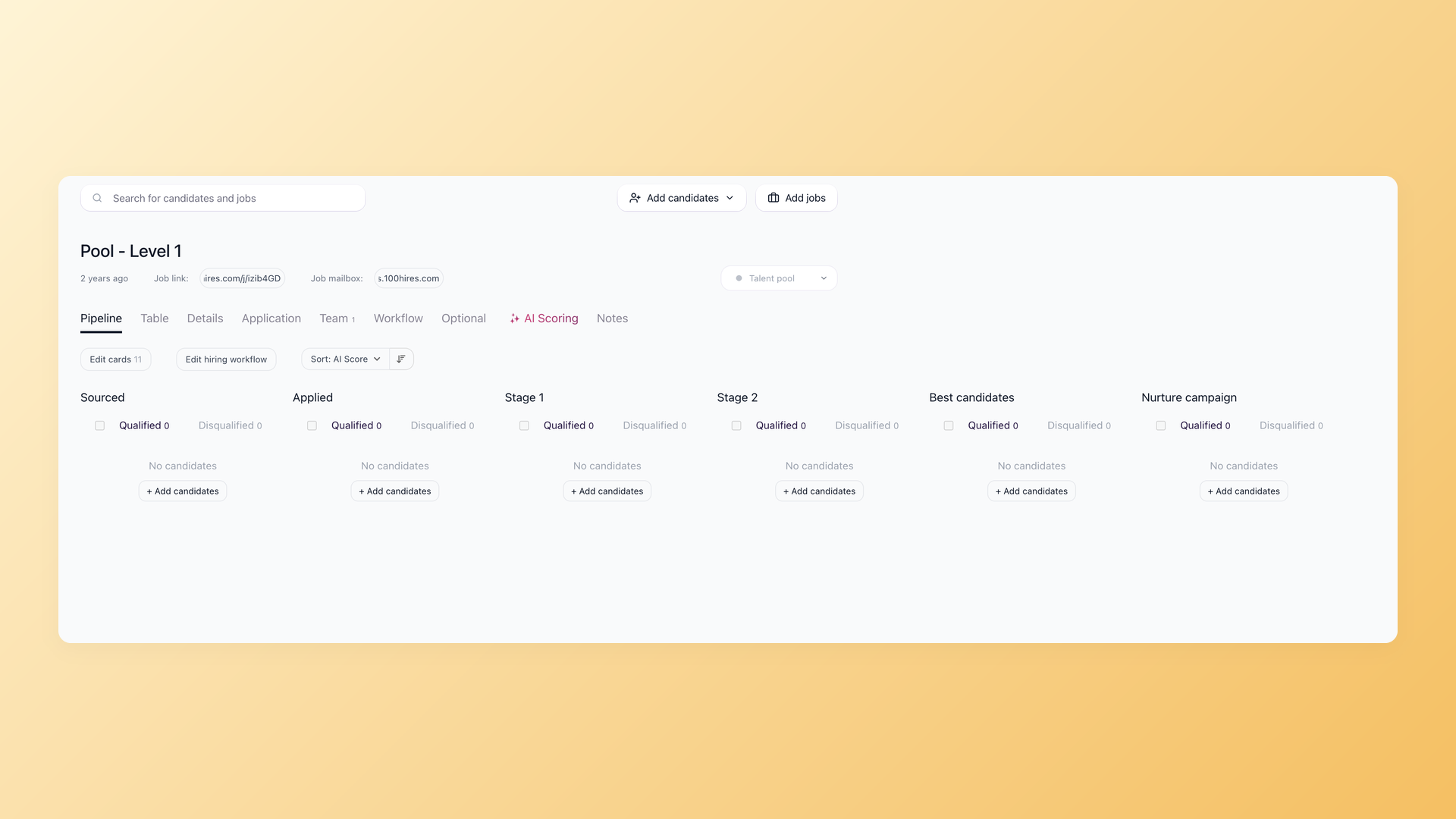
Where does it fall short? If you run a high-volume agency placing candidates into other companies, the Talent Pool is built for in-house teams first, and the 100Hires page says as much.
For a company hiring its own repeat roles, though, the four pieces above cover the evergreen pattern end to end, disclosure and reporting included.
Frequently asked questions
What does evergreen mean in a job posting?
Evergreen means the posting is kept open on purpose to build a pipeline for a role the employer hires for repeatedly, rather than closing once a seat is filled. In 100Hires, that pattern runs through the Talent Pool status, which collects and nurtures candidates even when no position is currently live.
What is an evergreen requisition in Workday?
In Workday it is a generic parent requisition that pools candidates for a repeating role but cannot make a hire itself. You link child requisitions to it and hire on those. 100Hires reaches the same result with a single persistent job plus reposting automation, so every applicant funnels into one canonical pipeline.
Is an evergreen job posting a ghost job?
No. An evergreen posting is a real pipeline for a role you genuinely refill, while a ghost job has no intent or budget to hire. Disclosure is the line between them, and 100Hires supports that with clear pipeline statuses and Nurture Campaigns that keep candidates informed instead of ignored.
How long should an evergreen posting stay open?
As a working convention, refresh it every 60 to 90 days, which lines up with compliance guidance that suggests a review around three months. Prune the pool each time. In 100Hires, reposting automation keeps one canonical job running so refreshing the listing does not scatter your candidate history.
Are evergreen job postings legal?
Yes. New state bills target disclosure rather than the practice itself, and New Jersey's pending bill would create a safe harbor for disclosed pipeline postings backed by a real hiring history. 100Hires makes the disclosure side simple, since you control the posting text and can label a role as a pipeline in plain language.
What is the difference between an evergreen posting and a talent pool?
An evergreen posting is a live listing that keeps taking applications, while a talent pool holds candidates with no active posting attached. They work together: the posting feeds the pool. In 100Hires, the Talent Pool status is where those candidates live, and you can read more on the Talent Pool page.
Run evergreen roles without the ghost-job reputation
An evergreen posting done in the open is a pipeline. The same posting dressed up as a live opening is a ghost job. The difference is one disclosure sentence and a response system you actually staff.
Get those two right and a standing pipeline becomes your fastest way to fill a recurring role, not a mark against your name.
Start a free 100Hires trial and set up a Talent Pool for your first evergreen role.
Try 100Hires for free
No credit card. 14-day trial. Forbes Advisor #1 ATS for SMBs.