
Blind recruitment: a practical guide to blind hiring (2026)
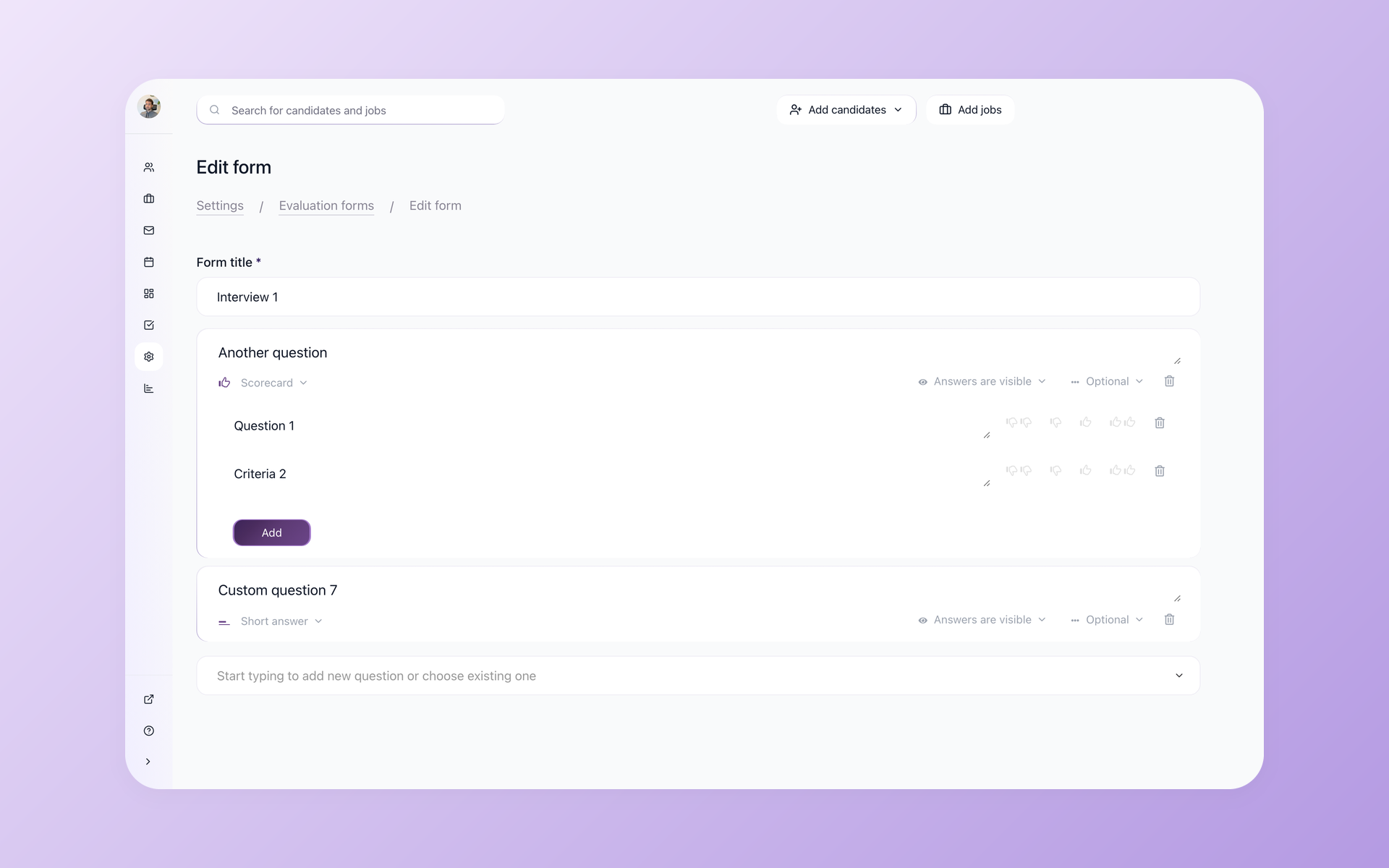
Blind recruitment means hiding the details that identify a candidate, such as their name, photo, age, and gender, so a first read of an application rests on skills instead of assumptions.
This guide is about that hiring practice, not about employing people who are blind or visually impaired, which is a separate subject.
Done well, blind hiring strips out bias that creeps in before anyone has read a line of experience. Done badly, it hides useful signal, frustrates the people it was meant to help, or just moves the bias one stage later.
You will get three things here: what to actually hide on a resume, what the research shows once you separate the good studies from the retold anecdotes, and how to blind your evaluators without losing the plot.
The short version
- "Blind hiring" bundles three different practices: anonymizing candidate identity, judging on skills and work samples, and blinding evaluators to each other's scores. Each has its own evidence and its own tools.
- The evidence that identity bias exists is strong. The evidence that anonymization fixes it is mixed, and in several real trials it reversed.
- The most durable win is a structured, independent evaluation process, not redaction software.
- Strip the name, photo, age, and gender markers from the first screen. Keep skills, work history, and portfolio visible.
- 100Hires blinds evaluators to each other's scores. It does not hide candidate identity.
What is blind recruitment
The hiring playbook, in your inbox
One email a week - benchmarks, AI screening tactics, and short interview templates from the 100Hires team. No product pitches.
Blind recruitment is a screening approach that hides personal information about a candidate during the early stages, so reviewers judge the work and the experience rather than the person.
In practice that means removing names, photos, ages, graduation years, and sometimes school or employer names before a human reads the application.
People use "blind hiring" and "blind recruitment" almost interchangeably. If you want a working distinction, treat blind hiring as the early-screening tactic and blind recruitment as the wider program that runs from application to offer.
It is a convention, not a rule, and the two terms point at the same idea.
One thing to be clear about up front: blind recruitment targets specific information and evaluation biases. It is not a whole diversity strategy.
Sourcing, representation, and inclusion after the hire sit outside its reach, and our diversity hiring guide covers that broader ground.
Identity is usually revealed by the interview anyway, which is exactly why the structure of your later stages matters as much as the redaction you do early.
The three things people call blind hiring
Most arguments about whether blind hiring "works" are really people talking past each other. The label covers three separate interventions, and they do not share the same evidence or the same tooling.
Sort out which one you mean and the rest of the conversation gets a lot clearer.
| Practice | What it targets | Evidence | Where it shows up later |
|---|---|---|---|
| Anonymizing candidate identity | Name and identity bias in first-pass screening | Mixed, depends heavily on context | Step 2 |
| Skills-first assessment | Pedigree bias and weak prediction | Strongest for structured interviews; work samples as a companion | Steps 3 and 5 |
| Independent evaluator scoring | Panel anchoring and groupthink | Clear mechanism, lighter field data | Step 4 |
Anonymizing candidate identity
This is the one most people picture: hide who the candidate is, their name, photo, age or graduation year, address, sometimes even the school or employer, before a human reviews the application. It carries the most-cited and the most-reversed evidence, which we get into below.
Few mainstream applicant tracking systems do this natively. A handful do, Lever offers anonymized resume review and Manatal advertises resume anonymization, but most teams end up improvising. 100Hires does not do this, and we will come back to that honestly.
Skills-first assessment
Instead of hiding pedigree, you can make it matter less. Front-load work samples, structured skills tests, and job-simulation tasks so the thing you judge is performance, not the logo on a resume.
Among the three practices, the structured-test and work-sample methods have the strongest track record for predicting who actually does the job well. Some tools sit around the edges of this.
Textio, for instance, flags gender-coded language in your job ads, though that is an adjacent fix rather than an anonymization tool.
Independent evaluator scoring
Here the candidate is fully known. The people you blind are the interviewers, from each other. Every one of them submits a score before seeing anyone else's.
The reason is simple: once one interviewer files a confident yes, the first strong opinion quietly becomes everyone's opinion, and the structure you built into your interview scorecard leaks right back out at the debrief.
The logic here is clean even if the field data is lighter than for skills tests. This is the practice 100Hires actually supports.
Does blind hiring actually work
Here is the rule that keeps this honest: evidence that hiring discrimination exists is one thing, and evidence that anonymization fixes it is another. The first is strong and consistent. The second is mixed, and it has reversed in real trials.
Most articles on this topic quietly slide from the first into the second. Do not.
Start with the discrimination side. In their 2004 field experiment, economists Marianne Bertrand and Sendhil Mullainathan sent about 5,000 fictitious resumes to real job ads and varied only the names.
Resumes with white-sounding names drew callbacks 10.08 percent of the time; identical resumes with Black-sounding names drew 6.70 percent, a gap of roughly 50 percent in relative terms. You can read the original NBER working paper for the detail.
One caveat worth stating: this was an audit that assigned names to measure discrimination. It never removed names, and it never tested blind hiring as a fix. A 2016 replication using different names found a much smaller racial gap, so even the size of the effect is debated.
The most famous "blind hiring works" story is the orchestra one.
When symphony orchestras started auditioning musicians behind a screen, the share of women rose, and economists Claudia Goldin and Cecilia Rouse linked the screen to a meaningful part of that rise (their original study is here).
It is a great story, but a 2019 reanalysis showed the headline numbers are shakier than they look, with wide error bars and round-by-round results that do not all point the same way. Keep the story, but do not attach a precise before-and-after percentage to it.
One widely repeated figure was later retracted as unreliable by the writer who spread it.
Now the part competitors skip. When researchers actually ran anonymization as an experiment, the results were all over the map, and in two cases they backfired.
Australia's public service ran a large trial in 2017, and de-identifying applications made reviewers less likely to shortlist women and minority candidates, since those reviewers had been quietly favoring them in the first place.
The government concluded that blind screening at that stage could actually work against diversity.
France ran a national trial a few years earlier; anonymous resumes lowered interview and hire rates for minority candidates, and the government dropped the mandatory rollout (the study is here).
The table below lays out what happened across five countries.
| Country | Study | What anonymization did | Did it survive to hiring? |
|---|---|---|---|
| Australia | BETA trial, 2017 | Reduced shortlisting of women and minority candidates, since reviewers already favored them | Shortlisting stage only |
| France | Behaghel et al., 2015 | Lowered interview and hire rates for minority candidates; helped women | Yes, and the policy was abandoned |
| Sweden | Aslund and Skans, 2012 | Raised interview rates for women and non-Western applicants | Minority effect faded by the offer stage |
| Germany | Krause et al. | No net change; direction varied by employer | No clear effect |
| Finland | Helsinki city pilot, 2020 | Raised callbacks and final hires for foreign-named applicants | Yes, the cleanest positive result |
There is one sentence that explains the whole mess. A name can trigger bias, but it can equally prompt the informal, unasked-for boost a reviewer gives a candidate they want to champion. Blinding deletes both at once.
So the net effect depends entirely on which way your reviewers were already leaning, and that is not something you can assume in advance.
What to remove from a resume, and what to keep
If you decide anonymization fits your first screen, the practical question is what actually comes off the page. The safe defaults are below.
| Always remove | Consider removing | Keep visible |
|---|---|---|
| Name, photo, age or graduation year, gender indicators | University name (prestige bias), address or ZIP code (socioeconomic assumptions), hobbies and interests (affinity bias) | Skills, work-experience descriptions, certifications, portfolio and work samples, years of relevant experience |
The middle column is where judgment comes in. Prestige bias is the habit of reading an elite school or a brand-name employer as a stand-in for ability. Hide the university name and you force the reviewer to look at what the person actually did.
Graduation year is worth hiding too, since it is an easy proxy for age. Address and ZIP code leak assumptions about class and commute that have nothing to do with the work.
You do not have to strip everything. Context sometimes matters. Hiding a required certification or security clearance does not help a role that genuinely needs it. The point is to remove the fields that trigger snap judgments and keep the ones that describe the work.
When in doubt, ask whether a detail predicts performance or just shapes a first impression.
How to implement blind recruitment step by step
You do not need all three practices. Pick the ones that match your goal and run them properly, rather than switching everything on and doing each one halfway. Here is the sequence most teams land on.
Step 1 - Decide which practice you actually need
Map the goal to the practice. Want to cut name and identity bias in the first screen? That is anonymization. Want better prediction of who can do the job? That is skills-first assessment.
Want to stop your panel from anchoring on the first strong opinion and keep your debriefs defensible? That is independent evaluator scoring. Each one has a cost, redaction labor, extra steps for candidates, or the loss of a recruiter's ability to spot and champion someone.
Choose deliberately.
Step 2 - Anonymize the first-pass screen, if it fits
The honest reality is that most teams still black out PDFs by hand. A German trial found that ad hoc redaction was more costly and error-prone than a standardized anonymous form. That matches what recruiters say on forums: hours in Adobe Acrobat and an inconsistent result anyway.
A few applicant tracking systems automate it, and the dedicated tools that once specialized in blind screening have mostly faded out: GapJumpers and Blendoor, two names you still see in old roundups, no longer appear to run live websites.
Software choices for this are covered in our guide to AI bias detection tools. Set your expectations too: anonymizing the first screen only delays bias unless your later stages stay structured.
Step 3 - Standardize the interview with structured scorecards
This is the best-evidenced lever of the lot. Ask every candidate the same questions, define your rating criteria in advance, and score against a card rather than a gut feeling. The research is not subtle.
Schmidt and Hunter's 1998 review reported a validity of r=0.51 for structured interviews against 0.38 for unstructured ones.
Sackett and colleagues' 2022 reanalysis placed structured interviews at the top of the predictors at r=0.42, with unstructured interviews sitting close to chance.
A shared interview evaluation form template is the simplest way to make this stick across a panel.
Step 4 - Blind your evaluators to each other
Require each interviewer to submit their evaluation before they can see anyone else's. That rule keeps later interviewers from reading the first confident yes before they file their own score, which is what pulls a panel toward one early opinion.
Pair it with a genuinely mixed panel, but treat panel composition as more than a checkbox.
Experienced practitioners caution that a lone under-represented voice on an otherwise homogeneous panel may carry less influence than the headcount suggests, so this is guidance from the field rather than a proven effect.
Deeper panel strategy lives in our collaborative hiring software guide.
Step 5 - Keep later stages structured, and add work samples
Identity comes back the moment you interview someone, so the bias you blocked early returns unless the late stages hold their shape. Keep scoring against the card, and add a job-relevant work sample or a task simulation so you are judging what the person can produce.
Write down the reasons behind each decision as you go, both for consistency and for the paper trail that protects you later, which our recruitment compliance guide gets into.
Common mistakes in blind recruitment
The failure modes are predictable, and most of them come from treating one tactic as the whole answer.
- Blinding early, then winging the interview. If the screen is anonymous but the interview is a free-for-all, you have just moved the bias to a stage that is harder to audit.
- Treating anonymization as the whole program. It does nothing for who applies in the first place. Sourcing is a separate job, and the diversity hiring guide covers it.
- Assuming blind means more diverse. As the country table showed, blinding can remove a positive tilt your reviewers were already applying and leave you worse off.
- Checkbox panels. A diverse panel on paper is not the same as a panel where every voice carries real weight.
- Deleting so much that you delete the signal. Some experienced practitioners argue you want an insightful process, not just an unbiased one, and there is something to it: strip away too much context and you lose the parts that actually predict fit.
- Inconsistent manual redaction. If one reviewer's redaction is thorough and another's is sloppy, you have introduced a new source of noise, not removed one.
How 100Hires handles blind evaluation
Straight answer first: 100Hires does not anonymize candidate identity. If native name-blind screening is a hard requirement for you, some competitors, Lever among them, offer it and we do not. What 100Hires does cover is the evaluator side.
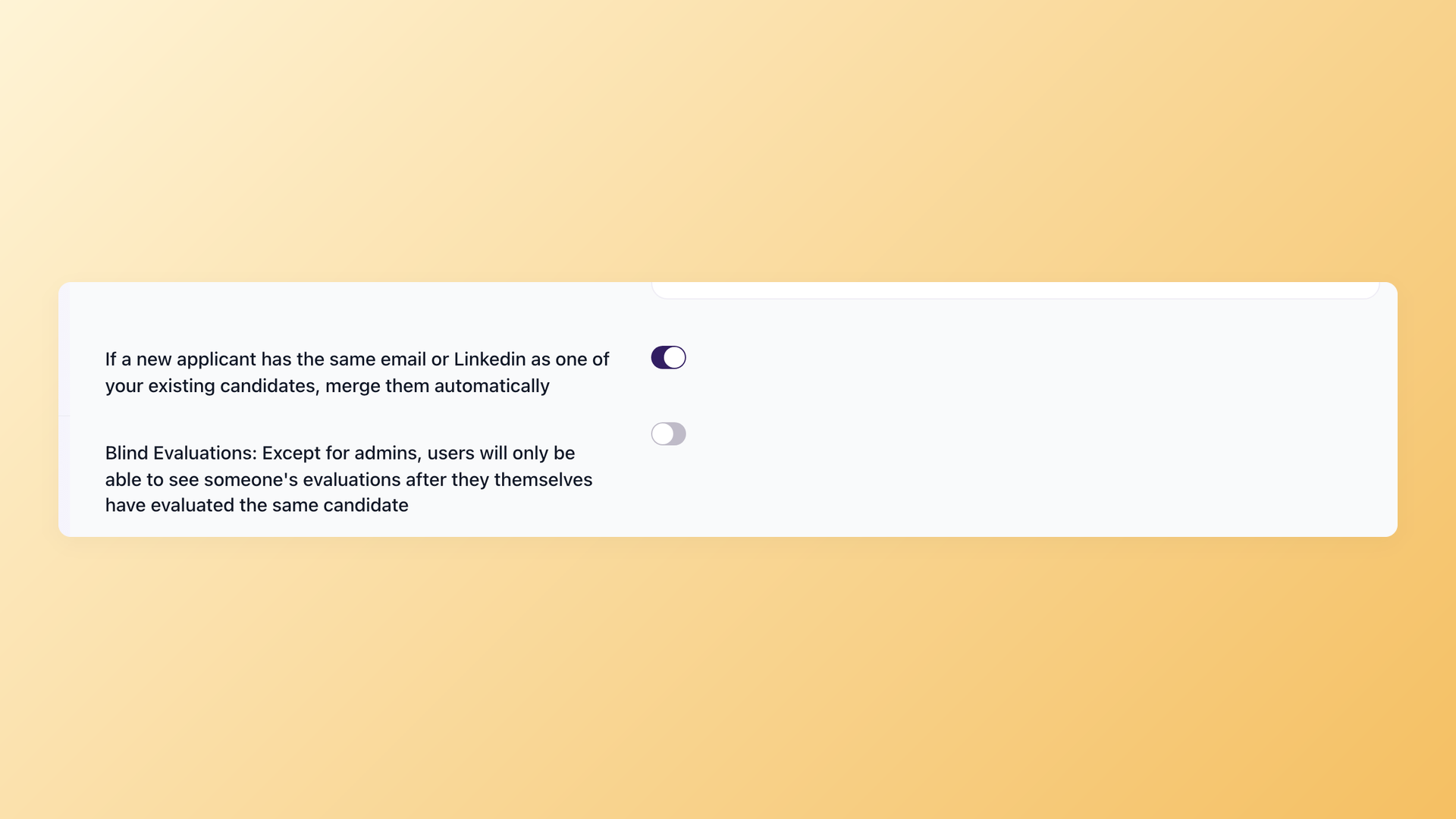
Blind Evaluations is a company-level setting under Settings and Company Settings. Turn it on and each interviewer sees other people's evaluations only after submitting their own, so nobody anchors on the first strong opinion. Administrators are exempt and can see everything.
Interviewers fill in a structured Evaluation Form, and a daily reminder email nudges anyone who has not submitted yet, which keeps the process from stalling before scores are revealed. It blinds the scores, not the candidate.
A quick example. Consider a hypothetical five-person panel scoring one candidate. With blinding on, each person submits before seeing the others, and the results come back split: two 8s, two 5s, and a 3. That disagreement is the useful part.
Without blinding, the later scorers tend to drift toward whoever posted first, and you never find out the panel was actually divided. Start a free 100Hires trial if you want to run your next debrief this way.
Frequently asked questions
What is blind recruitment?
Blind recruitment is the practice of hiding identifying details, name, photo, age, gender, and sometimes school or employer, during the early stages of hiring so reviewers judge skills and experience instead of the person. It usually covers three overlapping practices: anonymizing candidate identity, assessing on skills and work samples, and blinding evaluators to each other's scores.
Is blind hiring effective?
It depends on which part you mean. The evidence that name and identity bias exists is strong. The evidence that anonymizing applications fixes it is mixed: trials in Australia and France actually reduced shortlisting or hiring of the groups it was meant to help, and a Finnish pilot improved outcomes. Structured interviews and work samples have a much cleaner track record than anonymization on its own.
What is the difference between blind hiring and blind recruitment?
The terms are used interchangeably. A common convention treats blind hiring as the early-screening tactic and blind recruitment as the wider program that runs from application through to offer. Both point at the same idea, so the distinction is editorial rather than technical.
Is blind hiring part of DEI?
It is often grouped under diversity, equity, and inclusion, but it does not have to be framed that way. The strongest case for blind recruitment is decision quality and defensibility: consistent criteria, documented reasons, and less anchoring in the room. That case holds for a team on any side of the DEI debate.
What are the disadvantages of blind recruitment?
The main risks are that bias moves to the interview once identity is revealed, that manual redaction is slow and inconsistent, that removing context can strip out useful signal, and that in some settings blinding reduces the shortlisting of the very candidates it aimed to help. It does nothing, either, to fix who applies in the first place.
What should you remove from a resume for blind screening?
Always remove the name, photo, age or graduation year, and gender indicators. Consider removing the university name, address or ZIP code, and hobbies, since these carry prestige, socioeconomic, and affinity bias. Keep skills, work-experience descriptions, certifications, portfolio and work samples, and years of relevant experience visible.
Blind recruitment is not one thing, and it is not a magic fix. The durable wins are structured, independent evaluation and skills-first assessment.
Identity anonymization is a context-dependent tool that can quietly backfire, so use it where your reviewers need it and measure what happens. Get the process right and the bias has fewer places to hide.
Try 100Hires for free
No credit card. 14-day trial. Forbes Advisor #1 ATS for SMBs.